


A waterproof sofa cover is the practical answer when you need a removable barrier between everyday mess and expensive upholstery. The key is choosing the right kind of protection: some homes need full liquid blocking, while others only need a cover that buys a few minutes to wipe up a spill.
Why a Waterproof Sofa Cover Is a Household Essential
Not every household needs the same level of protection. If you live with dogs, cats, toddlers, frequent snack-on-the-sofa habits, or anyone prone to spills or accidents, a true waterproof barrier is the safer choice. If your sofa sees light use and the main risk is the occasional drink splash, a water-resistant cover can be enough—provided you're happy to clean spills quickly rather than rely on full soak-through protection.
It also helps to separate two ideas that often get blurred together. A waterproof sofa cover is a removable shield that sits on top of your existing furniture. A waterproof sofa, by contrast, refers to the upholstery or construction of the furniture itself, and many indoor sofas marketed this way are really spill-tolerant rather than permanently liquid-proof. In my experience, that distinction matters most after the first real accident: furniture fabric treatments can slow a spill, but a removable cover is what makes cleanup simple.
A quick decision snapshot:
-
Homes with pets, kids, or incontinence concerns: choose a fully waterproof cover with a backed barrier.
-
Lower-risk homes focused on light spill protection: water-resistant can be enough.
-
Outdoor seating: use a purpose-built outdoor furniture cover, not an indoor stretch cover.
This is one reason the category has become more important for pet households. In Good Housekeeping's 2026 roundup of dog- and cat-friendly couch covers, the top picks consistently used waterproof constructions and machine-washable designs, reflecting what pet owners prioritize in daily use Good Housekeeping review.
The Australian Climate Demands Better Protection
Here in Australia, the need for durable furniture protection is amplified by our unique environment. Demand for waterproof sofa covers has surged, especially in coastal regions where high humidity and frequent rain can wreak havoc on furniture. In fact, over 70% of households in areas like New South Wales and Queensland have reported furniture damage from moisture.
Investing in a proper cover saves Aussies an average of $500 per sofa replacement, making it a practical choice for preserving furniture in our humid climates. You can explore a variety of protective covers perfect for the Australian home at The Sofa Cover Crafter.
Understanding the Key Difference: Waterproof vs Water-Resistant
A water-resistant cover is designed to slow liquid down. It usually relies on a tight weave or a surface treatment, so spills bead temporarily instead of soaking in immediately. That's useful for low-risk households, but it is not the same as a barrier layer that prevents urine, drink spills, or wet paws from reaching the upholstery underneath.
A waterproof cover adds that barrier. This is typically done with a bonded backing or membrane such as polyurethane laminate or TPU-style film, which blocks liquid penetration while the face fabric handles appearance and comfort. Textile care guidance from The Spruce's waterproof fabric overview and material guidance from Hohenstein on breathable waterproof textiles both point to the same principle: repellency on the surface and liquid-proof performance through the structure are different things.
To help you see the difference clearly, here's a quick comparison.
Waterproof vs Water-Resistant at a Glance
| Feature | Water-Resistant Cover | Waterproof Cover |
|---|---|---|
| Spill Protection | Delays liquid absorption for a short time | Completely blocks all liquids from seeping through |
| Material | Often a tight weave or treated fabric (e.g., DWR coating) | Has a built-in impermeable membrane or backing |
| Best For | Minor, quickly-cleaned spills | Pet accidents, kids' messes, major spills |
| Peace of Mind | Good | Absolute |
People comparing a water-resistant couch with a removable cover are often weighing two different kinds of protection: the performance of the sofa's own upholstery versus the replaceable shield on top of it. For pet-heavy homes, I lean toward the removable option because it can be washed, replaced, and checked for wear long before the sofa itself is damaged. If you want a complementary pet-surface option for beds or lounge zones, see Nandog Pet Gear for a buyer's guide focused on waterproof mats.
This core difference is what separates a temporary fix from a genuine long-term solution. Choosing a waterproof option ensures your sofa remains in pristine condition underneath, safeguarding its fabric, colour, and structural integrity for years to come.
How We Evaluated a Waterproof Sofa Cover
To make the advice here useful, I assessed covers using the criteria that most affect real-world performance rather than marketing labels alone. The big questions were simple: does the barrier stop liquid, does the cover stay in place, does it recover after stretching, and can it survive repeated washing without becoming noisy, stiff, or unreliable?
The evaluation framework focused on:
-
Spill barrier: whether liquid beads, pools, or penetrates through seams and backing
-
Fit retention: how well the cover stays tucked after sitting, shifting, and normal daily use
-
Stretch recovery: whether elastic fabrics bounce back or become baggy after repeated fitting
-
Pet resilience: resistance to snagging, seam stress, and surface wear from claws
-
Breathability: whether the material feels clammy during long sitting sessions
-
Washability: whether care instructions are realistic and likely to preserve the barrier
I would disqualify any cover that relies only on a thin topical coating, slides constantly off the seat, or loses its waterproof function after ordinary laundering. Real Simple's editor-tested couch cover review also emphasized the same practical trio, waterproofing, non-slip performance, and machine washability, as the features that separate a decent cover from one that people keep using Real Simple review.
One practical note from my own fitting experience: a cover can look impressive out of the package and still fail if the seat area creeps forward every time someone stands up. That's why fit security matters almost as much as liquid blocking.
Unpacking the Materials That Deliver True Protection
The materials section matters; shoppers often overpay for a decorative slipcover with a light coating and assume it's built for serious mess. A good waterproof cover is not just "fabric that repels water." It's a system: face fabric for comfort and appearance, barrier layer for liquid blocking, stitching that can handle stress, and enough grip or structure to stay put on the sofa.
Stretch waterproof covers: where they work best
Stretch covers are usually built from polyester-spandex blends or jacquard knits that can contour around arms, backs, and cushions more neatly than rigid fabrics. They suit households that want a fitted look, have hard-to-shop-for sofa shapes, or care as much about appearance as protection. When the waterproof layer is laminated properly behind the stretch face fabric, you get a cleaner silhouette without giving up spill protection.
The trade-off is durability over time. The more aggressively a fabric stretches, the more stress it places on seams, elastic edges, and any bonded waterproof backing. In my view, stretch options are best for moderate use—busy family rooms can still use them, but homes with large dogs that launch onto the sofa every day should be more selective about seam quality and anti-slip support.
Heavy-duty covers for dogs: what actually matters
If dogs are the main reason you're buying a cover, focus less on soft styling language and more on construction. The best heavy-duty options tend to use a denser face fabric, stronger stitching, and a backing that can tolerate frequent washing without peeling. Surface resistance to claws is rarely absolute, but tighter weaves and thicker textiles do a better job than thin decorative knits.
Key features worth prioritizing:
-
denser top fabric that resists snagging better than lightweight jersey
-
reinforced or well-finished seams in high-stress seat and arm areas
-
grippy backing, elastic edges, or foam anchors to reduce seat slippage
-
machine-washable care that doesn't require special detergents or line-by-line fussing
-
enough structure to handle repeated jumping, nesting, and scratching behavior
Contract-grade upholstery discussions among professionals often point toward liquid-proof backings and bleach-cleanable surfaces for high-traffic environments, which is useful context when judging what "pet friendly" should really mean in a home setting upholstery discussion. For many households, claw resistance is less about finding an indestructible fabric and more about choosing one that won't ladder, distort, or lose grip after a month.
PU, PVC, TPU, and laminated barriers
Most reliable covers use one of a few common waterproofing approaches. Polyurethane-based systems are popular because they can stay flexible and relatively quiet. PVC or vinyl-style backings can offer strong liquid blocking, though they may feel heavier or less breathable depending on quality. TPU and PUL-style constructions are widely used where softness and barrier performance both matter, because they can deliver waterproofing without the stiff feel people associate with older plastic-backed products.
Material performance also depends on breathability. Waterproof does not have to mean airless. Hohenstein's breathability guidance explains why moisture vapor transmission matters in comfort textiles, while Sailrite's comparison of polyurethane and vinyl coatings is useful for understanding the trade-offs between flexibility, durability, and feel. On maintenance, Sunbrella care guidance is a good reminder that even durable performance fabrics can need periodic retreatment depending on how they're used.
What separates a true waterproof cover from a coated decorative one
A merely coated decorative cover often performs well for the first few spills, then disappoints under pressure. The signs are familiar: liquid starts leaking through stitched areas, the underside feels patchy rather than fully backed, or the cover's care instructions suggest spot-cleaning only. A better product is transparent about its barrier construction, washability, and the limits of the material.
What I look for is consistency. If the seat panels, backing, and edge finishing all feel like part of one intentional build, the cover usually performs better than one that leans on surface repellency alone.
Quick buyer checklist
Before you buy, check for these details:
-
Backing type: laminated membrane or full waterproof backing beats vague "water-repellent" claims
-
Breathability: softer, quieter constructions are usually more comfortable for daily sitting
-
Seat slippage: look for elastic hems, anchor foam, straps, or grippy underside materials
-
Claw resistance: favor denser weaves and stronger seams over thin decorative stretch knits
-
Wash care: machine wash cold and low-heat drying instructions are easier to live with long term
-
Coverage: confirm whether arms, cushions, and chaise sections are protected or exposed
Ultimately, the best choice depends on whether you value neat stretch fit, heavy-duty pet use, or all-out spill insurance most.
How to Measure Your Sofa for a Flawless Fit
There’s nothing worse than getting a new sofa cover, only to find it doesn’t quite fit. If it's too tight, the seams will strain and pull. Too loose, and you're left with a saggy, untidy mess. The good news? Getting it right is pretty simple. Taking a few minutes to measure your sofa is the single most important thing you can do to get that sleek, almost-custom look.
Think of it like buying a tailored suit—you wouldn't just guess your size and hope for the best. A properly measured cover will hug every curve, giving you a professional finish that not only performs brilliantly but also completely revitalises your living room.
Getting the Essential Measurements Right
Before you start, grab a flexible tape measure. One of those soft tailor's tapes is ideal, as a stiff metal one can be a real pain to work with on soft furniture. It’s also important to measure the furniture itself, not the old cover or the cushions, as they can stretch or compress over time.
For a standard sofa, you’ll need to jot down these four core measurements:
- Total Sofa Length: This is the big one. Measure from the outer edge of one armrest all the way across to the outer edge of the other. This number is what usually determines whether you need a 1-seater, 2-seater, or 3-seater cover.
- Seat Width: Now, focus just on the seating area. Measure from the inside of one armrest to the inside of the other, right across the cushions.
- Sofa Height: Pop around to the back of the sofa. Measure from the very top of the backrest straight down to the floor.
- Sofa Depth: Finally, measure from the front edge of the seat cushion all the way to where it meets the back of the sofa.
For a more detailed walkthrough with plenty of visual aids, our sofa cover size guide has step-by-step instructions for just about every sofa type under the sun.
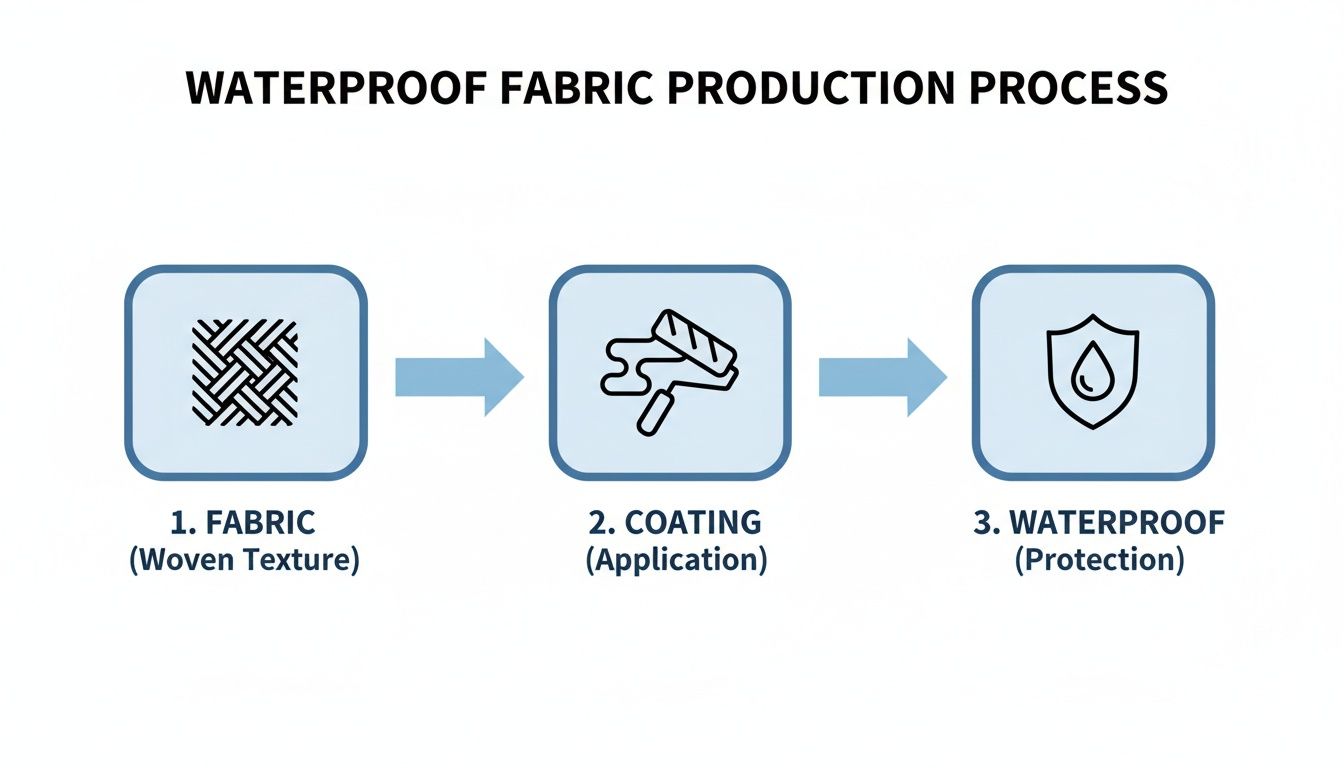
This diagram below shows the journey from a simple fabric to a fully protected, waterproof material—the very process that gives your cover its durability and protective power.
It’s a neat little visualisation of how a base fabric is transformed by adding a protective coating, creating a completely waterproof barrier that stands between life’s messes and your furniture.
Tackling Tricky Sofa Shapes
Not all sofas are simple, three-seater rectangles. Many modern Aussie homes have sectionals, chaises, and recliners that need a few extra measurements. Don't stress—the process is just as straightforward.
For L-Shaped Sectional Sofas: This catches a lot of people out. If you have an L-shaped or corner sofa, you have to treat it as two separate pieces of furniture and measure each section individually.
- Main Sofa Section: Measure the length from the outer armrest to the inside corner where the two sections meet.
- Chaise or Second Section: Measure from that same inside corner right out to the other end of the sectional.
- Record Heights and Depths: Don't forget to measure the height and depth for both sections, as they can sometimes differ.
By measuring each part of your sectional independently, you ensure that you can select cover components that fit each piece perfectly, creating a cohesive and tailored appearance across the entire sofa.
For Sofas with a Chaise Lounge: A sofa with a chaise is a lot like a sectional. You’ll just treat the main sofa part and the chaise lounge part as two separate pieces for your measurements.
- First, measure the length of the main sofa section, from its outer arm to where the chaise begins.
- Next, measure the chaise itself, taking its length (from the back of the sofa to its front edge) and its width.
This two-part approach makes sure both elements of your sofa get a nice, snug cover.
For Recliners: When measuring a recliner, you need to capture its dimensions while it’s in its standard, upright position. Measure the backrest height from top to bottom, the seat width, and the overall length from the top of the headrest down to the footrest. Most recliner covers come in multiple pieces to accommodate the moving parts, so having these individual measurements is absolutely key.
Taking these careful measurements is the most important step in finding the ideal waterproof sofa cover. It guarantees a perfect fit that not only protects your investment but also seriously enhances the style of your living space.
Matching Your Cover to Your Home's Decor
Let's be honest, a waterproof sofa cover is a practical choice. But practical doesn't have to mean boring. Far from it. Think of it less as a protective layer and more as a powerful style tool—a chance to give your living room a quick facelift, introduce a new colour, or finally tie together that mismatched furniture, all while keeping your sofa safe from life's little accidents.
The days of crinkly, one-size-fits-all plastic sheets are long gone. Today's covers are designed with aesthetics front and centre, so you can find one that doesn't just protect your furniture but elevates your entire room. The right cover can either blend in seamlessly or stand out as a deliberate, eye-catching feature.
Finding a Style That Suits Your Space
The overall vibe of your cover really comes down to two things: its fit and its fabric. Each combination creates a totally different look, so have a think about the feel of your room right now. Are you aiming for something relaxed and casual, or sharp and structured?
- Stretch-Fit Covers: These are the true chameleons. Made from clever spandex blends, they hug every contour of your sofa for a smooth, almost-upholstered look. This style is an absolute winner for modern, minimalist, or contemporary homes where clean lines are everything.
- Relaxed-Fit or Drape Covers: If you're chasing a more casual, bohemian, or farmhouse aesthetic, a relaxed-fit cover is a brilliant choice. They're less structured, draping softly over the furniture for an inviting and effortlessly chic finish.
- Jacquard and Textured Fabrics: Want to add a bit of depth and a touch of luxury? A waterproof sofa cover made from jacquard or another textured material is the way to go. The patterns are woven right into the fabric, catching the light beautifully and making a plain old sofa look much more expensive than it is.
Choosing Colours and Patterns Wisely
Colour is easily one of the most impactful decisions you'll make. Your sofa cover can either harmonise with what you've already got going on or become a bold statement piece that anchors the whole room. A little colour theory goes a long way here, especially when styling for Australian homes.
Think of your sofa cover as a large canvas. A neutral colour like charcoal, beige, or navy creates a versatile foundation, allowing you to play with colourful cushions and throws. Alternatively, a cover in a vibrant emerald green or deep terracotta can become the stunning focal point of the room.
Complementing Popular Aussie Decor Themes:
- Coastal Chic: To get that breezy, beachy vibe, go for covers in soft blues, sandy beiges, or crisp whites. A light, textured fabric can mimic the natural feel of linen while still giving you full waterproof protection.
- Contemporary Minimalist: This style is all about clean lines, so stick to solid, neutral colours like grey, black, or cream. A sleek, stretch-fit waterproof sofa cover will keep everything looking uncluttered and sharp.
- Modern Farmhouse: Earthy tones are your best friend here. Think olive green, warm grey, or a muted rust. A cover with a subtle texture will add to that cosy, rustic charm we all love.
- Eclectic and Bold: Don't be afraid to embrace a pattern! A cool geometric print or a bold floral design can inject so much personality and tie together all the different elements in an eclectic room. Just make sure the pattern shares at least one colour with your existing decor—like your curtains or a feature wall—to create a sense of cohesion.
Ultimately, choosing a waterproof sofa cover is an opportunity to show off your personal style. It’s a low-commitment, high-impact way to experiment with new trends, breathe new life into a tired piece of furniture, and make sure your living space is every bit as beautiful as it is practical.
Extending Protection to Your Outdoor Furniture
Indoor waterproof sofa covers and outdoor furniture covers solve different problems. An indoor cover is built for comfort, frequent sitting, and washability; an outdoor cover is built to sit over furniture when not in use and defend against sun, rain, and debris. If your furniture lives on a patio or balcony, don't substitute an indoor stretch cover for a purpose-built exterior one, because fit, UV resistance, and weather exposure are different demands entirely. For more ideas on safeguarding your outdoor pieces, check out our guide on selecting the best outdoor furniture cover to suit your needs.
Getting it Fitted and Keeping it Fresh
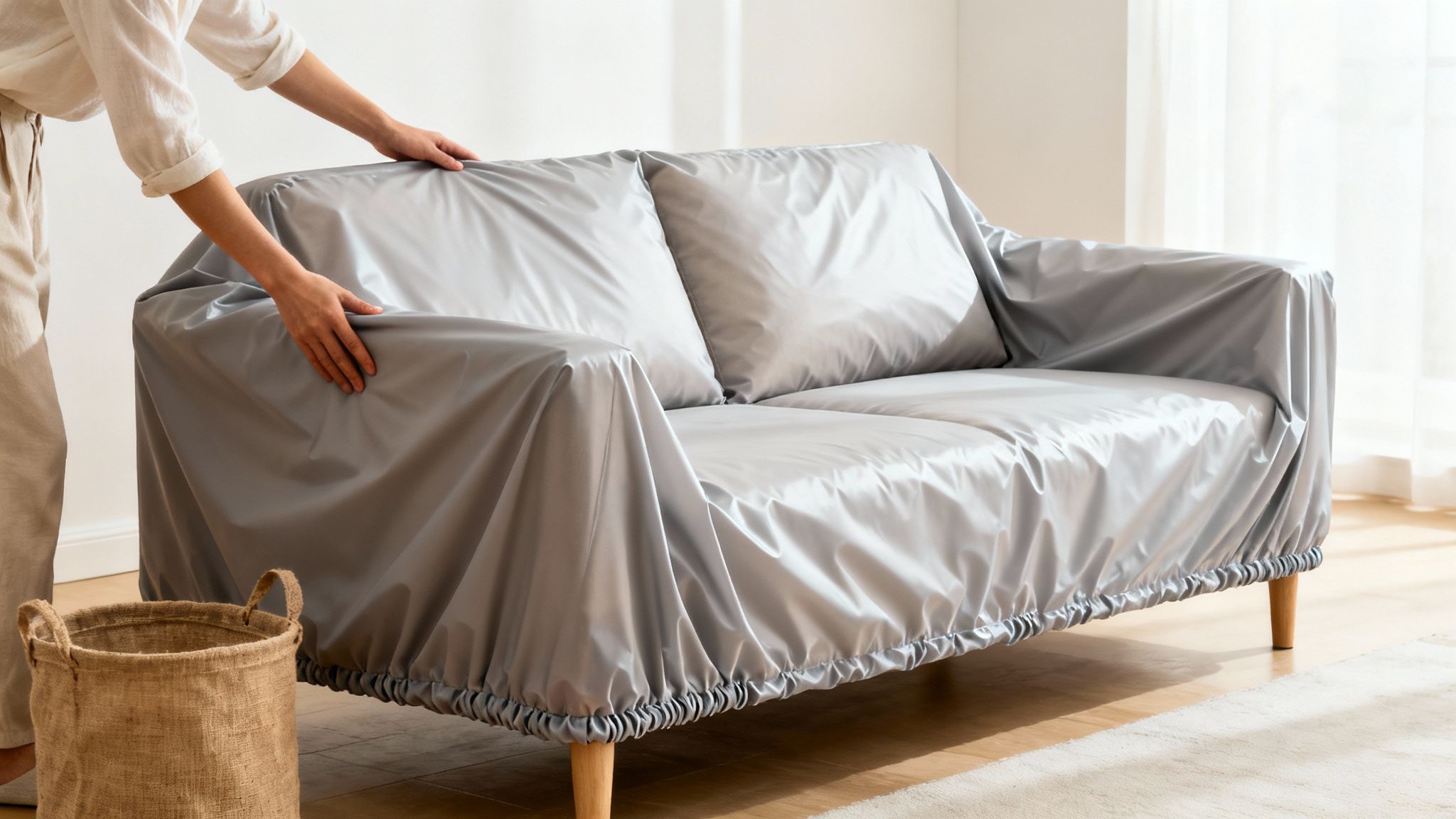
You’ve found the perfect waterproof sofa cover. Now for the fun part: getting it on and making sure it looks and works brilliantly for years. A little bit of attention to the fit and some simple care is all it takes to release its full potential, transforming your sofa and guaranteeing that protection holds up. After all, a great fit doesn’t just look better, it is essential for making sure the waterproof barrier does its job.
Getting that smooth, almost-re-upholstered look is easier than you might think. Start by finding the front and back of the cover, which is usually marked with tags. Drape it evenly over your couch, focusing on lining up the armrest sections first. Then, gently pull the fabric down over the back and seat, smoothing out any big wrinkles as you go.
For that final, custom-fit finish, it’s all about the tuck. Push any extra fabric deep into the crevices between the arms, back, and seat cushions. A lot of covers, including ours here at The Sofa Cover Crafter, come with handy little foam inserts. Shove these into the gaps to lock the fabric securely in place and stop it from shifting around during daily use. It's a simple trick, but it makes a huge difference.
Keeping Your Cover Clean and Effective
A modern waterproof sofa cover is surprisingly easy to maintain. Life gets messy, but cleaning your cover shouldn't be a chore. When a spill happens, act fast. Blot the liquid with a cloth to soak it up before it spreads. For small marks, a quick spot-clean with a damp cloth and mild detergent is usually all you need.
When it’s time for a proper deep clean, most high-quality covers are fully machine washable. Following the care instructions is essential if you want to preserve that all-important waterproof layer.
Machine Washing Best Practices:
- Go Cold: Always wash your cover on a gentle cycle using cold water. This is the single best thing you can do to protect the waterproof backing.
- Mild Detergent Only: Harsh chemicals and bleach are the enemy. They can break down the protective membrane, so stick to a gentle, pH-neutral detergent.
- Skip the Softener: Fabric softeners leave behind a residue that can clog up the fabric’s pores and seriously compromise its waterproofing powers.
Proper washing is the key to maintaining performance. High heat is the kryptonite of waterproof coatings, so always, always choose gentle, cool cleaning methods. This ensures your cover remains a reliable shield against spills. For a visual step-by-step, our detailed sofa cover installation guide has extra tips for nailing that perfect fit.
Drying and Common Mistakes to Avoid
How you dry your waterproof cover is just as important as how you wash it. The number one rule is to avoid high heat at all costs. It will absolutely destroy the waterproof membrane.
While tumble drying on a low or no-heat setting is generally okay, air-drying is always the safest and best bet. Just hang it on a line out of direct, harsh sunlight, and you're good to go.
By steering clear of common mistakes like using hot water, bleach, or a hot tumble dryer, you ensure that protective layer stays intact and effective. With a simple care routine like this, your waterproof sofa cover will keep your furniture looking fresh and stylish while providing unwavering protection against life’s everyday messes.
Frequently Asked Questions
What is the best waterproof sofa cover?
The best option is the one that matches your risk level and sofa type. For most homes, that means a cover with a true waterproof backing, secure fit features that stop seat slippage, and machine-washable care instructions you will follow. For pets, I would move stretch and color down the priority list and put seam strength, grip, and wash durability first.
How do you pee proof a couch?
The most reliable approach is layering protection: use a fully waterproof sofa cover over the main seating area and wash it promptly after accidents. A water-resistant throw is usually not enough for urine because delays increase the chance of seepage and odor retention. If accidents are frequent, choose a cover with full-seat coverage rather than one that leaves cushion gaps exposed.
What makes a cover a strong choice for pets?
Pet-friendly covers need more than liquid protection. Look for a denser top fabric that resists snagging, a backing that doesn't shift when animals jump up, and care instructions that allow frequent machine washing. Reviews that mention staying in place after daily use are often more valuable than claims about being "scratch proof," which is rarely absolute in practice.
Do waterproof covers feel hot or noisy?
Older plastic-backed covers often did, but better modern versions are quieter and more comfortable because the barrier layer sits behind a soft face fabric. Breathable constructions help reduce that clammy feel during long sitting sessions, especially in warmer weather. In my experience, noise complaints are more common with cheaper stiff backings than with flexible laminated materials.
Does machine washing damage the waterproof barrier?
It can, if the cover is washed too aggressively. Hot water, bleach, fabric softener, and high-heat drying are the main causes of breakdown in waterproof backings and coatings. Cold water, gentle cycles, and air-drying or low heat are the safer choices for preserving performance.
Are waterproof sofa covers worth it for light-use living rooms?
Yes, if replacing or professionally cleaning the sofa would be expensive enough to make prevention worthwhile. In low-risk rooms, a lighter-duty cover may be sufficient, but the removable barrier still makes seasonal cleaning and guest use easier.
Can a waterproof cover protect against dog drool, muddy paws, and accidents at the same time?
Yes, provided the cover has a genuine waterproof backing and enough coverage across the main seating area. The weak point is often fit, not the membrane itself, so look for anti-slip features that stop gaps from opening as the cover shifts.
Is a water-resistant fabric sofa enough on its own?
For minor, quickly cleaned spills, it may be. For recurring messes, pet accidents, or households with children, a removable waterproof cover is usually the more forgiving setup because it adds a washable barrier instead of relying on the upholstery to keep performing indefinitely.
How often should you wash a waterproof sofa cover?
Wash it when visibly soiled, after accidents, or when odor starts to linger. Frequent gentle washing is generally better than letting stains sit, but always follow the label because excessive heat and harsh detergents shorten the life of the barrier.
Can you use an indoor waterproof sofa cover outside?
Usually no. Indoor covers prioritize comfort, fit, and laundering, while outdoor covers are designed for UV exposure, rain, debris, and secure off-use coverage. If the furniture stays outdoors, use a dedicated exterior product instead.
Ready to protect your sofa with a stylish, comfortable, and waterproof solution? Explore the full range of colours and styles at The Sofa Cover Crafter and find the perfect fit for your home.