


When the cold really sets in, nothing beats curling up under the right warm blanket. But choosing one is not just about picking a pretty colour. The best warm blankets for winter are experts at holding onto heat, and the secret lies in the details: weave, weight, and insulation.
Think of a great blanket like the insulation in your roof. It is not there to create heat, but to stop your body heat from escaping into colder air, creating its own pocket of warmth.
How We Evaluated Warm Blankets for Winter in Australia
For this update, we assessed blankets using five criteria that matter in real Australian homes: felt warmth, breathability, ease of washing, how well the blanket works on a sofa, and how suitable it is for local climates. That matters because a throw that feels ideal in Hobart can quickly feel stifling in a Brisbane living room, and a very soft blanket is not always the one that stands up best to frequent washing.
I also prioritised materials that stay comfortable when layered, not just those that feel impressive in a shop. For sofa use, that is often where the difference shows up: a blanket that is too slippery slides off, a blanket that is too heavy becomes tiring to use, and a blanket that is too hot ends up folded beside you after twenty minutes.
In practical terms, we looked for:
-
Useful warmth, not just visual thickness
-
Breathability, especially for milder or changeable Australian climates
-
Real-world care needs, with attention to machine-washable materials
-
Resistance to pilling and fibre shedding, important in homes with children or pets
-
Primary use, whether for the sofa, bedroom, a draughty house, or as an extra layer
This framework reflects how textile insulation works in research on flexible insulating materials, where thickness, structure, and the ability to trap air matter more than a plush hand feel, with tested systems ranging from about 2 to 6 clo depending on materials and conditions textile insulation study. It also matches the basic principle of insulation: trapping warm air and limiting heat loss.
How to Choose the Right Warm Blankets for Winter
When the temperature drops, reaching for a cosy throw becomes second nature. But have you ever wondered what makes one blanket warmer than another? It is not only about the material, it is a smart combination of construction, weight, and insulating ability. A chunky knit may look extremely warm, but a tightly woven wool blanket of the same size may keep you warmer in practice.
Choosing the right warm blankets for winter means understanding those subtle but important differences. A blanket's job is to create and hold thousands of tiny air pockets, which your body then warms. The denser the fabric and the tighter the weave, the better it prevents precious heat from escaping.
Weave and weight: the basics of warmth
Picture a light throw with a loose weave. It may feel nice for a moment, but air can pass through it easily, carrying away your body heat. Now picture a heavier blanket with a dense, tight construction. That structure is much better at creating an insulating barrier, which is why materials like wool and thick fleece remain staples among the best warm blankets for winter in Australia.
A simple in-store guide is fabric weight, usually expressed in grams per square metre. Within the same material, that often separates a light decorative throw from a genuine warm blanket for winter.
A blanket’s main role is not to generate heat, but to stop the heat you produce from escaping. A high-quality winter blanket does this well, acting like a personal thermostat for your body.
In Australia, thermal comfort varies less by calendar date than by home type and location. A cool evening in Melbourne, Hobart, or inland NSW can feel very different from a winter night in Brisbane or Perth, especially in homes with draughts or limited insulation. That is one reason warm blankets for winter remain so useful in 2026: they improve comfort without needing every room overheated.
Size and insulation: working together
Beyond the fabric itself, the size of your blanket matters a lot. A larger throw lets you wrap yourself fully, block draughts, and create a continuous cocoon of warmth. No more cold feet sticking out.
Make sure your blanket is large enough for its job: about 130 × 170 cm for a simple throw, 150 × 200 cm to wrap two people on the sofa, and 220 × 240 cm for covering a bed without leaving edges exposed. Pairing the right size with a material known for good insulation is one of the simplest ways to narrow down the best blankets for winter 2026 in Australia.
Exploring Blanket Materials, from Wool to Microfibre
Choosing the right winter blanket is a lot like choosing the right coat; the material changes everything. It affects not only warmth, but also weight, breathability, washability, and the way the blanket feels against your skin. The route to real comfort starts with the fibres themselves.
For an Australian buyer, the right choice rarely comes down to a single idea of “warmth.” You also need to consider humidity, ease of washing, pets, and the difference between a drier southern winter and a milder evening on the east coast. A throw that feels perfect in a cool Melbourne house can quickly feel excessive in a well-tempered Sydney apartment.
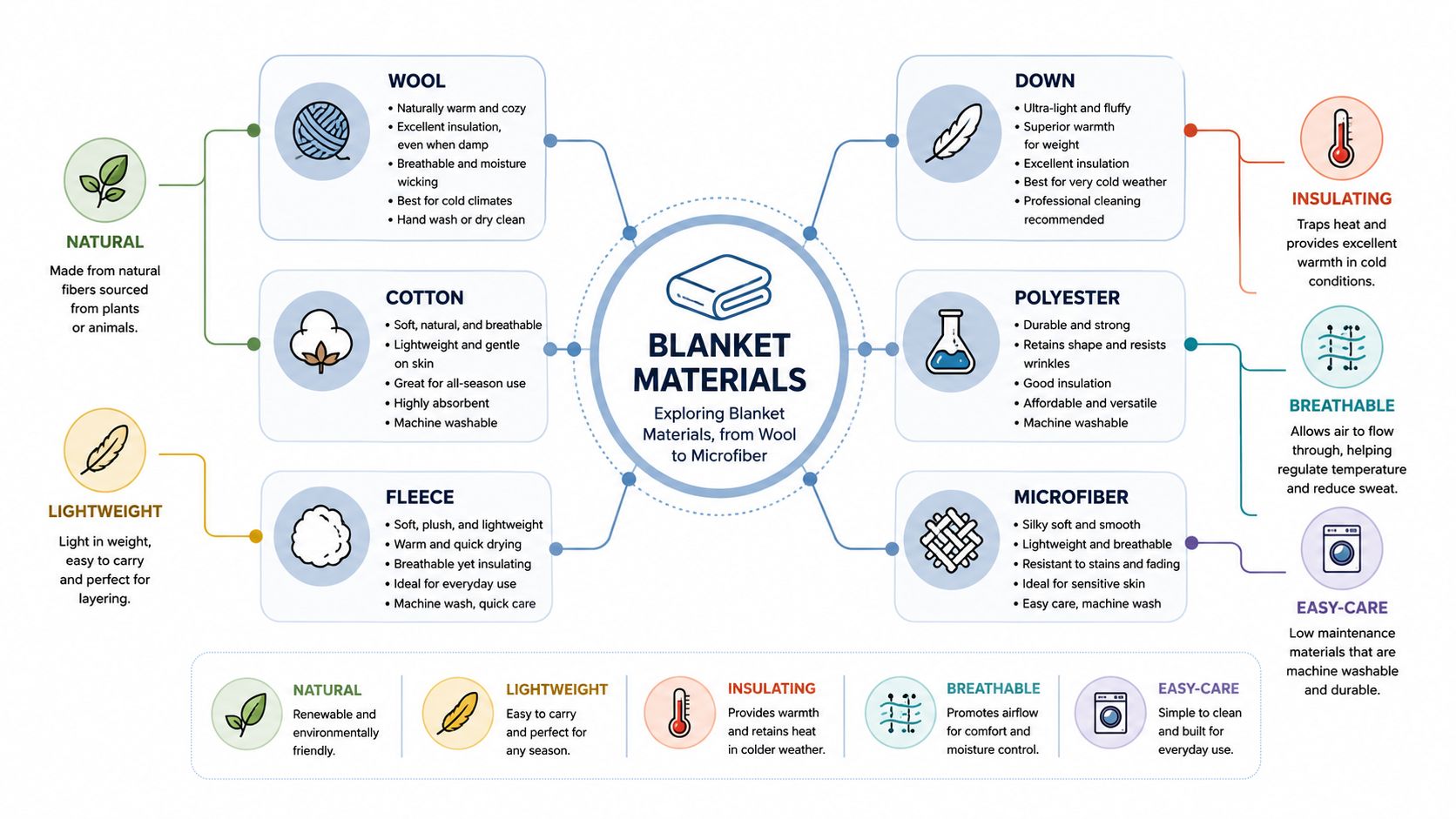
Quick comparison of the most useful materials
MaterialWarmthBreathabilityWashingKids/petsBest use in AustraliaWoolHighHighOften delicateGood, but needs more careColder southern areas, cool homes, bed + sofa useFleeceHigh at moderate weightMediumEasy in machineExcellentEveryday use, active homes, cool eveningsMicrofibreMedium to highMedium to lowVery easy in machineVery goodApartments, sofa use, simple careSherpaVery highLow to mediumVaries by liningGood if tightly madeVery cool nights, cocoon-style sofa useCotton blendMediumHighEasy to moderateGoodMild winters, layering, hot sleepers
Wool: the best ally in dry or damp cold
There is a good reason wool remains a benchmark. Its fibre structure traps air, insulates well, and also helps manage moisture, which avoids the clammy feeling some synthetics can create after an hour of use. The IWTO notes that wool can absorb a meaningful amount of moisture vapour while remaining comfortable to the touch, and the Australian Wool Education Trust highlights its thermal comfort performance.
In practice, wool is often the answer if you are asking for the warmest blanket in Australia for cooler, draughtier homes, especially in Victoria, Tasmania, or the NSW tablelands. Its weak point is care: some wool blankets are machine-friendly on a wool cycle, while others are not. If you want something to pull out nightly without much thought, check the care label closely.
Fleece and microfibre: the easy-care duo
On the synthetic side, fleece and microfibre are often the easiest options to live with. Fleece delivers real warmth for its weight and generally stands up well to family use. Microfibre is smoother, softer, and works well when you want a cosy throw that is light enough to fold away quickly.
Where they really shine is maintenance. Care guidance from Good Housekeeping and Martha Stewart broadly agrees that many polyester throws can be machine washed on a cool or gentle warm cycle, then dried carefully on low heat or air-dried. Very cheap microfibres, however, tend to pill sooner and lose their finish faster after repeated washes.
If you are looking for the most popular cozy throws for winter that are easy to wash in Australia, these two materials usually top the practical shortlist.
Sherpa: very warm, but not always the most versatile
Sherpa creates an immediate feeling of maximum warmth, and that is not just marketing. Its fluffy surface increases apparent thickness and traps a lot of air, making it especially pleasant for still evenings on the sofa. If your top priority is a cocoon effect, it is one of the strongest contenders.
Its trade-off is breathability. In a mild Australian climate, or for sleepers who run warm, a thick sherpa blanket can feel overly insulating. That is why I usually find it better as a living-room throw than as the only layer for sleeping all night.
Cotton blends: less warm alone, excellent for layering
A cotton blend is not usually the warmest option on its own, but it can be the smartest in some homes. It breathes better, often washes more easily than pure wool, and works very well as a first layer under a warmer blanket.
In a mild winter in Brisbane, Perth, or some well-insulated Sydney homes, a cotton blend paired with a warmer second layer is often more comfortable than a single very thick blanket. For people who overheat easily, it is also a more forgiving choice.
Easy-wash cosy throws: which ones are really worth it?
If you want a blanket for nightly sofa use, the most practical materials are usually polyester fleece, dense microfibre, and some cotton blends. These are also among the best warm blankets for winter in Australia when the priority is softness, easy washing, and suitability for normal family life.
Here is the care reality by material:
-
Polyester fleece: usually the easiest option. Machine washable, quick to dry, and fairly resilient with light spills.
-
Microfibre: also easy, but thinner versions are more likely to lint or lose their velvety finish over time.
-
Synthetic sherpa: often washable, though more likely to clump if dried on too much heat.
-
Wool: not the easiest choice for weekly washing; it holds up better with gentler, less frequent care.
-
Cotton blend: a good compromise when you want a breathable throw that can still go through the wash regularly.
For frequent washing, I would avoid very loose knits, heavily furry finishes, and fragile decorative textures if the throw is used every evening. Those are often the styles that shed most at first and age least gracefully on a heavily used sofa.
The best blankets for winter are not always the ones that look thickest. The most useful ones over time usually combine believable warmth, realistic care, and comfort that suits your climate.
Understanding Blanket Warmth with TOG Ratings and Layering
Have you ever wished for a more reliable way to judge blanket warmth than touching it in a shop? While feel and fabric are good starting points, there is also a more technical way to think about warmth: the TOG rating.
Think of it like choosing clothing. A light cotton shirt has low thermal resistance, so it suits a warm day. A thick wool jumper has higher thermal resistance, helping you hold body heat in colder weather. A TOG rating does the same kind of job for bedding, giving a simple number to describe insulating power.
TOG stands for Thermal Overall Grade. In general terms, a low TOG suggests a lighter, more breathable layer, while a higher TOG indicates stronger insulation. For anyone comparing the best blanket material for winter, that can be a useful starting point.
What TOG really helps you understand
The important point, especially in 2026, is that TOG is much more common for doonas, duvets, and full bedding products than for simple sofa throws. In other words, if you are buying a blanket for the couch, you may not get a clear TOG number to compare. In that case, material, weight, density, and layering ability matter more than the label.
Research on textile insulation also shows that thickness and structure strongly influence perceived warmth, while wind and draughts can sharply reduce the performance of lighter or more permeable layers thermal layering research. That is exactly why a moderately thick throw in a calm room can feel warmer than a theoretically heavier blanket in a draughty house.
Finding your ideal warmth level for your situation
Choosing the right warmth level is not about taking the most extreme option. It is about matching the blanket to your home, climate, and metabolism.
-
Cool Victorian home or older house in southern Australia: choose dense wool, sherpa, or thick fleece, ideally in layers. Here, the home’s insulation can affect comfort as much as the blanket.
-
Mild winter in Brisbane or on the Gold Coast: a cotton blend or lighter microfibre is often enough, with a second layer nearby for cooler evenings.
-
Sofa use: you lose heat faster because you move less and often leave shoulders or legs partly exposed. A larger, softer throw can outperform one that is merely heavier.
-
Bed use: TOG becomes more useful when a blanket is supporting an existing doona. A breathable layer close to the body and a warmer layer above often works better than a single massive textile.
-
Warm sleeper versus cold sleeper: people who run warm usually do better with breathable wool or a layered cotton blend, while colder sleepers often prefer sherpa, dense fleece, or a double-layer setup.
This is also the practical answer to questions like what are the best blankets for winter in my area in Australia: not one blanket suits every city or every home, and room draughts, humidity, and heating patterns matter as much as postcode.
The art of strategic layering
Even with the right blanket, mastering layering is key to winter comfort. Australian winter conditions are varied: southern homes can feel sharply cold overnight, while coastal homes may only need moderate warmth with flexibility. Layering lets you adapt in real time so you do not end up too hot or too cold.
Instead of relying on one ultra-thick blanket, layering lets you build a customisable cocoon of warmth. As a bonus, it also adds texture and visual depth to your living room.
By combining different weights and materials, you gain much finer control over comfort. Think of it as building your own climate-control system, one good blanket at a time.
For example, you might start with a light, breathable base layer close to you, such as a soft cotton or microfibre throw. That first layer focuses on softness and initial comfort. Then add your main source of warmth over the top — a thicker wool or sherpa blanket. That outer layer does the heavy lifting, trapping heat and pushing back the cold.
The most consistent pattern I see is simple: two well-chosen layers are almost always more comfortable than one very thick blanket. The first avoids an overly stuffy feel, and the second can be added only when the room cools down properly. That is especially true in Australian homes where evening temperatures can drop quickly without justifying very heavy bedding all night.
This method is not only practical; it also looks good. Imagine draping a lighter patterned throw across your sofa, then folding a chunky knit over the armrest, ready to pull over yourself. You instantly create a space that feels welcoming, stylish, and adaptable through winter.
Styling Your Sofa for a Cosy Winter Transformation
A warm blanket is much more than something to pull over yourself when temperatures drop; it is a key part of your living room’s winter feel. Adding a throw to your sofa can instantly change the atmosphere, turning the space into a welcoming retreat that invites you to curl up and unwind. It is one of the easiest and most affordable seasonal updates you can make.
And, realistically, people want homes that feel both comfortable and attractive. That helps explain why throws and blankets remain popular: more households are looking for comfort, softness, and visual warmth at home, especially while flexible and home-based work continues to shape daily routines in 2026.

Mastering the drape
How you place your blanket matters — it sets the tone for the whole room. There is no single correct approach; it is about finding a style that matches the mood you want, from relaxed to polished.
- The casual drape: for a lived-in, relaxed look, toss the blanket diagonally across one corner of the sofa. Let it fall naturally over the back and seat cushion. This is perfect for showing off the texture of a chunky knit throw.
- The neat fold: if you prefer a more organised look, fold the blanket neatly into a rectangle. You can place it over the sofa arm, across the back, or at one end of the seat. This works especially well with smoother fabrics like microfibre or wool.
- The cocoon: this is the ultimate invitation to get cosy. Spread the blanket across the full seating area and tuck it slightly around the sides. It looks welcoming while also adding a practical protective layer for your sofa cushions.
Try these methods and see what suits your space best. For more ideas, you can explore our guide to six sofa throw designs.
The goal is to create a space that feels like a warm hug. Your blanket should look intentional, but never stiff or over-styled — it should make everyone want to settle in and relax.
Creating cohesion with colour and texture
Styling with warm blankets for winter is a great chance to think like a designer, especially when you start pairing colours and textures. The trick is to create a look that feels considered and harmonious. Matching your throw to a sofa cover can make a noticeable difference.
Imagine a sofa cover in deep charcoal grey. Now drape a cream chunky knit throw over it. You instantly get a high-contrast look that feels modern and refined. The plush knit texture adds softness and depth, stopping the darker tone from feeling too heavy.
To really capture that warm, sheltered feeling, it helps to understand cosy styling principles. A lot of it comes down to atmosphere — the sense of comfort and ease a room gives you, not just how it photographs.
Winter styling combinations for your sofa
Pairing your throw with the right sofa cover creates an instantly more cohesive and elegant look. Here are a few combinations to inspire a cosy winter refresh.
| Sofa Cover Colour/Style | Recommended Throw Texture | Desired Look |
|---|---|---|
| Charcoal Grey (Velvet) | Cream Chunky Knit | Modern & Sophisticated |
| Natural Beige (Jacquard) | Rich Terracotta Wool | Warm & Natural |
| Deep Navy (Polyester) | Soft Faux Fur | Luxurious & Welcoming |
| Light Grey (Linen Look) | Mustard Fleece | Bright & Contemporary |
| Olive Green (Cotton Blend) | Cream Bouclé | Relaxed & Organic |
These combinations are just a starting point. Much of the pleasure comes from mixing textures, such as a smooth velvet throw against a textured jacquard sofa cover, to build the kind of rich layered look that suits a cool evening indoors.
Once you have found the right blanket, a little care helps it stay soft and attractive for many winters to come.
You cannot treat every blanket the same way; putting a delicate wool throw into the wash with a heavy fleece blanket is an easy way to ruin one of them. Washing, drying, and storing correctly is what protects your cosy investment.
Your first step should always be the care label. That small tag is the closest thing you have to a guarantee, because it gives the maker’s specific instructions for that fabric. Ignoring it is the quickest way to shrink or damage a blanket you love.
Washing and drying different blanket materials
Your regular detergent can sometimes be too harsh for delicate fibres. For wool or chunky knits, a mild liquid detergent with a neutral pH is a safer option. For durable fabrics like fleece and microfibre, normal detergent is usually fine.
For washing, think gentle. Most warm blankets for winter do best on a cool delicate cycle to avoid unnecessary wear.
- Wool & chunky knits: these are your most sensitive blankets. Hand washing in cool water is safest. If you need to use a machine, choose the wool or hand-wash cycle, use wool detergent, and place the blanket in a large mesh laundry bag to reduce snagging or stretching.
- Fleece & microfibre: these synthetic workhorses are much more forgiving. You can usually machine wash them on a gentle cycle with cool or mildly warm water. Try to wash them separately from heavy lint-producing items like towels.
- Weighted blankets: because of their heavy fill, many weighted blankets come with a removable cover you can wash separately. If the whole blanket is washable, check your machine’s weight capacity first. A commercial machine may be necessary.
Drying matters just as much as washing. High heat is the enemy of almost every blanket fabric. It can shrink natural fibres and damage synthetic ones.
Never use high heat to dry your blankets. Low heat or air drying is the safest way to protect the fabric’s softness and shape, so it remains a reliable winter companion.
For wool and chunky knits, flat air drying is the ideal method because it prevents stretching. For fleece and microfibre, tumble drying on low or no heat is usually suitable. Adding dryer balls can help fluff the fibres and reduce static.
Storing blankets in the off-season
When warmer weather returns, storing winter blankets properly is the best way to keep them fresh for next year. Before packing anything away, make sure the blankets are completely clean and dry. Even a little moisture or dirt can attract pests or encourage mildew.
Fold blankets neatly and place them somewhere cool, dry, and dark. A linen cupboard, under-bed storage box, or wardrobe shelf can all work well.
For long-term storage, breathable cotton or linen storage bags are usually better than sealed plastic tubs. They allow some airflow and reduce the chance of trapped moisture. That simple step helps your blankets come out next season feeling fresh and ready to use.
Choosing Blankets for Families with Kids and Pets
In a busy home full of children and pets, a blanket needs to be more than warm — it needs to be tough. Between spills, muddy paws, and constant cuddling, practicality matters as much as softness. Choosing the right warm blankets for winter in this setting means finding the balance between cosy comfort and easy-care durability.
When your sofa doubles as a play area, fort, and nap spot for furry family members, the blankets on it need to be ready for all of that. The trick is to favour materials that are durable, easy to clean, and safe for everyone.

The champions of durability and easy care
For homes with young children and four-legged companions, some fabrics are clear winners. They handle repeated washing and the wear that comes with a well-used home.
-
Microfibre and polyester fleece: these synthetic materials are the practical stars of family-friendly blankets. They are relatively stain-resistant, do not hold odours as easily, and can usually go through the washing machine without drama.
-
Tightly woven fabrics: look for blankets with dense construction. They are less likely to snag on claws or be pulled out of shape by rough handling.
-
Hypoallergenic qualities: microfibre and fleece can be good choices for sensitive households because they tend not to trap dust and allergens in the same way some natural fibres can.
A blanket should not become another source of stress. Choosing a durable, machine-washable option means you can relax when sticky fingers or a wet nose get a little too close.
A checklist for kid- and pet-friendly blankets
Picking the right blanket becomes much simpler when you know what to look for. This checklist keeps the focus on features that deliver both comfort and peace of mind.
-
Is it machine washable? Many families require that, so check the care label to confirm it can handle frequent cleaning.
-
Does it have a durable weave? Avoid loose knits or delicate fabrics that snag easily. A tighter construction usually stands up better to claws and active use.
-
Is it resistant to stains and odours? Fabrics like polyester fleece often cope better with spills and pet smells after washing.
-
Is it safe and non-irritating? Look for materials that feel suitable for sensitive skin and do not rely on harsh finishes.
Your blanket can also do double duty as a stylish, functional furniture protector. Draping a large durable throw over your sofa adds not only warmth but also a washable barrier against spills and pet hair.
Ultimately, the best warm blanket for a family home is the one that invites everyone to snuggle in without making you worry about cleanup. By choosing a durable, low-fuss material, you get the comfort you want with the practicality a lively household needs.
Frequently Asked Questions
What is the warmest blanket for winter?
For maximum warmth, thick dense wool blankets and sherpa styles are among the strongest options. Wool stands out because it insulates well while handling moisture better, whereas sherpa creates an immediate cocoon feel but breathes less. In real use, the warmest blanket for winter is often the one that combines insulating material, enough size, and smart layering.
What is the best warm blanket for winter?
There is no single answer for everyone. For many homes, a quality fleece or an easy-care wool blanket offers the best balance of warmth, comfort, and everyday use. If I had to recommend one practical approach, it would be a breathable main blanket plus a second backup layer so you can adjust warmth to the room.
What is the warmest blanket in Australia?
In many colder Australian regions, wool remains one of the strongest choices because it offers steady warmth with better breathability. In a draughty southern home, it is often more useful over time than a very fluffy synthetic that handles moisture less well. For a very cool lounge room, however, a thick sherpa throw may feel warmer in the short term.
What type of blanket is best for winter?
The right type depends on how you use it. For sleeping, a breathable blanket that layers well with existing bedding usually works better than a single overly heavy throw. For the sofa, the best options are often larger, softer, and easier to reposition, such as dense fleece, light wool, or well-finished microfibre.
Which blanket material is easiest to wash often?
For frequent washing, polyester fleece and microfibre are usually the easiest options. They often go straight into the machine, dry fairly quickly, and need less care than wool. The cheaper versions can pill more, though, so it is usually worth choosing decent density over the thinnest fabric.
Your Winter Blanket Questions Answered
What is the warmest blanket material for an Australian winter?
For most uses, dense wool remains the benchmark because it combines insulation, breathability, and better moisture management. Testing on textile systems shows that thermal performance depends heavily on thickness and structure, not just apparent softness study on clo and insulation. If you want immediate cocoon-like warmth on a sofa, thick sherpa is also one of the strongest options.
Are electric blankets a good choice for the sofa?
They can be useful on a bed, but they are less ideal on a sofa if they are frequently folded or scrunched up. The concern is uneven use and hot spots rather than stable flat placement. For living-room comfort, I generally find it more reliable to layer a breathable blanket with a warmer outer layer instead of depending on an electric model.
Are weighted blankets warm enough for winter?
They can feel comforting, but their main function is pressure rather than maximum insulation. Their warmth depends heavily on the outer cover: a fleece or minky-style cover will feel much warmer than a simple cotton one. For cold nights, layering them with a conventional blanket is usually the better answer.
How do I stop my throw from shedding fluff?
A gentle pre-wash often helps settle the fibres, especially on fluffy synthetic throws. It also helps to avoid high drying heat, which stresses fibres and can make the finish look worn faster.
Which throw should I choose if I want something warm and easy to wash?
The best compromise is often a good-density polyester fleece or a thicker microfibre throw, especially for a sofa used every day. These materials offer genuine warmth, wash easily, and dry faster than wool. If you want something more breathable, a cotton-blend base layer with a fleece top layer is often more versatile.
Which material works best for different Australian climates?
In cooler southern areas, wool and sherpa throws are often the most satisfying options. In cities with milder winters, microfibre, medium-weight fleece, or a layered cotton blend is usually enough. The most useful factor is not the whole region but your exact home: insulation, draughts, and evening temperature change everything.
Ready to find the perfect throw to complete your cosy winter setup? Explore the stylish and comfortable throw collection at Casamé Home and add that final layer of warmth and visual softness to your living room. Find your next favourite throw at Casamé Home


