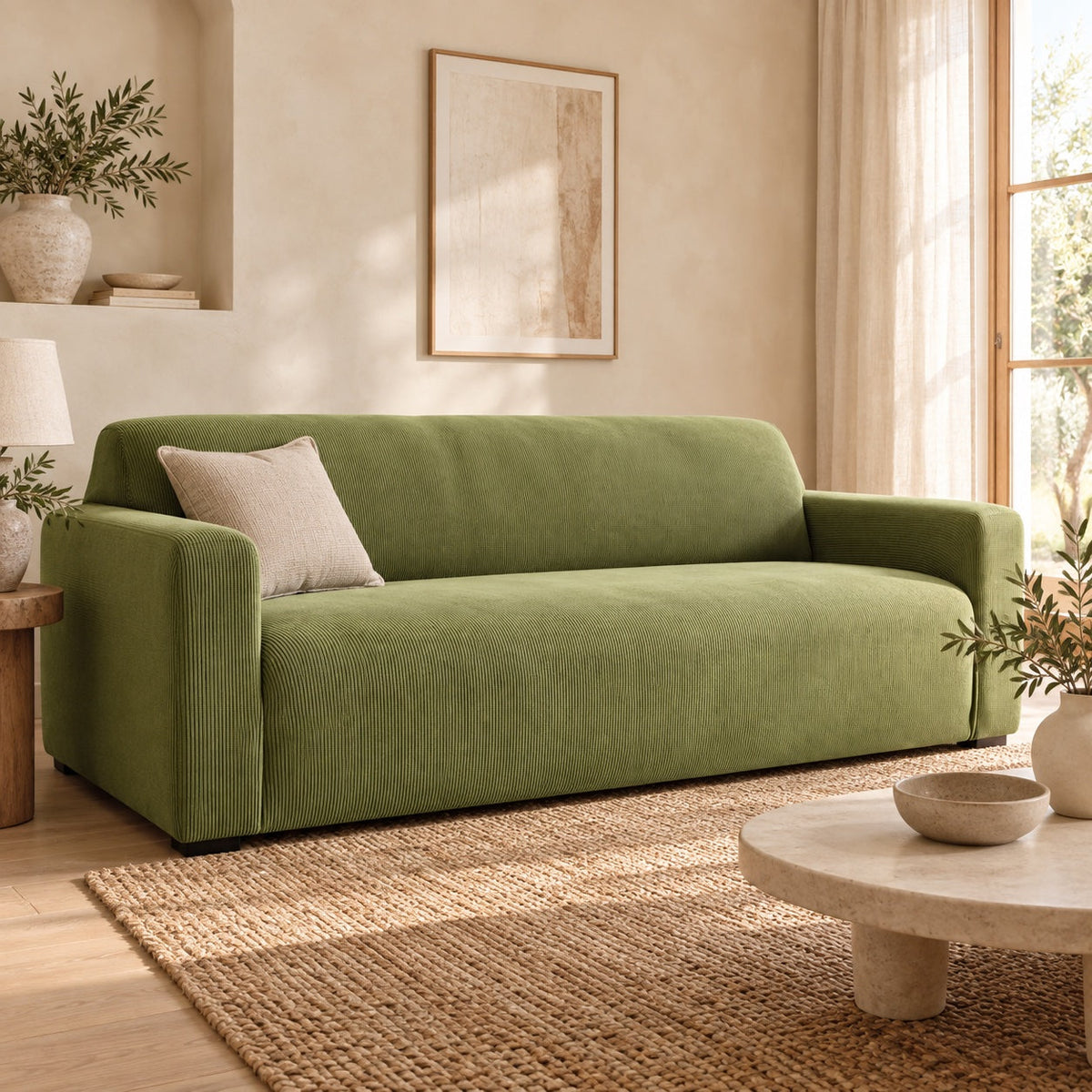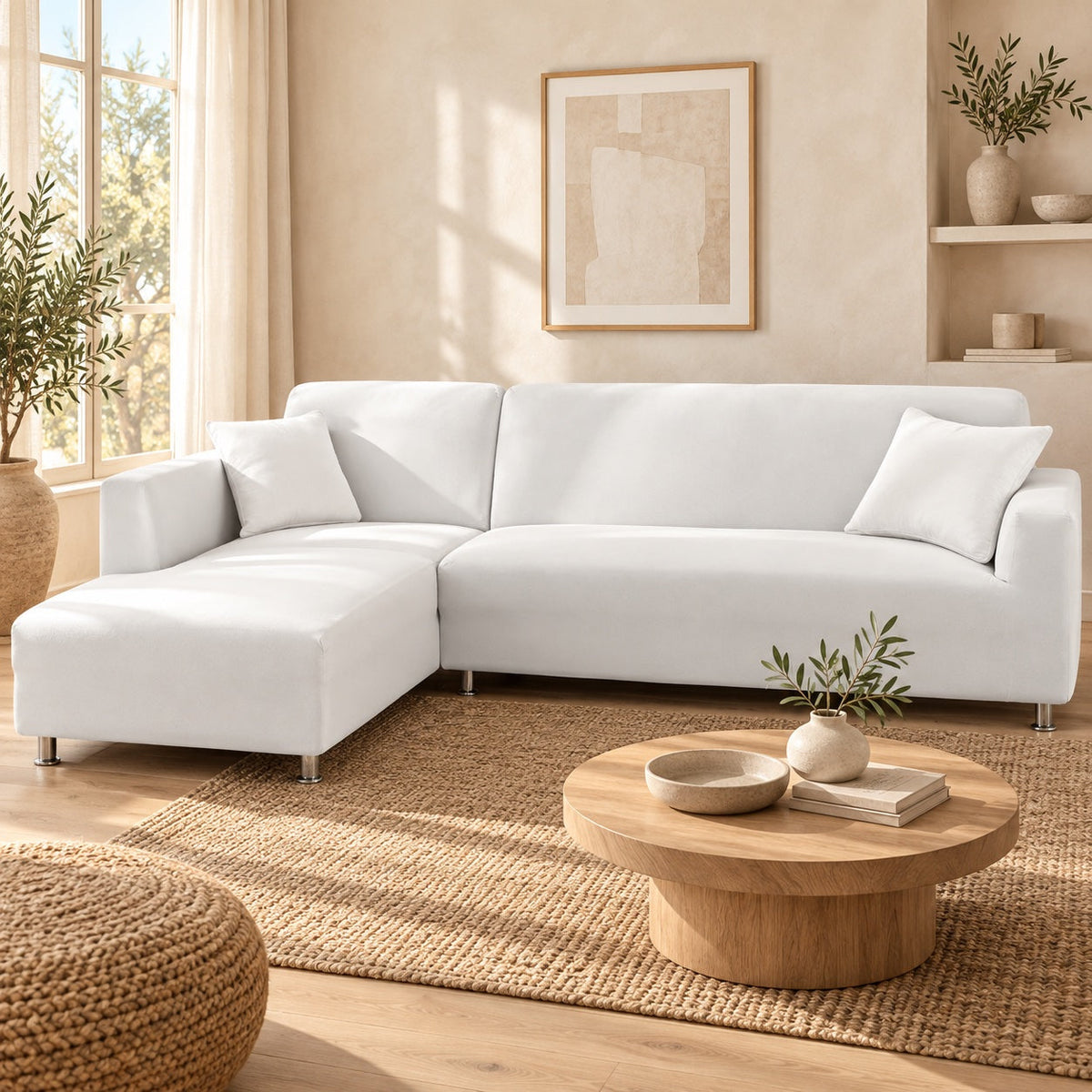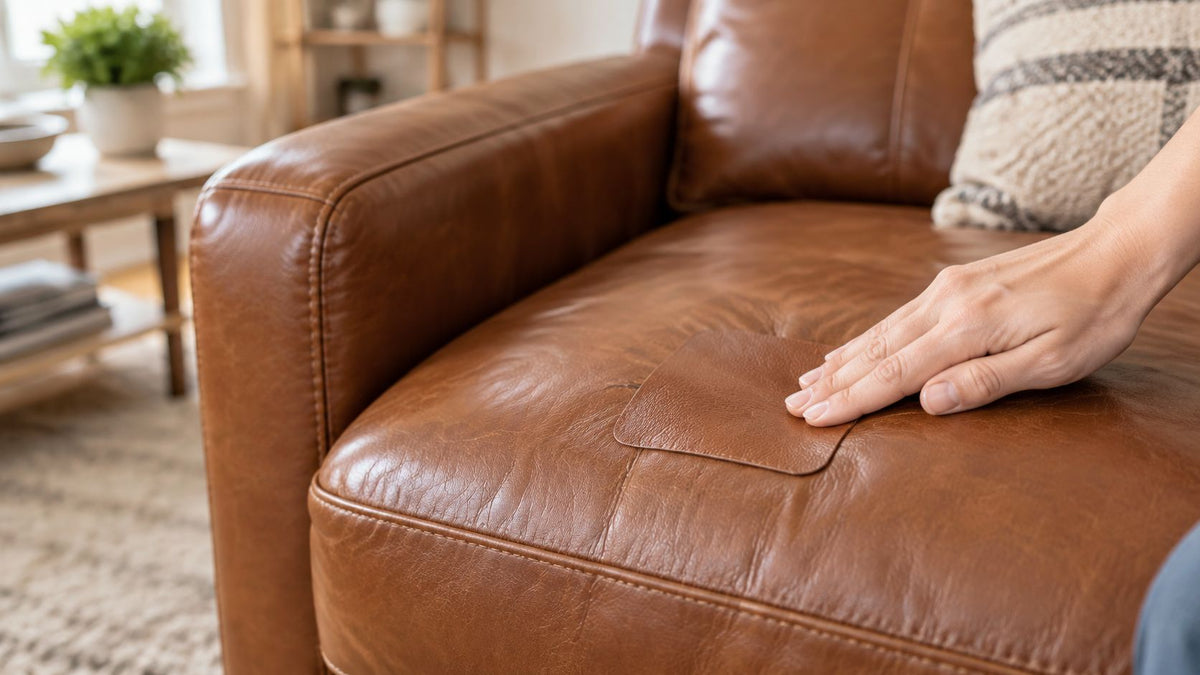
Is the tear really the problem, or is the leather around it too weak to hold a repair? Leather repair patches for couch damage can work when the damage is localised and the surrounding upholstery is firm. A patch won't rebuild a failed seam, replace missing backing or rescue a surface that's peeling away underneath it.
Table of Contents
- Can a Leather Repair Patch Fix a Couch?
- Which Couch Damage Can a Patch Fix?
- Does a Seller Fault Rule Out a Patch?
- Which Couch Leather Finishes Suit an Adhesive Patch?
- How Do You Match a Patch to Your Couch Colour?
- Where on a Couch Should the Patch Go?
- How to Keep a Couch Patch Lasting Longer
- When Is a Stretch Couch Cover the Better Answer?
Can a Leather Repair Patch Fix a Couch?
Yes, a self-adhesive leather repair patch can cover and stabilise a surface tear, split, scuff or worn area on a couch when the surrounding leather is sound. A surface patch doesn't repair stitching, foam or the frame, so the visible mark needs to be assessed before anything is stuck over it.
The Self-Adhesive Leather Repair Patch is a single peel-and-stick sheet measuring 50 × 120 cm, cut to shape for the damaged area. It isn't a restoration system: there's no filler, colourant or sandpaper included.
The available colours are Beige (Off-White), White, Khaki (White Choco), Grey, Black, Orange, Chocolate and Dark Brown. The useful distinction is between covering a damaged surface and rebuilding upholstery. A patch can do the former when it has a secure surface to grip.
The buying rule: Choose a patch for a limited defect on usable upholstery, not as a substitute for structural repair.
Keeping usable furniture in service matters: about 95% of Australia's textiles, leather and rubber waste was sent to landfill in 2024–25, according to DCCEEW's National Waste and Resource Recovery Report 2026. That's a broad material category, not a couch-specific disposal figure.
The decision starts with damage triage, then a seller-fault check, finish check, colour match, placement, aftercare and, finally, whether a stretch cover is the better answer.
Which Couch Damage Can a Patch Fix?
A seat split that opens wider every time someone sits down tells you more than the split itself. That spot is under tension, so a patch placed over it gets asked to work as structure. A scratch on a firm armrest, by contrast, asks for nothing more than coverage. Read the damage by where it sits on the couch and what that spot has to carry before deciding.
Look beyond the centre of the mark. A neat-looking split can sit beside brittle leather, while an ugly scuff can be surrounded by perfectly serviceable material. Gently inspect the perimeter without pulling the tear wider.
Couch damage and whether a patch suits it
| Damage | Patch suits it? | Reason | Better option |
|---|---|---|---|
| Surface scuff or scratch on firm leather | Yes | Surface is sound and gives the patch somewhere to grip | Patch placed over the scuff |
| Small tear or split with no foam showing | Yes | Edges sit on firm leather that can hold the bond | One long patch spanning the tear |
| Worn-through colour on seat front edge or arm top | Yes | Sound leather remains around the high-friction zone | Patch wrapped over the edge |
| Peeling or flaking bonded leather | No | The top layer is separating from its backing | Stretch couch cover |
| Exposed foam or torn backing | No | Patch would carry load it cannot hold | Professional upholstery repair |
| Failed stitching or stretched seam | No | Seam needs thread, not surface adhesive | Sewing or professional upholstery work |
| Cracking across a whole seat or several cushions | No | Many joins would be needed | Stretch couch cover |
| Large puncture or hole | No, not as a standalone repair | Patch cannot support an open gap | Underside backing first, then assess |
Position shapes the verdict as much as the damage type. Arm tops and the front edge of the seat wear through friction yet usually stay firm underneath, so they bond well. The middle of a seat cushion flexes under every occupant, and a patch there gets peeled and re-pressed with each use. Where the table points you toward a stretch cover, remember the cover only fits if the sofa has a separation, even a tiny one, for the fabric to tuck into.
Separate appearance from support
A scratch crossing an otherwise firm armrest is a surface job. A seat split that parts under sitting is a load job, because the covering ends up holding the occupant's movement. A hole may need backing underneath before any surface treatment becomes sensible, and a seam needs its original joining function restored, which adhesive cannot supply.
For a wider view of how fabric damage sorts into cosmetic and structural categories, Lewis and Sheron Textiles' guide to repairing luxury sofa fabric offers useful context. Fabric techniques aren't automatically transferable to leather, but the distinction between surface appearance and underlying support remains important.
Run a finger around the damage edge by edge before buying. If the surrounding coating flakes under light handling, making the patch larger won't create a trustworthy bonding surface.
Does a Seller Fault Rule Out a Patch?
A couch that arrived with a split seam is a seller problem first. Patching over a defect like that hides the evidence you would need for a claim, and the underlying fault stays in place. Damage sitting where the couch carries load, a seat seam, a back panel join, a cushion corner, points toward construction rather than wear you caused.
Under Australian Consumer Law, a minor problem generally requires a free repair by the business, while a major problem gives the buyer a choice of refund or replacement of the same type; if a supplier refuses or takes more than a reasonable time to repair, further remedies may be available, including reasonable outside repair costs or rejection for a refund or replacement when reasonably available, as explained by the ACCC's repair, replace, refund guidance.
Checks before altering the couch
- Cause: Is the damage ordinary wear or accidental damage, or does it suggest a manufacturing fault?
- Description: Does the upholstery match the material, colour and quality represented when you bought it?
- Records: Can you locate the receipt, order confirmation and original description?
Photograph the affected area from several angles before cleaning, trimming or covering it. Keep those images with your purchase records, and contact the seller before altering a disputed defect. A patch pressed onto a seat that keeps splitting under use becomes hard to separate from the original fault, which weakens your position.
Once a claim is resolved, or the damage proves to be ordinary wear on sound upholstery, the Self-Adhesive Leather Repair Patch suits an isolated mark. Wear spread across several cushions calls for a different assessment, where a cover may be the more practical buy.
Which Couch Leather Finishes Suit an Adhesive Patch?
Pigmented or protected leather, the finish on most family couches, is the strongest starting candidate for an adhesive patch because the adhesive sits on a sealed topcoat. Semi-aniline needs a discreet trial, while aniline, nubuck and suede require greater caution.
The important difference is what the adhesive grips. On a coated surface, the bond is only as reliable as the coating's attachment to the upholstery beneath it. On absorbent leather, adhesive contact can affect the leather itself rather than just a protective surface.
Leather finish and adhesive patch suitability
| Finish | How the adhesive grips | Patch suitability | First step |
|---|---|---|---|
| Pigmented or protected, most family couches | Sits on a sealed topcoat | Suitable when the topcoat is sound | Clean, dry and press each edge twice |
| Semi-aniline | Partly bonds into the leather | Suitable with a test | Try an offcut on a hidden spot first |
| Aniline | Bonds into leather without a topcoat | Higher risk | Test an offcut; hide oils can weaken the bond |
| Nubuck | Grips loose surface fibres | Use caution | Test an offcut on a hidden spot |
| Suede | Grips loose surface fibres | Use caution | Test an offcut; consider a cover if fibres are worn |
Check absorbency before committing
Aniline has no protective topcoat. Hide oils can weaken adhesion, and peeling a patch away can lift dye or leave a darker mark. Semi-aniline sits between aniline and heavily protected leather, so don't assume the same behaviour across different couches.
If a drop of water darkens the leather and soaks in, try an offcut on a hidden spot first. Use a discreet location and minimal water. This is a caution signal, not proof of a particular leather grade or a guarantee of compatibility.
For material background, Slone Brothers Furniture's explanation of which leather furniture lasts longer helps distinguish bonded and genuine leather. The guide to buying a faux leather sofa is also relevant when the original upholstery description is unclear.
Don't treat removal as risk-free. A hidden trial is particularly important when preserving the original finish matters more than covering the mark.
How Do You Match a Patch to Your Couch Colour?
Match the patch to the part of the couch you are repairing, not to the colour on the receipt. Skin oils and constant friction darken seat cushions, arm tops and headrests faster than the back and sides, so a shade chosen against a barely touched panel can look wrong once it sits beside real wear.
Compare colour, grain and sheen
Treat the listed shade names as starting points, not exact descriptions of an aged couch. A couch sold as beige can drift towards tan or grey over years of use, and the right choice depends on where the leather has ended up, not where it started.
Hold the uncut sheet against the damaged area and look from your normal sitting and standing positions. Check whether it reads lighter, darker, shinier or flatter than the surrounding upholstery. If your leather has a pronounced grain, a smoother patch face can still stand out as a flat island even when the shade is close, so judge the sheen as carefully as the hue.
Archer H., on the Self-Adhesive Leather Repair Patch, wrote: "Got this leather repair patch to fix a tear on the couch" and "The colour's spot on too, blending perfectly with the off-white leather."
Beige (Off-White) is the listed matching colour for the leather described in that review. That buyer's match doesn't establish a match for another couch, particularly one with different wear or lighting.
Judge it where the couch actually sits
Window light fades the cushions nearest it faster than the sheltered end, and a patch that matches on day one can drift apart as the patch and the original surface age at different rates. Make the decision in the room's normal daylight, with the curtains arranged the way you usually keep them. A lamp or a phone screen shifts the apparent tone enough to mislead you.
If two shades both look close, press a small offcut corner against the worn area and check it again under evening light. Choose whichever disappears in the conditions the couch lives in, because a colour name alone can't account for accumulated wear.
Where on a Couch Should the Patch Go?
Place a leather couch patch across the full damaged area and over a high-friction edge, rather than ending the patch directly on that edge. Where an intact fold moves, position the patch to span the crease instead of leaving its boundary at the bend.
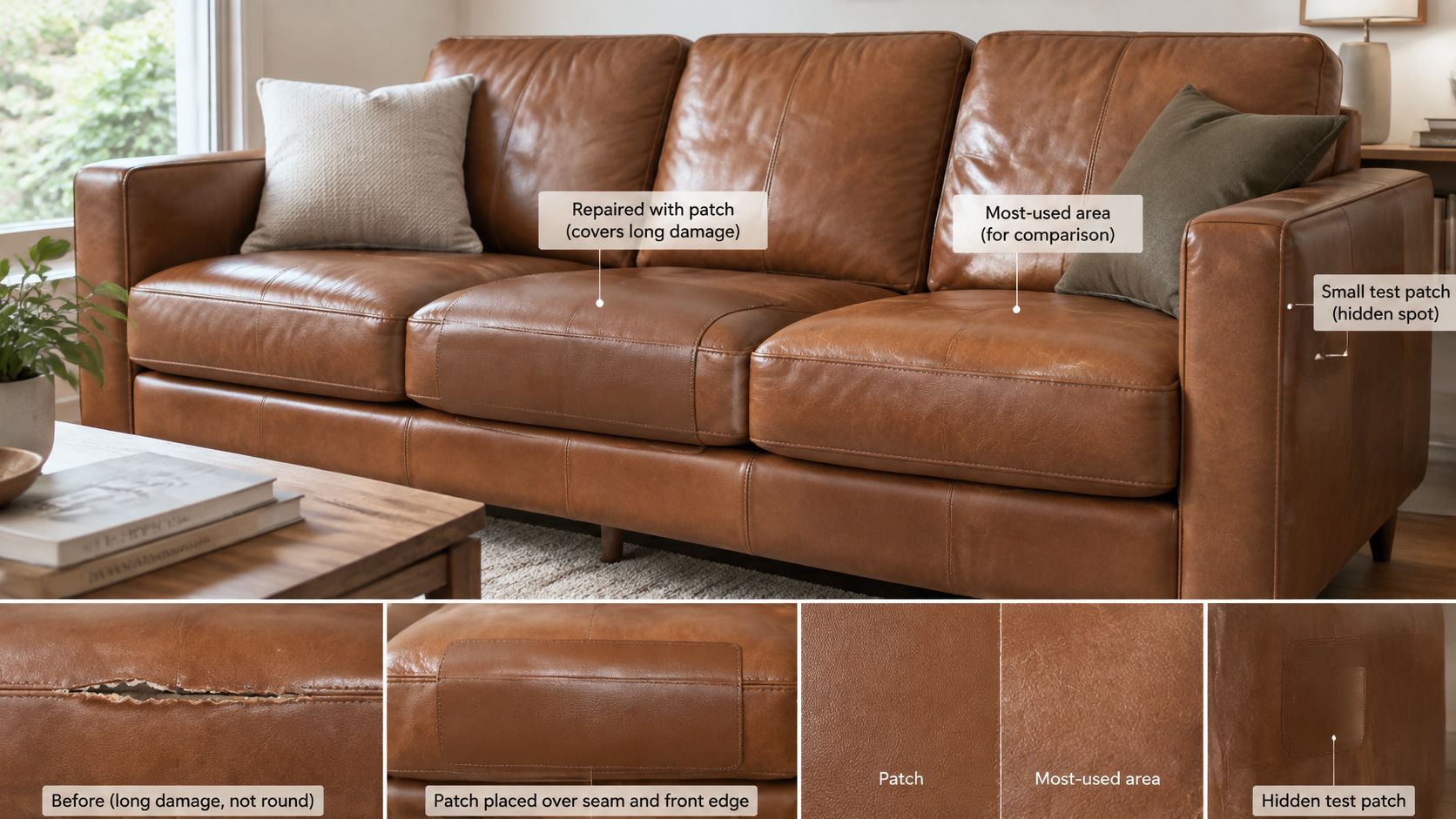
Couch damage often runs long, not round. Seat seams, cushion fronts, arm tops and the headrest line create elongated wear areas, so a narrow strip can make more sense than a small square.
The image illustrates the difference between leaving a damaged area exposed and covering it with a shaped patch.
Arm tops and cushion fronts
The sheet's long dimension can cover an arm top or cushion front in one piece when the measured repair span fits within 120 cm. If the arm or cushion edge is longer, one sheet cannot cover its full length without a visible join. Measure before deciding on the shape.
One continuous strip is preferable to several small pieces butted together. Every join creates another exposed edge that clothing, hands or cleaning cloths can catch.
On an arm top, consider where someone rests an elbow and where their hand slides when standing. On a seat front, consider the drag from someone sitting down or moving forward.
Placement rule: Wrap past the contact edge, round the corners and press every edge twice.
A split along a seat-cushion front
Say a small split follows the front edge of a cushion, with firm upholstery around it and no foam showing. Cut a rounded strip long enough to cover the whole split and reach sound material beyond both ends.
Give the strip enough depth to travel over the front curve and finish away from the main rubbing point. Ending exactly at the crest of that curve gives movement an easy place to start lifting the patch.
An intact crease can be spanned, but a failed stitched seam still needs seam repair. Don't use the placement rule as permission to bridge upholstery that separates under load.
Keep preparation short and purposeful: trim loose threads without enlarging the damage, clean with a finish-compatible cleaner and let the area dry completely. Fortis Adhesives' contact-adhesive guidance explains why clean, dry bonding surfaces and pressure from the centre towards the edges matter, although separate contact adhesives have their own application requirements.
Lay the cut strip in position with its backing still attached. Check the full coverage and wrapping depth, then mark its position discreetly before peeling.
How to Keep a Couch Patch Lasting Longer
A leather couch patch has the best chance of holding when it's protected from direct heat and sun, left undisturbed while the bond settles, and checked early for lifting edges. Continued friction immediately after fitting can disturb a repair before it has settled into contact.
Reduce disturbance and cleaner residue
Avoid heavy use of the patched seat or arm while the bond settles. Adhesives differ, so don't borrow a curing time from a separate glue product and assume it applies to a peel-and-stick sheet.
Keep the repaired area away from heaters and strong direct sunlight. Dark upholstery can become hot, and heating the surface deliberately isn't a sensible way to accelerate bonding.
Avoid silicone-based conditioners and harsh cleaners on the patch. Conditioner intended for the original leather isn't automatically suitable for the added surface, and residue around the perimeter can complicate adhesion.
Lott's Furniture's guide to leather furniture care for busy homes provides context for caring for protected upholstery. For the surrounding room rather than the adhesive repair itself, consider leather sofa styling with Casamé Home.
Read early warning signs
Watch for a lifting edge, a curling corner or a newly dull-looking area. An appearance change alone doesn't prove bond failure, but it's a reason to stop experimenting with cleaners and inspect carefully.
If an edge lifts early and the underside remains clean, press from the centre outwards towards that edge. Don't peel the whole patch away to investigate. If the edge repeatedly releases, or the original coating comes away with it, stop treating extra pressure as the solution.
Use this aftercare checklist:
- Inspect early: Check edges weekly during the first month, particularly where clothing brushes the repair.
- Reduce loading: Keep the patched seat unloaded for a while after fitting, rather than immediately resuming heavy use.
- Clean gently: Avoid harsh cleaners and don't soak the patch.
- Store leftovers: Keep offcuts flat, clean and dry, with their backing attached.
The patch isn't waterproof, and you shouldn't expect it to outlast the couch. Keep useful offcuts protected for another suitable worn edge, but reassess that surface before using them.
When Is a Stretch Couch Cover the Better Answer?
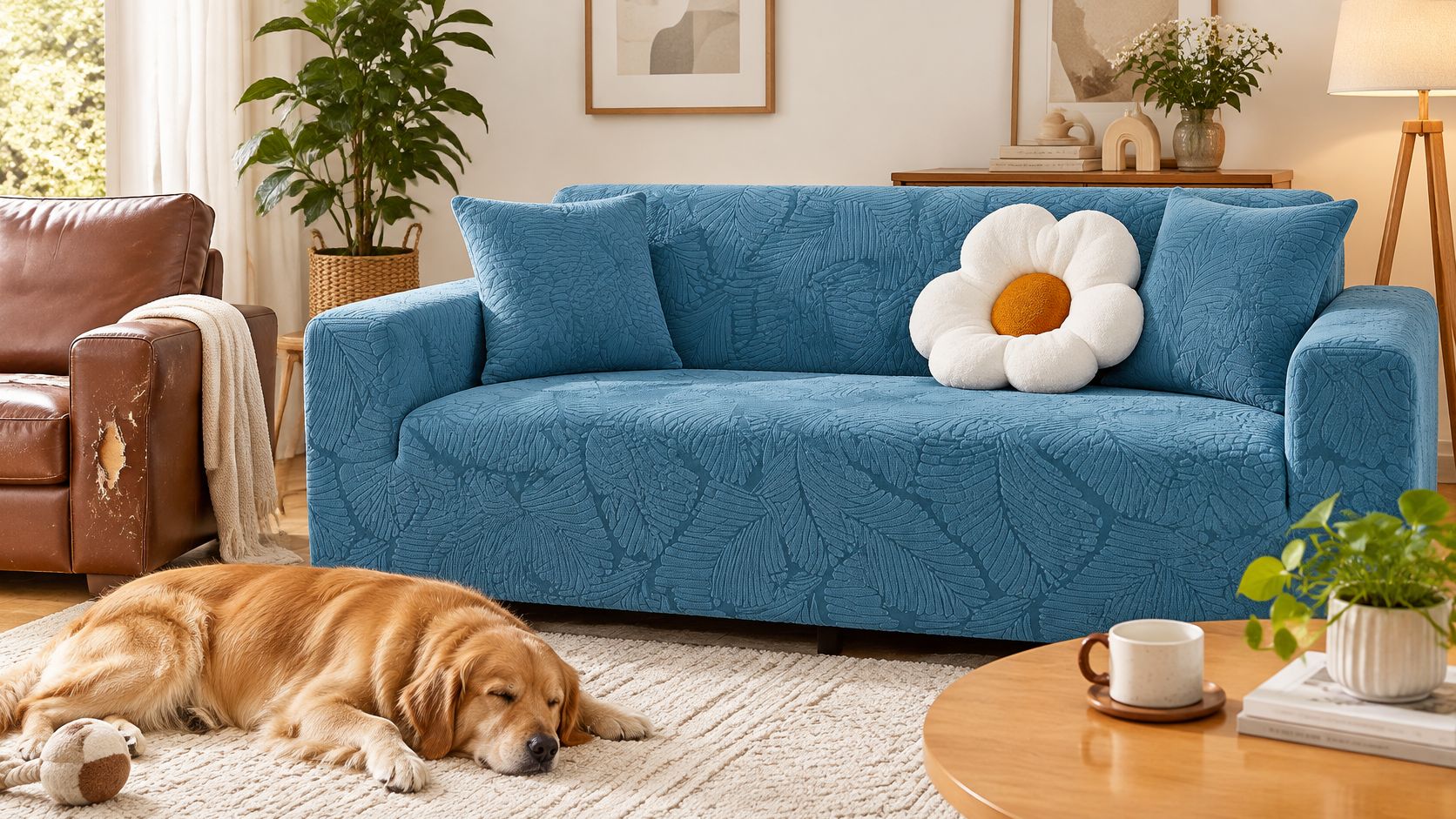
One torn armrest is patch territory. Cracking that runs across every seat cushion, bonded leather peeling in sheets or a couch whose colour you want gone altogether is a different problem, and that is where a stretch cover earns its place.
The honest rule is location plus spread. Damage confined to one zone, a single cushion edge, one armrest top or a small area of seat, suits a patch. Once the same failure appears in two or three zones, patching produces a collection of mismatched repairs, while one cover hides all of it at once. A cover also answers the cases a patch never can: a dated colour or texture you want changed.
Covers have hard limits. They cannot repair a broken frame, collapsed cushioning or unsafe upholstery, so structural problems still need attention first. What a cover does well is give worn or dated upholstery an immediate visual refresh without reupholstery or furniture replacement.
A cover treats the couch as one surface.
Cover options by couch configuration
| Couch configuration | Cover option |
|---|---|
| 1 seater | Stretch couch cover, 1 seater |
| 2 seater | Stretch couch cover, 2 seater |
| 3 seater | Stretch couch cover, 3 seater |
| 4 seater | Stretch couch cover, 4 seater |
| L-shaped or corner | Two covers, one for each sofa section |
| Seat cushions only | Couch Cushion Covers |
| Outside the listed sizes | No listed cover fits this couch |
Stretch covers run from 1 seater up to 4 seater with corner selections, so measure before choosing from Couch Covers and check the size guide for current dimensions. For L-Shaped Sofa Covers, measure each section separately, including armrest tops, inside arm heights and seats. A seater label on the couch does not establish compatibility on its own.
Couch Cushion Covers handle the narrower job where only removable seat cushions look tired. The frame stays exposed, so this route makes sense only when the rest of the upholstery still presents well.
Fit limits and the slippery-leather problem
A stretch cover only works if the couch matches a listed size and has a separation, even a tiny one, where fabric can be tucked in. These are ready-made covers, so an unusual arm shape or a reclining mechanism can rule them out; dedicated recliner covers exist for that format.
Leather is slippery beneath a cover. Tuck the fabric deep, hold the tuck with foam rods or a rolled towel pushed into the gaps around the cushions, and lay an anti-slip sofa pad on the seat. A slippery seat that keeps spitting the tuck out is the main reason covers disappoint on leather.
On the styling side, a product like the Avelia Couch Cover · Blue · Stretch Fit shows how covering doubles as a colour change across the whole couch. Covers come in textures from smooth stretch through jacquard to velvet, and sofa cover advice from Casamé Home walks through that choice.
The money argument shifts with spread as well: the moment you would need a second patch, a cover stops looking extravagant. As a restoration benchmark, hipages' couch reupholstery cost guide sets out what Australian couch reupholstery typically costs. Those figures are not a quote for your couch, but they frame the gap between cosmetic covering and professional restoration.
Casamé Home sells a cut-to-shape self-adhesive leather repair patch for localised damage alongside stretch couch, cushion and waterproof covers for broader wear. Measure the damaged area, check the condition of the upholstery underneath and visit Casamé Home to choose the route that fits your couch.