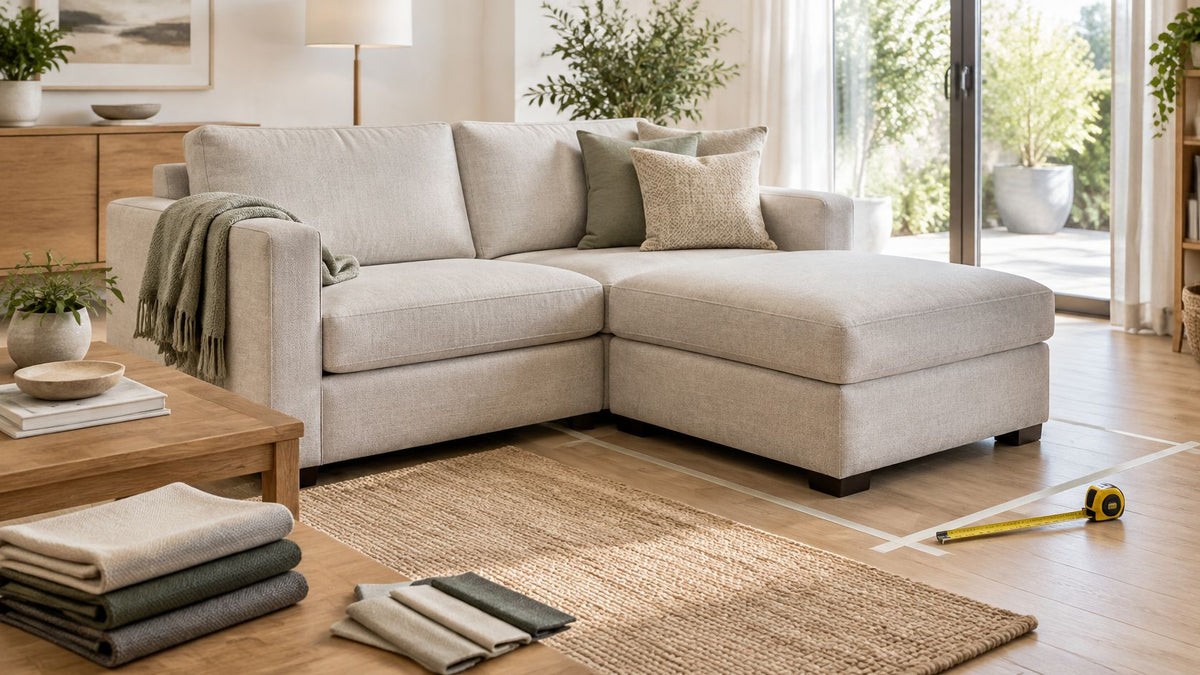
Could the right 2 seater chaise sofa already be in your living room, just needing a different finish? A 2 seater chaise sofa combines a two-seat run with a chaise extending forward from one end, creating a compact L-shape. Whether you're considering a replacement or refreshing an existing sofa, the useful starting points are its full floor footprint and the measurements of its separate sections.
Table of Contents
- What Is a 2 Seater Chaise Sofa?
- Does a 2 Seater Chaise Suit Your Room?
- Should You Refresh or Replace Your Chaise Sofa?
- How to Measure Each Arm for a Cover
- Which Fabric Suits a 2 Seater Chaise Sofa?
- Do You Need Cushion Covers as Well?
- How Can You Style a Chaise Sofa With Covers?
- Confirm the Order Before You Buy
What Is a 2 Seater Chaise Sofa?
A 2 seater chaise sofa is a two-seat run with a chaise extending forward from one end, so the frame forms a compact L-shape. Casamé Home does not sell sofas, lounges or frames; we sell covers for them.
The main section provides upright seating, while the chaise gives you somewhere to stretch your legs without adding a separate footrest. That extended section is why a sofa described as compact can still occupy a substantial part of the room.
Two seater describes seating capacity and layout, not a fixed size. Start with the actual product dimensions rather than assuming that every sofa with the same seat count will fit the same space.
Typical two seater and chaise measurements
The common-width range and straight-sofa examples below come from Koala's sofa dimensions guide, including widths of 150–180 cm, an example measuring 180 × 88 × 66 cm, another at 190 × 95 × 83 cm, and a chaise configuration measuring 190 × 174 cm.
| Configuration | Width (cm) | Depth (cm) | Height (cm) |
|---|---|---|---|
| Two-seat sofa, common width | 150–180 | Check model specification | Check model specification |
| Two-seat sofa, example A | 180 | 88 | 66 |
| Two-seat sofa, example B | 190 | 95 | 83 |
| Two-seat with chaise, example | 190 | 174 | Check model specification |
| Two-seat with chaise, widest layout | 280 | 163 | Check model specification |
For the widest chaise layout in the table, Sofa Decor's Australian dimensions guide gives an example reaching 280 cm wide and 163 cm deep. These are reference examples, not a universal sizing standard.
Read the table from the straight sofas to the chaise layouts. The important change isn't necessarily the wall width: it's the forward projection into the room. Height also matters when you're checking a window sill or the visual balance of nearby furniture.
For a broader explanation of the arrangement, Groen's Fine Furniture's guide to choosing chaise seating for your living room provides useful context. Your own decision still needs the exact dimensions and the chaise's position on the left or right.
Start with the footprint: Record the full width and deepest projection before deciding whether a chaise belongs in the room.
Does a 2 Seater Chaise Suit Your Room?
A chaise that fits along the wall can still block the doorway or pinch the route across the room. Test its full outline in the positions where you use the space every day, with doors, dining chairs and other movable furniture in place.
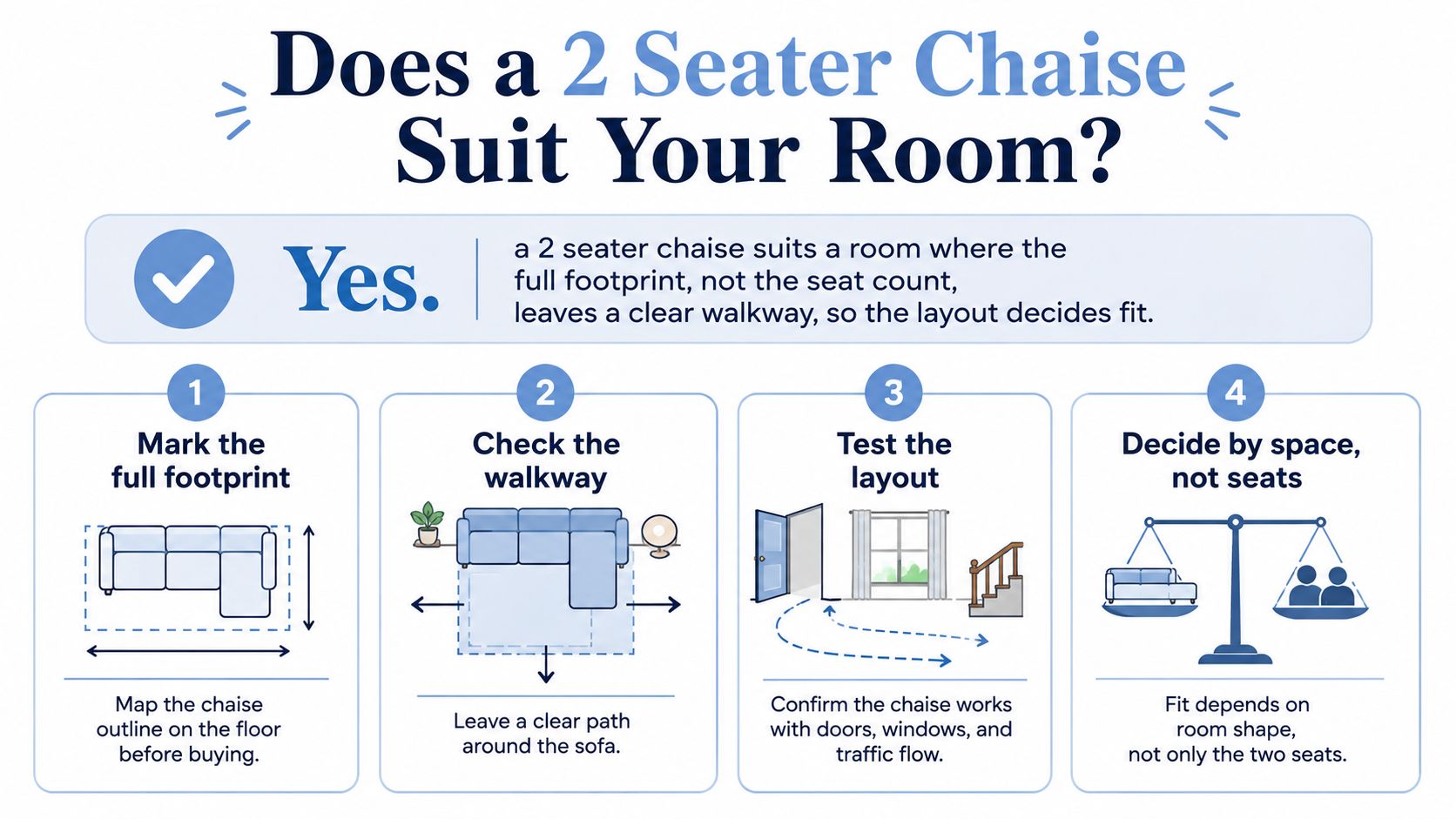
- Mark the full outline. Use painter's tape to show the sofa's total length and depth, chaise included. Walk around the taped shape to check how it affects movement.
- Check the chaise side. Note the positions of doors, windows and the TV. The extended seat should leave the entrance route clear, allow curtains to open and keep the screen easy to view.
- Allow movement space. Koala's sofa-planning guidance recommends 60–80 cm of clear floor in front for legroom and movement, plus approximately 30 cm at each end when the sofa isn't flush against a wall. Check the clearance beside the chaise as well.
- Check whether the chaise moves. A fixed chaise limits which way the sofa can face. A reversible design offers more options if you rearrange the room or move home.
Test everyday use, not just the outline
Carry a laundry basket along the main route. Open nearby cupboards and sit where you would watch television. These checks can reveal awkward spots that a floor plan misses.
Cozey's Australian configuration guide also recommends checking the complete footprint, doorways and lift access. Getting a sofa into the room is a separate question from whether it fits once it is there.
A shorter chaise may leave more room to move. A longer one may suit the layout if it takes the place of an ottoman or occasional chair.
For apartments, rentals and small living rooms, try the taped outline before settling on a layout. If you're considering chaise sofas with washable covers, treat the cover and the room layout as separate choices: a fresh cover won't clear a blocked walkway.
Should You Refresh or Replace Your Chaise Sofa?
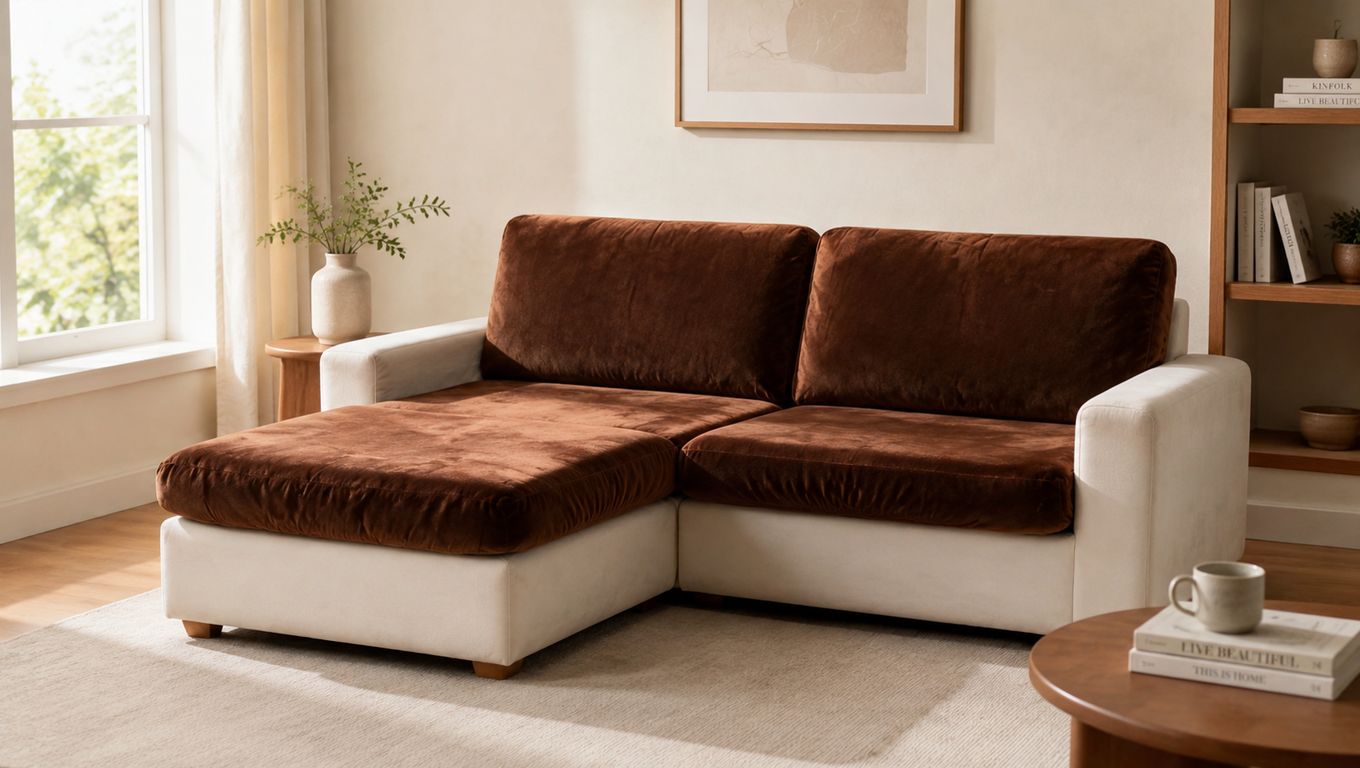
Press along the seats first. Check whether they feel comfortable and whether the sofa rocks, creaks at a damaged joint or sags noticeably. These checks help separate worn upholstery from problems with the frame or cushioning.
Separate appearance from condition
If the frame and seats feel sound, a cover refresh may be a practical alternative to replacing the sofa. Cleaning and covers can update dated upholstery, while flattened cushions may need attention to their filling or support. A damaged frame needs repair or replacement rather than a change of fabric.
Consider the sofa's next home
The City of Sydney's waste reduction and circular materials strategy reports that audits found more than 25% of furniture in household bulky-waste collections was suitable for reuse. Before disposing of a usable chaise, consider resale or local charity collection. Check acceptance requirements, describe any damage clearly and provide photographs.
A second-hand chaise also deserves a close inspection of its structure and comfort before you decide how to update its appearance. Removable covers can refresh a suitable sofa you already own, including one in a rental where you want a reversible change.
A low purchase price may not be the whole decision if the furniture needs replacing again soon. Refresh the chaise when it works and the appearance is the problem. Rehome it if it remains usable but no longer suits your household. Replace it when repair is not appropriate, considering service life, fabric durability, repairability and eventual disposal.
How to Measure Each Arm for a Cover
Measure the first arm from the outside edge to the inside corner. Then measure the other run the same way. Each measurement represents a separate section of the L-shaped sofa, like two straight sofas meeting at the corner.
Measure the separate runs
- Identify the two runs that form the chaise.
- Measure from the outside edge of the first arm to the inside corner.
- Repeat for the other arm, measuring each section separately.
- Compare each measurement with the size bands below.
- Choose two covers that match the measurements, one for each section.
Couch-cover band for each arm
| Seater band | Arm measurement (cm) |
|---|---|
| 1 seater | 90–140 |
| 2 seater | 145–185 |
| 3 seater | 190–230 |
| 4 seater | 235–300 |
For example, if one run falls in the 2-seater band and the other in the 3-seater band, choose a 2-seater and a 3-seater cover. Paired cover sizes run from 1 seater and 2 seater up to 4 seater and 4 seater. These labels describe the cover sizes for each section.
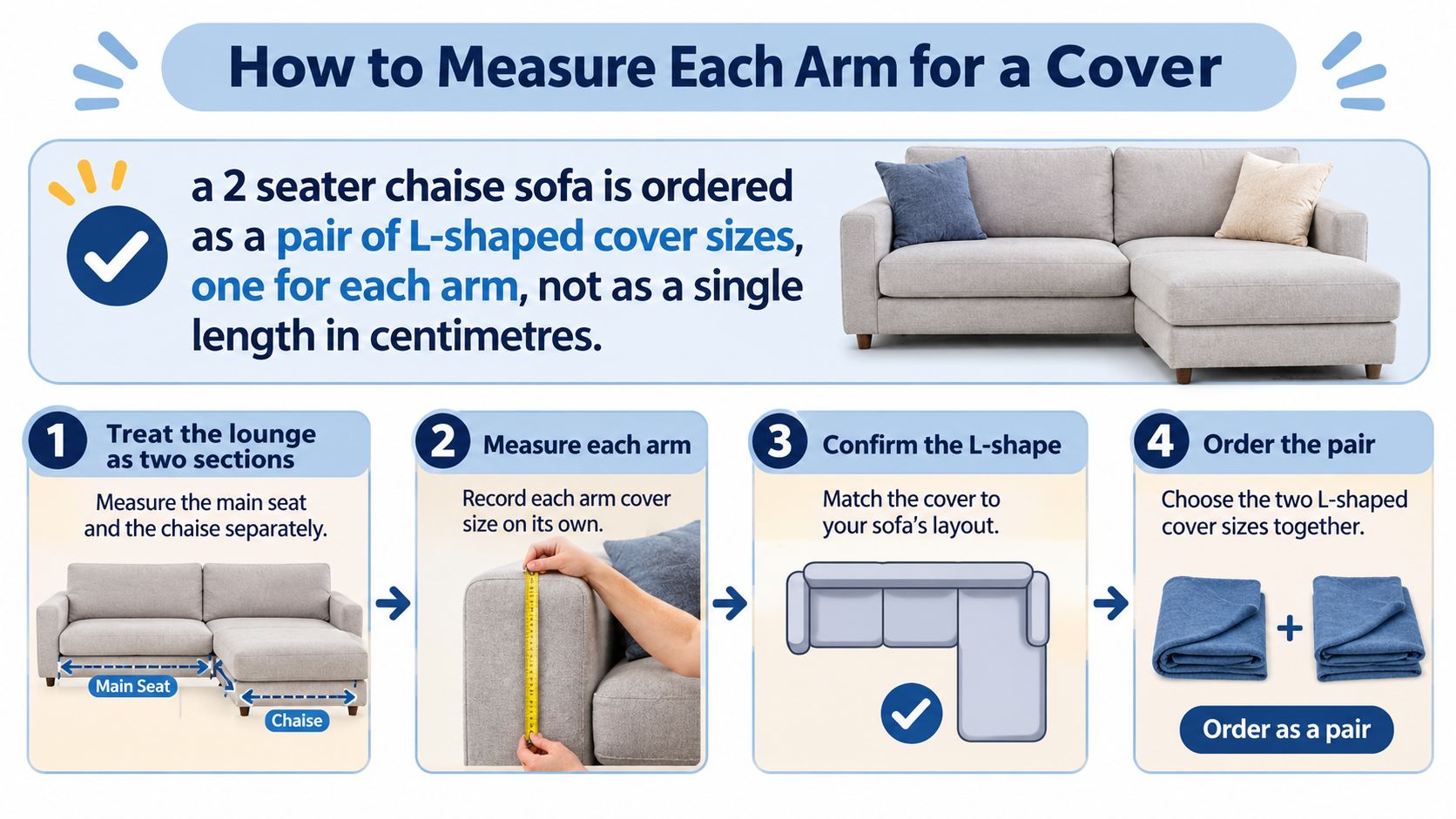
The stretch-fit covers can suit a chaise on either side, so there's no left-hand or right-hand version to select. The sofa sections need a separation, even a tiny one, so the covers can be inserted.
Measure each section's armrest tops, inside arm heights and seat as well. The arm to arm sofa measuring guide explains where to take these measurements. For a typical larger sectional, Koala's L-shaped sofa guide gives a long-section length of approximately 220–280 cm. Use your own measurements to choose cover sizes.
Which Fabric Suits a 2 Seater Chaise Sofa?
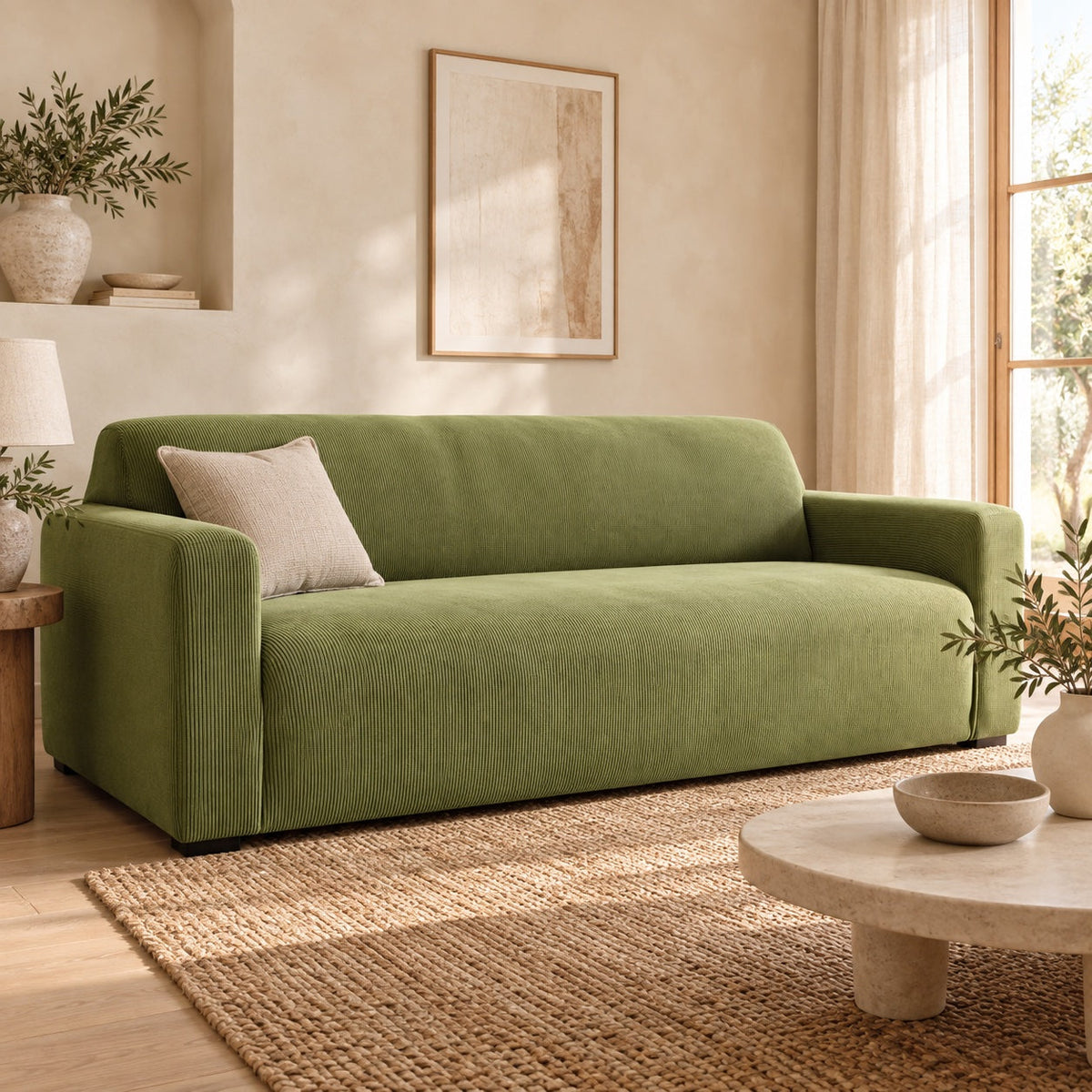
The fabric affects how a chaise cover looks across both the main sofa and its extended seat. Casamé Home offers Velvet, Cordelle, Crossmere, Elligate in Sage Green, Mousoon in Milk Tea, and Herpome in Cloud Gray. Check the product details for the finish and fit of the option you're considering.
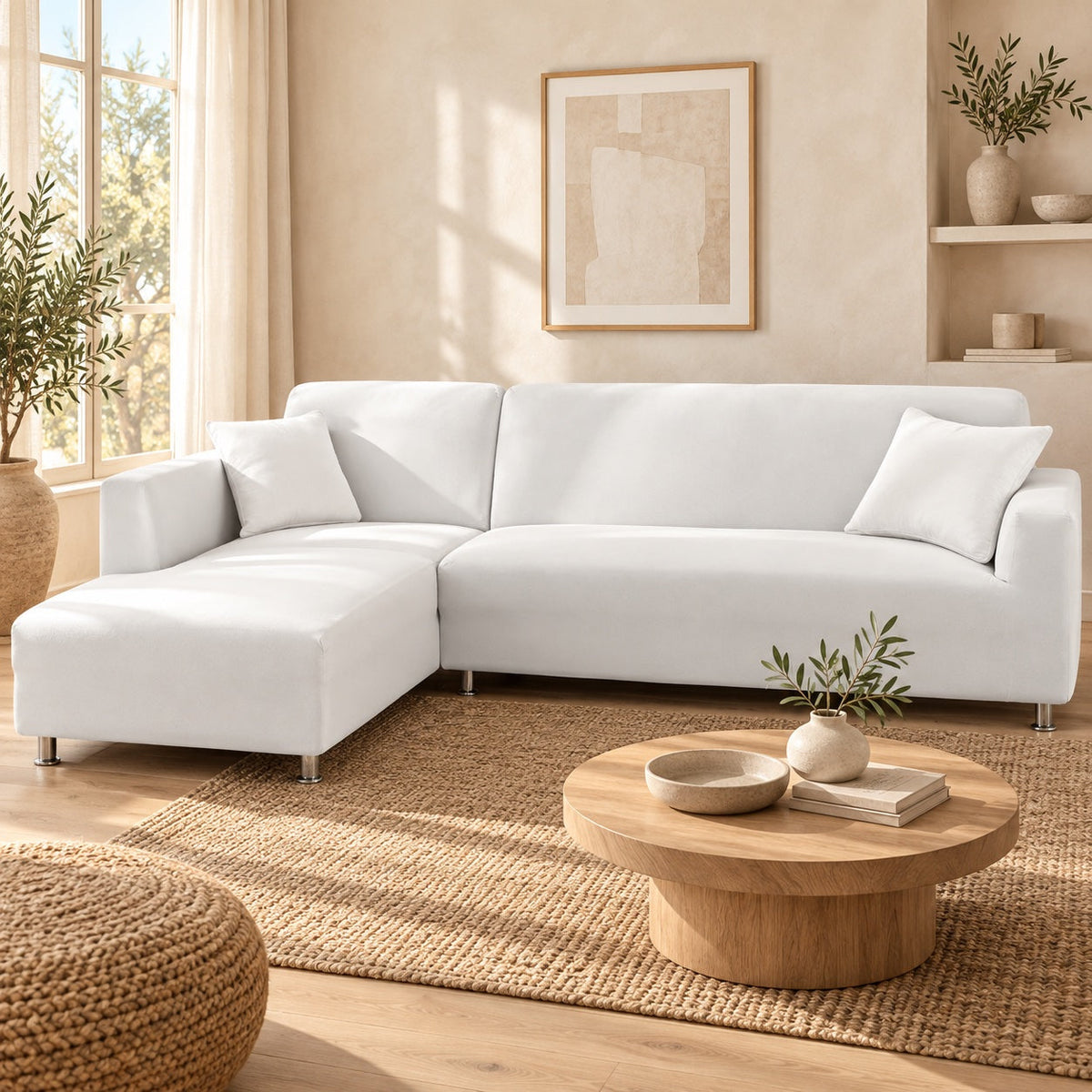
A chaise has two separate sections, so refreshing the sofa you already own means choosing a matched pair of L-shaped covers. Consider how the fabric will look across both sections, rather than judging it from one cover alone.
L-shaped cover families and cushion matching
| Family | Matching cushion cover | Notes |
|---|---|---|
| Velvet | Check the cushion-cover listing | Its pile can show pressure marks and paw prints |
| Cordelle | Check the cushion-cover listing | Compare the product details for its finish |
| Crossmere | Check the cushion-cover listing | Compare the product details for its finish |
| Elligate (Sage Green) | Check the cushion-cover listing | The listed colour is Sage Green |
| Mousoon (Milk Tea) | Check the cushion-cover listing | The listed colour is Milk Tea |
| Herpome (Cloud Gray) | Check the cushion-cover listing | The listed colour is Cloud Gray |
Consider the arm shape and visible surface
Fabric and sofa shape work together. A textured or raised surface may look different over a rounded arm than across a flat section, so consider how the cover will sit on your sofa's contours.
Velvet's pile can show pressure marks and paw prints. If you prefer a surface that looks consistent after use, compare the listed finishes before choosing.
The cover should be selected for each separate sofa section, while loose cushions need their own covers. Check the product details for both, and choose a coordinated look if you want the frame and cushions to feel like one set.
Do You Need Cushion Covers as Well?
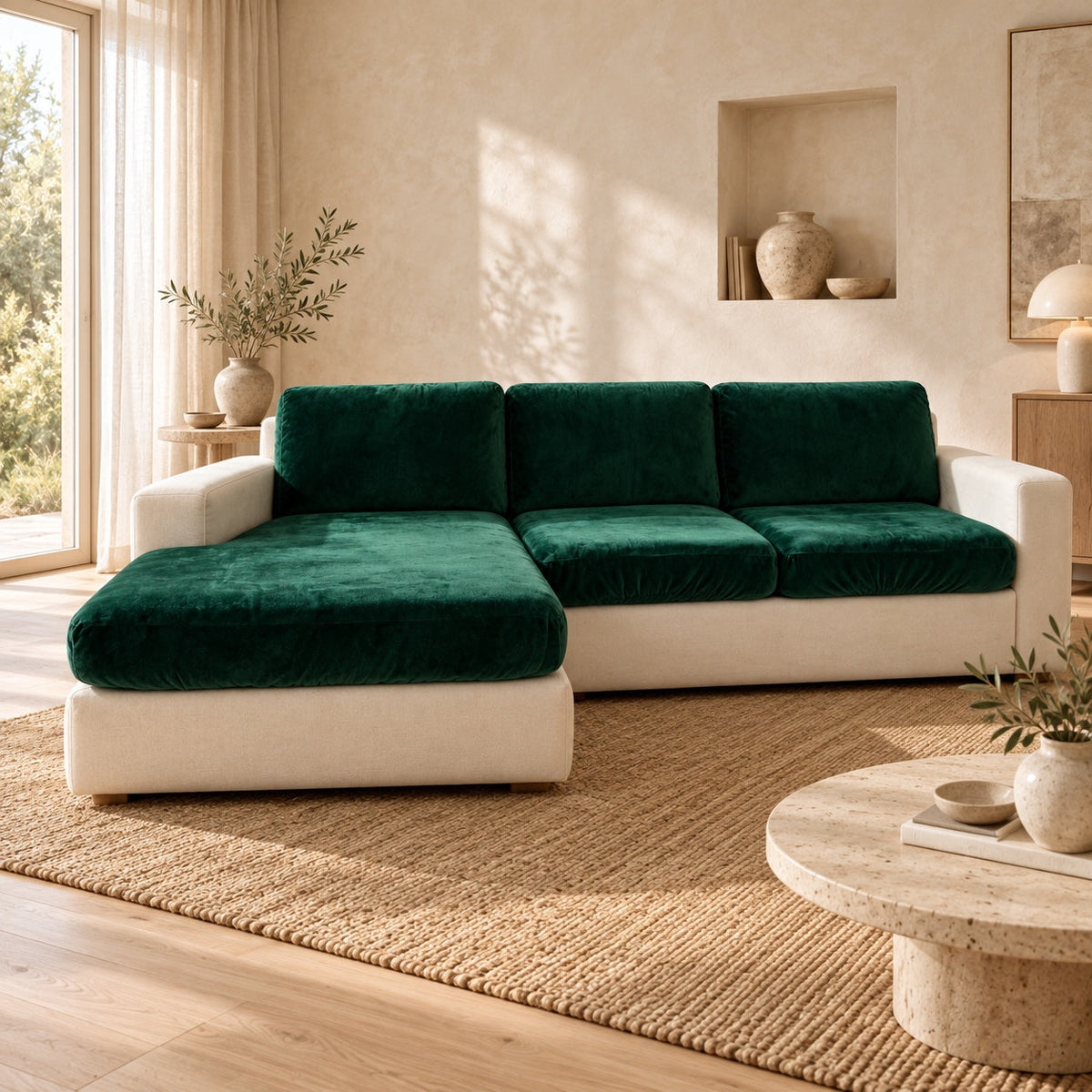
A chaise sofa's loose cushions can be covered separately from its frame. If you want the seat cushions covered too, measure each one rather than relying on the sofa's two-seater label.
Lift the cushions and note their shapes. The regular seat cushions and the extended chaise cushion may need different cover sizes, even if you want them to look like a matching set.
Match the cover to the cushion
Start with the cushion's dimensions and compare them with the sizing details on the product listing. A standard cushion, a deeper seat and a chaise cushion may call for different options. Measure each cushion on its own, including the chaise cushion.
Choose the fabric and colour with the frame cover in mind. Matching options can help the whole sofa look coordinated; a deliberate contrast can also work. Similar colour names do not guarantee an identical finish.
Keep seat and frame choices coordinated
Cushion covers fit the loose seat cushions, while the L-shaped sofa covers fit the sofa sections. Check both choices together so the chaise cushion is accounted for and the fabrics suit the look you want.
If a cushion has lost its shape or comfort, a cover will not replace its filling. Casamé Home sells cushion covers; browse covers for sofa cushions to compare the available options.
Before ordering, list the cover needed for each sofa section and each loose cushion. This simple check can help you avoid leaving one part uncovered or choosing a combination that does not match.
How Can You Style a Chaise Sofa With Covers?
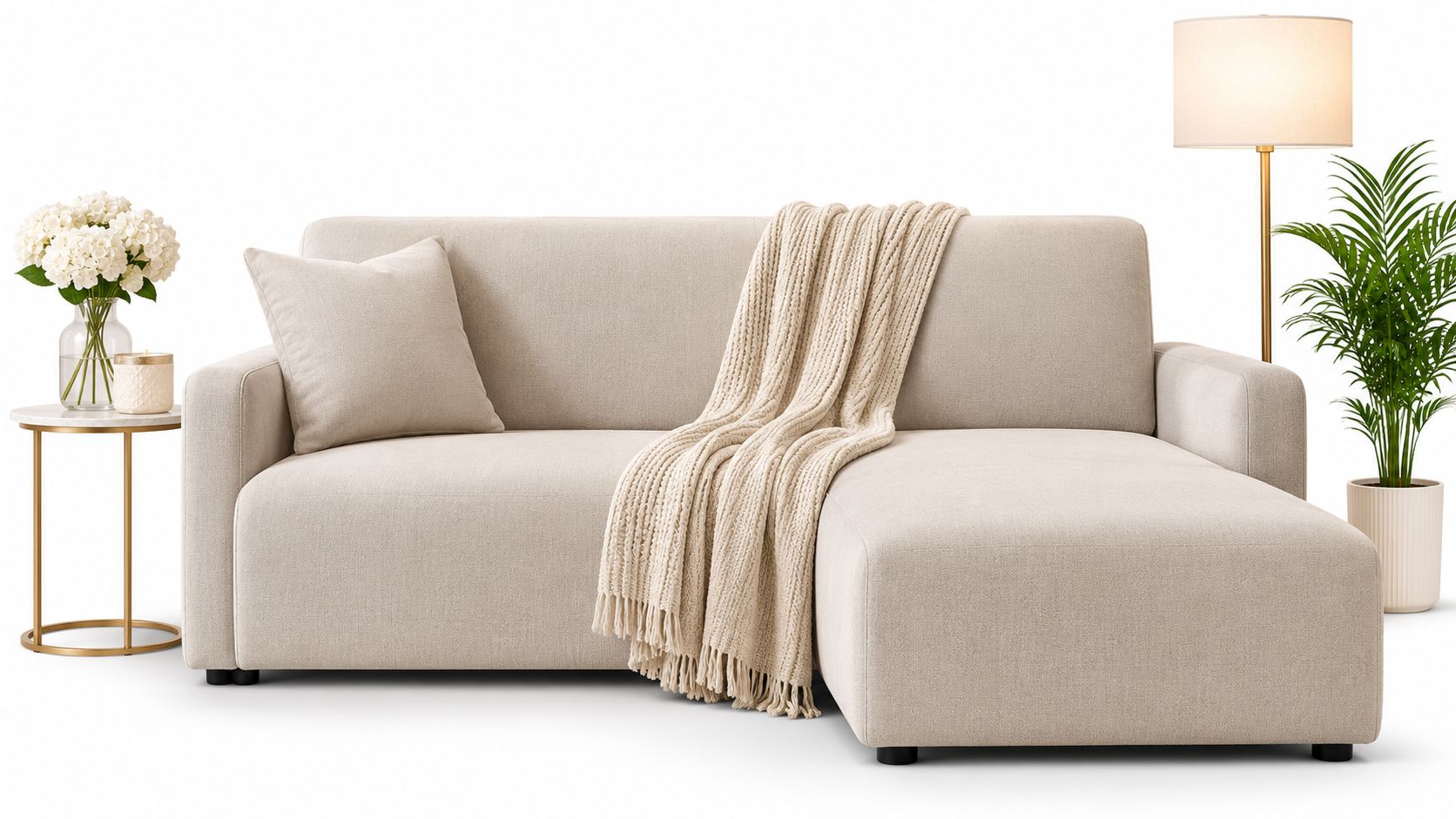
On a Sunday afternoon, the chaise end may be the spot where someone stretches out with a book while another person sits upright. Coordinated covers can make both parts feel like one seating area, while a few carefully placed accessories keep the extended seat comfortable to use.
Make the arrangement feel connected
- Coordinate the large surfaces. Choose a related look for the frame and cushions so the chaise and upright seats read as one piece. If you want contrast, choose a clear difference rather than finishes that almost match.
- Orient the sofa toward a focal point. Set the lounging end toward a window or TV, while leaving a comfortable route through the room. An offset position can work better than forcing the sofa into symmetry.
- Repeat a texture. Echo the cover's texture in a small cushion or throw elsewhere in the room. One repeated finish can connect the seating area without making every textile identical.
- Keep the extended seat open. A cushion or two can add comfort, but too many decorative cushions crowd the chaise and take up space meant for stretching out.
Velvet reflects daylight differently across a curved arm and a flat seat, adding visual depth. A plain stretch finish gives the sofa a quieter outline when shelves, curtains or artwork already draw attention.
Use the video as visual inspiration, then compare its arrangement with your own room.
Look at the sofa from the doorway, then sit in the main seat. Check that the throw stays out of the walkway, the side table is within reach and the chaise still has enough clear space to lounge.
Confirm the Order Before You Buy
Before ordering, check that the two covers suit the separate sections of your chaise sofa and that any cushion covers match the cushions you want to cover. The measuring section above explains how to measure each arm.
Casamé Home sells L-shaped sofa covers, which require two covers, one for each part of the sofa. Check that your sofa has a separation between the sections, even a small one, so you can insert the covers. For loose cushions, measure each one before choosing a cover.
Also confirm that the sofa's footprint leaves a clear walking route once the covers are fitted. A correct size should fit the furniture without making the room harder to move through.
Casamé Home offers covers for couches, L-shaped sofas, sofa beds, chairs and recliners. For a chaise, choose from the L-shaped sofa cover range rather than a straight-sofa cover.
Casamé Home offers paired L-shaped covers and separate cushion covers for refreshing a usable chaise sofa. Visit Casamé Home with both arm measurements and your cushion dimensions ready to compare the suitable options.