


Does your sofa need a refresh? Maybe it has picked up a few stains, or maybe the style no longer feels right for your space. Before you start thinking about the cost and hassle of replacing it, it is worth looking at one of the smartest alternatives: stretch couch covers.
Think of them as a new outfit for one of the hardest-working pieces in your home. They add protection, change the look of a room quickly, and can make an older sofa feel useful again in just a few minutes.
Table of Contents
- How We Evaluate Stretch and Fitted Couch Covers
- Why Stretch Couch Covers Are a Smart Choice for the Home
- Stretch vs Fitted Couch Covers: Which Look and Use Case Suits You?
- Choose stretch couch covers if…
- Choose fitted couch covers if…
- The most realistic choice for most households
- Choosing the Right Fabric for Your Lifestyle
- The everyday standout: polyester and spandex blends
- Breathable cotton blends for a lighter feel
- Textured jacquard for better disguise and durability
- Stretch velvet for a softer, more polished look
- Comparing popular fabrics for stretch couch covers
- How to Measure Your Sofa for a Better Fit
- Start with the core measurements
- Common measuring mistakes to avoid
- Reading retailer size guides with more confidence
- Understanding How Fit Behaves on Different Sofa Shapes
- T-Cushion and Rolled-Arm Sofas
- Armless Sofas and Recliners
- Deep Seats, and When Fit Will Look Genuinely Tailored
- Your Guide to a Wrinkle-Free Installation
- Set up for a better fit
- The tuck-and-smooth step that really matters
- Fixing common installation problems
- Styling Your Sofa So It Looks More Intentional
- What creates a more fitted look
- Add styling, but do not overdo it
- How to Keep Your Couch Cover Looking New
- Best practices for washing and drying
- Handling everyday spills and stains
- Troubleshooting Fit Problems After Washing
- Smarter storage and simple repairs
- Where to Find the Best Couch Covers in Australia
- For lower budgets or simple protection
- For a more fitted appearance
- For a modular or corner lounge
- For homes with pets
- For a more premium feel
- Frequently Asked Questions
- Are fitted couch covers really worth the extra cost?
- What makes a couch cover look genuinely fitted instead of temporary?
- Are stretch couch covers the best choice for a standard Australian sofa?
- What should I check first before buying?
- Which fabric hides wrinkles and signs of wear best?
- Can a couch cover stay in place on a leather sofa?
How We Evaluate Stretch and Fitted Couch Covers
Before getting into fabric, style, or installation, use this method to judge a couch cover in a useful way. Identify what really changes the result once the cover is on the sofa: how well it stays on the seat, whether it works with the arm shape, how it looks from across the room, how realistic the care instructions are, and whether the listed measurements match the actual sofa shape.
I prioritised five criteria. First is the accuracy of the sizing system: a good listing should give a clear width range, explain how to measure the seating area, and say whether cushion covers are separate. Second is fabric construction: a balanced polyester-spandex blend is usually the most versatile, while thicker or more textured fabrics hide wrinkles and small imperfections better. Third is shape compatibility: a standard straight sofa, a model with removable cushions, a rolled arm, or a corner modular all need very different cover designs. Fourth is stability: the presence of foam tucks, elastic around the base, straps, or anti-slip details. Finally, I check care credibility: cold wash guidance, gentle drying advice, and a fibre composition that makes sense for the use being promised.
I consider a listing disqualified when it stacks several weak signals together: a vague size guide, only close-up photos, no full-sofa image, a "universal" fit promise with no detail, no seat-depth information, or fabric so thin that every wrinkle is obviously going to show. For modular sofas, I also avoid listings that do not distinguish separate sections. The Federal Trade Commission highlights the importance of non-misleading product information; for couch covers, that starts with clearly stated dimensions and materials.
These observations come from the patterns you see again and again with this type of product: the covers that look most "made for the sofa" almost always combine separate cushion pieces, medium-to-heavy fabric, and real anchor points. The least convincing options usually rely on lots of stretch but very little structure. For care, I also align with the general textile guidance from The American Cleaning Institute and fibre-care recommendations from The Woolmark Company regarding avoiding excess heat, harsh friction, and unsuitable drying.
Why Stretch Couch Covers Are a Smart Choice for the Home
Not every couch cover solves the same problem. If you want the easiest option for a busy household, a rental, a sofa that needs quick protection, or a style change on a tighter budget, stretch couch covers are usually the easiest choice to get right. They go on quickly, forgive small shape variations better, and usually cost far less than full reupholstery. That logic also matches the wider affordable-furniture-renewal trend: Australia’s market for mid-century sofa covers is described as a steadily growing segment, with about 8–12% CAGR across 2026–2035, driven by both style interest and the practical need for protection in pet-owning homes.
For a standard straight sofa, stretch couch covers are often the best compromise. They work well on the most common shapes, do not require professional fitting, and cope better with minor width differences than more structured options. If your priority is practicality — children, guests, pets, easy washing — they usually tick the most boxes for the least effort.
For a cleaner look, fitted couch covers have the edge. They need more precise measurements and are less forgiving of mistakes, but they also look less temporary. The best versions include separate cushion covers, heavier fabric, seams that follow the sofa lines, and anchoring details that stop the seat area from riding up. I recommend them most when the sofa is still structurally attractive and you want a look that feels closer to reupholstery.
For a corner sofa or modular lounge, a so-called universal cover is rarely the best answer. Separate pieces sized section by section work far better. It takes more effort at the buying stage, but it is the only realistic way to avoid fabric that pulls on one side and sags on the other. Major measuring guides for upholstered furniture, such as the ones published by Better Homes & Gardens, make the same point: measure each useful section, not just the total visible length.
In a home with pets, the best couch covers are not always the ones that look the tightest. A jacquard texture, denser fabric, and a colour that does not immediately show hair are usually smarter choices than a very smooth finish. The look may be slightly less showroom-perfect, but durability in everyday use is often much better when the sofa is used every day.
In practice, the ranking is simple: stretch for daily use and standard shapes, fitted for the neatest appearance, section-specific for modular corners, and pet-focused for heavy everyday wear. If you are still unsure, keep this rule in mind: stretch lounge covers are almost always the best all-rounder, while fitted lounge covers win for a neater look.
Stretch vs Fitted Couch Covers: Which Look and Use Case Suits You?
The choice between stretch and fitted comes down to one question: are you mainly looking for a flexible, easy-care solution, or a more structured result that makes the cover itself less obvious?
Choose stretch couch covers if…
Stretch couch covers are the right answer when the sofa has a fairly standard shape, budget matters, and you want to remove, wash, and refit the cover without much trouble. They are also more forgiving if your sofa sits between two sizes, because the spandex content helps absorb part of the difference. On standard 2- and 3-seater sofas, this is usually the most rational option.
Their limits show up when the cushions are highly structured, the arms are unusual, or the silhouette is very design-led. In those cases, even a good stretch cover may look acceptable without ever looking integrated.
Choose fitted couch covers if…
Fitted couch covers are worth the extra spend when the final appearance matters most. The most convincing versions use separate cushion pieces, clearly defined arm sections, and a fabric with more substance. They are especially well suited to living rooms where the sofa takes up a lot of visual space and a softer cover would look temporary.
The downside is that a poorly measured fitted cover shows its flaws immediately. If the size guide is weak or the photos do not clearly show the cut on several sofa shapes, it is better to skip it.
The most realistic choice for most households
For most living rooms, the best strategy is not to buy the most expensive cover, but the one that matches the sofa shape most closely. I would recommend a good-quality stretch option for a heavily used straight sofa, and a fitted version only when the sofa already has attractive lines and you want a more premium finish. That is where the details really matter: fabric thickness, separate cushions, arm compatibility, and grip under the seat.
Choosing the Right Fabric for Your Lifestyle
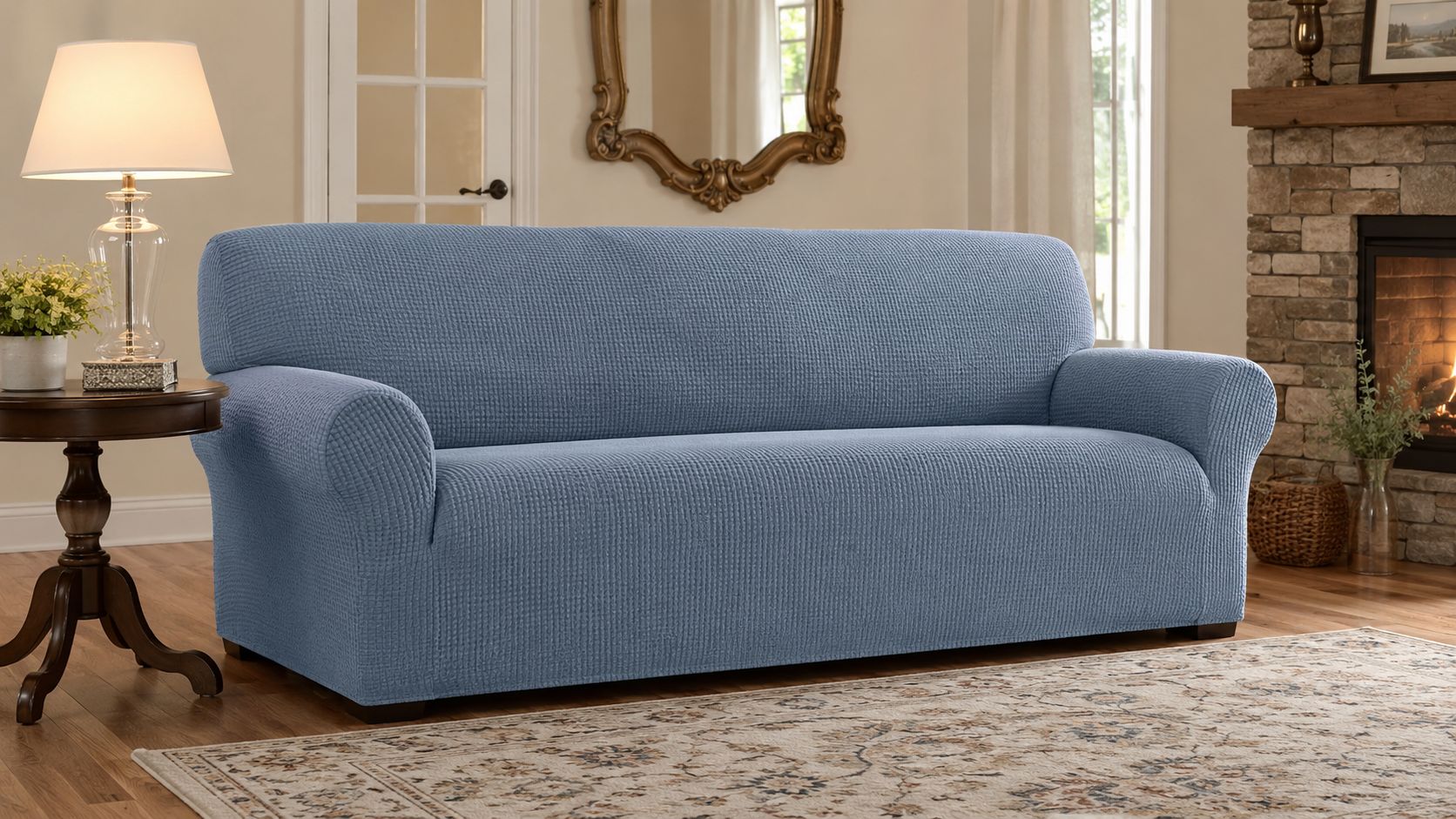
The secret to choosing successful stretch sofa covers australia buyers will be happy with is not just picking a colour you like, but choosing the right fabric. It is a bit like dressing for the weather: you would not wear a heavy wool jumper to a beach barbecue. In the same way, the ideal cover fabric depends on how you live, whether that means a busy family home with kids and pets or a calmer, more minimal apartment.
Choosing well means making sure the cover is not only attractive, but also durable enough for real use. The goal is to match the textile to your lifestyle so you get comfort, better wear, and a cleaner overall look.
The everyday standout: polyester and spandex blends
For most homes, a polyester-spandex blend is still the clear winner. That is because it provides the balance needed: durability plus flexibility for a smoother fit.
Think of this fabric as activewear for your sofa. It is made to stretch and recover without losing shape, so it can follow the curves of the furniture and create a neater finish. The elasticity also makes installation easier and helps the cover stay usable in a busy room.
Polyester is also known for durability. It stands up well to stains, fading from stronger sun exposure, and general wear, which makes it a practical choice for households with children or pets. The fibre guides from Sewport and Textile Exchange help explain why synthetic fibres remain so common in easy-care home textiles.
Breathable cotton blends for a lighter feel
If you live in a warmer climate, a cotton-blend cover can make a real difference. Pure cotton usually is not stretchy enough for a proper fitted result, but when blended with fibres like polyester and spandex, it can offer a better balance.
These blends bring some of the softness and breathability people like about cotton. Your sofa can feel cooler and more comfortable during warmer weather, which matters if comfort is a top priority. They are also popular for everyday use because they are generally easy to maintain.
Textured jacquard for better disguise and durability
If you have ever seen a fabric with an intricate pattern woven into the material instead of printed on top, it was probably jacquard. These stretch couch covers often have texture that is useful as well as decorative.
That raised texture is forgiving. It hides pet hair, small marks, and signs of daily wear better than very smooth fabric. If you have pets or want a cover that does not show every little flaw, jacquard is often a smart choice. The thicker weave can also add a little more protection.
Jacquard is a strong choice for high-traffic rooms. Its texture adds visual depth, but it also helps disguise the kind of wear a well-used sofa naturally develops.
Stretch velvet for a softer, more polished look
For anyone who wants a more dressed-up finish, stretch velvet can work well. It gives some of the comfort and visual richness associated with more expensive upholstery, without the full cost or commitment of replacing the sofa fabric.
Do not assume softness means fragility. Modern stretch velvet is usually made with durable synthetic fibres, so it can still work for everyday use. It also reflects light in a way that gives colour more depth, which makes it useful when you want the sofa to act as a stronger style feature in the room.
Comparing popular fabrics for stretch couch covers
To make the decision easier, here is a quick comparison of the most common fabric types.
Fabric typeBest forKey strengthsCare notesPolyester-spandexBusy families, pet owners, and higher-traffic roomsDurable, easy-care, wrinkle-resistant, and flexible for fitMachine wash cold on a gentle cycle; low heat dryCotton blendWarmer climates and people who prefer a softer feelBreathable, comfortable, and more natural-feelingCheck label; usually cold wash, sometimes low-heat ironingJacquardHomes with pets or children, or sofas with minor imperfectionsTextured, better at hiding wear, thicker appearanceUsually machine washable; texture helps conceal creasingStretch velvetCreating a more luxurious focal pointSoft, plush feel, richer appearance, still usable for daily lifeGentle wash, ideally inside out; air dry helps protect texture
Each fabric has its own strengths. When you match them to how your home functions, you are much more likely to end up with one of the best sofa covers australia shoppers can live with day to day.
How to Measure Your Sofa for a Better Fit
There is nothing more frustrating than buying a new couch cover and realising it does not fit. If it is too tight, it can strain seams. If it is too loose, the whole sofa can end up looking sloppy. The good news is that getting the size right is usually straightforward.
Taking a few minutes to measure properly is essential if you want a cover that looks neat and intentional. It is like buying jeans: you do not just guess and hope for the best. Accurate measurements help the cover sit more cleanly on the shape of the sofa and improve the result dramatically.
Start with the core measurements
Before you shop for stretch couch covers australia options, grab a flexible tape measure. A soft dressmaker-style tape is ideal because a rigid metal tape is much harder to use around upholstered furniture.
Here is what to measure:
-
Overall width: Measure across the sofa from the outside edge of one arm to the outside edge of the other.
-
Seat width: Measure only the seating area, from the inside of one arm to the inside of the other, across the seat cushions.
-
Back height: From the floor to the top of the back.
-
Seat depth: Measure from the front edge of the seat cushion back toward the sofa back.
Write down all four numbers. They make it much easier to rule out covers that only sound right on the label.
Common measuring mistakes to avoid
Even with the best intentions, it is easy to make a small mistake that affects the final look. These are the most common ones to watch for.
-
Forgetting bulky features: If your sofa has thick padded arms or a high back, measure the fullest points, not just a straight-line shortcut.
-
Measuring a modular as one piece: This catches many people out. If you have a corner or sectional sofa, treat each part as its own piece and measure it separately.
-
Ignoring the retailer’s size guide: Every seller is different. A "3-seater" from one brand is not automatically the same as a "3-seater" from another.
The secret to a better fit is not just measuring the sofa. It is comparing those numbers carefully against the seller’s own size chart before you buy.
Reading retailer size guides with more confidence
Once your measurements are taken, you are ready to compare options properly. Many retailers provide a more detailed size guide, which is worth using. To compare your measurements with our own product options, see our size guide. It gives a visual overview designed to help you choose more accurately the first time.
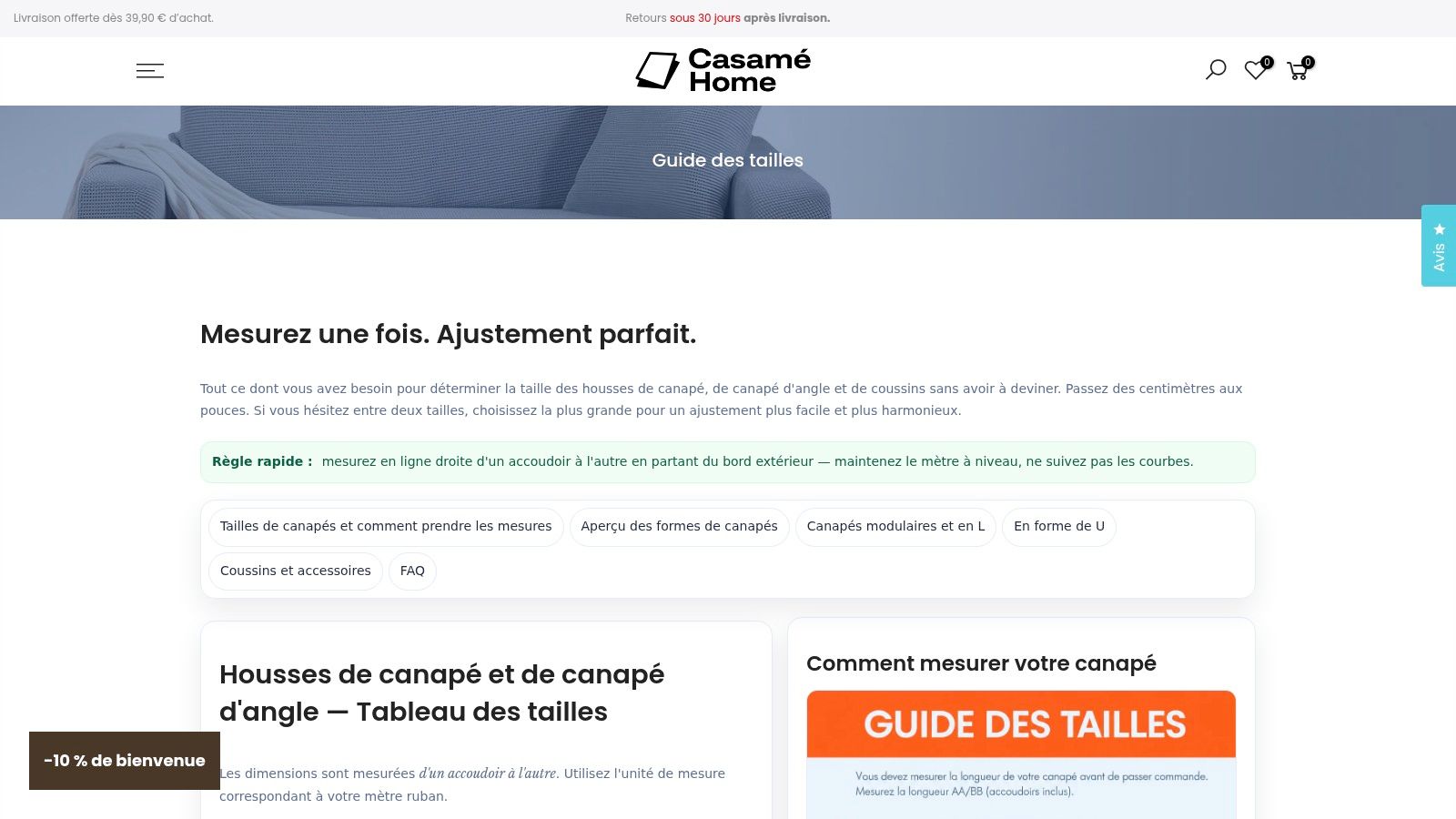
This visual guide shows how different materials work across sofa shapes. It also highlights why accurate measurements matter so much if you want a cleaner final result.
Understanding How Fit Behaves on Different Sofa Shapes
Measurements get you most of the way there, but the shape of your sofa still decides how convincing the final result looks. It helps to know what to expect before you buy.
T-Cushion and Rolled-Arm Sofas
T-cushion sofas need extra care because the seat shape extends around the arm area — a one-piece cover can usually go over the whole sofa, but it rarely looks as precise as a version with separate seat pieces. Rolled-arm or curved-back sofas follow the same logic: the fabric will generally follow the silhouette, but expect folds at the corners and along the tops of the arms rather than the crisp line you would get on a straight, boxy frame.
Armless Sofas and Recliners
Armless sofas and compact loveseats are usually the easiest shape to cover, simply because there are fewer tension points for the fabric to fight against. Recliners sit at the opposite end of the spectrum — a standard cover often interferes with the reclining mechanism or shifts around the moving sections, so it is worth choosing a cover specifically designed for recliners (these typically come in four or more pieces that wrap the back, seat, and arms independently) rather than relying on stretch alone.
Deep Seats, and When Fit Will Look Genuinely Tailored
Very deep sofas need caution too — they can look acceptable while unused, then lose tension quickly once someone actually sits down. As a rule of thumb, a stretch cover looks closest to custom-made when three conditions line up: your sofa's width sits comfortably in the middle of the stated size range, the cushions are still reasonably firm, and the overall shape stays clear under the fabric. If your sofa combines very wide arms, a skirted base, a deep hollow seat, or irregular fixed cushions, expect softer corners and visible extra fabric no matter how carefully you measure.
Your Guide to a Wrinkle-Free Installation
Unpacking new stretch sofa covers can feel a bit like wrestling with an oversized puzzle. In reality, getting a smoother, more professional finish is much easier than it first appears. A few simple habits make a big difference and help you avoid the sagging fabric and constant readjustment people dislike.
The key is to work methodically. Do not just throw the cover over the sofa and hope for the best. A little preparation and a basic understanding of how the cover is shaped will give you a much cleaner result. It is not about forcing the fabric; it is about using its stretch in the right order.
Set up for a better fit
Before you begin, give the sofa a quick clean. A fast vacuum removes crumbs, dust, and pet hair from the creases, which helps create a smoother surface underneath the cover.
Next, find the tag. Most stretch couch covers include a label that marks the back of the cover. That small detail matters. If you try to install it the wrong way round, the fit is rarely convincing.
With the tag identified, stand behind the sofa and drape the cover over it, letting the fabric fall naturally toward the front and over the arms. Make sure it is centred so there is a roughly even amount of material on both sides.
The tuck-and-smooth step that really matters
Once the cover is draped properly, noticeable improvement follows. Start by gently stretching the fabric over the back and arms of the sofa.
Then tuck the excess fabric carefully into the gaps and channels of the sofa. Push it between the back cushions and seat cushions, and into the inside edges of the arms. Do not be shy about pushing it in firmly; the deeper the tuck, the cleaner the lines usually look.
The secret to a cleaner finish is tension. When the fabric is pulled evenly and tucked deeply into the sofa structure, the cover is more likely to stay put and look closer to real upholstery.
For a better result, many good-quality covers include foam sticks or anti-slip inserts. After tucking the fabric, push those pieces firmly into the same gaps. They act as anchors, helping the cover stay in place when people sit down.
Fixing common installation problems
Even if you follow the steps carefully, a few common issues can still come up. Here is how to handle them:
-
Too much fabric bunching at the corners: The cover is probably off-centre. Pull it back slightly and smooth the material diagonally toward the corners before re-tucking.
-
Slipping on a leather sofa: Leather and faux leather are naturally slippery. In addition to foam tucks, you can place anti-slip pads on the seat cushions before putting the cover on.
-
A loose or sagging appearance: This almost always means the material has not been tucked deeply enough. Go back over the seams and use the foam anchors to hold the fabric more firmly.
Styling Your Sofa So It Looks More Intentional
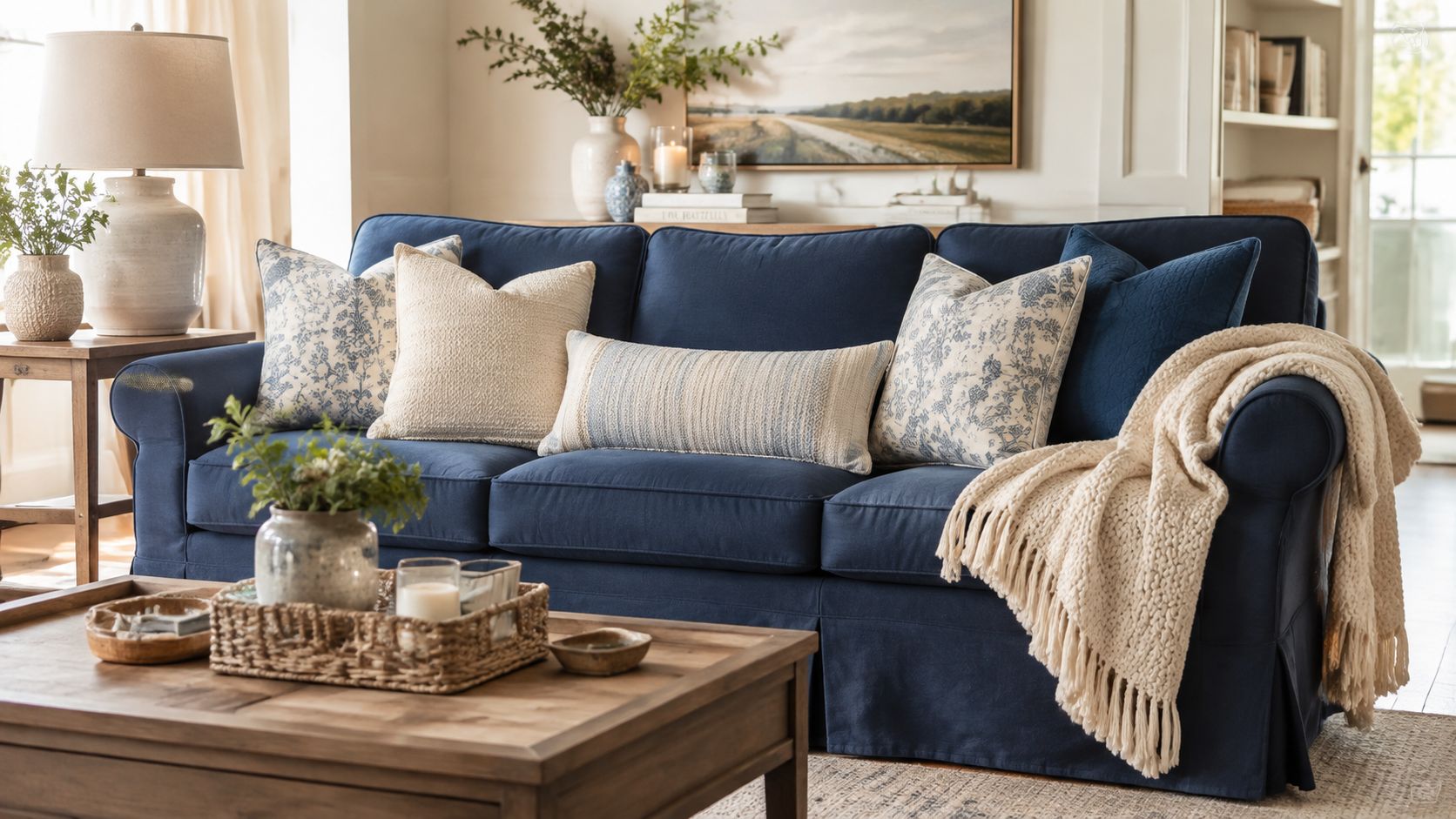
A couch cover can be practical without looking temporary. If you want the result to feel closer to a reupholstered sofa, the details of the cover matter more than decorative extras around it. The features that make the biggest difference are usually the same: separate cushions, thicker fabric, arm-shape compatibility, anti-slip systems, and the correct size. When those five things line up, the cover looks more integrated and needs less adjusting during the week.
What creates a more fitted look
Separate cushion covers change the result immediately because they recreate the natural lines of the seating area. A heavier or more textured fabric then helps smooth over minor tension points and avoids the overstretched look that thin fabric can create. Arm shape matters too: a cover designed for straight arms rarely looks as good on rolled arms. And foam tucks plus elasticated bases are not gimmicks; they are often what stops the cover from shifting after the first use.
Add styling, but do not overdo it
Once the base fit is good, keep styling simple. A light throw and two or three cushions are usually enough to add dimension without drawing attention to any area where the cover is working harder. If the fit is right, the goal is not to hide the cover under accessories, but to let the sofa look tidy and deliberate.
For extra inspiration, this piece on 11 creative ways to restyle your sofa with covers is a useful reference if you want more decorative ideas.
How to Keep Your Couch Cover Looking New
A good-quality stretch couch cover is a practical investment, so it makes sense to keep it in good condition for as long as possible. The good news is that the maintenance is usually simple. Regular care helps protect the colour, the fit, and the feel of the fabric over time.
Think of it like a favourite knit or jacket. You would not throw it into a hot wash and hope for the best. Giving the same level of care to your couch cover can make a real difference to how it looks after repeated use.
Best practices for washing and drying
First, always check the care label. That is the basic rule. Different materials, especially fabrics like velvet, may need slightly different treatment. Still, most modern stretch couch covers are designed to be manageable for everyday households.
For common polyester-spandex or cotton-blend covers, the safest habits are usually these:
-
Wash on a gentle cycle in cold water. Heat is hard on elasticity and can weaken the fibres that help the cover stretch and recover.
-
Use a mild detergent. Avoid bleach and overly harsh softeners, which can wear the fabric down and dull colour over time.
-
Tumble dry on low, or air dry if possible. Just avoid strong direct sun for long periods if you are concerned about fading.
Pro tip: The first wash matters. Following the care instructions properly from the start helps preserve both fabric quality and fit.
Handling everyday spills and stains
Accidents happen, especially in homes with children or pets. The key with stains is speed. Deal with the spill before it has time to set.
If liquid lands on the cover, use a clean dry cloth and blot gently. The goal is to absorb, not scrub. Rubbing usually pushes the stain deeper into the fibres. For tougher marks like coffee or red wine, a mild stain treatment before washing is often enough.
Troubleshooting Fit Problems After Washing
If a cover suddenly fits worse after a wash, a few different things could be going on. Mild shrinkage reduces the available length and can pull seams outward, while tired fabric or weakened elastic does the opposite, leaving the cover looking looser than it did originally. Twisted seams usually mean the cover went back on without realigning the orientation markers, and bulging at chaise joins or deep seats more often points to a shape mismatch than an installation mistake. The fix in most cases is to reinstall the cover fully after drying rather than just tugging it back down — on multi-piece sets, fit the cushion covers first, then tension the base.
Smarter storage and simple repairs
If you like to switch covers seasonally, storage matters too. Make sure the cover is fully clean and dry, then fold it and place it in a breathable storage bag. A cool, dry cupboard works well.
Now and then, you may notice a small pull or loose thread. It is better to fix it early. A basic hand repair can stop a tiny issue from becoming a much bigger one and help you get more life from your stretch sofa covers australia purchase.
Where to Find the Best Couch Covers in Australia
What separates one of the best couch covers from a disappointing purchase is rarely a marketing slogan. It is the quality of the information you get before buying. The best listings usually have clear measurements, full-sofa photos, a cut that matches arm type, a specific fabric composition, and a believable returns policy. Avoid listings that promise a perfect fit for nearly everything while explaining very little.
The size of the online market makes this filtering even more important. Amazon Australia currently shows 272 results for the term “couch covers” on Amazon Australia, which gives a sense of how large the option set has become. The more choice there is, the more useful good exclusion criteria become.
For lower budgets or simple protection
If you mainly want protection for a sofa used every day, look for stretch couch covers in polyester-spandex with a straightforward size guide, practical colours, and clearly stated machine-wash care. At this level, I would accept a slightly less fitted look if the everyday hold is solid.
Check for: real elasticity, foam anchors, customer photos, and an easy return policy.
Skip it if: the fabric is not clearly identified, the photos feel overly edited, or the description stays vague about the maximum size.
For a more fitted appearance
If your goal is a more polished living room, look for listings that show separate cushions, side views of the arms, and thicker fabric, often jacquard or another textured finish. This is one of the best ways to separate covers that create a convincing effect from those that instantly read as temporary protection.
Check for: seat depth, arm shape, denser fabric, and believable before-and-after photos.
Skip it if: a single piece is expected to cover a very structured sofa, or the seller never explains how the cover stays in place on the cushions.
For a modular or corner lounge
Here, the best buy is rarely the cheapest one. You usually need separate pieces, or at minimum module-based sizing. Better sellers explain how to order each section and show the full arrangement clearly. The measuring guidance published by Houzz points in the same direction: large, complex furniture needs detailed measuring, not rough estimation.
Check for: piece-by-piece purchasing, a configuration diagram, and section-by-section matching.
Skip it if: the listing treats an entire corner setup like a simple standard 4-seater.
For homes with pets
The best choice is not the trendiest colour, but the fabric that hides hair, light claw marks, and heavy use most effectively. A jacquard texture, tighter knit, or heavier upholstery-style stretch fabric often looks better after six months than a very thin smooth cover.
Check for: texture, ease of washing, colours that work with visible pet hair, and grip under the cushions.
Skip it if: the material looks too delicate, too shiny, or too slippery for a leather seat.
For a more premium feel
If you want a richer hand-feel, look at better-quality stretch velvet or thicker knits with cleaner finishing. Premium does not just mean soft to the touch; it also means a more coherent cut, cleaner seams, and fabric that falls well. Resources from Good Housekeeping and The Spruce consistently point to the same thing: the best stretch couch covers australia shoppers tend to like most are the ones that combine style, easy care, and real stability.
Frequently Asked Questions
Are fitted couch covers really worth the extra cost?
Yes, but only if your sofa has a shape worth highlighting and you are willing to measure carefully. A well-chosen fitted cover looks cleaner, moves less, and recreates cushion lines more convincingly. On a standard heavily used sofa, though, a good stretch cover with decent fabric weight and grip often gives better value for the effort.
What makes a couch cover look genuinely fitted instead of temporary?
Five things make the biggest difference: separate cushion covers, thicker fabric, compatible arm shape, anti-slip systems, and the correct size. If one of these is missing, the result may still be acceptable; if several are missing, the improvised look appears much faster.
Are stretch couch covers the best choice for a standard Australian sofa?
In most cases, yes. For a straight 2- or 3-seater with conventional arms, they are usually the easiest to adapt, remove, and wash. They become less convincing on highly structured sofas, very low modern designs, or large modular setups, where fitted couch covers or separate sectional pieces often work better.
What should I check first before buying?
Start with the measurement range, then look at seat depth, arm shape, whether the cushions are separate, and what anchoring accessories are included. Only after that should you focus on colour and styling. Even the best couch covers will disappoint if the sizing is wrong.
Which fabric hides wrinkles and signs of wear best?
Textured fabrics such as jacquard or some thicker knits are usually the most forgiving. They hide pet hair, light creasing, and minor wear better than thin smooth materials. Very fine fabrics can look attractive at first, but they tend to reveal tension lines more quickly.
Can a couch cover stay in place on a leather sofa?
Yes, but it usually needs more than stretch alone. Because leather is slippery, look for effective foam tucks, a strong elasticated base, or add a non-slip underlayer on the seat. Without that extra grip, even a decent cover can shift after a few uses.
Ready to give your sofa the stylish and protective upgrade it deserves? At Casamé Home, we offer a beautiful range of high-quality stretch couch covers designed for Australian homes. Browse our collection today and find the perfect new look for your living room.


