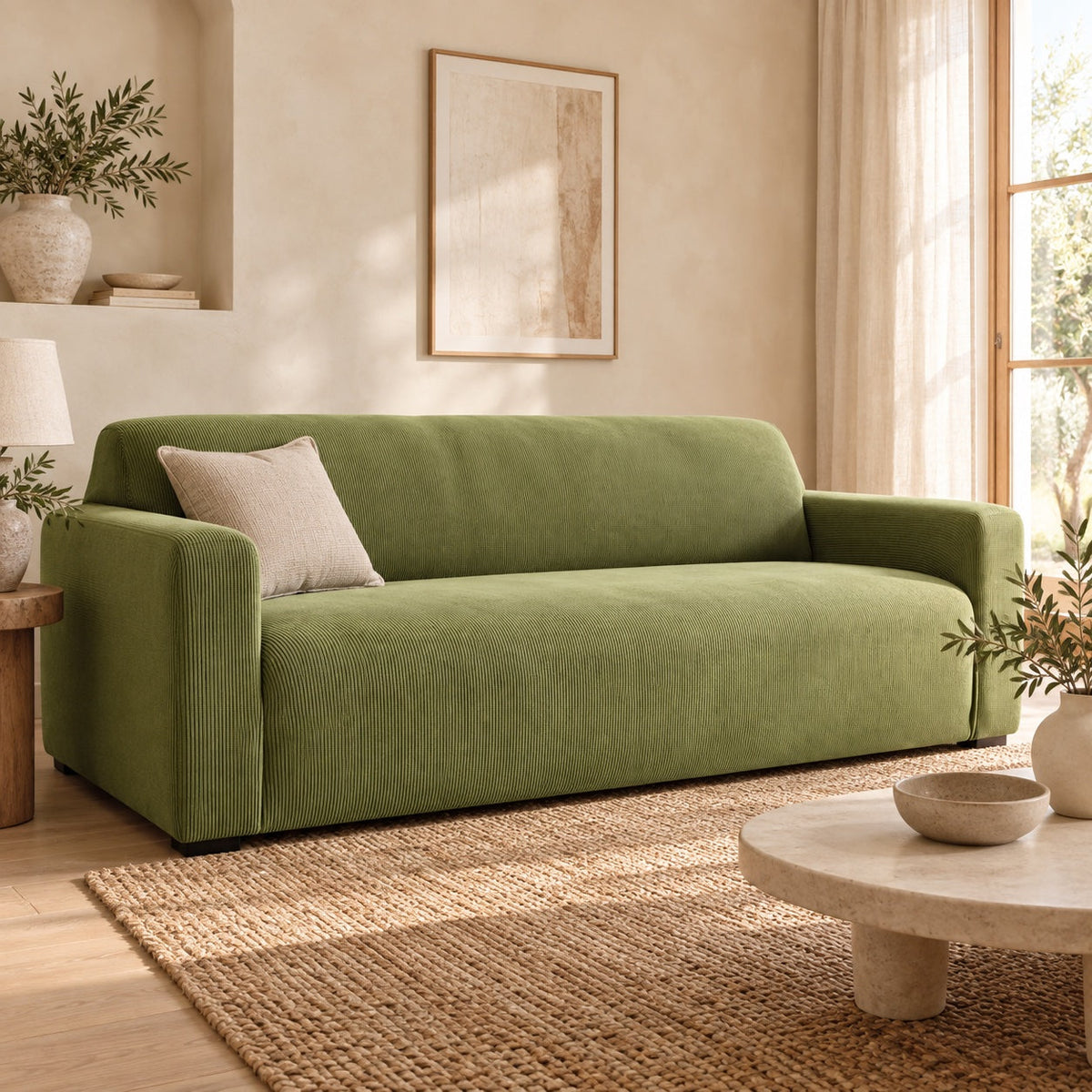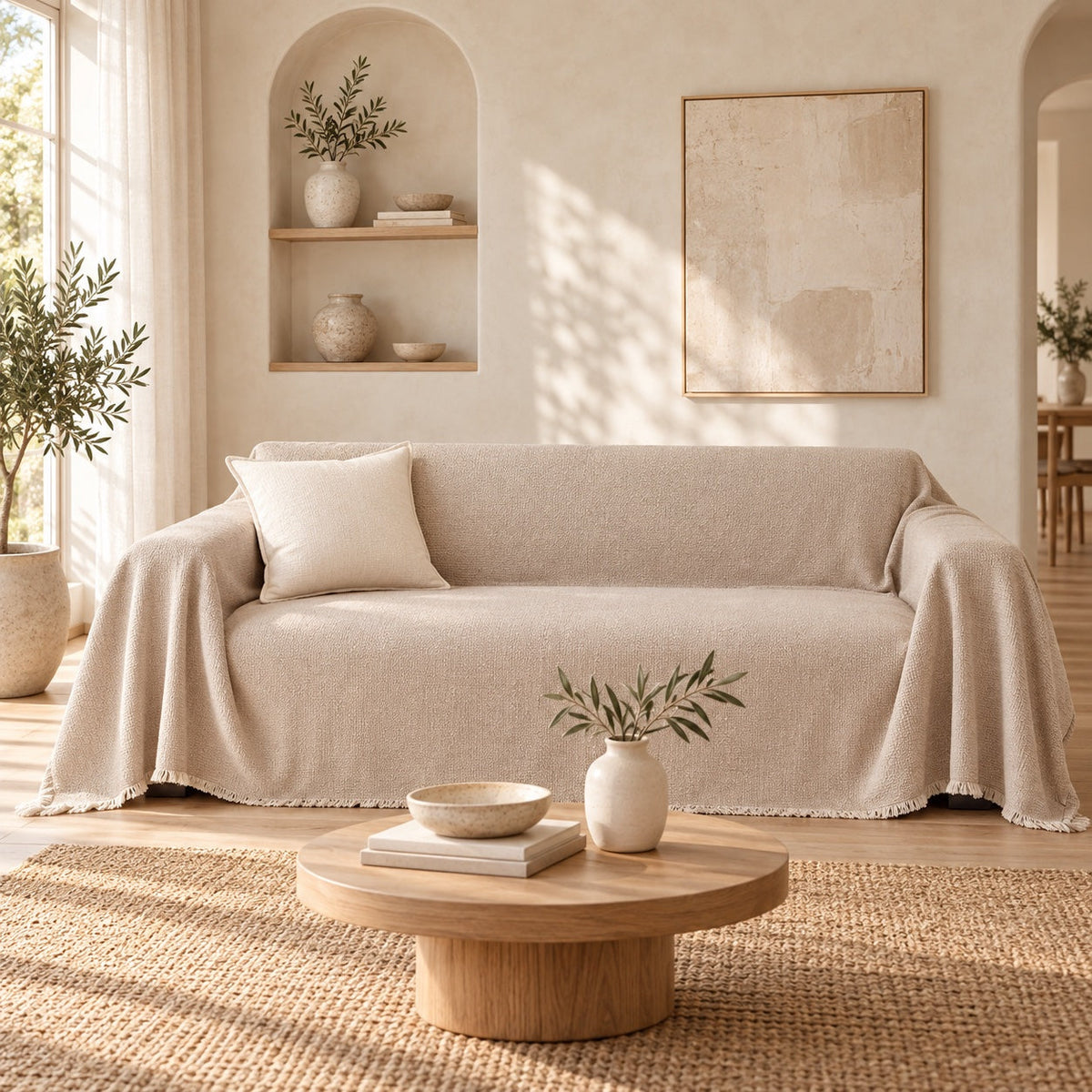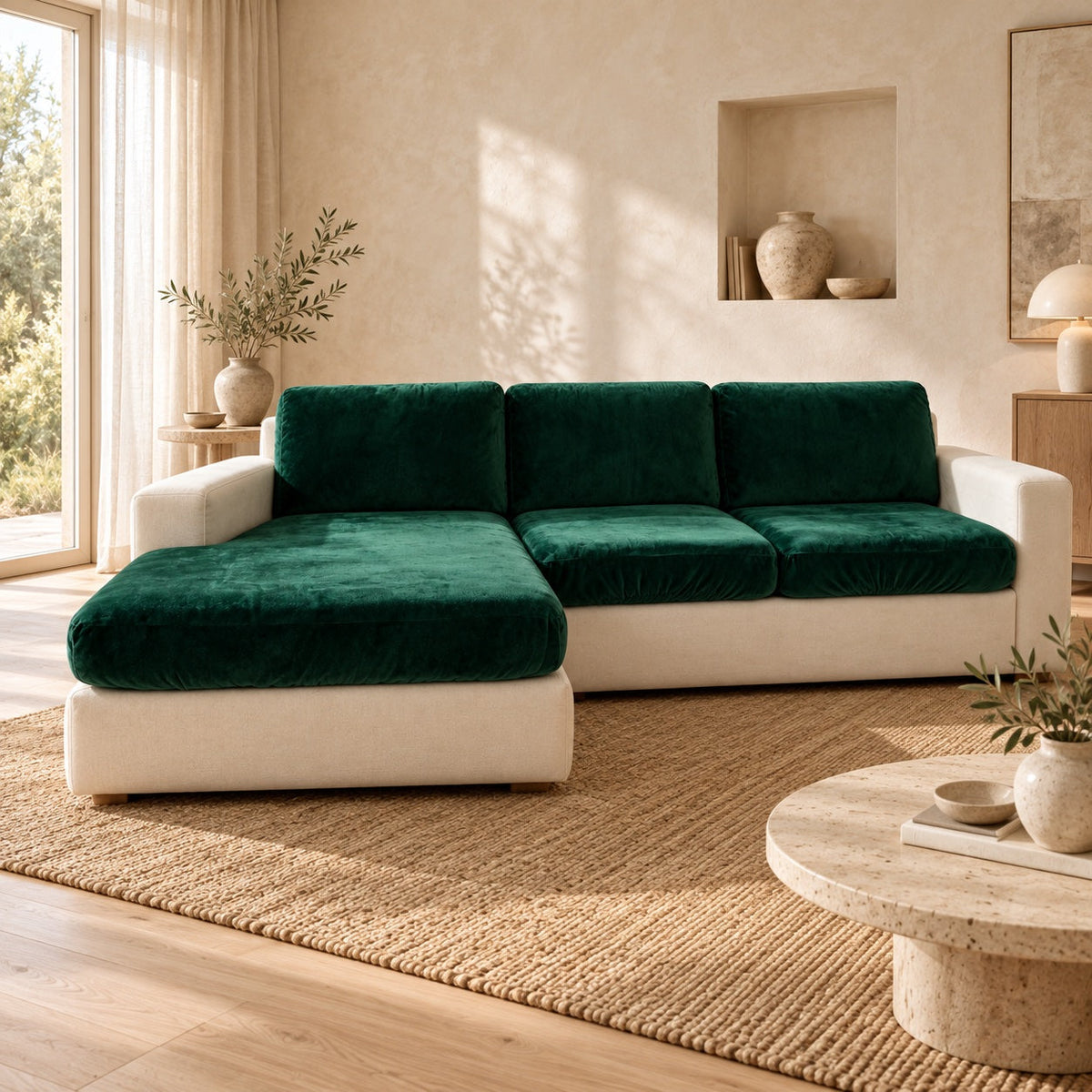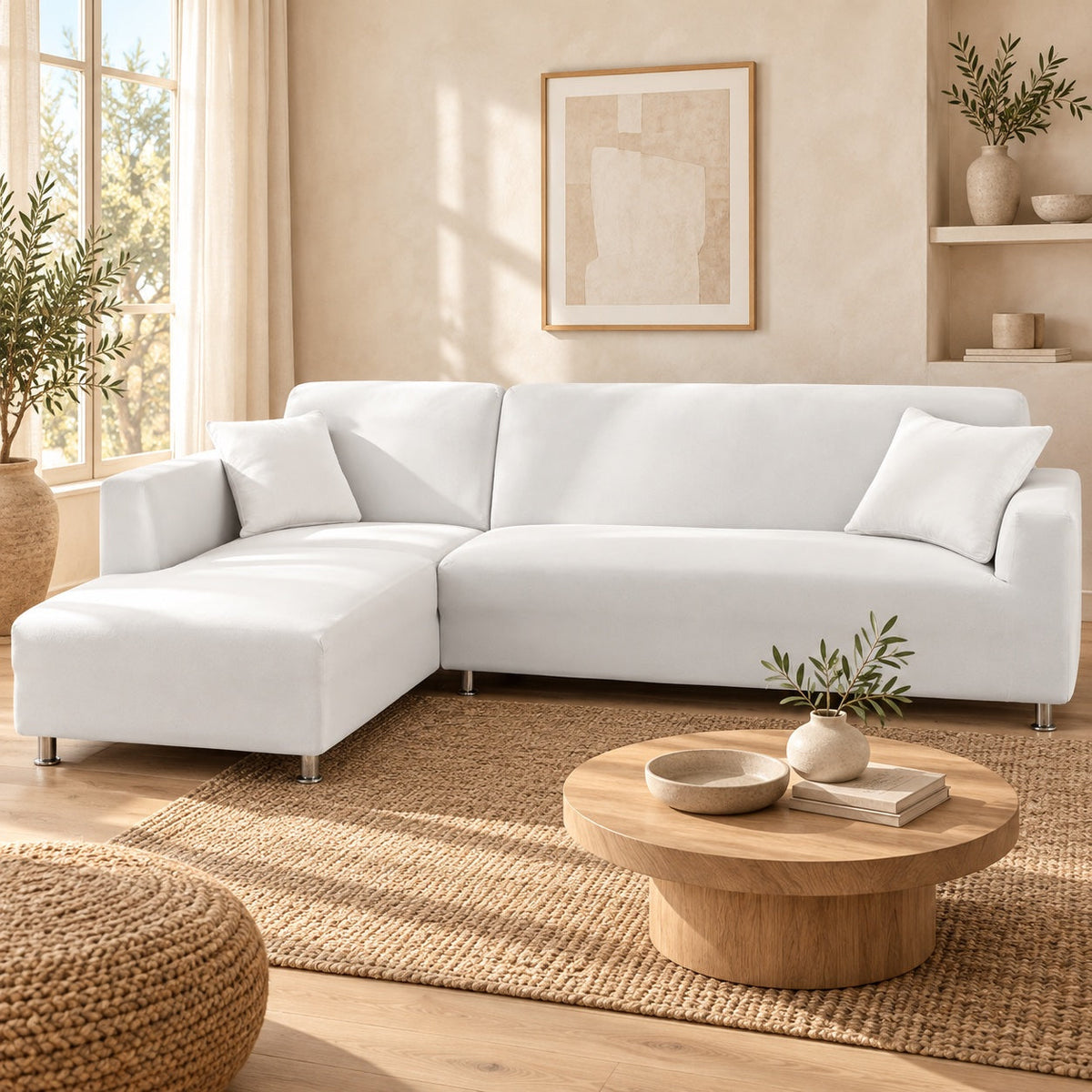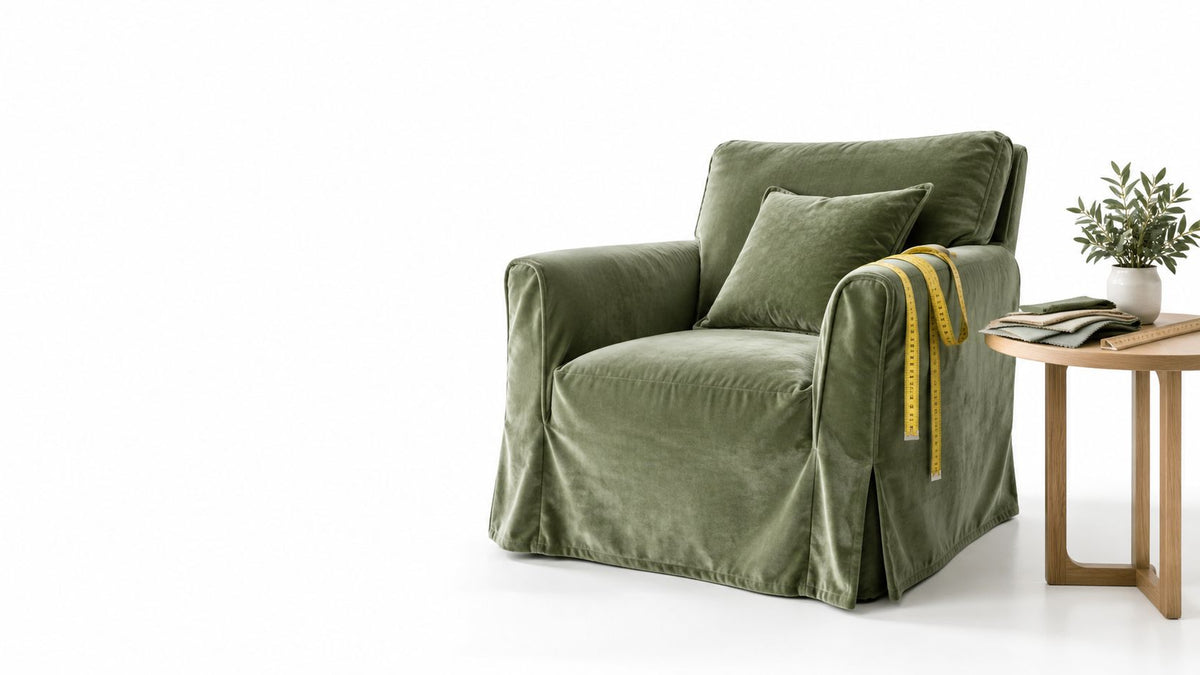
A tired armchair in a sun-filled Brisbane or Perth room doesn't need to go straight to the upholsterer. A velvet armchair slipcover can give faded upholstery, worn arms and last-minute guest seating a perfect reset, while shielding the chair from spills, pet hair and further sun exposure. The trade-off is real, though. Velvet looks rich because it has a raised pile, and that pile needs gentler care than a basic cotton blend or hard-wearing canvas.
Table of Contents
- What a Velvet Armchair Slipcover Does and Who It Suits
- How Velvet Compares to Other Slipcover Fabrics Australians Choose
- How to Measure an Armchair So a Velvet Slipcover Actually Fits
- Installing a Velvet Armchair Slipcover Without Crushing the Pile
- Caring for Velvet on a Working Armchair
- Styling a Velvet-Covered Armchair in an Australian Living Room
- A Short Velvet Slipcover Checklist for Families, Renters and Hosts
What a Velvet Armchair Slipcover Does and Who It Suits
A velvet armchair slipcover is a removable fabric sleeve made to cover an existing chair and change its appearance without replacing the frame or commissioning full reupholstery. It can make an old chair feel deliberate rather than tired, especially when the original fabric is faded, marked or out of step with the room.
Velvet brings colour depth that flatter fabrics often lack. The surface catches light in different directions, so a deep green, blue or neutral can look subtly varied across the arms, seat and back. That gives a single armchair the visual weight of a proper design feature.
The honest trade-off: velvet saves you from a permanent upholstery job, but it doesn't save you from maintenance.
The raised pile crushes under repeated pressure, collects pet hair and can show handling marks. A velvet armchair slipcover therefore needs low-abrasion vacuuming, gentle brushing and careful spill treatment. It isn't a set-and-forget cover, and buyers who want to remove everything and throw it into a harsh wash cycle will be happier with another fabric.
Who should choose velvet
Velvet makes sense when the chair is used as an accent rather than the household landing zone.
- Design-led owners: Choose velvet when texture, colour saturation and a structured appearance matter more than effortless cleaning.
- Lightly used chairs: A reading chair in a formal lounge, bedroom or occasional sitting area will preserve its finish better than a chair beside the television.
- Renters: A removable cover can create a premium-looking update without permanently altering the furniture, and it can leave with you at the end of a lease.
- Homes without heavy-shedding pets: Light pet use can be manageable, but dense hair and scratching quickly turn velvet into a daily cleaning task.
Velvet is a poor choice for a messy family room, a commercial short-stay lounge that needs rapid turnover, or a humid coastal interior where crushed pile can become obvious quickly. Australian furniture trend reporting also points to softer demand for velvet accent chairs, with searches falling 47% year-on-year to 320 monthly searches, as shoppers favour practical materials. That doesn't make velvet irrelevant. It means you should buy it for a specific styling or protection problem, not because it's fashionable by default. Australian furniture trend reporting supports that more selective approach.
How Velvet Compares to Other Slipcover Fabrics Australians Choose
Velvet wins on tactile depth and loses on recovery after crushing, heat retention and care effort. For a daily-use armchair, cotton-linen blends, stretch polyester or faux linen are usually more forgiving.
| Fabric | Feel | Durability | Pet Performance | Washability | Best For |
|---|---|---|---|---|---|
| Velvet | Plush, dense and light-catching | Good when treated gently, but pile wear is visible | Fine for light pet use, less suitable for heavy shedding or scratching | Depends on specification, often needs gentle or professional care | Styling chairs and low-traffic rooms |
| Cotton-linen blend | Cool, breathable and naturally textured | Reasonable, but can wrinkle and fade | Acceptable with regular cleaning | Often practical, but follow the label | Warm Australian rooms and relaxed interiors |
| Polyester stretch | Smooth, flexible and casual | Forgiving for regular seating | Better for everyday pet and family use | Usually the easiest option, subject to the label | Daily-use chairs and flexible fits |
| Heavy canvas | Firm, sturdy and workmanlike | Strong choice for hard use | Strong performance, especially where claws and hair are concerns | Generally practical, but can be bulky to handle | Families, pets and utility spaces |
| Faux linen | Linen-like texture with more consistency | Moderate and generally forgiving | Better than delicate natural weaves, though hair still needs removal | Usually manageable according to the care label | Budget-conscious styling updates |
Velvet creates a more upholstered, finished appearance than stretch polyester. Its surface absorbs and reflects light in a way that makes a simple chair look richer, while polyester stretch tends to read more casual and can develop pilling depending on its construction and use.
Cotton-linen blends breathe better through Australian summers, but they wrinkle and can fade in strong light. Canvas is the practical workhorse, although its stiffness can make a fitted cover look less fluid. Faux linen sits between the two, offering texture without the full visual drama or care demands of velvet.
Price comparisons need to be made in AUD, but a reliable ranking depends on the specific product, construction, size and retailer. Don't assume velvet is automatically more expensive or that a low price means a poor fit. Compare the fabric specification, washing instructions, seam construction and return terms together.
My rule: choose velvet when the armchair is a styling feature in a low-traffic zone with light pet use. Choose stretch polyester or a cotton blend when the chair handles daily family life.
A velvet armchair slipcover is also structurally aligned with a growing Australian home-textiles category. Australia's home textiles market is projected to rise from USD 2.24 billion in 2025 to USD 2.37 billion in 2026, reaching USD 3.11 billion by 2031 at a 5.62% CAGR, while upholstery is forecast to grow at 5.82% CAGR. The Australian upholstery fabric market outlook provides that market context, but the useful buying point is simpler: upholstery applications are expanding, and shoppers still need to match the fabric to the room.
How to Measure an Armchair So a Velvet Slipcover Actually Fits
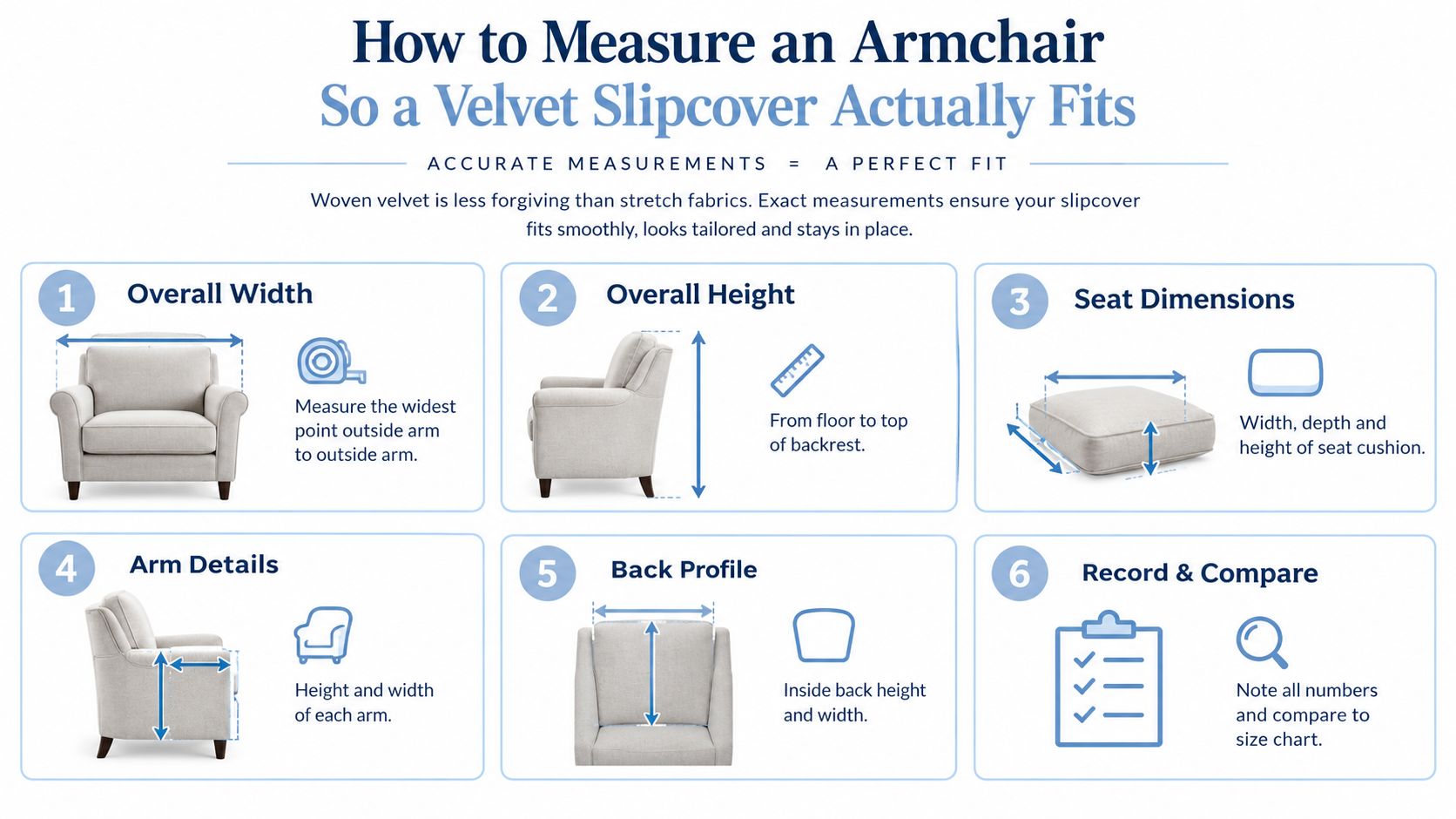
A velvet armchair slipcover won't fit every armchair just because the product description says “stretch”. Woven velvet depends on accurate cutting and pattern control, so measure the actual chair and compare every figure with the seller's chart before paying.
Record these measurements
Use a flexible tape measure and keep the chair in its normal position. Measure over the upholstery, without compressing cushions or pulling the tape tight.
- Overall height: Measure from the floor to the highest point of the backrest.
- Seat width: Record the widest front edge of the seat, including the usable seating area specified by the seller.
- Seat depth: Measure from the front edge to the back of the seat, following the chair's surface.
- Arm dimensions: Record both arm height and arm width. Don't assume the two arms are identical on an older chair.
- Back width: Measure the widest point across the back.
- Skirt length: If the velvet cover includes a skirt, measure from the relevant chair edge to the floor and consider whether the floor is carpeted or hard.
Check the chair profile, not just the numbers
Write down whether the chair has square arms, rolled arms, a T-cushion, a bench cushion, removable cushions or fixed upholstery. A cover shaped for a simple square-arm chair may sit poorly over a rolled arm, and a pattern designed around separate cushions won't necessarily behave properly on a continuous bench seat.
Four fit failures appear repeatedly. Tight arms place strain on seams and can cause splitting, short backs ride up when someone sits down, narrow seats create excess fabric at the front, and skirts drag on carpet when the drop is too long.
Sizing rule: a slightly relaxed fit can usually be managed with proper tucking, but an undersized woven cover won't be rescued by force.
Measure the chair twice, then compare Casamé Home sizes against your recorded dimensions. If a seller provides only a broad “armchair” label without measurements, treat that as a warning. A product photo can show styling, but it can't tell you whether the back, arms, seat depth or skirt will fit your chair.
Installing a Velvet Armchair Slipcover Without Crushing the Pile
Install a velvet armchair slipcover from the back down, using broad, flat hands and careful tucking so the pile stays upright rather than developing shiny pressure marks.
Start by turning the cover inside-out. Lay it over the top of the armchair back and slide it down like a sleeve, keeping the seams aligned with the chair's centre and sides. Once the cover reaches the seat, ease the front panel over the cushion before pulling the side and back panels into place.
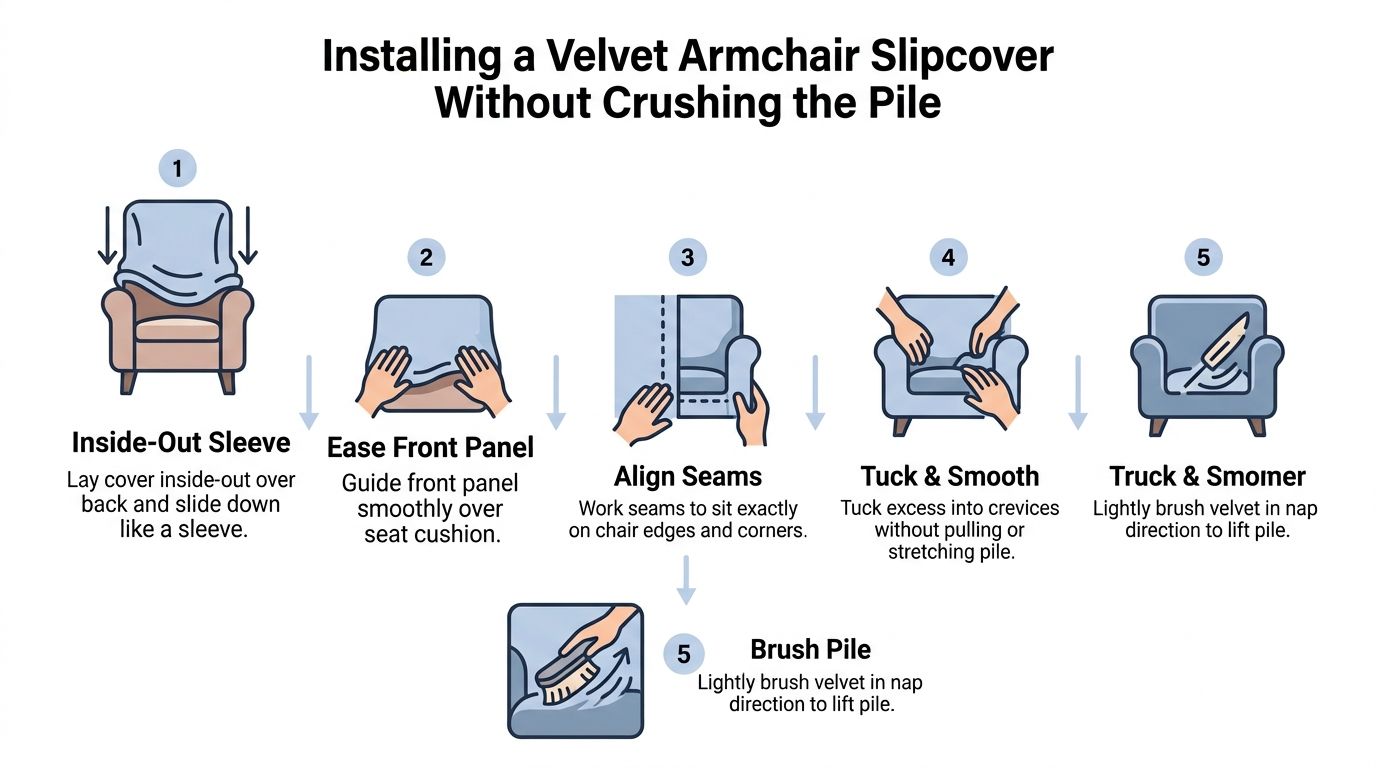
Work slowly around the arms. Push seams into the gaps between cushions rather than placing them over buttons, piping or raised joins. Use a flat spatula or wooden spoon to tuck excess fabric into the crease where the seat meets the arms, but cover the tool with a clean cloth if its edge feels sharp.
Don't pinch the velvet between your fingers. Pinching compresses the pile and can leave a visible shine, especially on darker colours. Keep your hands flat and spread the fabric with broad movements.
Two simple ways to stop movement
Foam tubing pushed into the crease between the seat and arms helps prevent sideways sag. It holds the tucked fabric in place without requiring aggressive pulling.
For a cover with a back panel that rides upwards, loop elastic bands over the chair feet and connect them beneath the chair where they won't obstruct movement. Don't attach anything to moving mechanisms, sharp frame edges or unstable legs.
Smooth the pile with a soft brush in the direction of the nap. Leave the chair for about ten minutes of normal use, then inspect the seams, seat front and back panel. If the cover has shifted, correct the tucks now rather than waiting until the fabric has stretched into a poor position.
For a visual installation reference, use the instructions at Casamé Home. The same sequence applies whether you're fitting a removable chair cover or adjusting a replacement cover after cleaning.
Caring for Velvet on a Working Armchair
Velvet usually looks tired because its pile is crushed, dusty or marked, not just because the cover has been used. A consistent low-abrasion routine keeps the surface presentable and prevents small problems from becoming permanent texture changes.
Vacuum weekly with a soft upholstery brush attachment and never use a rotating beater bar on the velvet surface. Brush in the direction of the nap with a soft velvet brush, using light strokes that lift fibres rather than grind dirt further into them.
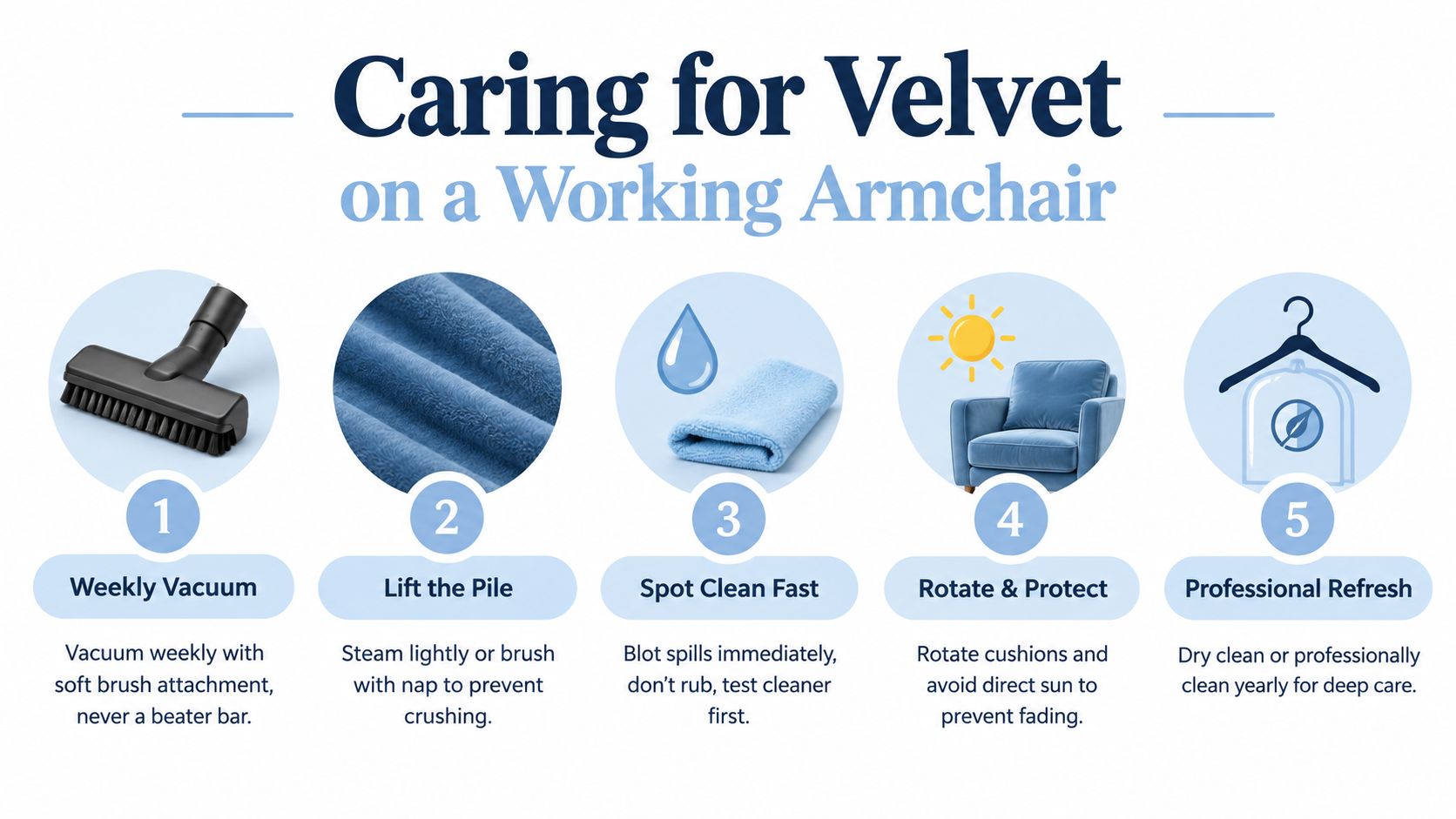
Blot a spill immediately with a clean microfibre cloth. Rubbing pushes moisture and grime across the pile, so keep the cloth still and replace it as it absorbs liquid. Test any velvet-safe spot cleaner on an inside seam before treating a visible area, and avoid silicone-based sprays that can leave uneven marks.
Washing needs restraint
Wash only when the care label allows it. Australian upholstery guidance recommends low-abrasion maintenance, gentle brushing and immediate blotting, while GlobeWest's velvet care guidance explains why pile fabrics require particular attention during abrasion assessment.
Warwick's Australian care-label guidance warns that a zip doesn't automatically mean an upholstered fabric can be removed and laundered. That caution matters for fitted slipcovers. Follow the textile specification rather than assuming every removable velvet cover is machine washable.
If the label permits machine washing, use a mesh bag, cold water, a gentle cycle, a small amount of mild detergent and the lowest spin speed. Air-dry the velvet flat on a clean towel, reshape it gently and keep it away from direct Australian sunlight. Never use bleach or harsh chemicals.
Rotate removable cushions monthly to spread contact across the surface. Keep the chair away from harsh summer sun and open windows that carry dust, and consider a fabric protector only if the product manufacturer approves it for that velvet. Direct sunlight can fade colour, while friction and over-wetting can damage the finish.
Styling a Velvet-Covered Armchair in an Australian Living Room
A velvet-covered armchair works best when its colour responds to the room's light and the chair's actual workload. In a bright coastal or Hamptons-style interior, sage green, dusty blue and champagne soften white walls and timber floors without making the room feel heavy.
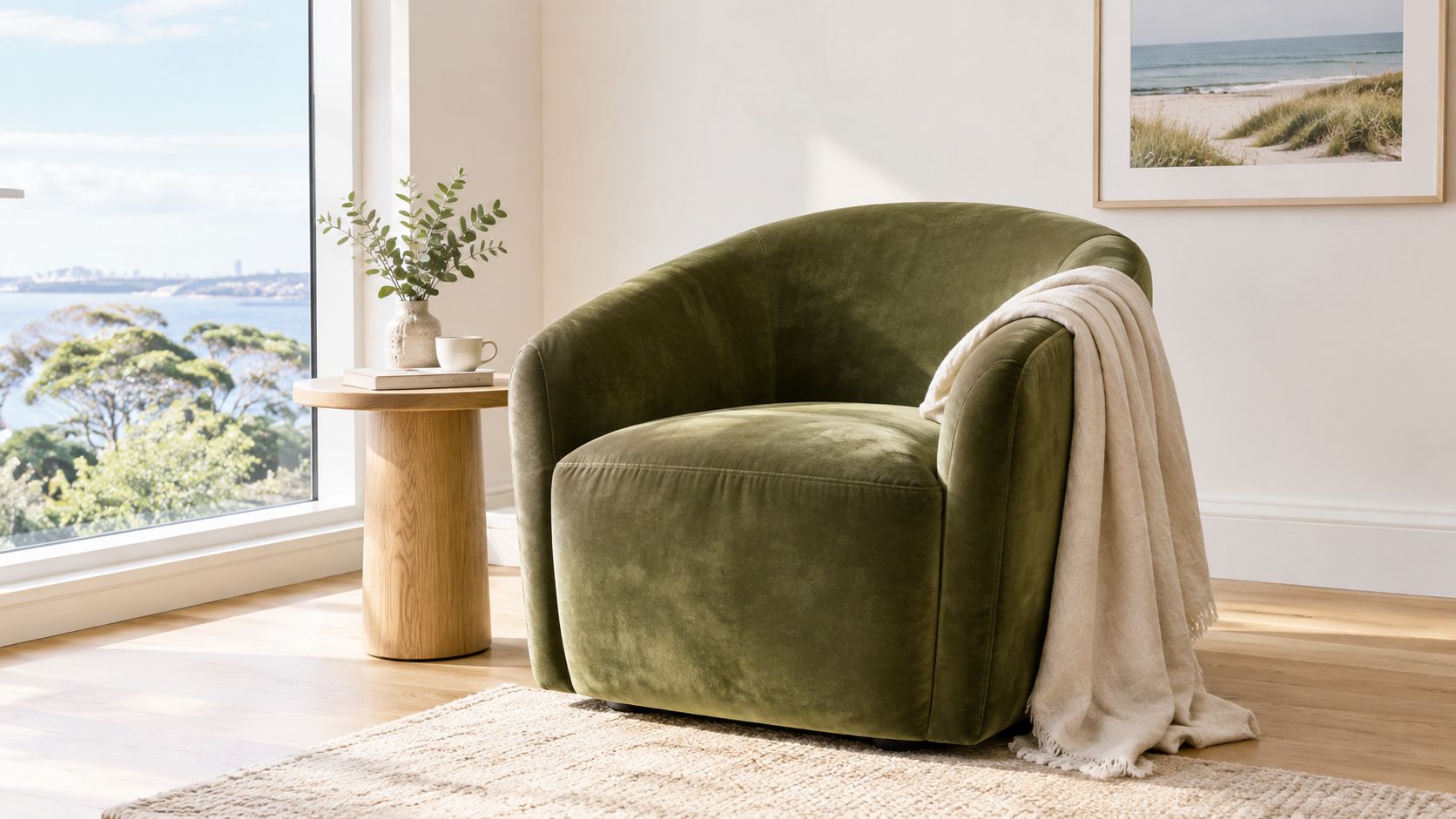
Use deeper colour in darker period interiors and inner-city terraces. Emerald, sapphire and burnt orange add warmth against aged timber, painted joinery and patterned rugs, but choose the tone after checking the room at morning and afternoon light. Velvet changes visually as the nap catches the sun.
Place the chair where the fabric can behave
Filter natural light with curtains, blinds or a nearby layer rather than placing the chair directly in a strong beam. The care guidance from GlobeWest and Warwick both stresses limiting direct sunlight to reduce colour fade and UV damage.
Layer the velvet with materials that create contrast instead of adding more shine:
- For softness: Use a chunky wool throw over the arm or back.
- For breathability: Add a linen cushion in a quieter colour.
- For contrast: A sheepskin can soften a sharp chair, but it will increase the need for hair and dust removal.
- For grounding: Place the chair on a jute or sisal rug that brings a dry, natural texture beneath the plush pile.
Renters should favour neutral velvet tones such as soft beige, muted olive or dusty blue if the chair needs to work across more than one lease. Hosts can use a bolder hue to anchor a styled corner in listing photography, but should avoid placing it where guests will drag luggage, eat or repeatedly brush against the arms.
If your room already has a dark sofa, use a related tone rather than an identical one. The guidance on protecting a dark velvet couch is useful when coordinating a chair cover with darker seating, because the goal is controlled contrast, not a room full of competing pile directions.
A Short Velvet Slipcover Checklist for Families, Renters and Hosts
A velvet armchair slipcover is a smart buy for a specific household, not a universal upgrade. Choose it by traffic, cleaning capacity, pet behaviour and how permanent you want the change to be.
Families with young children
Choose a denser velvet with secure seams and a clearly stated care method. A washable construction is more useful than a beautiful colour if the chair sits near meals, craft activities or daily play.
- Prioritise: A medium-to-heavy fabric feel, removable construction and a colour that disguises ordinary handling marks.
- Avoid: Pale velvet in a high-traffic room unless you're prepared to blot spills immediately.
- Ask first: Can the complete cover be washed, or are only selected panels washable?
Australian upholstery testing provides a sensible framework for the questions. AS 2687-1997 guidance discussed by AWTA covers cleanability, strength, appearance, colourfastness and abrasion resistance, while pile fabrics such as velvet are assessed with a Stoll Abrasion Tester and frosting attachment head. In practical terms, watch the seat crown, arms and front edge first, because those areas flex and rub most.
Pet owners
Velvet can work with a calm, lightly shedding pet that doesn't scratch furniture. It's the wrong call for a heavy-shedding dog, a cat that claws upholstery or a chair used as a regular pet bed.
Choose a colour that doesn't exaggerate hair contrast, and keep a soft upholstery brush and reusable lint roller nearby. If hair removal is already a daily battle on your existing chair, don't add a pile fabric and expect the routine to become easier.
Renters
Velvet is a good renter option when you want a visible refresh without committing to new furniture. Choose a removable cover in a flexible neutral, measure carefully and avoid any product that requires modifying the upholstery or chair frame.
Check the change-of-mind return conditions before ordering. Casamé Home publishes a return window for eligible unused items, but the retailer's stated conditions, including return postage and any restocking fee, still need to be read before purchase.
Short-stay hosts
Hosts should be cautious. Velvet can create a luxe impression in a photograph, but a short-stay lounge needs fast cleaning, dependable fit and predictable turnaround between guests. Select velvet only for a lower-contact accent chair with an approved deep-cleaning process. Otherwise, stretch polyester or canvas is the smarter operational choice.
Ask the seller these questions before clicking buy:
- Fit: Does the size chart cover your chair's back, arms, seat depth and cushion arrangement?
- Pilling: What does the product specification say about surface performance and expected use?
- Colourfastness: Has the fabric been assessed for colourfastness, and should direct sun be avoided?
- Cleaning: Is the cover machine washable, or does the label require dry cleaning?
- Returns: Is there a processing or restocking fee for change-of-mind returns?
Australian Consumer Law separates faulty-goods remedies from a retailer's change-of-mind policy. If a product has a confirmed problem, the business must reimburse reasonable return costs already paid, so keep postage or transport receipts. The ACCC explains return-cost responsibilities for faulty products, and its guidance also identifies processing, restocking and repair fees as potentially problematic terms in online return policies. The ACCC's return-policy guidance is worth checking when comparing sellers.
A velvet armchair slipcover earns its place when the chair is a deliberate feature, the room isn't punishing the fabric and you'll follow the care label. If the chair handles constant family traffic, heavy pet hair or rapid guest turnover, choose a practical stretch or canvas alternative instead.
Casamé Home offers removable chair and furniture covers, including stretch-fit options, size guidance and care information suited to Australian shoppers. Visit Casamé Home to check the measurements, fabric options and installation guidance before choosing a velvet armchair slipcover.