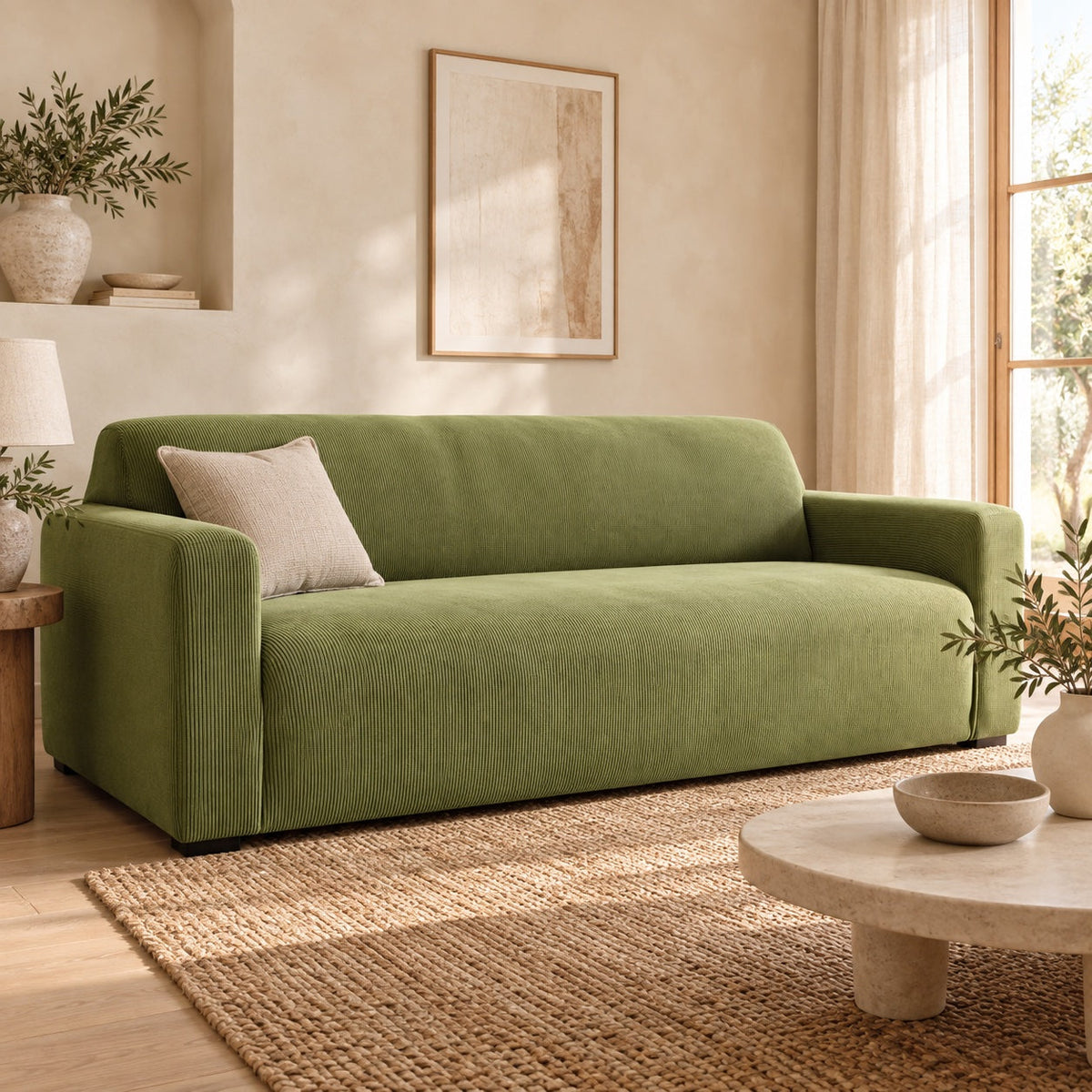
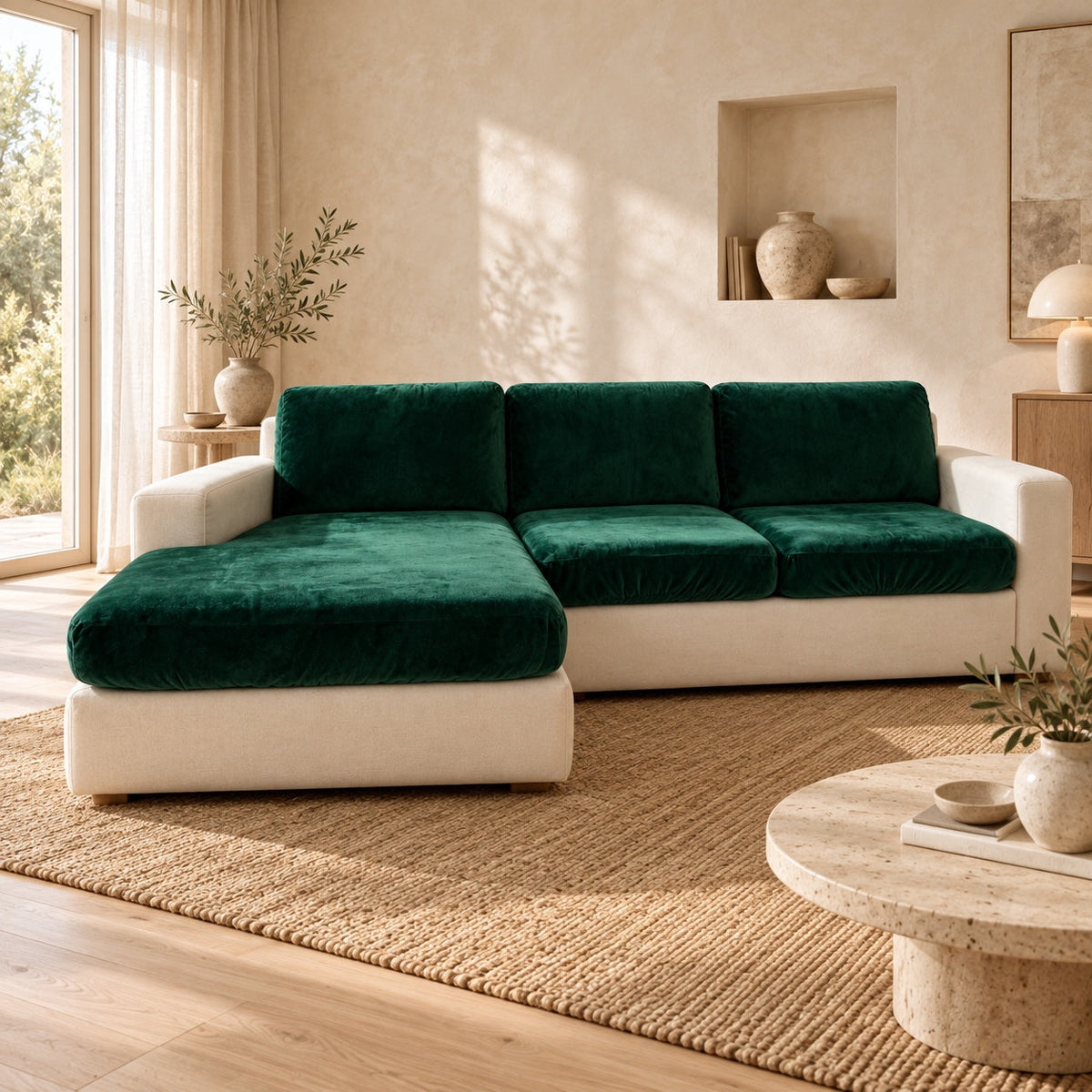
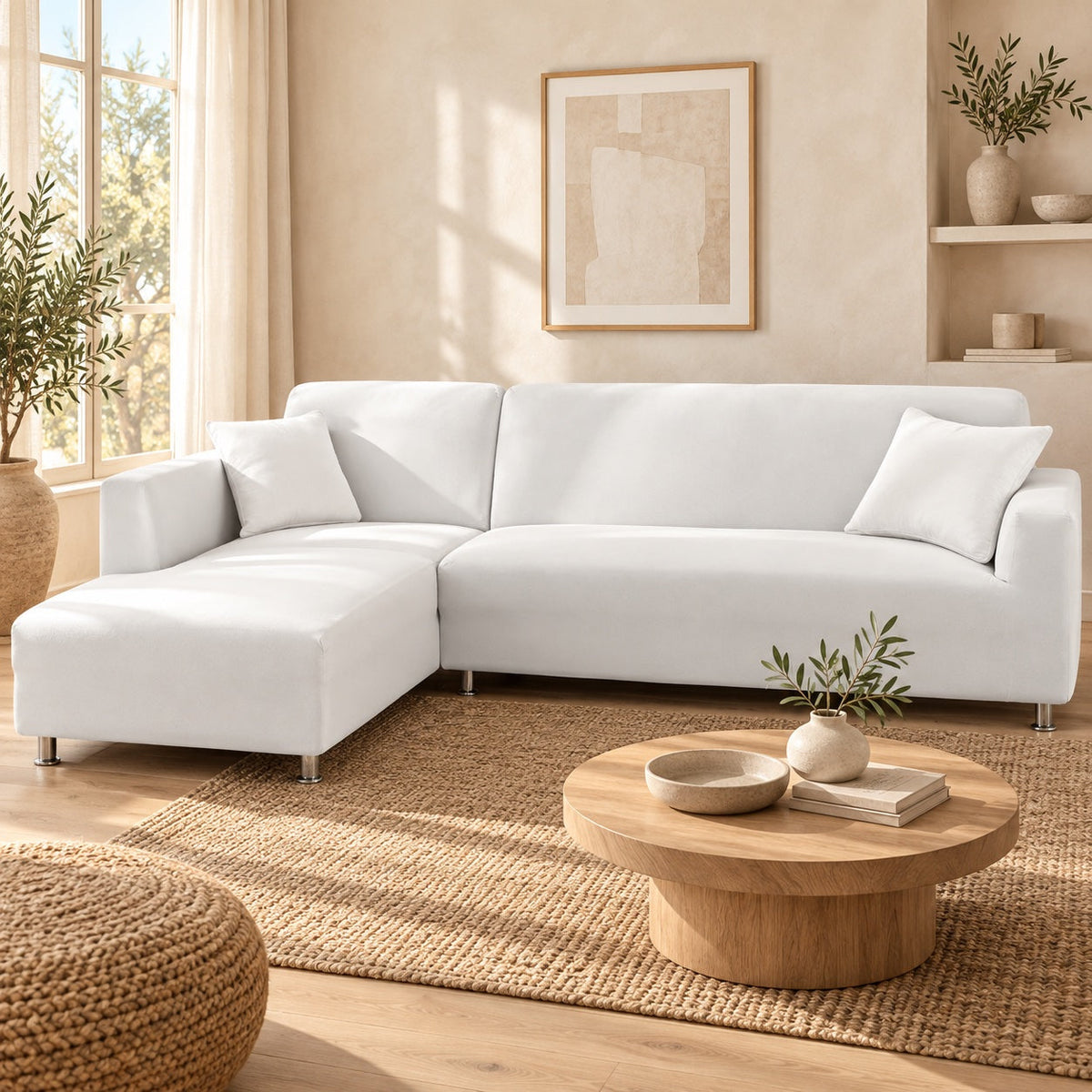
Casamé Home doesn't make rectangular, oblong, lumbar, bolster or round scatter cushion covers, and every scatter cushion cover it sells is 45cm by 45cm square. Its rectangle cushion covers are fitted covers for a couch's own seat, back and chaise cushions, so size means measuring those cushions and matching them to a band, not choosing a loose decorative shape.
Table of Contents
- What Are Rectangle Cushion Covers Used For?
- Which Rectangle Cushion Cover Size Bands Are Available?
- How Do You Measure a Couch Seat or Back Cushion?
- How Do You Match Measurements to the Right Size Band?
- Which Way Round Should a Stretch Cushion Cover Fit?
- How Can You Mix Square and Rectangle Cushion Covers?
- What Is the Right Rectangle Cushion Cover for My Couch?
What Are Rectangle Cushion Covers Used For?
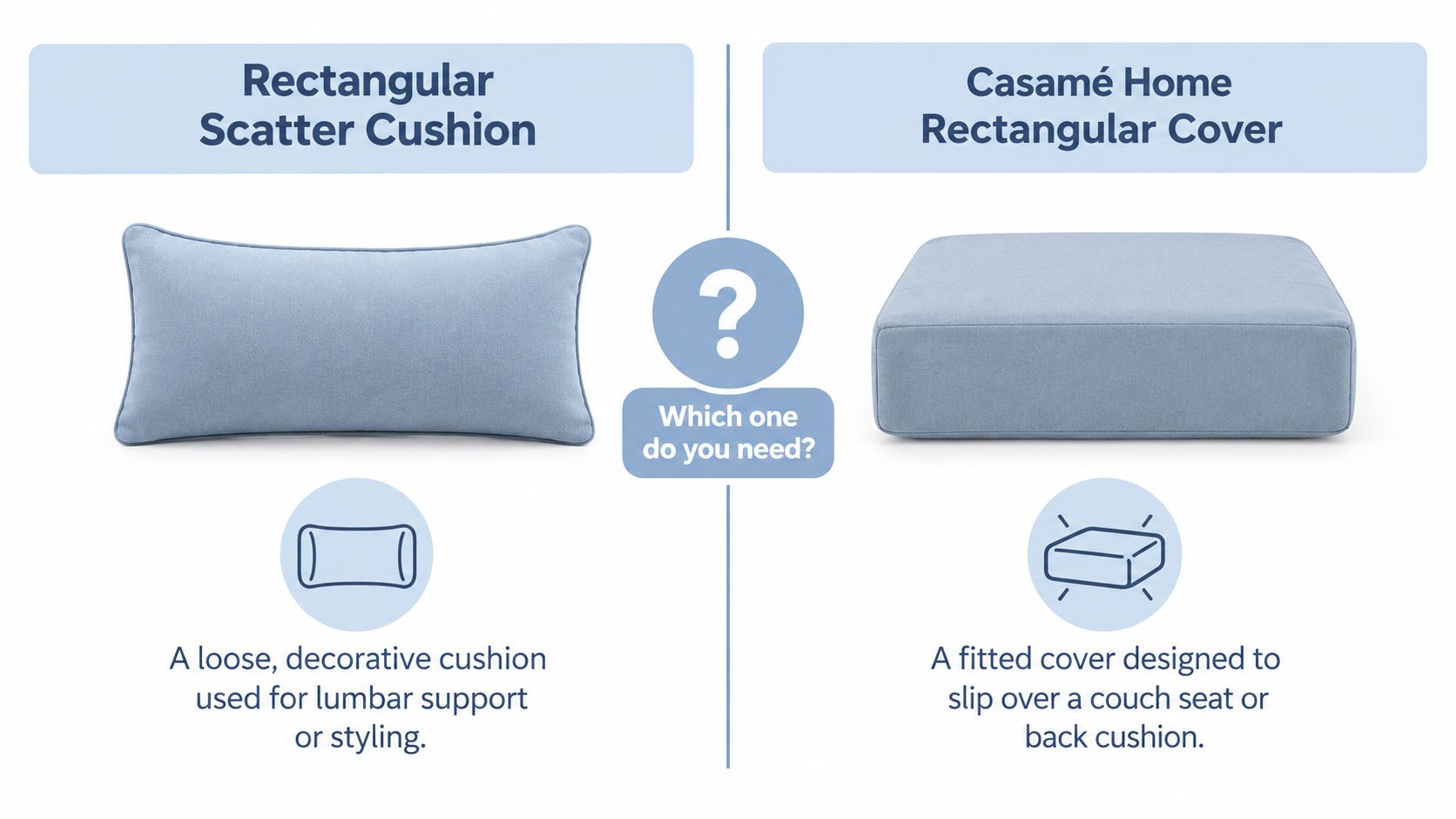
Rectangle cushion covers from Casamé Home are used to cover the rectangular seat, back and chaise cushions that belong to a couch, not to dress a loose lumbar or oblong scatter cushion. That distinction matters because shoppers often search with one phrase for two different objects. A loose rectangular scatter cushion sits on top of seating for support or decoration, while a couch cushion is part of the seating itself.
Casamé Home makes no rectangular, oblong, lumbar, bolster or round scatter cushion covers, in any fabric. It also sells no custom or made to measure covers and no cushion inserts or fillings, only covers. Every scatter cushion cover it sells is 45cm by 45cm square and is available as one or two pieces.
Where confusion starts
If you're picturing a long loose cushion, such as a 14 by 36 inch accent pillow, that belongs to a separate decorative category. That isn't the shape described here. A Linear Geometric Cushion Cover creates similar confusion because its rectangle pattern is printed on a square 45cm cover, not cut as a rectangle.
If the cushion lifts out as part of the couch seat or back, you're measuring a couch cushion. If it sits loose on top, it's a scatter cushion.
So start by naming the object in front of you. For loose scatter cushions, Casamé Home's answer is square only. For the rectangles built into your couch, the next step is identifying the correct size band.
Which Rectangle Cushion Cover Size Bands Are Available?
Rectangle cushion covers for couch cushions are available in size bands rather than centimetre pairs, covering Standard, Deep, Chaise, Backrest and selected Headrest cushions. You don't shop by a single length and width pair the way you might for a loose scatter cover. You identify the cushion's role first, then use the product page size chart for that fabric family.
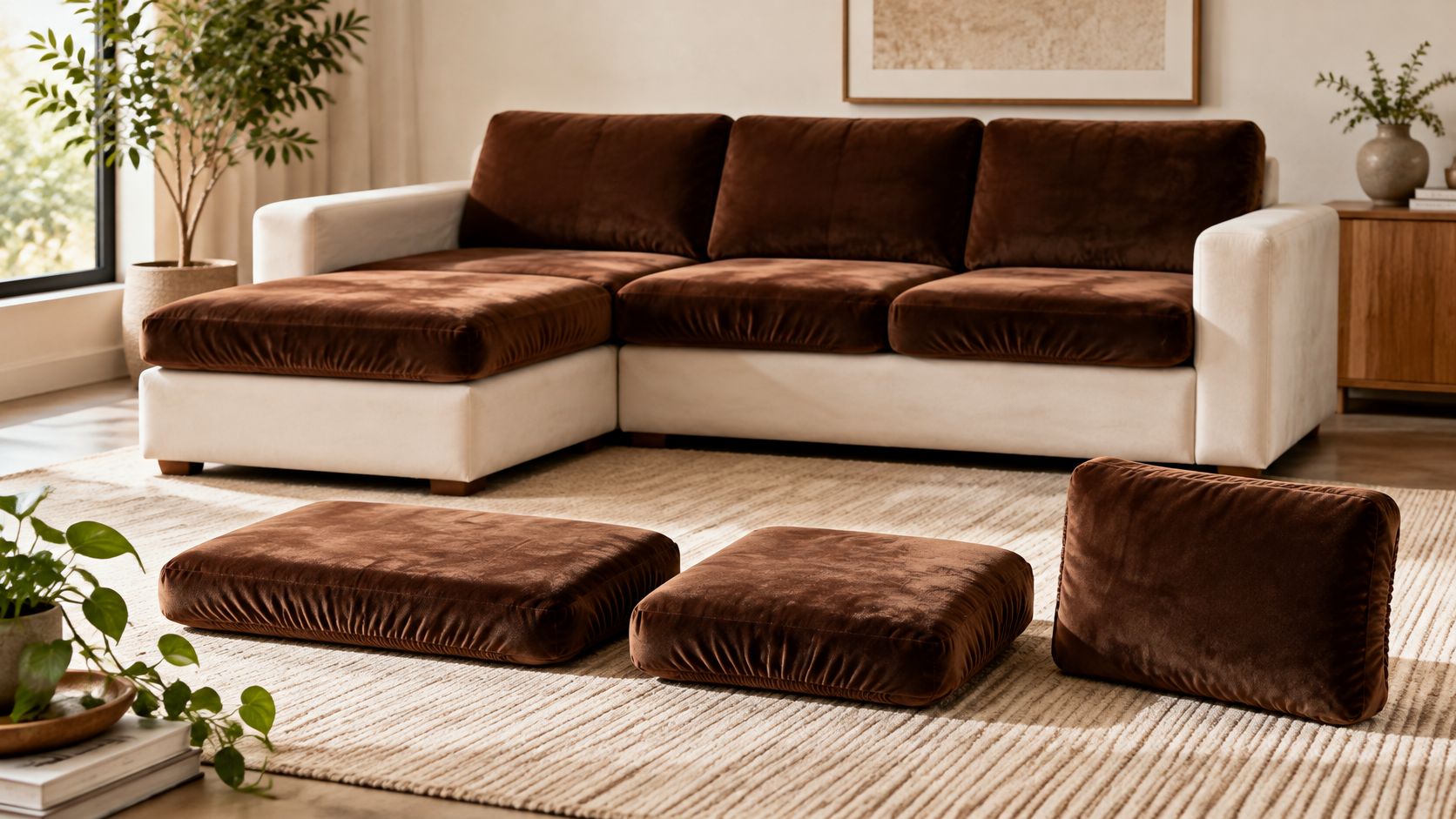
The four couch cushion cover families are Jacquard, Velvet, Luma and Waterproof. A Velvet Couch Cushion Cover · Brown · Stretch Fit is one example of a couch cushion cover sold by band rather than as a centimetre pair. Don't compare bands across families without checking the relevant chart.
| Cushion role | Available bands | Important limitation |
|---|---|---|
| Standard seat | Standard S, M, L and XL | Luma has no Standard XL |
| Deep seat | Deep S, M and L | Check the family chart |
| Chaise pad | Chaise Narrow and Chaise Wide | Measure a chaise separately |
| Backrest | Velvet Backrest S and M, Luma Backrest S | Only on selected families |
| Headrest | Luma Headrest S and L | Only on selected Luma options |
How to read the bands
A band name tells you which cushion job you're matching, not a guaranteed fit. Standard and Deep aren't interchangeable labels for the same seat, and a chaise band isn't a wider seat band. Match your three measurements to the chart for the exact cover you're considering.
How Do You Measure a Couch Seat or Back Cushion?
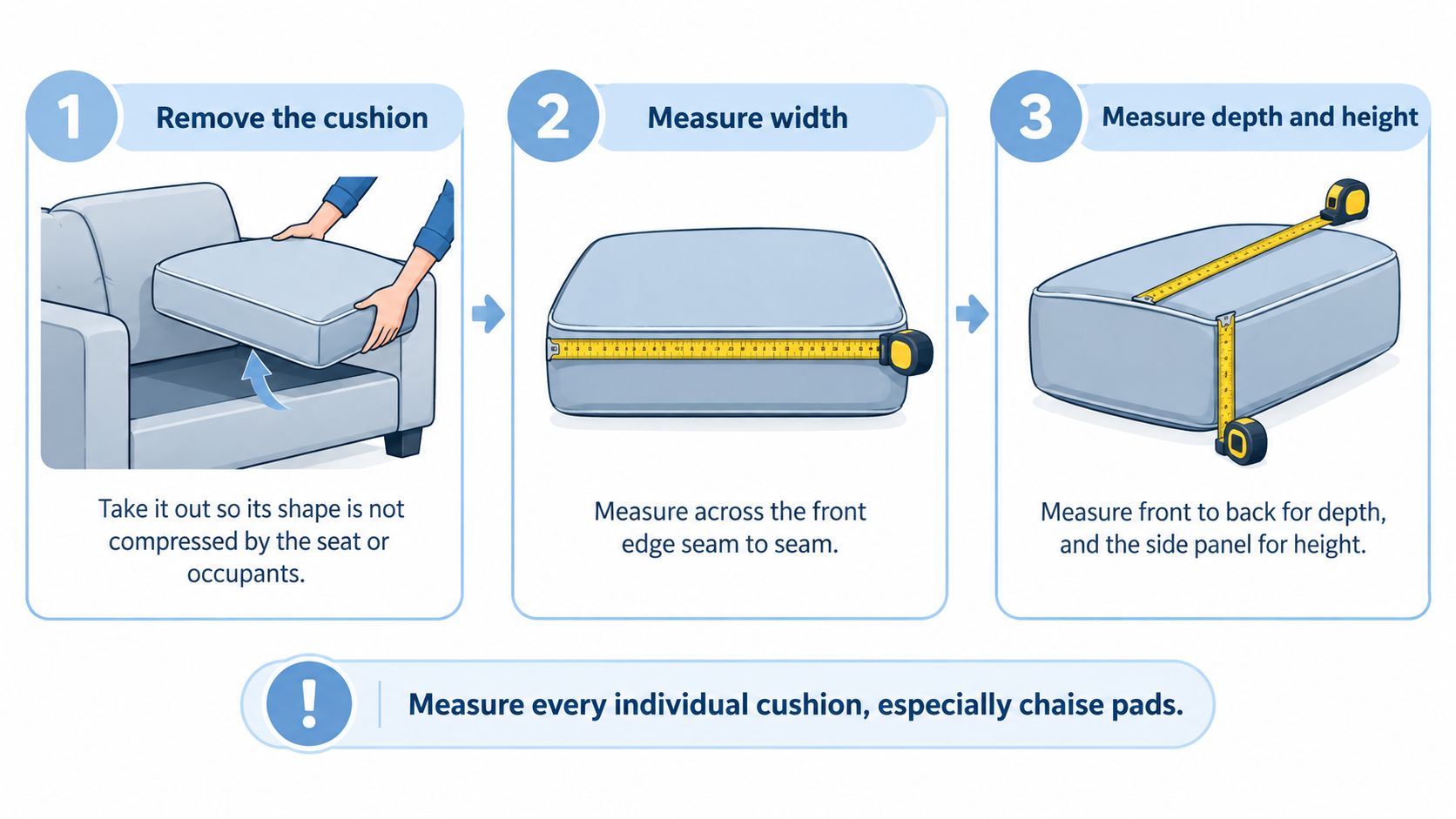
You measure a couch seat or back cushion by removing the cushion from the couch and recording its width, depth and side panel height while it's uncompressed. Don't measure it in place, where arms, neighbouring cushions and the seat base squeeze it out of shape.
The three measurements
Take the figures in this order and write each one down separately.
- Width across the front edge: Measure seam to seam along the front, keeping the tape straight rather than pulling it into the cushion.
- Depth front to back: Measure from the front seam to the back seam along one side.
- Height of the side panel: Measure the vertical side, sometimes called the border or gusset, from top seam to bottom seam.
For example, record one seat cushion as width, depth and height in that fixed order, then label it, such as left seat or chaise. Don't collapse the result into a two figure size, because the side panel height affects which band the cushion belongs in. That three figure record is also the starting point if you're separately measuring for new cushion inserts.
Measure every cushion. Seat cushions on one couch often differ, and a chaise pad always needs its own figures. If you measure only the middle seat and order multiples, you're assuming a uniformity the couch may not have.
How Do You Match Measurements to the Right Size Band?
You match measurements to the right size band by comparing all three figures, width, depth and side panel height, with the size chart for the rectangle cushion cover you're considering. Don't match on width alone because it's the most visible measurement. A cushion can look right across the front while its depth or side panel places it in a different band.
First, name the cushion's role. Is it a Standard seat, Deep seat, Chaise Narrow or Chaise Wide pad, Backrest or Headrest? Then compare your labelled figures with that role's chart and keep each axis in its own column.
A simple checking order
- Check width first: Place the front edge figure against the chart without swapping it for depth.
- Check depth second: Confirm the front to back figure sits in the same band.
- Check height last: Use the side panel figure to confirm the choice, not as an afterthought.
- Repeat per cushion: Don't copy one result across the whole couch.
Near a band boundary, the stretch-fit Jacquard, Velvet and Luma covers take up the difference. That doesn't turn a nearby band into a promise for every cushion. Choose the band your three measurements support and check the product page before ordering.
The Jacquard Couch Cushion Cover, Light Grey product page is the relevant place to make that comparison for that cover. Thomas J., on the Jacquard Couch Cushion Cover in Light Grey, said, "It fits my sofa seat like a glove". Treat that as one buyer's result after choosing a size, not as a substitute for your own measurements.
Practical rule: If two axes point to one band and the third doesn't, stop and recheck the cushion role and chart rather than averaging the figures.
Which Way Round Should a Stretch Cushion Cover Fit?
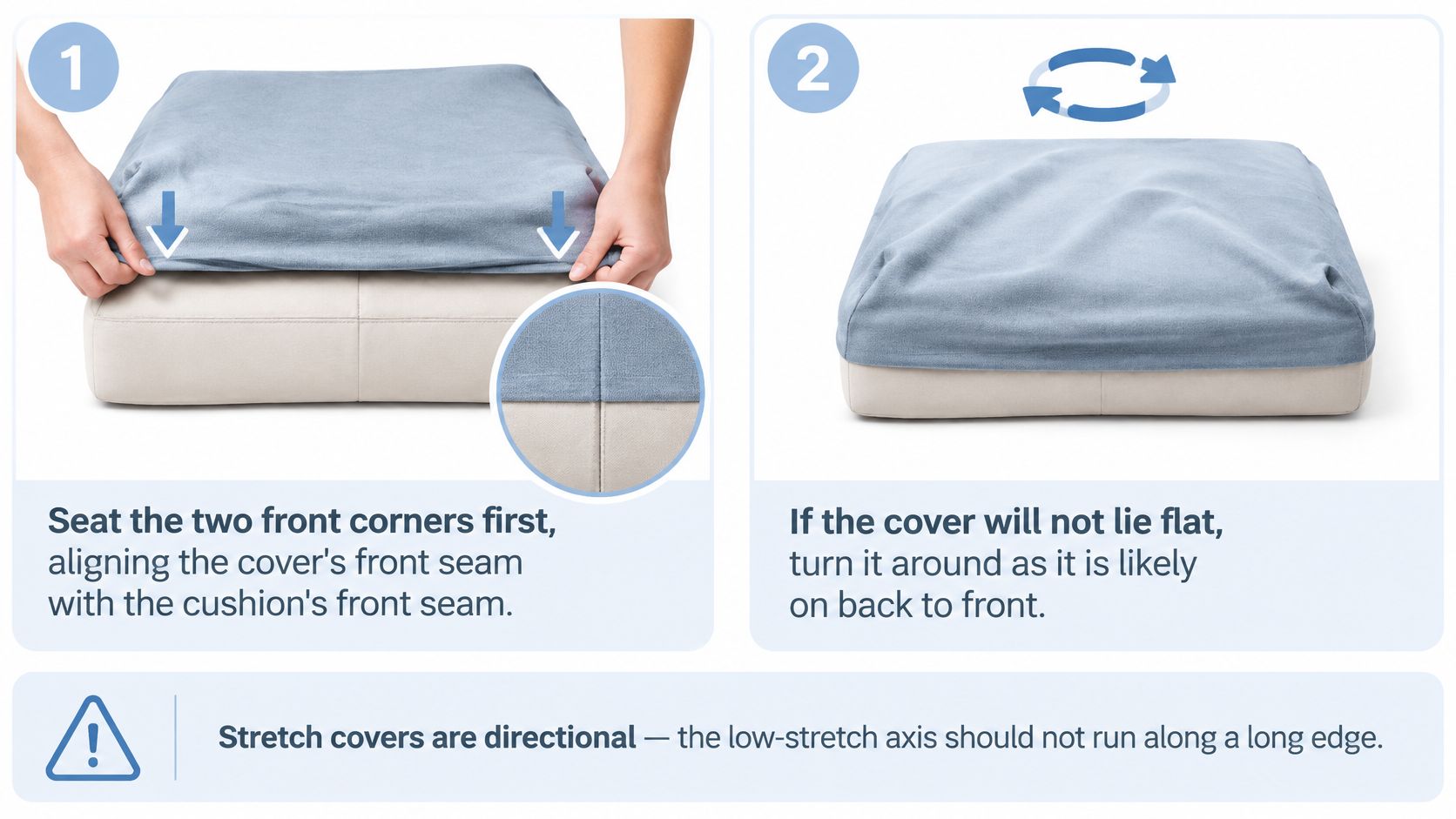
A stretch rectangle cushion cover should fit with its front seam aligned to the cushion's front seam and its two front corners seated first. Orientation matters because a stretch cover gives far more across one axis than the other. Put it on the wrong way round and the low-stretch axis ends up on the long edge, which can make the front bow.
Start with the cushion out of the couch on a flat surface. Find the cover's front seam, line it up with the cushion's front seam, and seat both front corners fully. Then work the back corners in, easing the fabric rather than dragging it from one corner.
How to tell it's back to front
Smooth the face and sides while the cushion is still uncompressed. If the front won't lie flat, the cover pulls unevenly, or you're having to stretch much harder along the long edge, it's likely on back to front. Take it off and turn it rather than pulling harder.
That simple test saves confusion. A correctly oriented stretch cover shouldn't need force to convince the front edge to sit straight. Once the face lies flat and the corners sit at the cushion corners, put the cushion back and check the front seam alignment again in place.
How Can You Mix Square and Rectangle Cushion Covers?
You can mix square and rectangle cushion covers by keeping the rectangular couch seat and back covers quiet and letting 45cm square scatter covers carry pattern and colour, or by matching fabric colours across both shapes. The rectangles cover large seating surfaces, so a plain or lightly textured finish gives you a calm base. The squares then become the smaller, easier accents to change.
Keep the shapes honest here. Casamé Home's loose covers are squares, while its rectangles fit the couch cushions. When you browse stretch-fit home textile accessories, every scatter cushion cover there is 45cm by 45cm square.
Coordinated or contrasting
- Quiet base, stronger squares: Choose plain or lightly textured seat and back covers, then use patterned or brighter 45cm squares in front.
- Matched Velvet: Velvet is available in the same nine colours across couch and 45cm square cushion covers, Grey, Light Grey, Beige, Brown, Dark Green, Lake Blue, Navy Blue, Orange and Pink.
- Matched Luma: Luma is available in the same five colours across both shapes, Beige, Orange, Light Grey, Serene Blue and Neutral Grey.
- Mostly matched Jacquard: Jacquard shares most shades, including Navy Blue, Off-White, Cream, Chocolate, Bondi Blue and Light Grey.
Texture does useful work without adding more pattern. For example, a Velvet square against a flatter couch cushion cover catches light differently, so the combination looks deliberate even in one colour family. Don't use matching colour names as a shortcut around measuring the rectangular cushions first.
What Is the Right Rectangle Cushion Cover for My Couch?
The right rectangle cushion cover for your couch is the size band that matches all three measurements of the specific seat, chaise, backrest or headrest cushion you measured. There's no single rectangle size to memorise, and there's no rectangular scatter option to fall back on in this range. Your decision follows the cushion itself.
Use this short path before you order.
- Identify the object: Decide whether it's a couch seat, chaise pad, backrest, headrest or a loose scatter cushion.
- Apply the shape limit: Casamé Home stocks no rectangular, oblong, lumbar, bolster or round scatter covers, and every loose scatter cover is 45cm square.
- Measure in three dimensions: Remove the couch cushion and record width, depth and side panel height for each one.
- Match the band: Compare all three figures with the relevant product page size chart for Casamé Home couch cushion covers.
- Fit by the front seam: Seat the front corners first, then the back corners, and turn the cover if the face won't lie flat.
Size doesn't come from the front edge alone. It comes from three measurements, the correct cushion role and the right orientation.
After fit is settled, decide whether the square covers should match the rectangles through shared Velvet, Luma or Jacquard shades or provide the stronger pattern. That order, measure first and style second, prevents the most common sizing mistake. You'll know you're done when each labelled cushion has its own three figures and each figure has been checked against one band.
Measure each couch seat, back or chaise cushion in width, depth and side panel height, then match those figures to the size bands for Casamé Home's Jacquard, Velvet, Luma and Waterproof couch cushion covers. Pair those rectangular covers with 45cm square scatter covers where you'd like matching colour or contrast, and start your shortlist at Casamé Home. If the whole couch needs covering rather than its individual cushions, see Casamé Home couch covers.