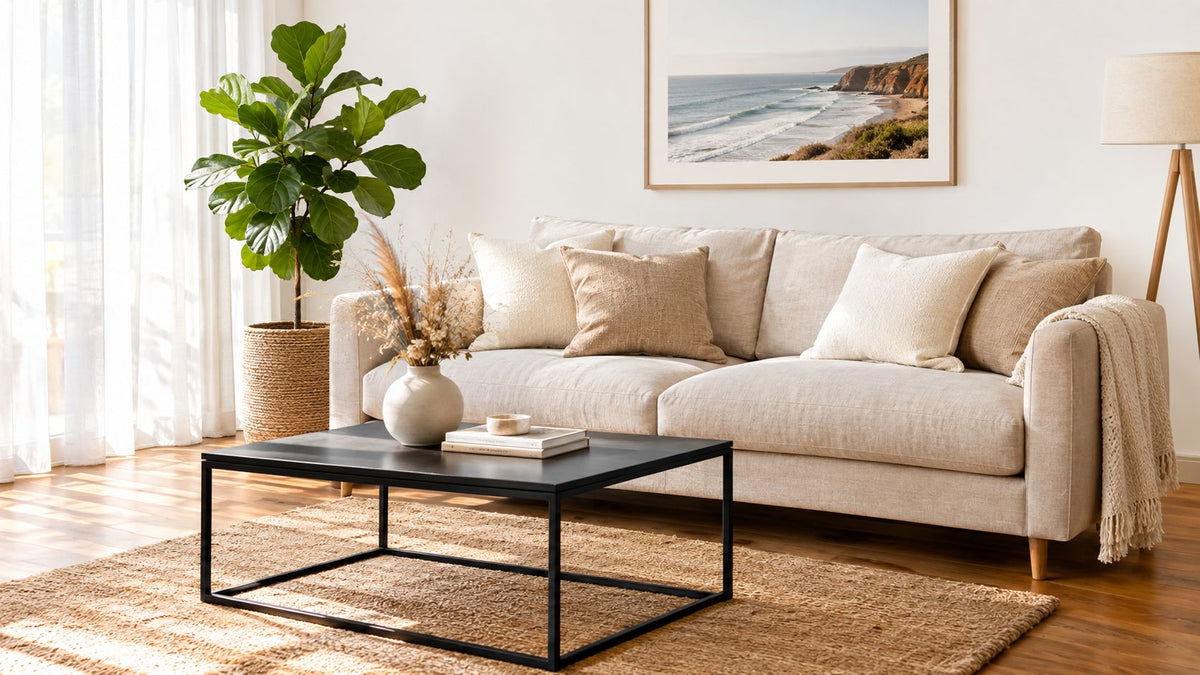
Beige 2 seater sofa content should help you choose the look, match the undertone, and keep the lounge looking fresh. Casamé Home sells covers only, not sofas or lounges, so if you're buying a beige two-seater from scratch or refreshing one you already own, the useful decision is whether the frame, the fabric, or a beige stretch cover gives you the result you want.
Beige is also the hardest neutral to live with and the easiest to change your mind about. That's why a smart beige choice is less about picking “a beige sofa” and more about choosing the right beige, the right size, and the right maintenance route for an Australian home with timber, grey flooring, white walls, pets, children, and daily use.
Table of Contents
- What This Beige 2 Seater Sofa Guide Actually Covers
- Which Beige Undertone Fits Your Australian Living Room
- Does Fabric Durability Matter More Than Colour for Beige Sofas
- How to Measure a Two-Seater Sofa Correctly
- How to Style a Beige Two-Seater So It Does Not Look Flat
- How to Keep a Beige Two-Seater Looking New Over Time
What This Beige 2 Seater Sofa Guide Actually Covers
A beige 2 seater sofa works best when you treat beige as a family of undertones, not a single shade. The practical focus here is choosing the beige look, matching it to your room, and deciding whether a new frame or a removable cover makes more sense for everyday life.
Beige earns a reputation for being easy because it feels neutral, but that same neutrality makes it unforgiving. In the wrong room, a cool beige can look flat against warm timber, while a yellow-leaning beige can fight with white walls and pale flooring. A cover route gives you more room to adjust if your first choice feels too cold, too dark, or too washed out.
Australian buying patterns also support a practical, not romantic, approach. Australian councils collected 510,000 tonnes of hard waste, mostly furniture, in 2022-23 across six states and territories, according to Australian furniture-waste reporting, which is a strong reason to favour durable, washable seating when you can (Australian furniture waste statistics). The broader manufacturing base is large and established too, with the Australian wooden furniture and upholstered seat manufacturing industry estimated at A$4.5 billion in 2026 and 4,161 businesses operating in the sector in 2025 (IBISWorld industry profile).
A beige 2 seater can therefore be a frame purchase, a cover refresh, or both. The rest of the decision comes down to undertone, fit, fabric performance, and how much commitment you want from the colour.
Which Beige Undertone Fits Your Australian Living Room
The right beige undertone depends on what your room already has in it. Linen beige, cream, off-white, milk tea, greige, biscuit, and sandy tones all sit inside the beige family, but they behave very differently beside timber, grey flooring, and white walls.
Warm timber usually likes a beige with some body, because a pale, chalky beige can disappear against wood grain. Grey flooring often benefits from a warmer beige or milk tea tone, because it stops the room feeling cold and clinical. White walls are the easiest surface to overmatch, so off-white and cream can work, but only when the sofa has enough texture to avoid looking like a second wall.
Practical rule: if the room already reads cool, lean into warmer beige. If the room already reads warm, keep the sofa lighter and cleaner so the beige doesn't go yellow.
Australian trend coverage is also moving in a helpful direction for buyers who don't want beige to feel dated. The shift in 2026 sofa trend coverage is toward warmer, grounded tones such as sand, mushroom, biscuit, taupe, camel and soft mocha, which means warmer, more specific neutrals rather than a flat default beige. That makes undertone selection more important than the label on the swatch.
The easiest way to narrow the choice is to compare beige by temperature, not by name. A cooler beige can calm a busy room, but it can also look stubbornly grey beside warm timber. A richer milk tea or biscuit tone can feel softer in a lived-in Australian lounge, but it can also pull yellow if the room already has brass, honey oak, or heavy warm lighting.
| Beige tone | Best suited to | Avoid pairing with |
|---|---|---|
| Linen beige | Bright rooms, light timber, crisp styling | Strongly yellow walls or very creamy trims |
| Cream | White walls, layered textiles, softer traditional rooms | Pale flooring with no texture or contrast |
| Off-white | Smaller spaces, clean-lined interiors, light-catching rooms | Heavy beige carpets and warm-toned walls |
| Milk tea | Timber floors, warm lighting, relaxed family rooms | Cool grey floors with stark white walls |
| Sandy beige | Mixed natural materials, stone, jute, oak | Very cool, blue-grey décor |
| Biscuit | Earthy interiors, brown timber, textured fabrics | Glossy white finishes and icy greys |
For a deeper look at palette pairing, the colour schemes interior advice page is useful, especially if you're trying to decide whether the sofa should blend in or carry the room.
The safest choice is the beige that repeats the room's existing warmth without copying it exactly. If the room is already warm, choose a cleaner beige. If the room is cool, choose a beige with enough warmth to stop the room looking stark.
Does Fabric Durability Matter More Than Colour for Beige Sofas
Yes. For a beige sofa, fabric durability matters more than colour because beige shows wear faster than darker neutrals. A beige 2 seater sofa can look fresh on day one and already feel tired once abrasion and pilling start showing on the surface.
What the fabric tests tell you
If you are buying a new two-seater frame, ask for the upholstery's Martindale abrasion rating and its pilling grade on the 1 to 5 pilling scale before you commit, and compare both across the fabrics you are considering.
Those figures matter more on beige because light neutrals reveal fuzz, flattening, and seat-face wear sooner. A fabric with stronger abrasion resistance keeps its surface longer on the arm tops and seat edges, and a better pilling rating helps the sofa look cleaner for longer. That matters most in a home where the lounge is used every day, not treated as a display piece.
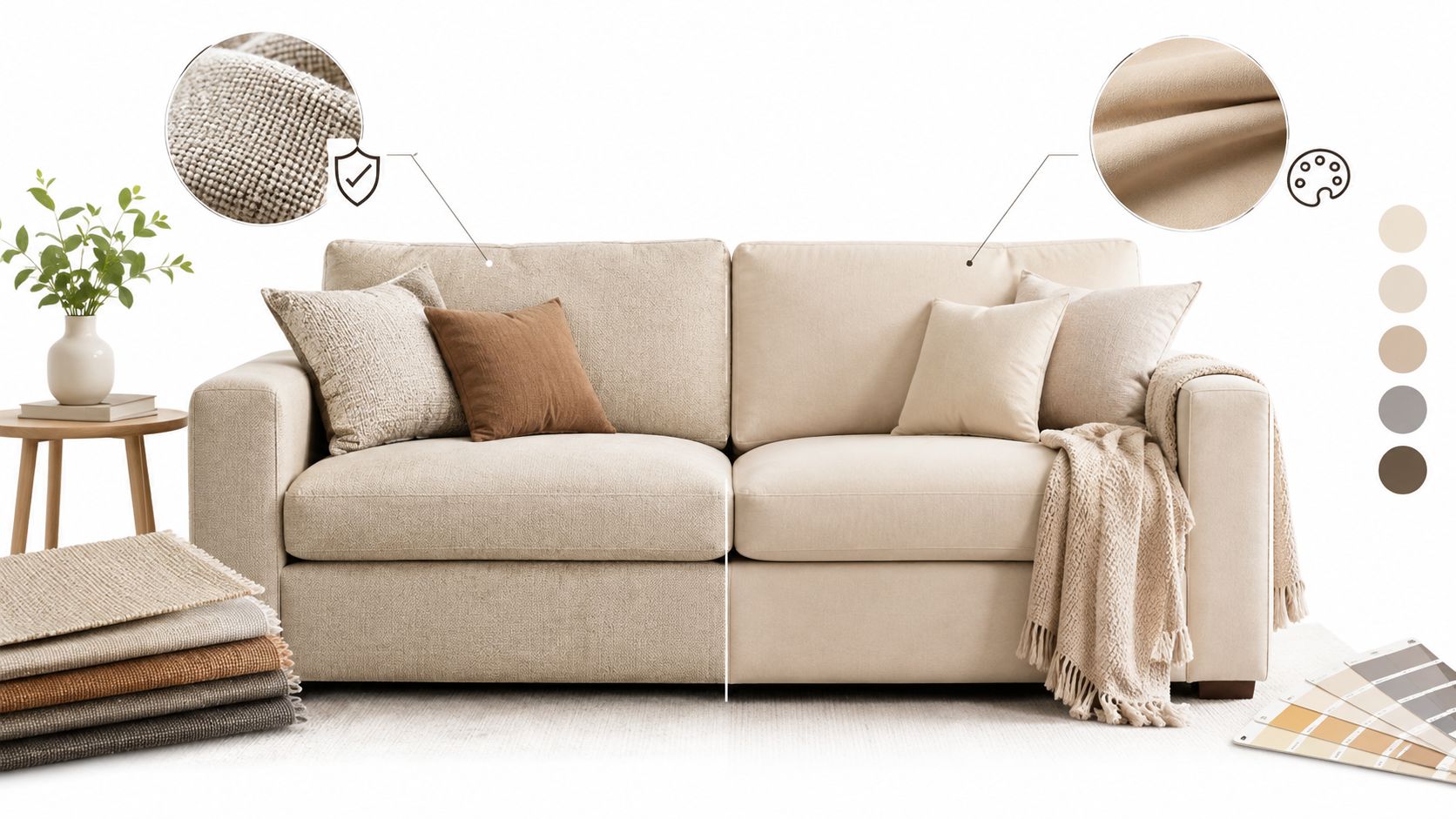
A beige frame still makes sense if the upholstery is honest about use. Better fabric performance means you do not have to rely on perfect habits from everyone in the house.
Why lighter neutrals need better construction
Two beige sofas can look similar in a product photo and perform very differently in a real room. One holds its shape and finish. The other starts to look fuzzy where hands, elbows, and shoes make contact.
That is why the choice is not beige versus a darker colour. The actual question is whether the beige upholstery can stay neat when it is lived on, and whether the construction suits the room it will sit in.
A light sofa does not need to be fragile. It needs better fabric behaviour than a darker one because the eye notices wear sooner.
If beige is the colour you want, choose the fabric with care. Colour sets the mood, but construction decides how long the mood lasts.
How to Measure a Two-Seater Sofa Correctly
Measure a two-seater sofa across the outside of both arms in centimetres, then match that number to the correct size band before you buy a cover. For a beige 2 seater sofa, the useful band is 135 to 175 cm, while a 1 seater is 90 to 130 cm and a 3 seater is 180 to 220 cm, so if your measurement falls between two sizes, choose the larger size rather than guessing.
The reason to measure the outside width, not just the seat cushion area, is simple. A cover or fitted textile needs the full frame length, and arm shape changes the usable fit more than shoppers expect. If a sofa falls between the two-seater and three-seater bands, the size guide says choose the larger size.
A dedicated fitting walk-through is available in how to measure for a 2-seater cover, and that's the place to go if you want installation detail rather than a broad sizing rule. This article keeps the measurement step short on purpose, because the colour decision matters just as much as the tape measure.
One more sizing note helps if you're buying a new lounge rather than a cover. "Two-seater" is a label, not a measurement, which is why some sofas feel compact and others feel closer to a small three-seater even when they're both called “two-seaters.” Check the listed width before you buy, and if budget is the main constraint, the cheap two seater sofa guide covers that side of the decision.
The safest habit is to measure the sofa you already own, not the one you think you own. Tape measures remove guesswork, and guesswork is where beige purchases usually go wrong.
How to Style a Beige Two-Seater So It Does Not Look Flat
A beige two-seater looks best when the room gives it contrast, texture, and one darker anchor. Beige by itself can go flat fast, but beige layered with the right textiles and materials looks deliberate rather than plain.
Build around texture, not just more beige
Beige originally referred to undyed natural wool, which helps explain why it sits so naturally with wood, jute, linen, and stone. That older, fibre-first feel is useful now because beige sofas look better when the room repeats natural textures instead of relying on more beige surfaces.
Build the room in layers of the same family, then break the sameness. Oatmeal, sand, caramel, and chocolate can sit together without looking muddy if the textures differ. A chunky knit throw, a linen cushion, and a velvet cushion give the eye enough change to keep the sofa interesting.
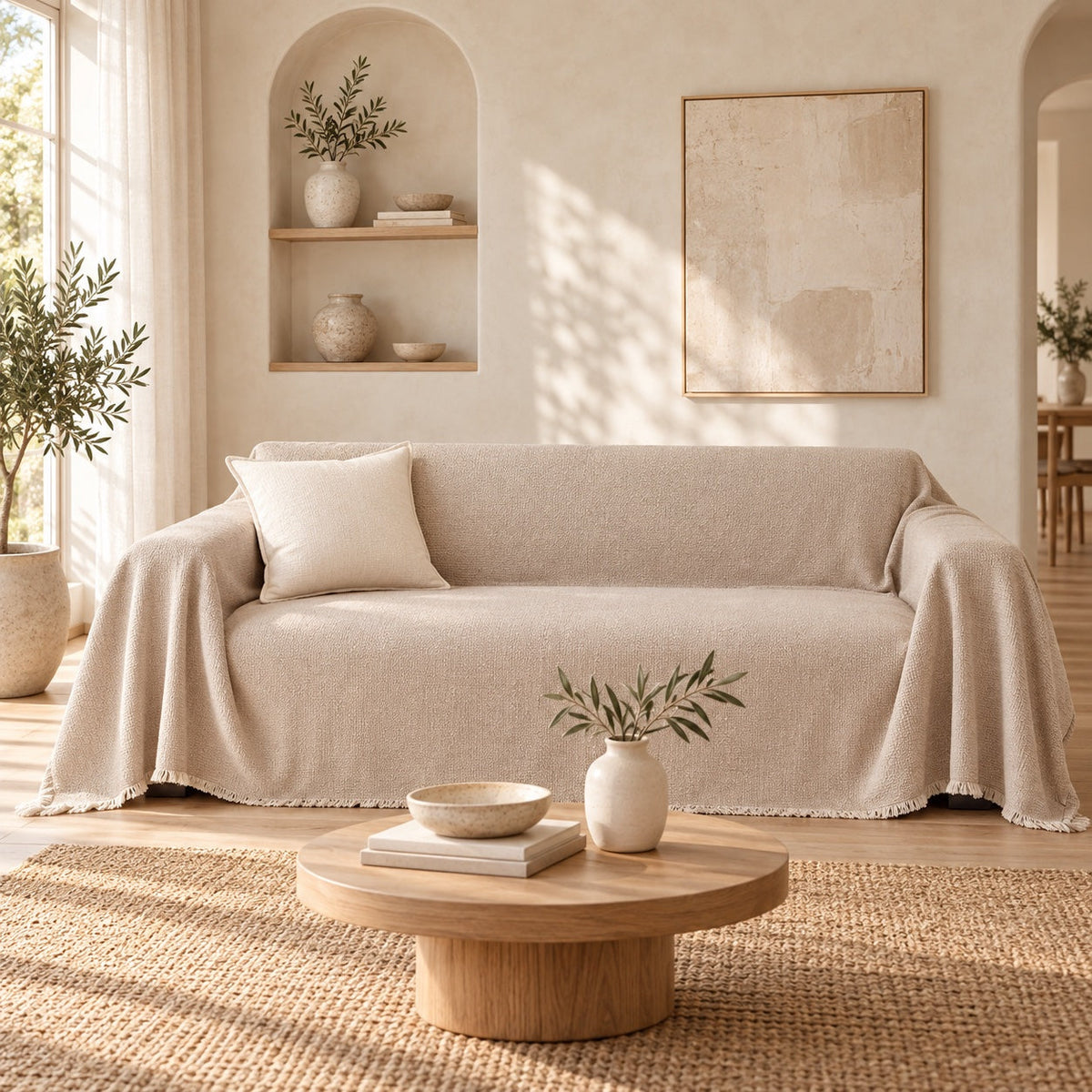
For accessories that support that layered look, you can also shop throw blankets Australia, and cushion covers matter just as much if the lounge needs more texture than colour.
Simple styling rule: one beige sofa, three textures, one dark anchor.
That dark anchor can be a black lamp, a charcoal cushion, or a dark wood side table. Without it, the room can drift into a washed-out palette, especially under strong daylight or pale lighting.
Match the sofa to the room, not the trend
Beige is more forgiving when the rest of the room has structure. Timber handles warmth well, stone adds weight, and linen keeps the room from feeling dressed up in the wrong way. If the lounge feels too soft, one black or charcoal object usually fixes it faster than adding more pale neutrals.
The styling mistake is to treat beige as an empty placeholder. Beige works when it's the quiet base for materials with contrast, not when it's left to carry the room alone.
How to Keep a Beige Two-Seater Looking New Over Time
A beige two-seater stays fresher when you protect the high-contact areas and wash the cover properly, rather than hoping the upholstery will hide wear on its own. Marks show first where hands, heads, and feet touch most, so removable covers are a practical route for families, renters, and anyone who wants the beige look without committing to permanent upholstery.
Casamé Home does not sell or recommend fabric treatments or protective sprays, and nothing about spray performance has been tested in-house. The cleaner solution for beige upholstery is a removable cover that can come off, be washed, and go back on without replacing the lounge.
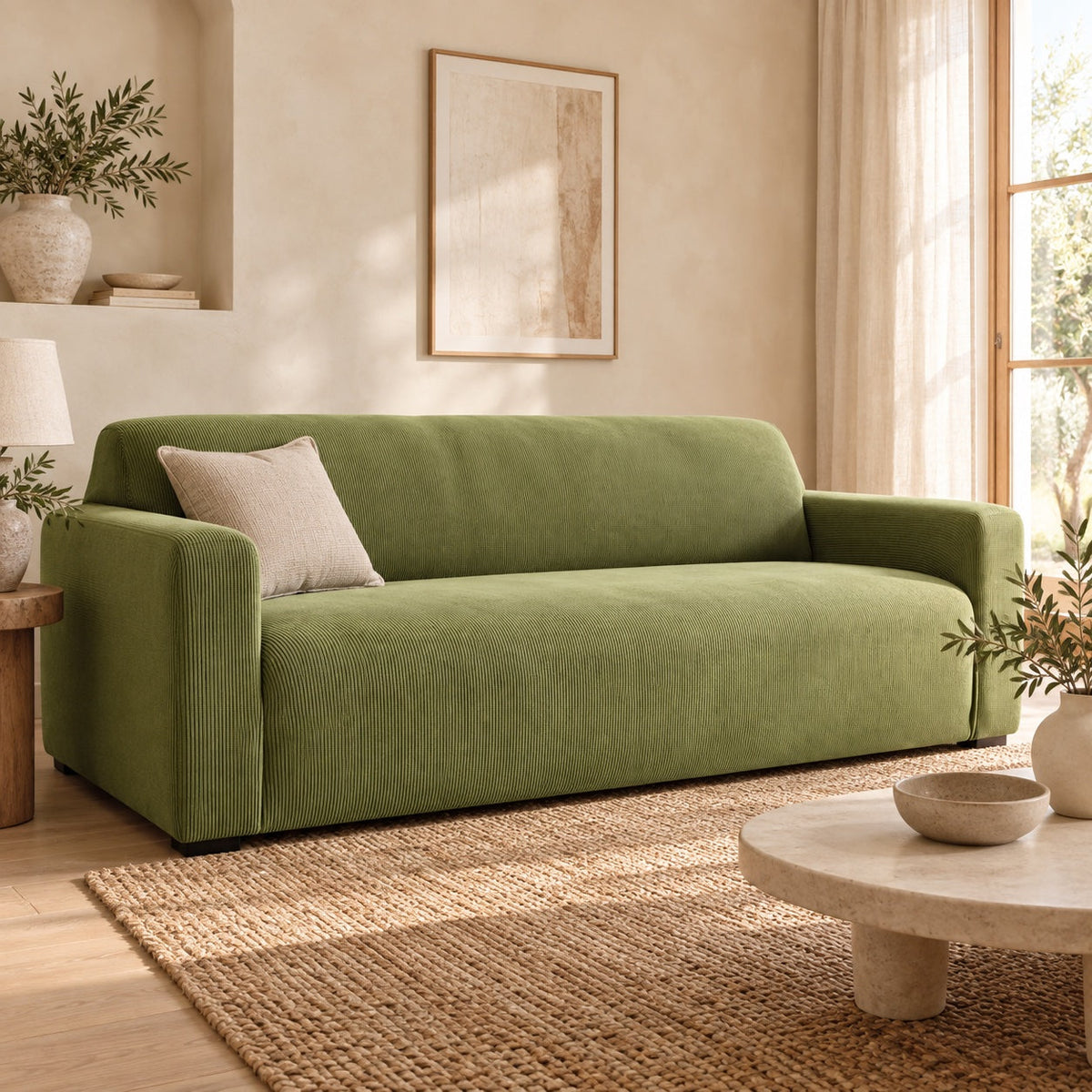
The available beige and near-beige two-seater couch cover families include Arquette in Beige and Milk Tea, Velvet Couch Cover in Beige, Crosshatch in Beige, Luma in Beige, Cordelle in Beige, Veloura in Beige, Crossmere in Beige, Bobble-Textured in Beige, Classic Stretch in Linen Beige, and Jacquard in Cream and Off-White. If the lounge is a corner or chaise, that belongs in the L-Shaped range, not a two-seater cover.
Billie M., in a verified buyer review of the Arquette Couch Cover in Beige: "The beige colour is just what I wanted, fits my two-seater a treat."
The washing routine matters just as much as the colour choice. Follow the care label on the cover you buy, because high heat can shrink a stretch cover so it no longer fits.
Choose the cover size from the sofa's actual frame length, follow the care label, and don't rely on sprays to do a job a removable cover can handle more cleanly. For beige, maintenance is part of the colour decision, not a separate afterthought.
If you want a beige two-seater look without replacing the lounge, Casamé Home has stretch covers, cushion covers, and throws that make the change practical as well as visual. Visit Casamé Home to compare the beige, milk tea, cream, and off-white options, then choose the cover route that fits your sofa, your room, and your daily living habits.