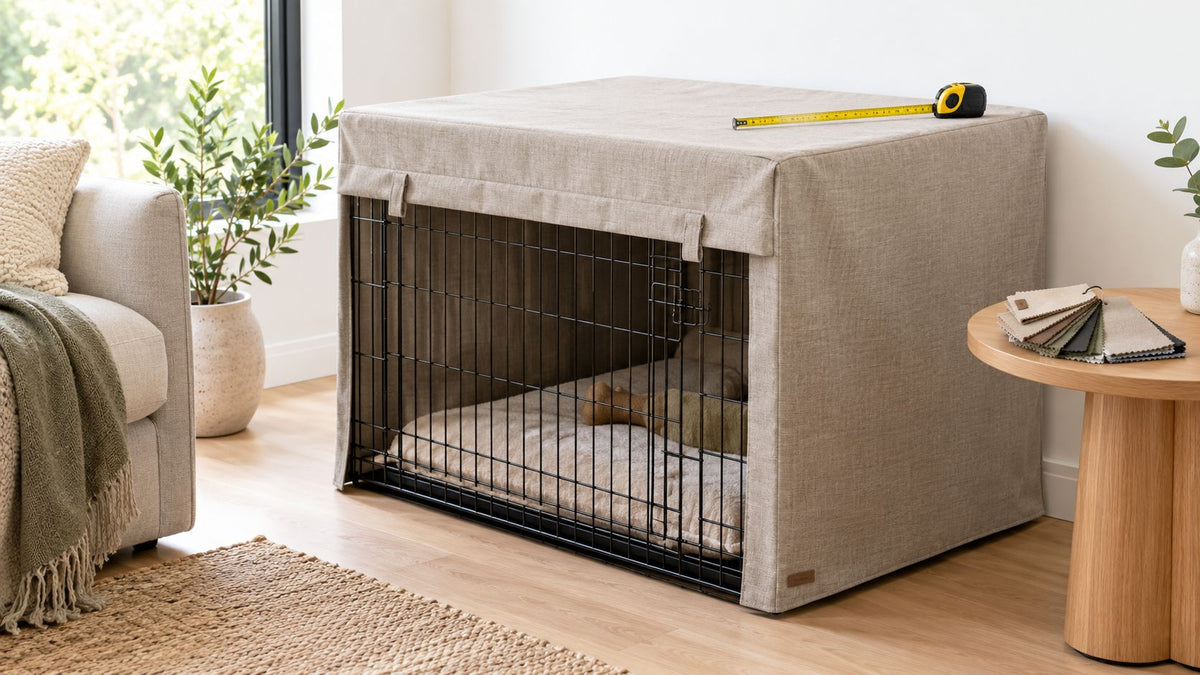
You're probably trying to make a big wire crate feel calmer, darker, and less draughty without buying the wrong thing twice. A large crate cover can do that, but only if you get the fit, airflow, fastening, and washability right. Casamé Home makes washable covers for lounges, armchairs and cushions, not crate covers, so this guide is about choosing one rather than about anything we sell.
Table of Contents
- What a Large Crate Cover Actually Does and Why It Matters
- How to Measure a Large Wire Crate the Right Way
- Choosing the Best Fabric for a Large Dog Crate Cover
- Getting Ventilation Right in an Australian Climate
- Securing the Cover So It Stays Put
- Washing and Caring for a Crate Cover
- Buyer Checklist and Honest Brand Note
What a Large Crate Cover Actually Does and Why It Matters
A large crate cover turns a bare wire box into a calmer, more den-like space for a big dog. It cuts down light, takes the edge off draughts, and makes the crate look less like spare equipment sitting in the room.
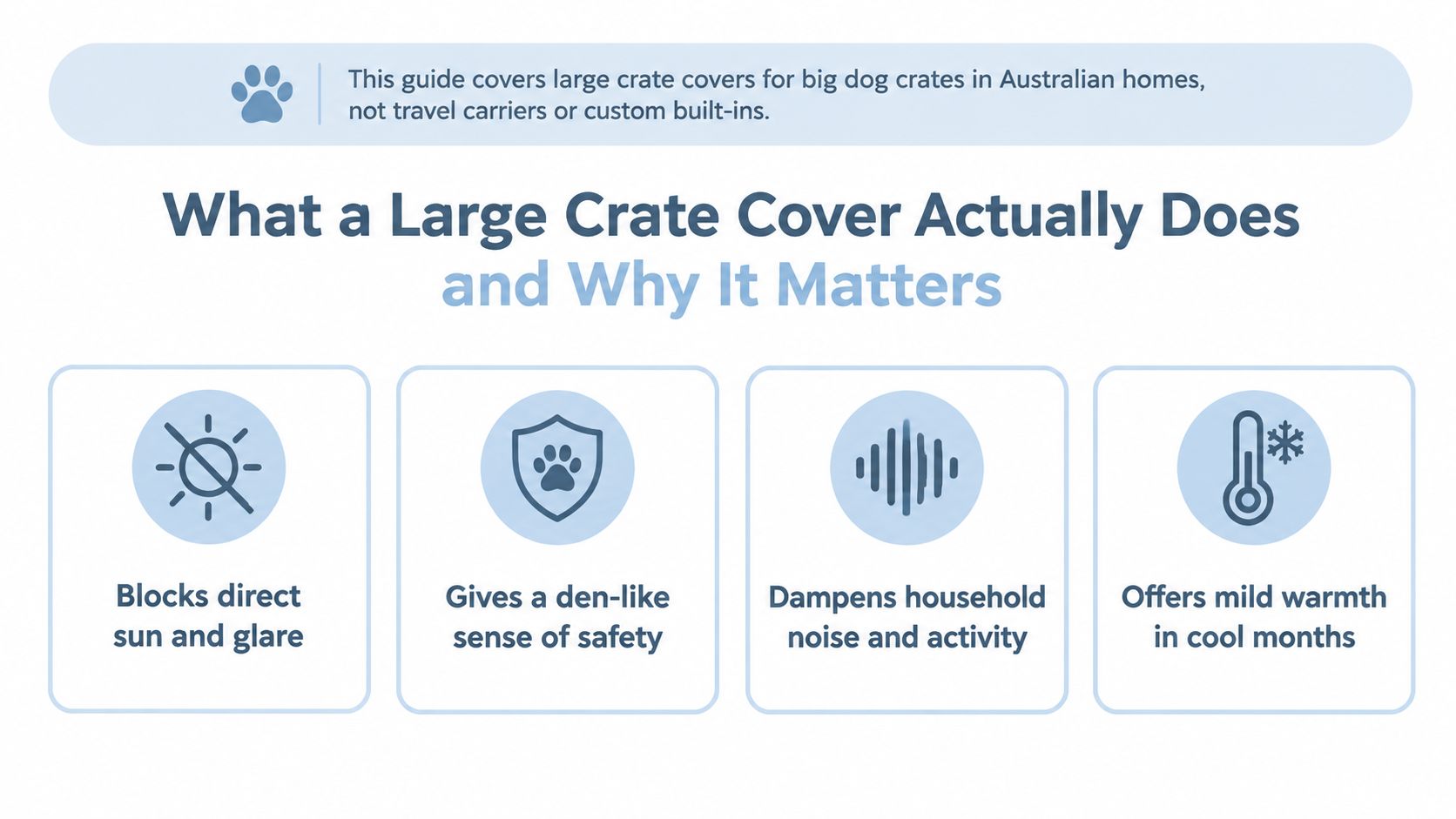
A good cover has four jobs. It should calm the dog by reducing that open, exposed wire feel. It should block draughts without sealing the crate shut. It should survive regular washing, because a cover that cannot be cleaned properly gets binned early. And it should stay anchored when a big dog bumps the frame, leans on the side, or paws at the corners.
Practical rule: treat the cover as part of the crate system, not decoration. If the fabric, fit, and fastening do not work together, the crate ends up hotter, messier, or harder to use.
Colour is the easy part. Fit, airflow, fastening, and washability do the real work. A cover that looks cosy on day one can be the wrong choice by summer if it traps heat, slips out of place, or shrinks after washing. With a large dog, weak seams and loose hems get punished fast because body pressure, movement, and chewing find every weak point.
How to Measure a Large Wire Crate the Right Way
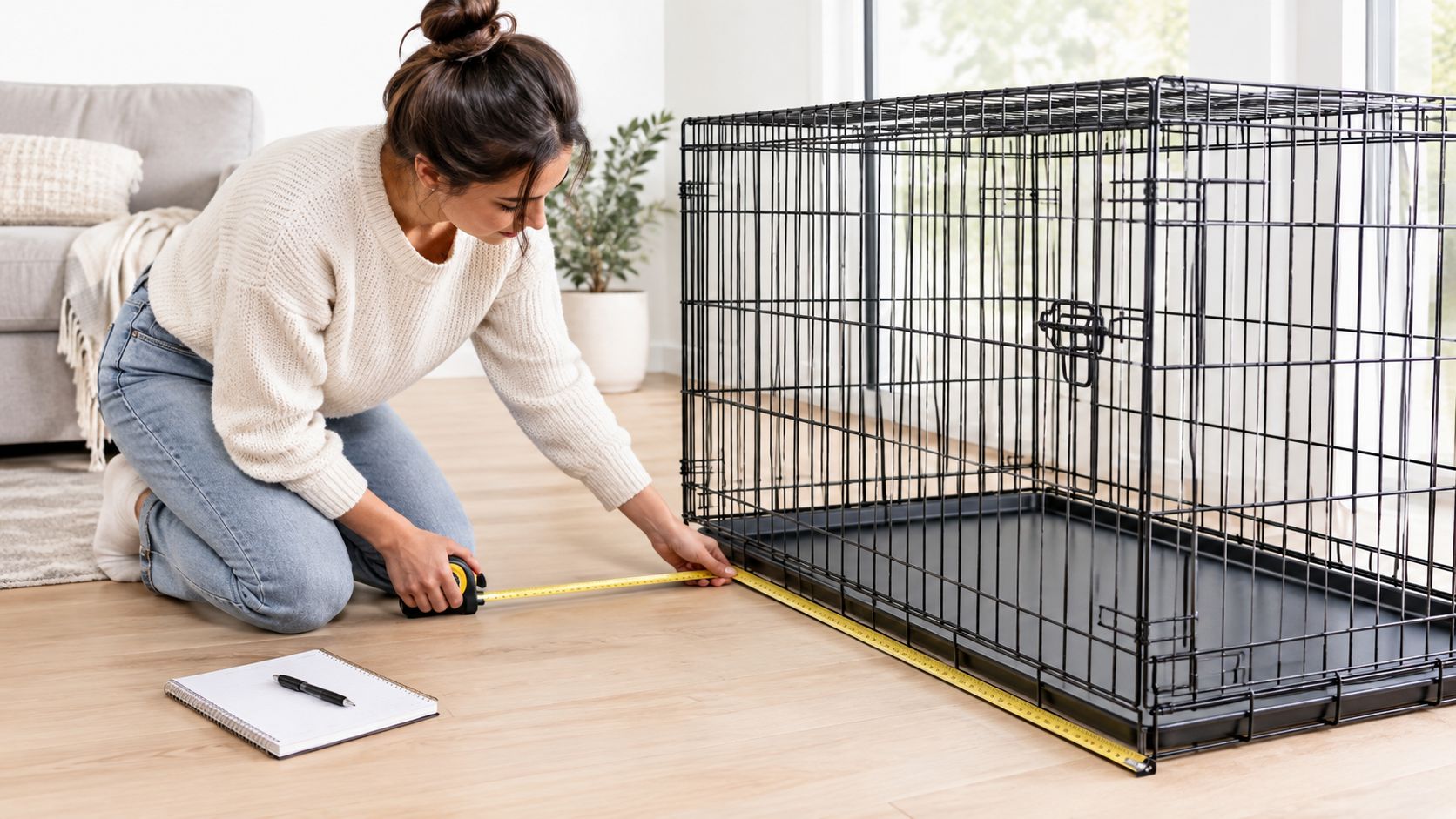
Measure the outside of the crate, not the inside, and check the door area before you order anything. A large wire crate is a rigid box with a door and bars, so the cover has to clear the full external frame, latches, and any feet or tray lip.
Start with the full outer frame
Measure the crate's external length, width, and height at the tallest point. If the crate has raised feet, a protruding tray, or a handle that affects the cover line, include that in the check. A cover that fits the body but ignores the hardware will fight the door every time you use it.
If the crate sits between sizes, round up to the next sensible cover size or look for adjustable panels. For a custom order, send the seller the crate model number and a photo from three angles. That gives a far clearer picture than a label like “large” ever will.
Measure twice, once with the crate empty and once with the dog inside if the crate is used that way. A big dog shifts usable space, and a cover that just clears the frame can still feel tight when the crate is lived in.
The easiest mistake is guessing from the box label. Australian retail listings for extra-large crate covers specify exact measurements, such as Kmart's extra-large pet crate cover at 76 cm high, 107 cm wide, and 70 cm deep, made to fit one brand's large crate. That's a reminder that this category runs on precision, not vague sizing language.
Choosing the Best Fabric for a Large Dog Crate Cover
For a big dog in an Australian home, a mid-weight polyester or poly-cotton blend with a tight weave is the most sensible default. It usually gives you the best balance of washability, structure, and everyday durability without becoming heavy enough to drag on the frame.
Fabric choices that actually hold up
Cotton feels soft and breathes well, but it's slower to dry and more likely to pick up mildew if it stays damp too long. Polyester blends are usually the safer all-rounder because they dry faster and tend to handle repeat washing better. Canvas is tough, but it's heavy and can feel stiff on a wire crate. Fleece feels cosy and looks comforting, but it holds heat and dog hair, so it's not the first pick for warm weather.
A crate cover should feel sturdy in the hand, but not so thick that it behaves like a blanket tent. If you have to fight the fabric onto the frame, the cover is already too awkward for daily use.
For a large dog in a warm Australian home, I'd avoid PVC-coated or vinyl-style covers. They trap heat, smell unpleasant in summer, and make the crate feel more enclosed than cosy. If the goal is a den-like space, choose a fabric with some body, not a plastic shell.
The care side matters just as much as the feel. Australian textile care labels use five symbol families, and the washing symbol can show a maximum temperature, hand wash at up to 40°C, or do not wash. That makes care labels useful, not decorative, when you're choosing a washable crate cover. (Australian care labelling guide)
| Fabric | Chew Resistance | Wash & Dry | Breathability | Best For |
|---|---|---|---|---|
| Cotton | Moderate | Easy to wash, slower to dry | Good | Cooler rooms and lighter use |
| Polyester blend | Good | Usually the easiest to manage | Fair to good | Most homes, especially warm climates |
| Canvas | Very good | Washable, but heavier to dry | Moderate | Tough use, garage or utility areas |
| Fleece | Low to moderate | Washes well, can hold hair | Low to moderate | Shorter use in cooler weather |
Fabric performance and maintenance are separate decisions. A tough-looking fabric that's awkward to clean usually loses the long game.
Getting Ventilation Right in an Australian Climate
Leave part of the crate open at all times, or the cover becomes the problem instead of the solution. For a large wire crate, I'd cover the sides that give the den feel and leave a generous gap for cross-flow, especially on the side facing the room's main airflow.
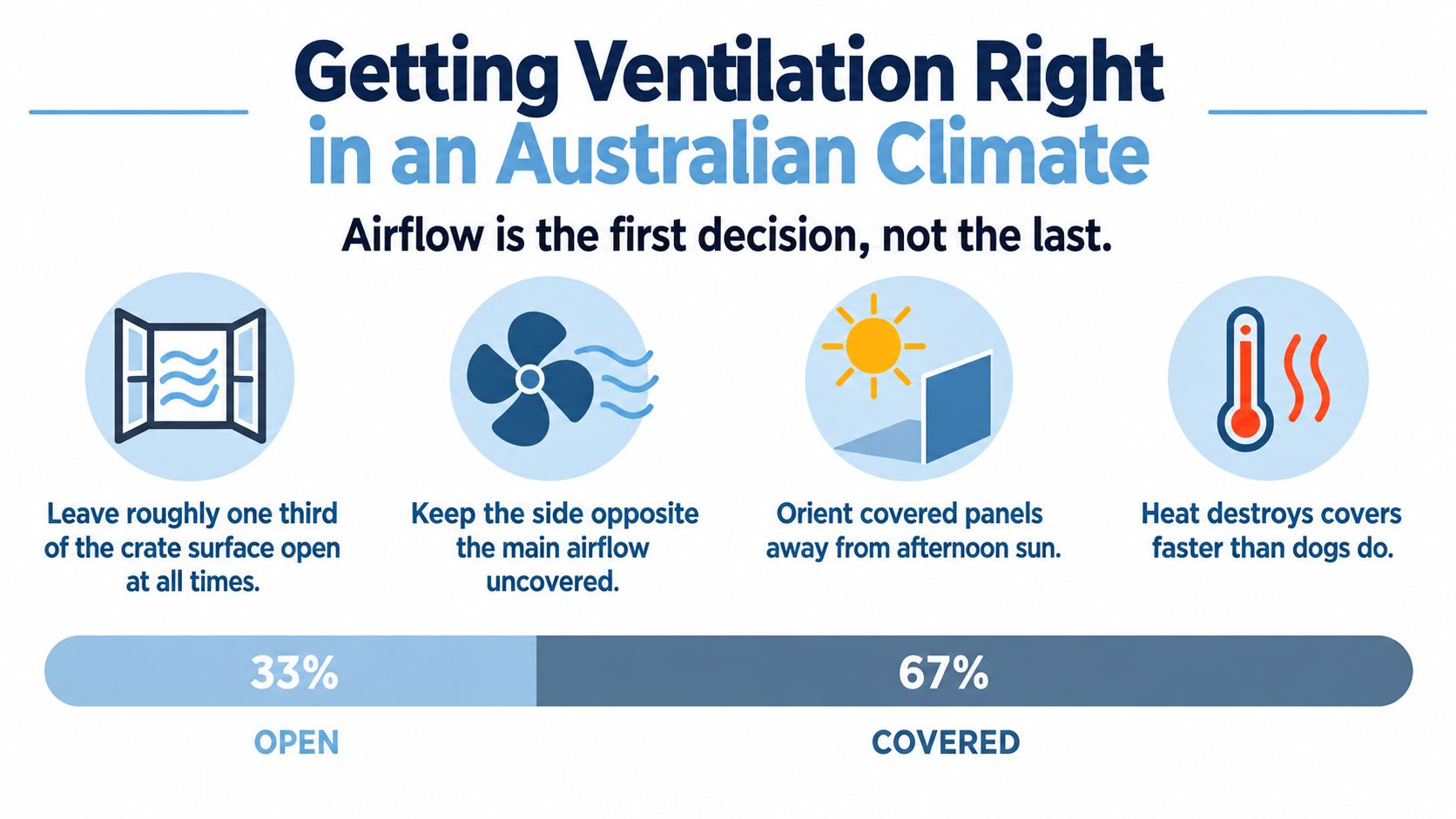
Airflow is the first decision, not the last. In practice, that usually means covering about three panels fully, keeping the door panel partly open if needed, and leaving the back or side opposite the airflow less covered so the crate can breathe. If the cover has roll-up flaps or mesh windows, put them where the air moves, not against a solid wall.
In summer, I'd use a thinner cover and leave more of the front open. In cooler months, a breathable base layer with an extra blanket outside the crate works better than wrapping the whole frame in something heavy. If the dog starts panting, moving to the bare side, or fussing more than usual, the cover is too closed in.
Keep the crate out of direct sun as well. A cover absorbs radiant heat quickly, and a spot that seems fine in the morning can turn uncomfortable fast by midday. That's one of the reasons airflow is not a styling detail, it's a safety and comfort decision.
The Australian angle matters here. Independent AU-focused guidance on crate covers warns that even partial covering can trap heat and favours breathable, machine-washable covers. It recommends covers with mesh windows or roll-up panels so airflow stays adequate. (AU crate-cover airflow guidance)
Securing the Cover So It Stays Put
Use the fastening system that matches the crate frame, not the one that looks neatest on paper. A big dog will paw, bump, and sometimes mouth the cover, so the hold matters as much as the fabric.
What actually grips on a wire crate
Elastic hems are the easiest starting point because they're simple and quick, and they grip a standard wire frame fairly well. They do stretch out over time, though, especially on a heavy dog that presses the sides often. Bungee cords with hooks, threaded under the bottom rails, usually hold better and let you tune tension from one crate to another.
Velcro straps make the most sense on non-standard frames or plastic-base crates. They don't rely on bar spacing, and they give you more control at the corners. Anchor points should sit low, because top-edge ties tend to slide when the dog leans into the walls.
Avoid drawcords on a large cover. A loose cord invites trouble, and once a dog can catch a tooth or paw in the slack, the fastening stops being useful. Check the fixings weekly as well, because a loose cover becomes a chew target fast.
Simple rule: if the fastening can snag, dangle, or loosen easily, replace it with something lower, flatter, and harder to paw at.
| Method | Best For | Hold Strength | Ease of Fitting |
|---|---|---|---|
| Elastic hem | Standard wire crates | Moderate | Very easy |
| Bungee cords | Heavier dogs and frequent shifting | Strong | Easy once set up |
| Velcro straps | Non-standard frames and plastic bases | Strong | Moderate |
| Drawcords | Not recommended for large crates | Weak | Easy, but risky |
Washing and Caring for a Crate Cover
Buy a cover that can go in the machine, or expect to replace it sooner than you should. For a large dog, machine washability is not a nice-to-have, it's the difference between a usable cover and a dead one.
Keep the cleaning routine boring and repeatable
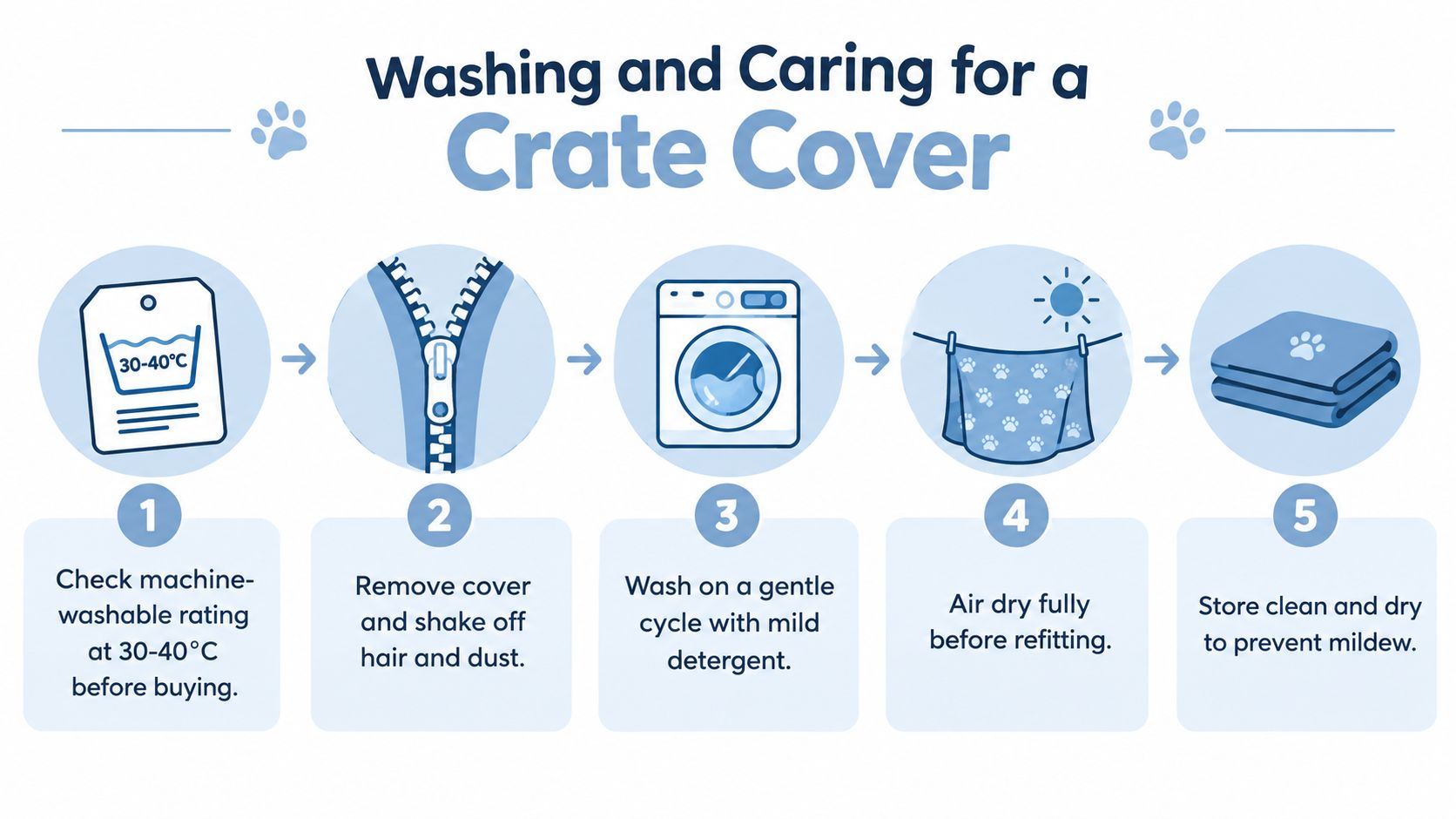
Check for a machine-washable label before you buy, ideally with a 30–40°C wash range if the care label allows it. Wash the cover separately on a gentle cycle with pet-safe detergent, and skip fabric softener because it coats fibres and reduces breathability. For light odours or minor marks, spot-clean first so you're not over-washing the whole cover.
Drying matters just as much as washing. Line-drying suits Australian conditions well and helps avoid shrinkage from heat. If you need a fast dry, hang the cover over two parallel lines so air can move around both sides, then bring it in before evening dew settles. That's the simplest way to avoid damp corners and mildew.
Useful habit: keep two covers in rotation if you can. One stays on the crate while the other dries, and the dog keeps a familiar scent instead of a bare frame.
Warwick's furnishing-fabric guidance also says furnishing fabrics should have a Fabric Care Label, and it recommends checking the label and testing a patch before cleaning the whole piece. That's a sensible habit for any removable textile that's going to live in a real home rather than a showroom. (Warwick care labels guidance)
Buyer Checklist and Honest Brand Note
A good large crate cover decision comes down to five essentials. If one of these is missing, keep looking.
- Measure the actual crate: use the outside length, width, and height, plus door clearance and any protruding hardware.
- Choose a breathable fabric: a mid-weight woven fabric is safer than a heavy coated shell in a warm climate.
- Leave airflow gaps: a crate should feel den-like, not sealed.
- Use low, secure fastenings: elastic, bungee, or Velcro beats dangling ties and drawcords.
- Check the care label: machine washability and practical drying are what keep the cover in service.
Casamé Home's range is built for washable furniture covers, cushion covers and throws for lounges and chairs, not for pet crates. The product logic is different, because furniture sizing and crate sizing are different, and a crate is a rigid box with bars rather than a soft seat. What the range does offer is straightforward, washable home textiles for the lounge in a big-dog household.
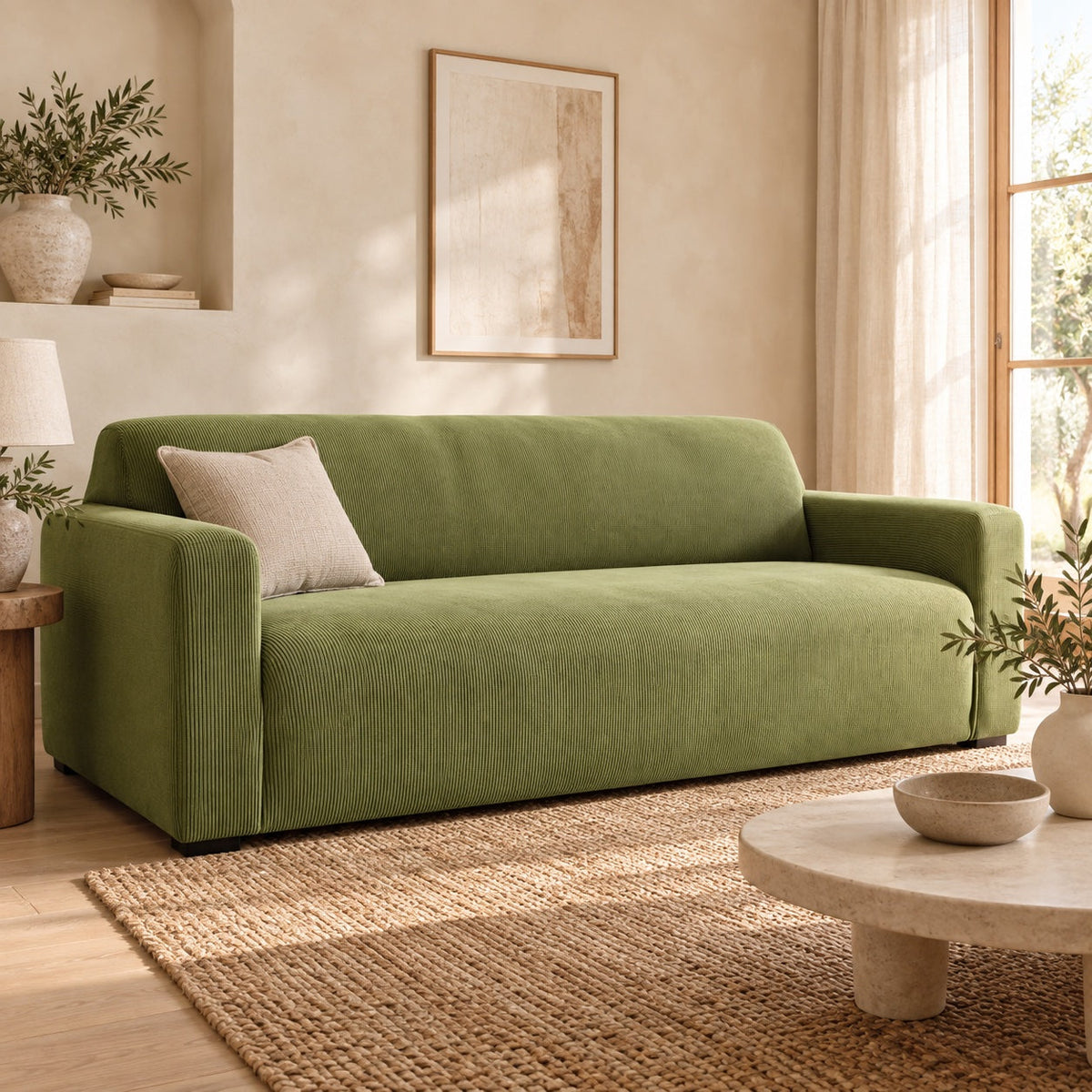
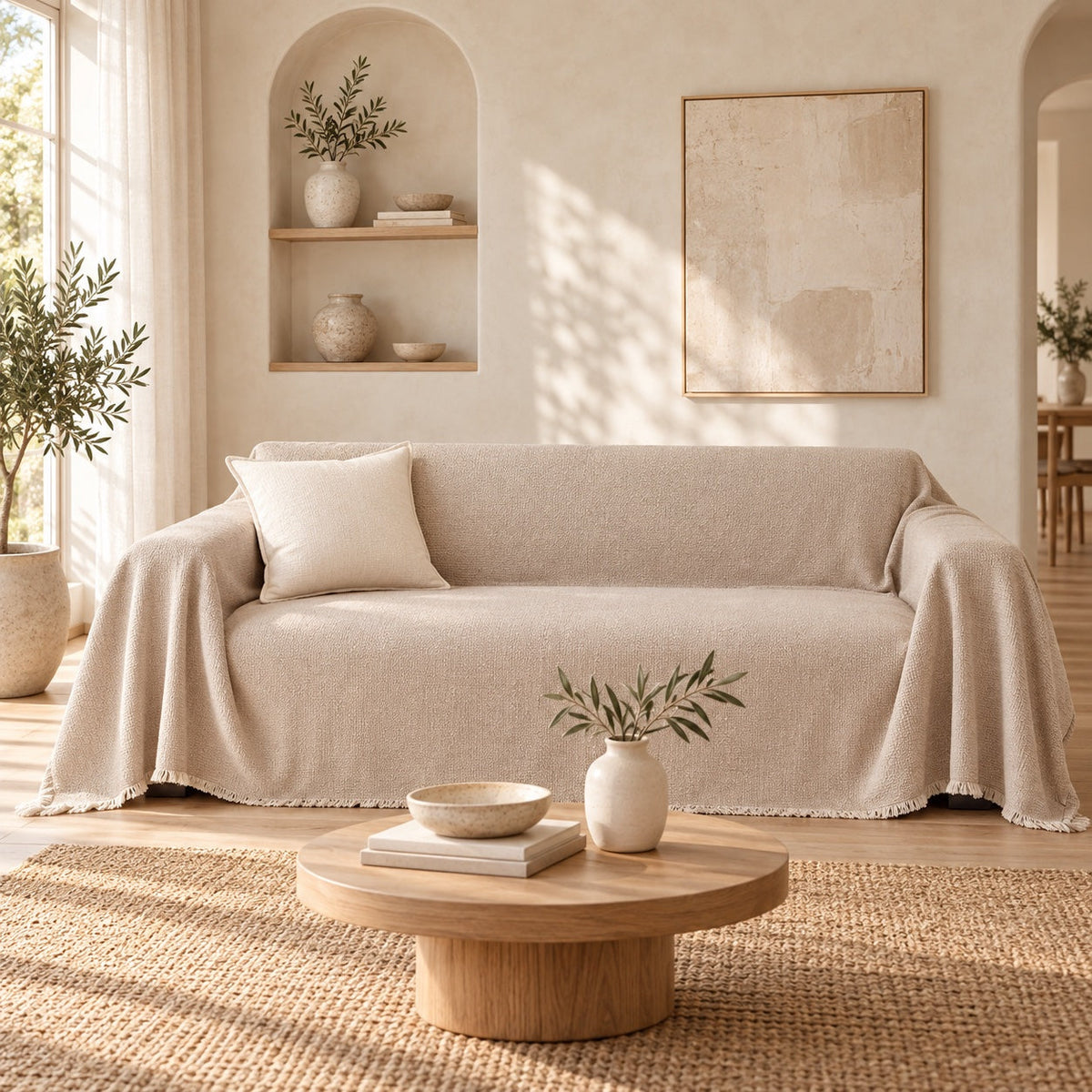
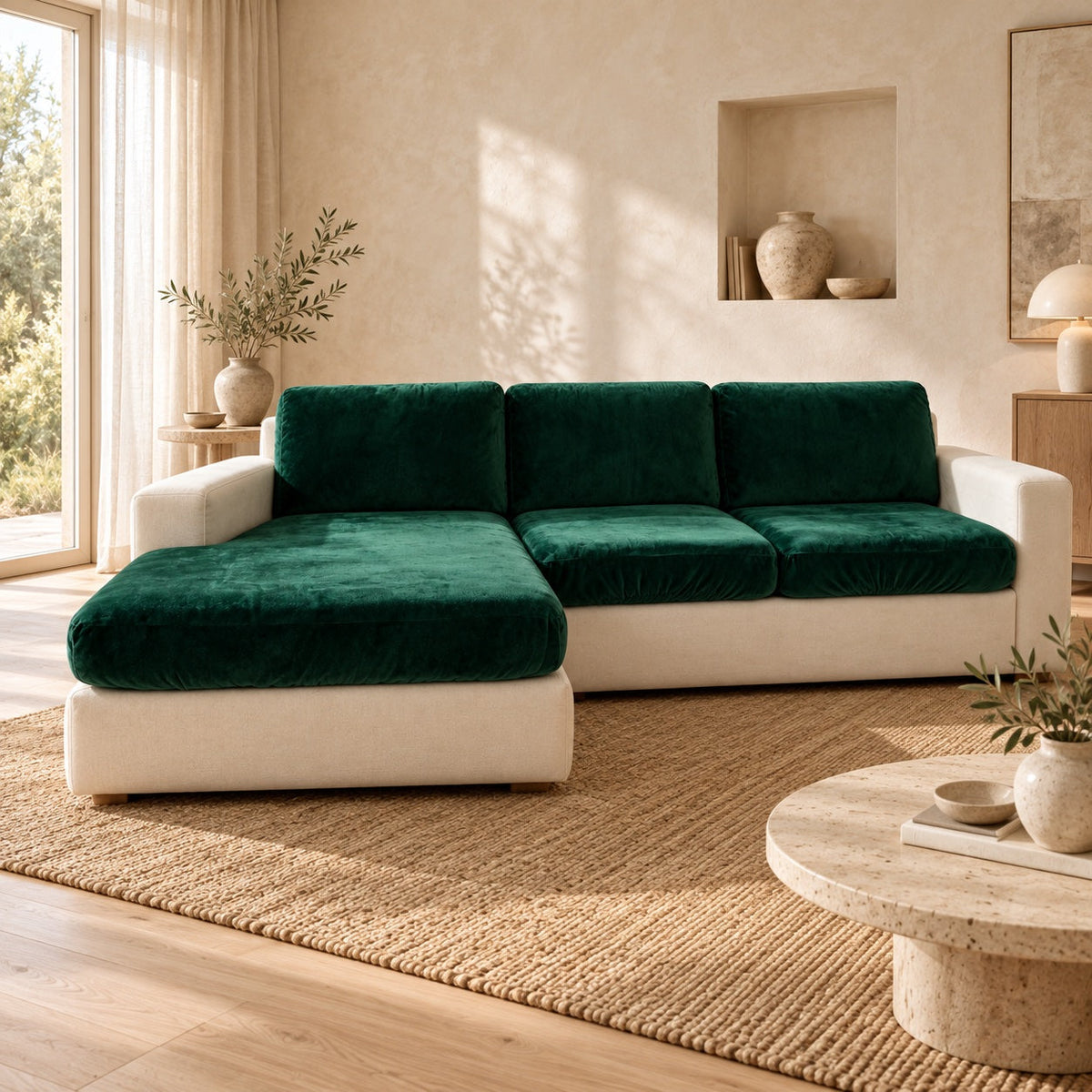
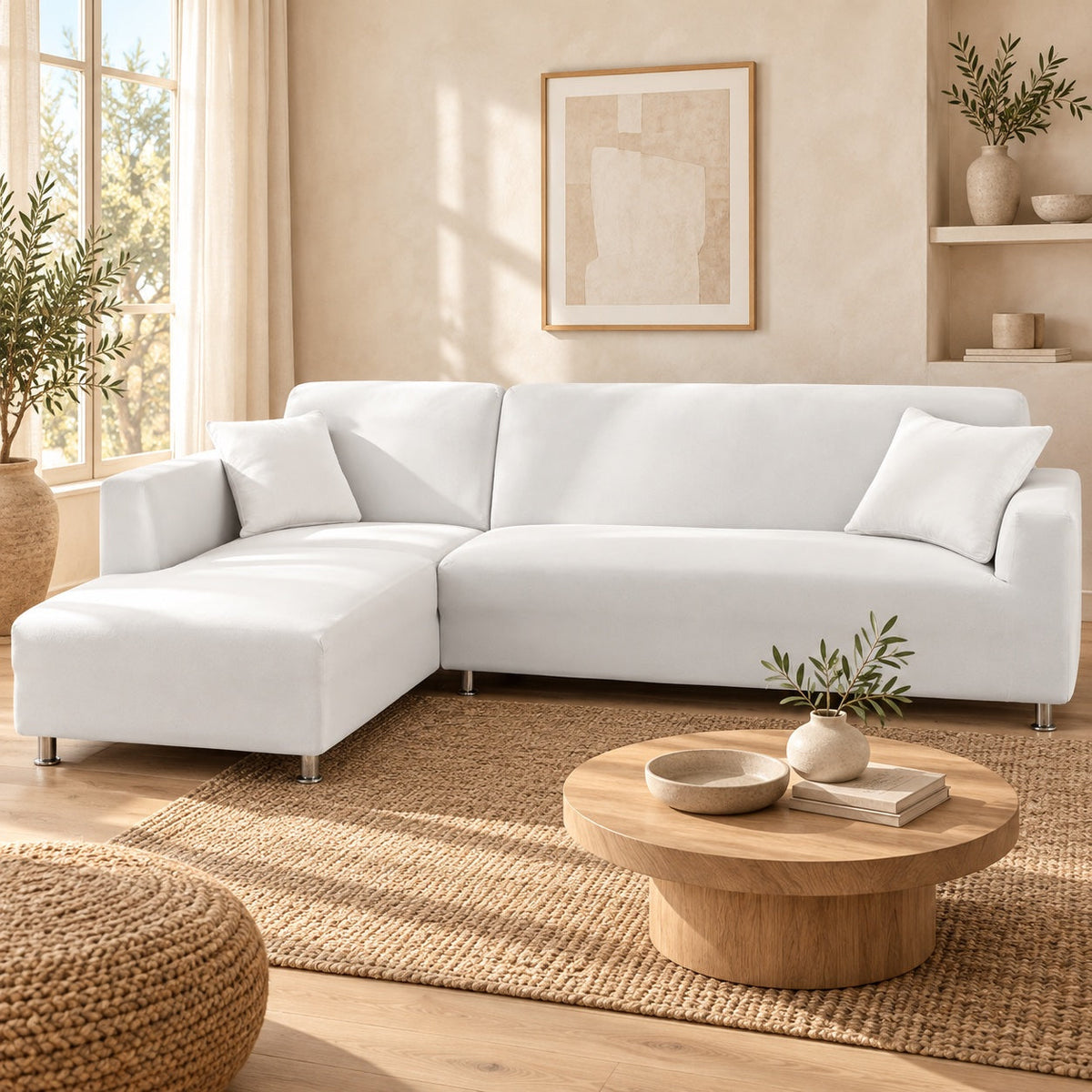
For a reader trying to protect a living room rather than a crate, the relevant options are the Pebble-Textured Waterproof Couch Cover, the Waterproof Couch Cushion Cover (both in our waterproof couch covers range), and the throw blanket range. The couch cover comes in 1 seater 90-130 cm, 2 seater 135-175 cm, 3 seater 180-220 cm and 4 seater 225-300 cm, while the cushion cover comes in Standard and Deep S, M and L, plus Standard XL, Chaise Narrow and Chaise Wide. Those are made for furniture use, they belong on the lounge, not over a pet crate, and they belong in a different buying decision.
Frequently Asked Questions
Can I use a throw blanket on a large crate?
No, not as a proper crate cover. A throw blanket is made for a sofa, bed, or decorative drape, not for a rigid wire box with a door and bars. It can slide, bunch, and block ventilation.
What if my crate sits between two standard sizes?
Size up or look for an adjustable design, then confirm the door and corner clearance before buying. If custom sizing is available, send exact measurements and photos from different angles so the seller can see the full shape.
How often should I wash a crate cover in a multi-dog home?
Wash it whenever it starts to smell, pick up visible dirt, or feel damp, because more dogs mean more hair, oil, and surface grime. If you've got a second cover in rotation, the routine gets much easier and the crate stays usable.
How do I introduce a cover to a crate-trained dog?
Start with part coverage and a familiar bedding setup, then watch how the dog reacts over a few sessions. If the dog relaxes, you can close off a little more, but if the dog pants, paws, or avoids the crate, the cover is too enclosed.
If you're protecting the lounge in a big-dog household, Casamé Home has washable covers and throws made for sofas, cushions and chairs, not crates. Visit Casamé Home to check the furniture range, compare the sizes, and choose the right textile for the room your dog shares.