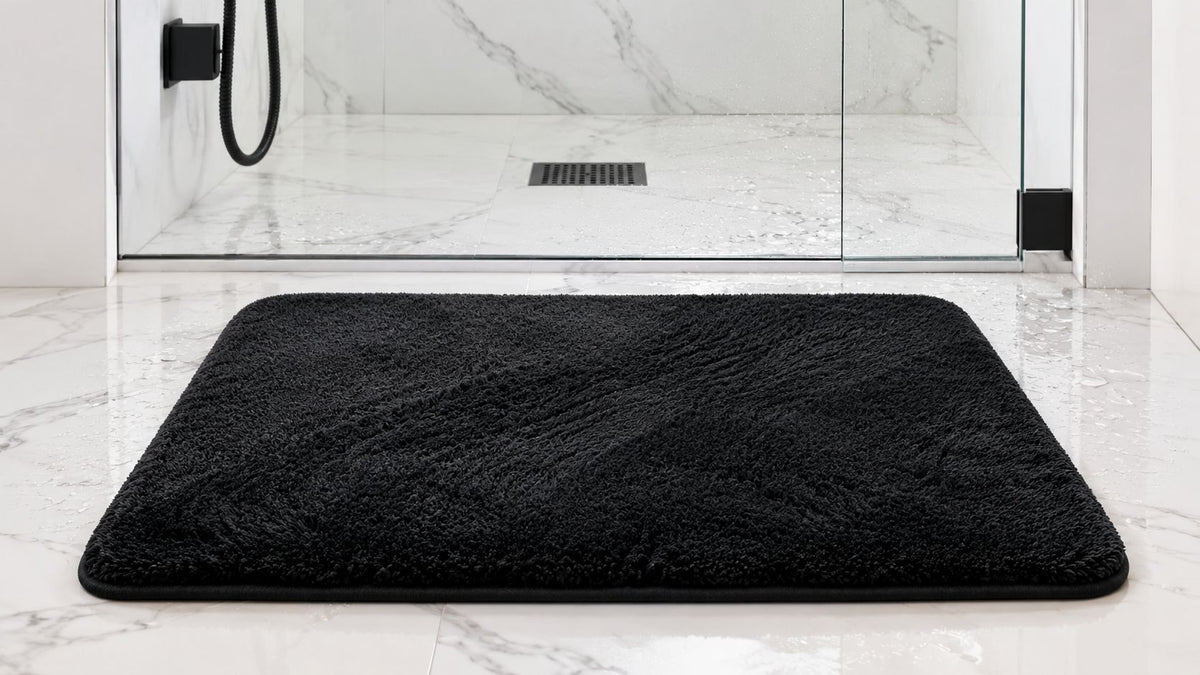
Casamé Home makes no bathroom mats, so a black bathroom mat should be chosen for slip resistance, quick drying, a size that clears the door, and care that keeps the black looking even as the pile wears. In Australia, that matters because about 8,600 hospitalised falls among older Australians occurred in bathrooms in 2019 to 20 (AIHW).
Key Takeaways Black Bathroom Mats
Black Shows Wear: Dust and crushed pile show more clearly on dark mats.
Test the Backing: Judge grip on a dry floor, not by a non-slip label.
Lift Grit First: Shake and vacuum with the pile before washing to keep black even.
A black bath mat seems simple until you put it on a wet floor and live with it day after day. Then the colour, the pile, the backing, and the cleaning routine all start behaving like separate decisions, and each one changes how the mat looks and feels underfoot.
Table of Contents
- What a Black Bathroom Mat Needs to Do in an Australian Bathroom
- Why Black Is the Hardest Colour to Keep Looking Even
- Which Materials Hold Black Best and Which Drink the Water Fastest
- How to Judge an Anti-Slip Backing Without Trusting the Word Non-Slip
- Sizing and Placement That Suit an Australian Bathroom Layout
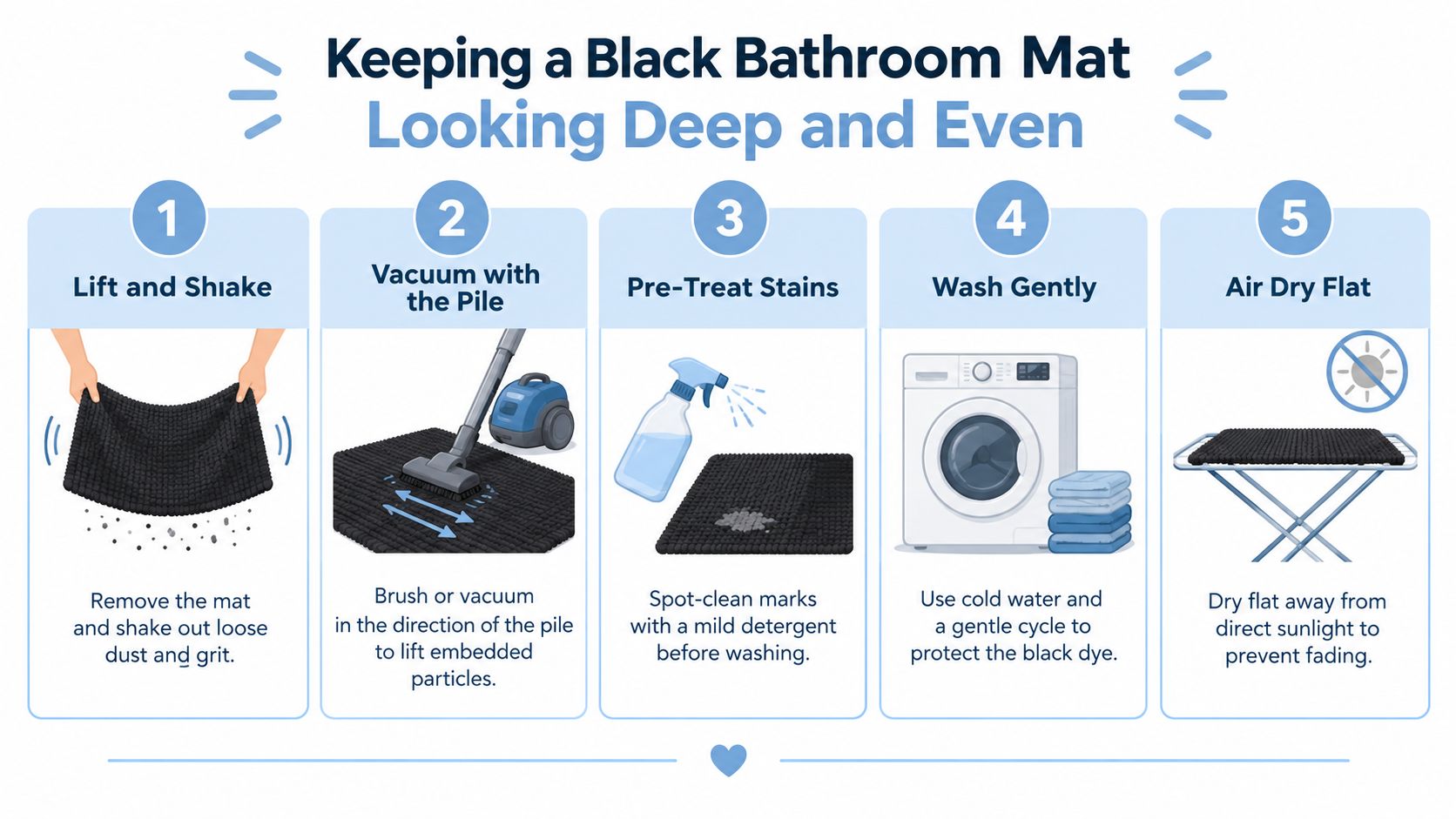
- Keeping a Black Bathroom Mat Looking Deep and Even
- Where a Black Mat Hands Off to the Living Room
What a Black Bathroom Mat Needs to Do in an Australian Bathroom
This is a buying guide from a home-textiles editor rather than a product pitch. A black bathroom mat in an Australian home has three jobs at once, and buyers usually notice only one of them at first.
The mat has to land well, not just look good
A bathroom mat needs to give you a stable landing zone outside a shower or bath, soften a hard tile floor, and keep its shape when the room gets damp. That means the mat has to stay put, take in splash water, and still look deep and even after repeated use. If any one of those fails, the mat starts feeling like clutter instead of comfort.
This is why the colour question is really a care question. Black can look sleek against pale tiles or calm against timber-look flooring, but colour won't rescue a mat that shifts, stays damp, or goes patchy at the pile tips. A smart buyer treats black as the final layer, not the deciding feature.
Practical rule: if a black bathroom mat can't stay flat, dry, and easy to wash, the colour stops mattering very quickly.
Why Black Is the Hardest Colour to Keep Looking Even
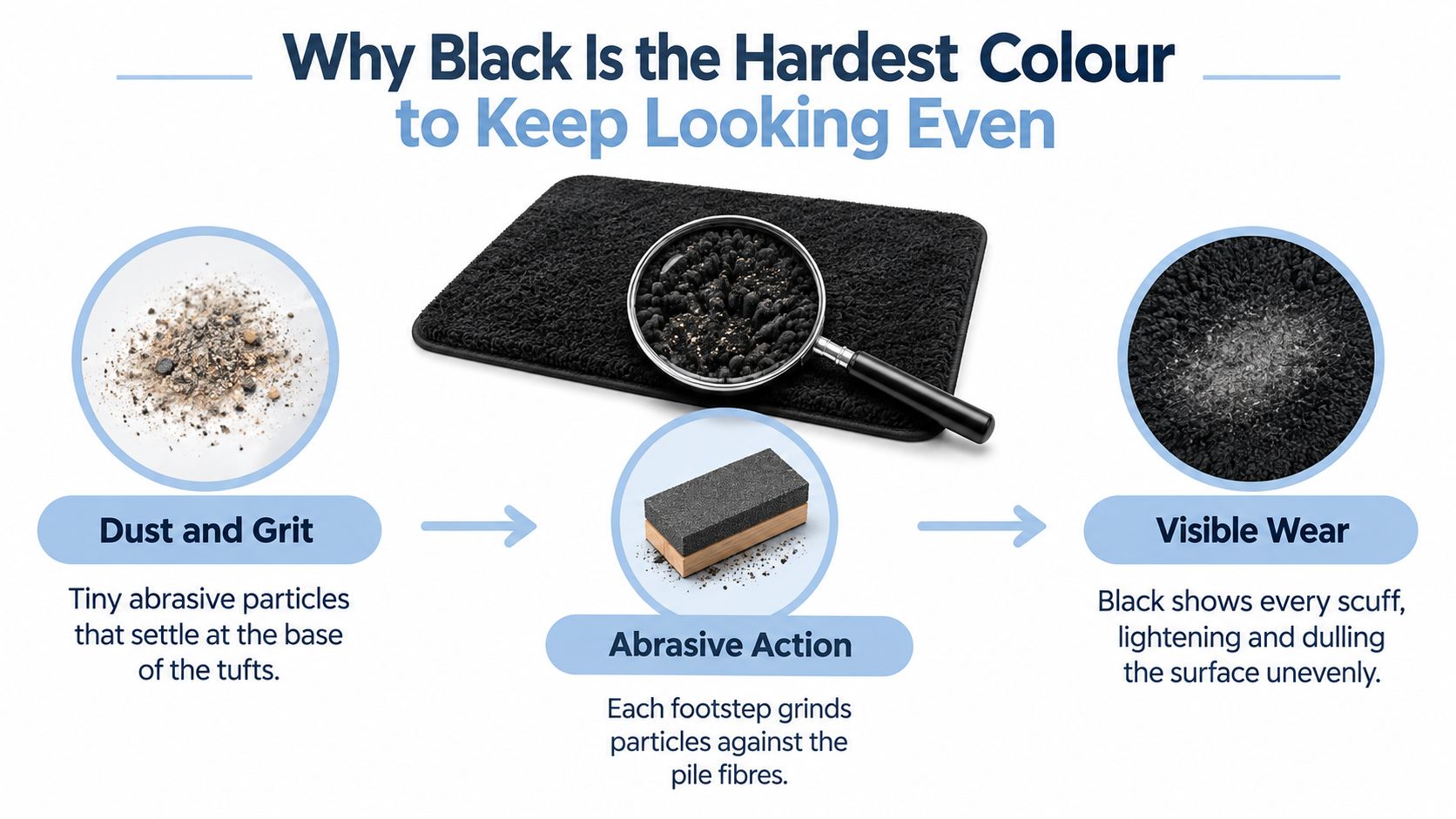
Black is the hardest colour to keep looking even because pile fabric shows wear, dust, and nap direction more clearly than lighter colours do. On a dark surface, the eye reads changes in light as changes in colour, even when the dye hasn't changed at all.
Pile fabric fails from grit before it fails from washing
Dust and grit settle at the base of the tufts, and every footstep grinds those particles against the fibres like a fine abrasive. That's true for a bathroom mat, but it's also familiar from a dark velvet cushion or a dark couch cover. The fabric does not just get dirty, it gets mechanically flattened.
That's why brushing or vacuuming with the direction of the pile before washing matters more than a lot of shoppers realise. If you wait until after the wash, the grit has already done its work, and the pile can still sit crushed and dull. The fibres need to be lifted before they go into water, not after they've been hammered flat.
The nap direction changes how black reads
On a dark pile, the nap lies one way and reflects light differently along it than against it. A crushed patch can look pale or faded even though no dye has moved. That's the strange part about black, it can look “worn out” because the fibres are lying in the wrong direction, not because the colour has disappeared.
For black tiles and dark finishes, black bathroom tile ideas can help explain why contrast and reflection matter so much in a bathroom. The same visual rule applies on the floor, where a flattened mat can read like a lighter patch even when the colour is still technically black.
A black pile looks deepest when its nap points the same way and its surface hasn't been crushed by grit.
Palette ideas from Casamé Home can be useful as a colour-thinking reference, but black on the floor is less forgiving than black on a sofa or throw because feet, water, and grit all work on it at once.
Which Materials Hold Black Best and Which Drink the Water Fastest
The best material for a black bathroom mat depends on whether you want quicker drying, heavier absorbency, or easier home washing. A mat that looks beautiful in the showroom can behave very differently once it has sat near a shower for a month.
| Material | Absorbency | Drying speed | Washable at home | Black colour hold |
|---|---|---|---|---|
| Cotton chenille | Usually strong | Often moderate | Usually yes, check the label | Good, but crushed pile can look dull |
| Egyptian-style long-staple cotton | Strong | Moderate | Usually yes, check the label | Good if the pile stays lifted |
| Microfibre | Often very high | Often faster than thicker pile | Usually yes, check the label | Can look even, but lint shows clearly |
| Memory-foam backed polyester | Comfortable and absorbent on top | Slower because the backing holds moisture | Often yes, but drying matters | Black may look even until the backing stays damp |
| Rubber-backed blends | Varies by pile | Often slower if the backing traps moisture | Sometimes, depending on construction | Good when the backing stays stable |
| Jute and sisal | Low for splash-heavy bathrooms | Usually quicker on the surface | Often less convenient at home | Black styling is less common and the fibres can look dry or rough |
A few material patterns matter more than branding language. Dense pile can feel luxurious, but dense pile also holds more moisture if the room ventilation is poor. Thinner constructions may dry faster, yet they can feel less cushioned and may show floor irregularities more obviously.
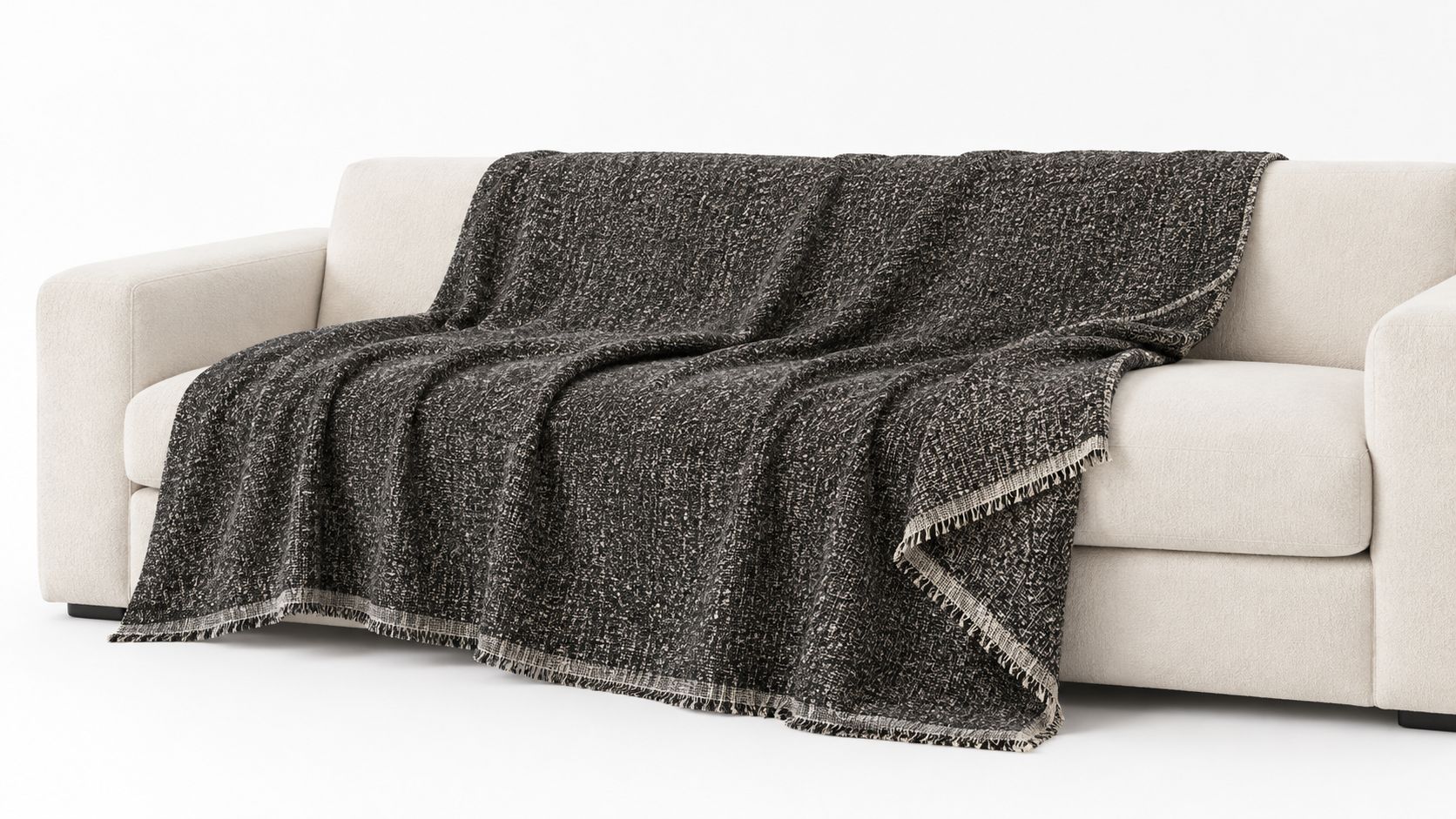
The exact weave matters too. For example, the Tressa Throw Blanket · Black has a speckled, tweed-style texture with a fringed edge, and that kind of textured surface is a good reminder that texture changes how black reads across a room. On a bathroom mat, the same principle means that a smoother, faster-drying surface can look cleaner for longer than a deep, plush one if the room gets used heavily.
For Australian homes, the larger point is simple. A black bathroom mat is only as good as its ability to dry between uses, because repeated dampness is what makes the pile lose shape, lose depth, and start looking tired.
How to Judge an Anti-Slip Backing Without Trusting the Word Non-Slip
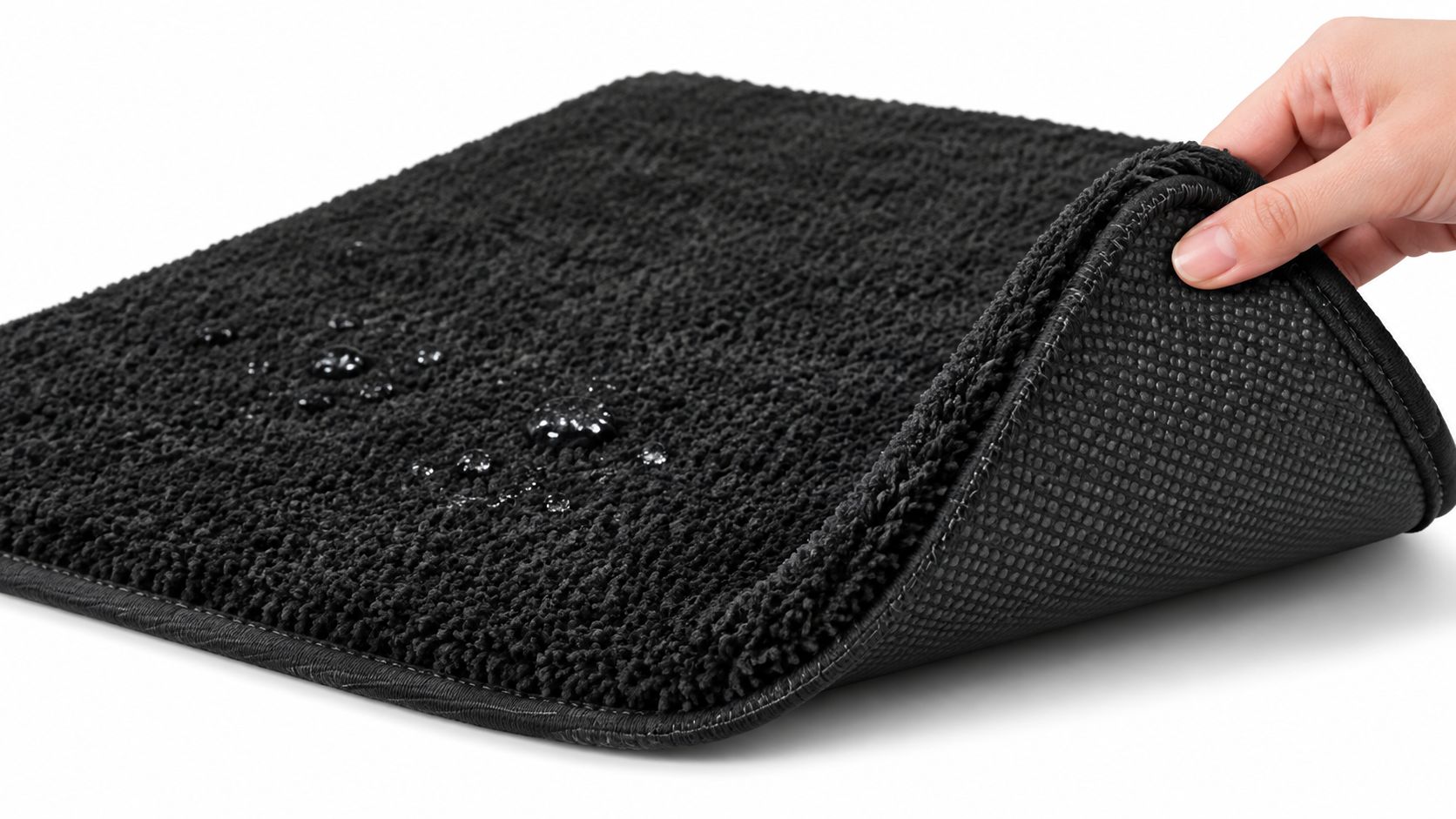
A black bathroom mat should be judged by how its backing grips a clean, dry floor, not by the word non-slip on the tag. The pile can absorb water all day, but the backing is what decides whether the mat stays where you put it.
Look for backing behaviour, not just backing claims
The backing should feel like a layer that lies flat and keeps the mat from creeping when nudged. If the edges curl, the dots peel, or the rubber has cracked, the mat is telling you it has aged out of safe service. A mat that slides when you push it lightly is not doing its job, even if the label sounds reassuring.
Water reduces floor friction, and an unsecured mat can become a sliding or trip hazard. That matters even more in a bathroom, where soap film and stray moisture can reduce contact under the mat.
The same floor logic underpins this guide to non-slip bathroom flooring, which is useful context if you're trying to understand why a mat can't fix a slippery room by itself. The floor still needs enough grip underneath the mat.
Separate the mat from the floor, and the floor from the mat
Do not confuse a bathroom mat with Casamé Home's Anti-Slip Sofa Pads, which are felt pads made to sit beneath sofa legs on hardwood, tile, and laminate floors. They're for furniture legs, not for sitting under a mat.
Anti slip mat for bathroom covers the broader safety angle if you want a deeper read on bathroom slip control. The core rule is the same either way, a backing only works properly on a clean, dry floor with enough surface contact.
Secure the mat only after the floor is dry, because dust, soap film, and moisture all weaken the grip you think you've got.
Sizing and Placement That Suit an Australian Bathroom Layout
The right size black bathroom mat is the one that fits the floor you have, not the floor you wish you had. Measure the landing zone, the door swing, and the path between the shower, vanity, and toilet before you decide on shape.
Match the shape to the room, not the trend
A standard rectangular mat usually suits the spot outside a shower or bath. A longer runner can make sense along a vanity wall, especially in a family bathroom where several people use the same space. A small square can work near a separate water closet, while a contour shape can follow a pedestal without bunching.
The important part is clearance. Leave space for the door to open freely, because a mat that catches under a door is a trip risk and a wear point all at once. A black mat that has to be folded or shifted every day is not really the right size.
In an ensuite, a smaller mat near a walk-in shower often looks cleaner than a runner that dominates the room. In a family bathroom with a double vanity, one longer mat can feel calmer than two separate mats that drift apart over time. Black works well in both settings because it can either anchor pale tiles or blend into darker finishes without shouting for attention.
Safe Work Australia lists bathrooms among the wet-floor slip hazards, because water and other contaminants can make floors slippery (Safe Work Australia). That makes placement part of safety, not just style.
Keeping a Black Bathroom Mat Looking Deep and Even
A black bathroom mat stays rich-looking when care protects the pile, the dye, and the backing in the right order. Skip the prep and the wash can press dirt deeper while leaving the nap flattened.
Start by lifting the grit out of the pile
Lift the mat, shake it out, then vacuum or brush with the direction of the pile before washing. By the time a mat goes into water, its surface already has a shape, and the wash will set that shape unless you lift the fibres first. Pre-cleaning is the part that helps the pile rebound instead of drying in a crushed state.
Wash the label, not your assumptions
Australian textile care labels must give enough information to explain how an item should be cleaned and maintained under the Consumer Goods (Care Labelling) Information Standard 2023 (legislation.gov.au). That matters because a black bathroom mat cannot be treated as automatically machine-washable, and dark dyes may run or fade if washed the wrong way.
Wash the mat separately from light textiles when the label calls for it, and dry it fully so moisture does not stay trapped in the backing. Australian housing guidance says bathrooms are damp areas where mould can grow, especially with poor ventilation, and recommends venting moisture outside and keeping wet areas clean and dry (CDC Australia). A black mat can hide lint better than a pale one, but it can also hide residue and mould longer. The same care logic applies to kitchen mats for busy homes, where pile and backing also need to dry cleanly.
Best habit: dry both the room and the mat fully before putting the mat back down.
Where a Black Mat Hands Off to the Living Room
A black bathroom mat teaches the same care lesson as a black throw or cushion cover. Pile depth only stays even when the fibres stay lifted and clean. Once the nap gets crushed, dark fibres read flatter and duller, which is why black can look tired before the textile is worn out.
That logic carries straight into the living room, where Casamé Home's range lives. The black throw range includes Melareve, Norka, Klint, Velmora, Mistara, Coveri, Yeluxe, Striniara, and Elligate. Oriona (Jet Black) and Tressa (Black) show the same point more clearly: black works best when texture and care are chosen together. The black cushion covers are all 45 cm x 45 cm and square, including the Classic Stretch Cushion Cover, Jacquard Cushion Cover, and Diamond Jacquard Cushion Cover.
Households generated nearly 90% of Australia's textile waste in 2018 to 19, equal to about 247,000 tonnes, so washability and longevity affect more than style alone (ABS). A black mat, throw, or cushion cover that keeps its pile upright holds its depth longer, which is why the same care habits matter from the bathroom floor to the couch.