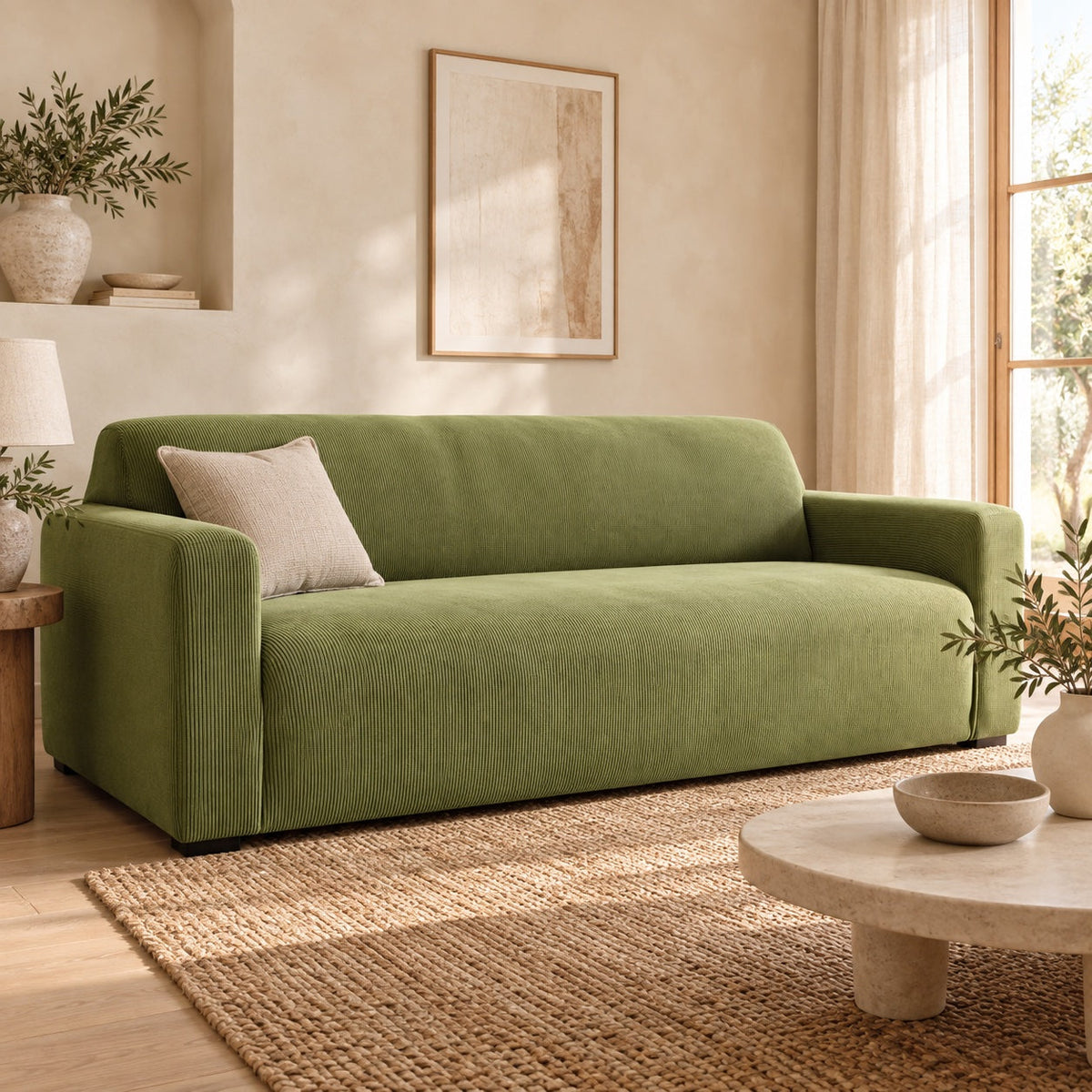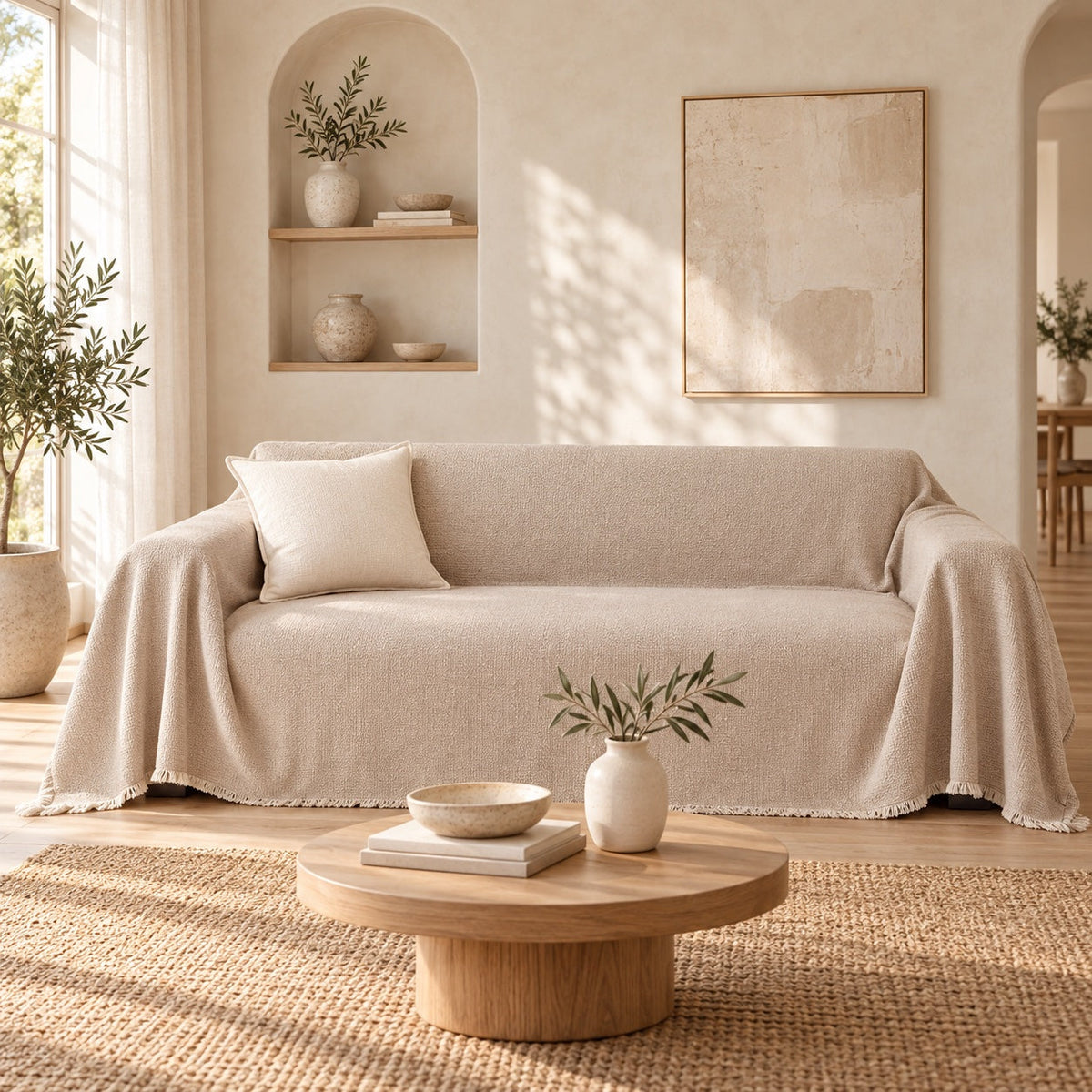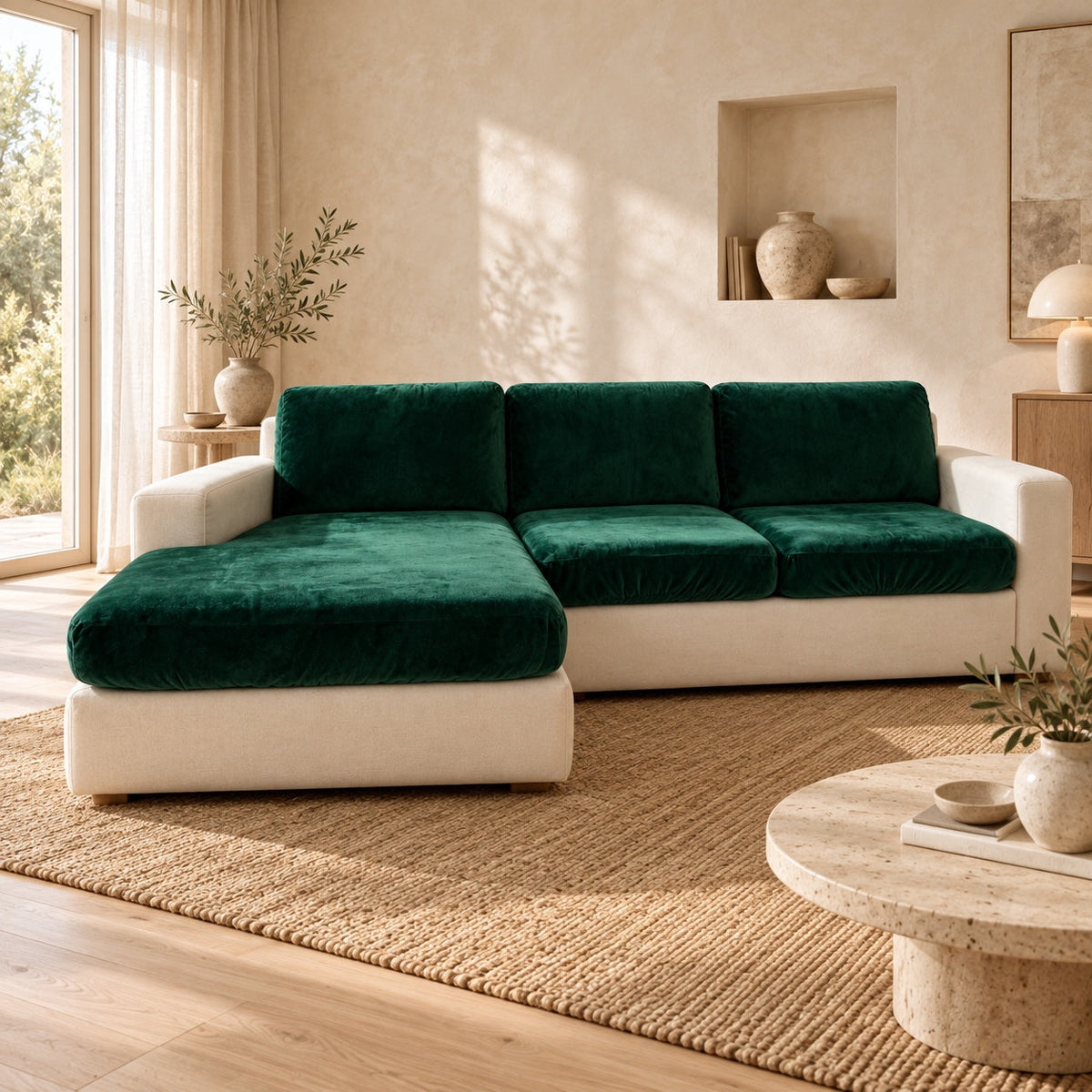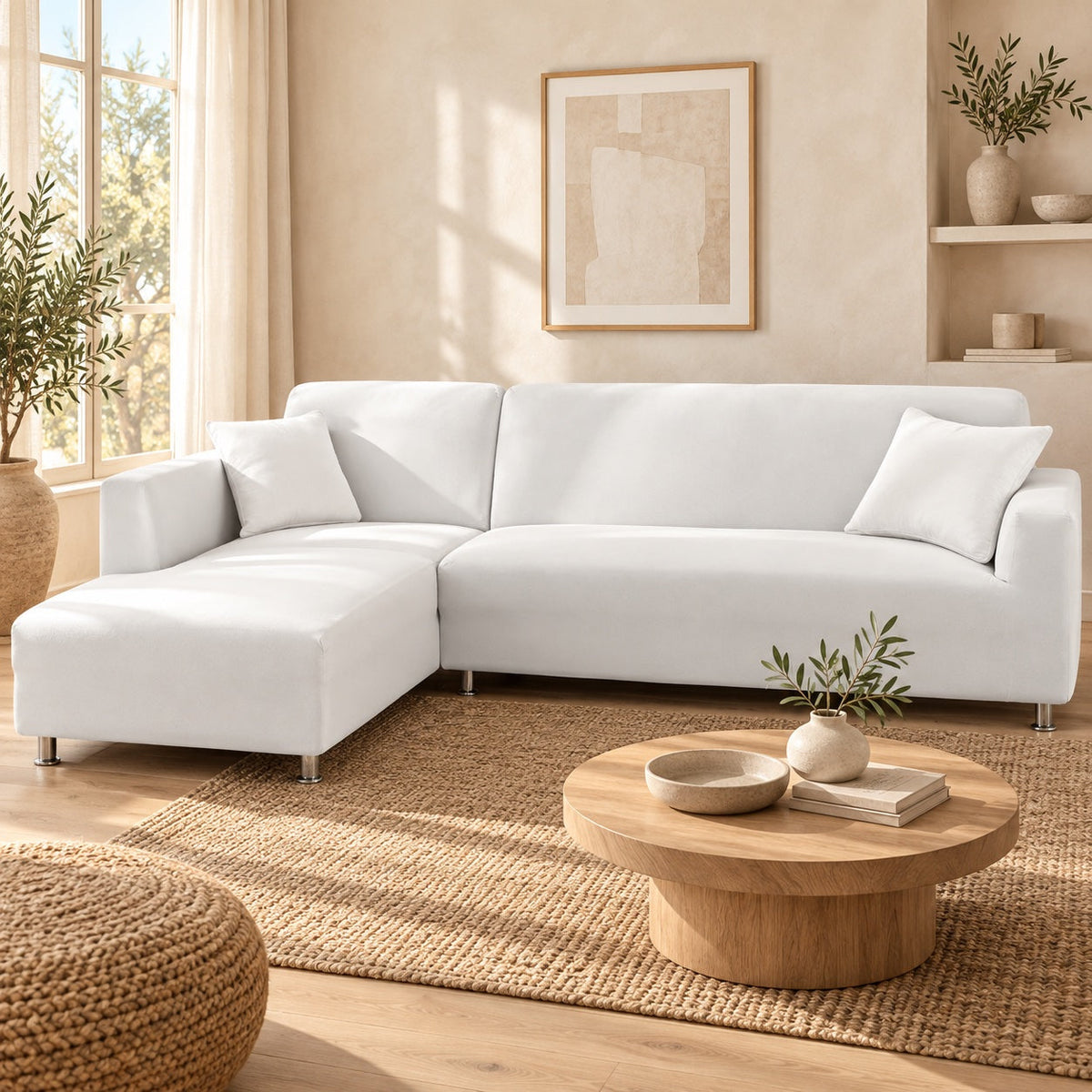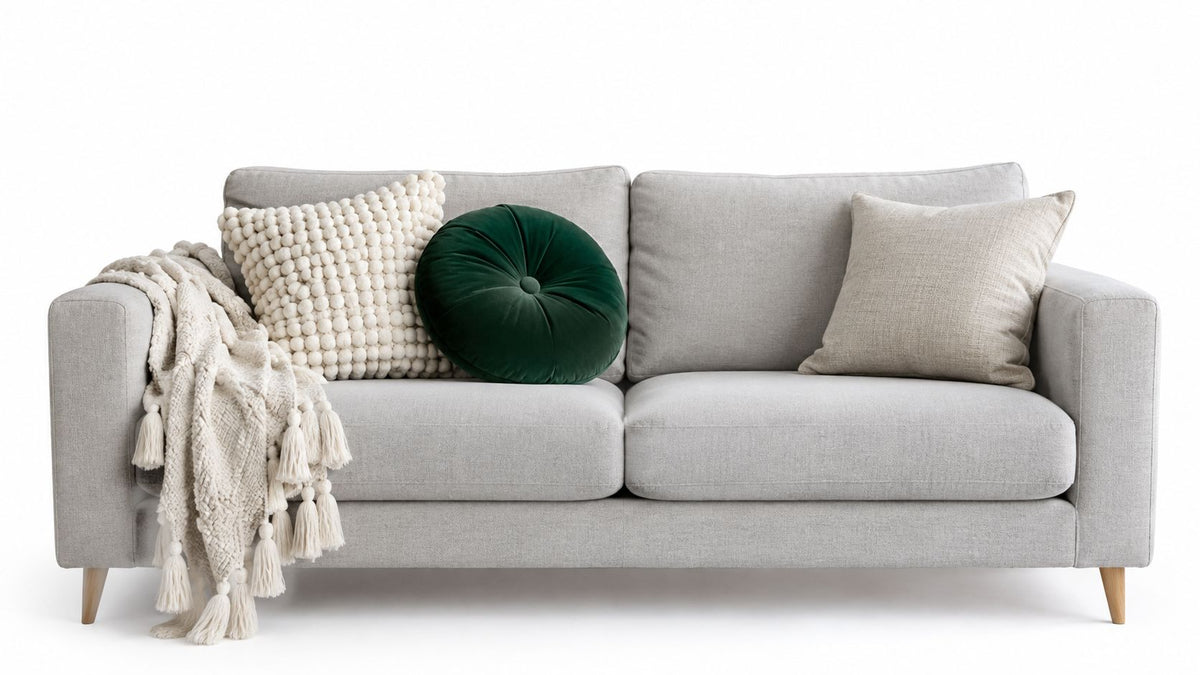
Our velvet cushion covers are square at 45cm x 45cm, sold as 1 piece or 2 pieces, and we don't make a round one. If you're chasing the velvet cushions round look, you're really after the plush, light-catching finish, not the circle, and that's exactly what a smart cushion scheme can deliver.
That's the part worth noticing when styling a sofa. The outline matters less than the pile, the mix of textures, and the way the whole set sits with the couch cover or throw behind it. If you want to build the look with our range, find stretch-fit sofa cushion covers.
Table of Contents
- Why a Round Velvet Cushion Search Often Leads to a Square Result
- What Makes Velvet Look the Way It Does
- How Many Cushions a Couch Actually Needs
- Texture Beats Colour Every Time on a Velvet Sofa Scheme
- Which Velvet Colours to Mix in a Cushion Scheme
- Finishing the Set With a Matching Cover or Throw
- When Velvet Cushions Earn Their Keep Across the Year
Why a Round Velvet Cushion Search Often Leads to a Square Result
You're usually after the soft, luxe velvet look, not the geometry. Our cushion range is square, 45cm x 45cm, and every velvet cushion cover we sell is a cover only, so there's no round cushion cover, no insert, and no fill to match to a circle.
That's not a cop-out, it's the honest answer. A round cushion can be lovely if you want the shape, but if your real goal is to make a sofa feel richer, softer, and more deliberate, square velvet covers get you there fast. The eye reads pile, sheen, and contrast before it cares about the outline.
What the search is actually asking for
A lot of shoppers type velvet cushions round when they want the sofa to feel edited, not busy. They're chasing that plush finish you see in styled rooms, the one that makes even a plain lounge look considered. The answer is a scheme, not a single object.
That scheme starts with velvet, then gets better when you mix surfaces around it. Square covers let you layer cleanly on a couch, pair with a throw, and keep the look grounded rather than novelty-driven. If you want the circle itself, you'll need to shop elsewhere for the cushion body.
The best velvet look comes from the fabric and the mix, not from forcing the shape.
For a practical lens on material choice, the Casamé Home velvet sofa tips article sits nicely beside this one, especially if you're deciding whether velvet suits a family lounge, a rental, or a room that gets used properly.
What Makes Velvet Look the Way It Does
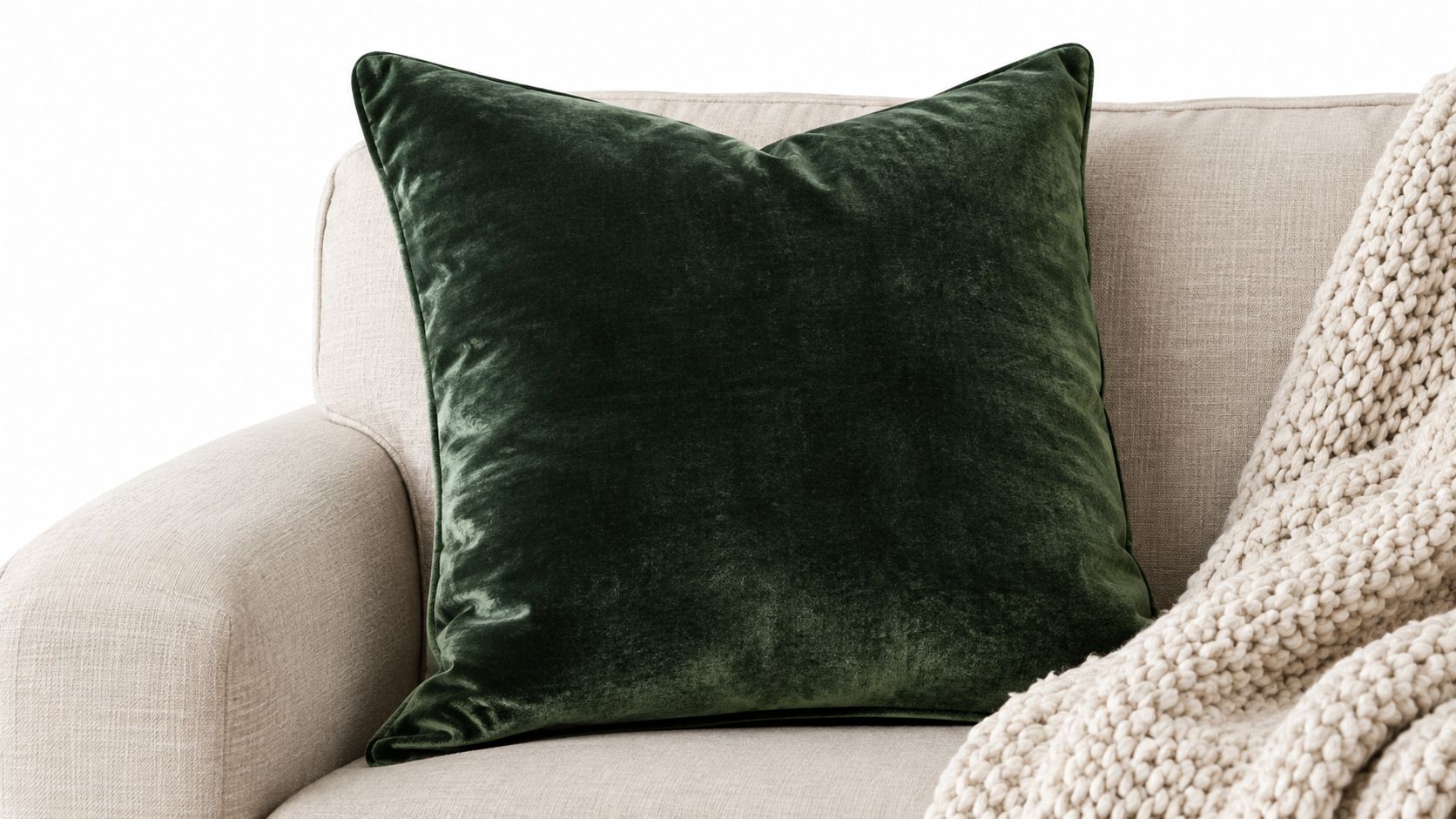
Velvet looks rich because its pile catches light from different angles, and that depth comes from the pile, not the shape.
Why deep colours work hardest
Dark shades show velvet's character more clearly because the contrast between shadow and light is stronger. A plain velvet cover in a deep tone feels more dramatic than the same fabric in a pale one, even when the construction is identical. That is why Dark Green, Navy Blue, and Brown pull the eye so well on a sofa.
A square velvet cover also photographs cleanly because the camera reads sheen and shadow first. The outline matters far less than the surface.
Read the fibre, then read the room
On a couch, velvet works best when the surrounding textures stay calm enough for the pile to stand out. A knitted throw, a flatter weave, or a linen-look surface gives the velvet a clean contrast. If everything is shiny, nothing looks special.
For more styling ideas in our range, Casamé Home's velvet sofa tips cover the broader lounge look without getting stuck on shape. The room needs a proper mix of texture, colour, and finish, not just one cushion with a different outline.
How Many Cushions a Couch Actually Needs
A two-seater usually looks right with three cushion covers, a three-seater starts at three and only takes five if the row still leaves space, and on a larger L-shaped setup an odd number along the main run keeps it from feeling jammed. That's a practical starting point, not a hard law, and the 45cm x 45cm size gives you enough presence without swallowing the sofa.
The cleaner answer is this, fewer covers usually look better than a pile of random ones. Velvet already reads as rich, so you don't need to overwork the couch to make it feel dressed.
Practical rule: Use enough cushions to shape the sofa, then stop before it starts looking crowded.
How to count without overthinking it
If you're styling a compact sofa, aim for balance rather than symmetry. Two can look tidy, but three usually feels more deliberate, and odd numbers tend to look a bit more relaxed. That matters with velvet because the fabric already has a polished feel, so a slightly softer arrangement stops the room from looking too formal.
For a family room or a lounge that gets used every day, keep the arrangement functional. The point is to soften the couch, not build a fortress of cushions nobody wants to move.
The same logic applies whether you're using one colour family or mixing textures. You're building a set, not stockpiling pillows.
Stop when the sofa looks styled, not stuffed
If the cushions start fighting the seat depth, you've gone too far. The strongest sofa scheme has enough shape to feel finished and enough breathing room to still look liveable. That's the difference between styled and overdone.
Texture Beats Colour Every Time on a Velvet Sofa Scheme
Texture wins because it changes how the whole sofa catches light. A plain Velvet Cushion Cover beside a Bobble-Textured or Crosshatch cover reads richer than three velvet covers trying to carry the room on colour alone. Each surface behaves differently, so the eye keeps moving.
Texture, not colour. Most people refresh a sofa by changing colours, but the biggest change comes from putting different textures side by side: velvet next to a chunky knit next to linen. A sofa with three textures looks more expensive than one with three matching colours, because each texture catches the light differently. If I had to pick one, it's velvet on a flat-weave sofa. The pile catches light at different angles, so even a plain colour looks deep and rich. It's the fastest way I know to make an ordinary sofa look deliberate.
The textures that sit well with velvet
Velvet plays nicely with Bobble-Textured, Crosshatch, Flecked, Veloura, Luma, Crossmere, Avelia, Rivelle, Gridelle, Braelyn, and Cordelle Cushion Covers. The woven Jacquard and Diamond Jacquard Cushion Covers work too, as does the Classic Stretch Cushion Cover when you want a smoother counterpoint.
You don't need to use all of them. Pick one velvet, one other texture, and if the sofa is large enough, a third surface that shifts the feel again.
Store-wide across all product types in the last 365 days, grey was 1134 units, 21% of all units ordered, and green was 893 units, 16% of all units ordered. Those are whole-store figures, not velvet-cushion figures, but they do tell you something useful, quiet colours are carrying a lot of the load. That makes sense, because velvet looks strongest when the tone doesn't fight the texture.
For a sofa that needs a softer finish, start with velvet and break it up with something flatter or more tactile next to it. That way the arrangement looks intentional rather than repetitive.
| Three Safe Velvet Cushion Schemes | What it does | Example pairing |
|---|---|---|
| Tone-on-tone | Keeps the look calm and cohesive | Dark Green velvet with Grey and Light Grey accents |
| Deep-and-neutral | Lets velvet carry the drama | Navy Blue velvet with Beige and a woven neutral |
| Mixed texture set | Creates contrast without clutter | Velvet with Crosshatch and Jacquard |
Which Velvet Colours to Mix in a Cushion Scheme
Tone-on-tone is the safest scheme, and it usually looks the most expensive. Pick two or three shades from one colour family, keep the textures different, and let the pile do the talking. A Dark Green velvet cover with a softer neutral beside it reads calmer than a grab-bag of unrelated colours.
The other easy route is deep-and-neutral. Deep velvet colours carry the look, while beige, grey, or a quieter weave give the scheme somewhere to rest. That's the strongest move for a living room that already has a lot going on.
The velvet colours that do the most work
Our velvet cushion cover colours are Light Grey, Beige, Brown, Dark Green, Grey, Lake Blue, Navy Blue, Orange, and Pink. Of those, the deeper tones usually look richest on the couch because the pile catches the light harder. Dark Green, Navy Blue, and Brown are the most convincing if you want velvet to feel obvious without screaming for attention.
Tommy K., on the Velvet Cushion Cover in Dark Green: "These dark green velvet pillow covers are just fantastic! The quality is spot on, feels really plush and luxurious, not like some cheap stuff you find out there."
Use colour to support the texture, not replace it. If the couch already has a lot of pattern, keep the velvet tone quieter. If the room is flat, let the velvet go deeper.
Pick one dominant colour family, one texture partner, and one accent. After that, you're done.
Colour rules that actually hold up
Grey and green are sensible anchor tones in a living room because they're easy to sit beside other finishes. That lines up with a lot of home styling behaviour, but you don't need to chase popularity to use them well. What matters is whether the colour supports the sofa, the floor, and the throw.
Try not to overbuild the palette. One velvet shade, one complementary texture, and one quieter cushion is enough for most couches. If the set starts to look like a rainbow, you've gone too far.
Finishing the Set With a Matching Cover or Throw
A throw or couch cover that shares one colour with the cushions makes the whole sofa read as a set. That's the look people usually want when they search for velvet cushions round, a room that feels deliberate, not pieced together one cushion at a time.
Our Velvet Couch Cushion Cover, Velvet Couch Cover, and Velvet L-Shaped Sofa Cover all carry the same nine velvet colours, so you can pull the cushion colour through to the larger sofa surface. The Soft Tassel Throw Blanket is the only tasselled item we stock, which makes it the obvious choice if you want a softer edge without adding another cushion shape.
Use one matching layer, not every layer
If the cushion and throw match exactly, the sofa can start to look like it came as a set from a showroom floor. That's not always a bad thing, but it can feel flat. A better move is to share one colour and change the texture, so the room stays coordinated without looking uniform.
Where Casamé Home fits into the scheme
Easy throw blanket styling for living rooms is worth a look if you want the couch to read as one finished zone rather than separate items. If you're building the full set, the collections for pillow covers, throw blanket, and couch covers give you the pieces to carry one colour across the room.
If you want the simplest version, match the dominant velvet cushion colour to the couch cover or throw, then let one other texture break it up. That's enough.
When Velvet Cushions Earn Their Keep Across the Year
Velvet earns its keep as a seasonal cushion, not a permanent one. In cooler months, velvet and deeper colours make a room feel heavier, softer, and more settled. In spring, linen and cotton in lighter shades do the opposite and stop the room from feeling weighed down.
That's why cushion covers are the cheapest way to change a room. You're not replacing the sofa, you're changing the surface mood. If you choose the right cover, the room changes with very little effort.
Why fewer covers work better than a permanent pile
A sofa doesn't need every cushion you own. It needs the right mix for the season, then a reset when the weather turns. Too many covers make a couch look cluttered, and clutter always dulls velvet's impact.
The stronger play is to keep a smaller set and swap by season.
Best practice: Keep velvet for the colder months, then move to linen and cotton in lighter shades when the weather turns.
That approach also keeps the styling honest. The velvet pile gets its moment, the sofa doesn't get overloaded, and the room reads as fresh instead of forced.
Start with one velvet shade and build from there
If you want the velvet look without the fuss, choose one velvet colour, one texture-mix partner, and one accent. For the darkest, richest effect, go with Dark Green, Navy Blue, or Brown. For a safer scheme, stay tone-on-tone and keep the rest quieter.
Casamé Home sells square 45cm x 45cm velvet cushion covers, matching stretch velvet couch covers, and throws that help the room read as one scheme rather than a collection of odds and ends. Visit Casamé Home and build the sofa properly, one texture and one colour at a time.