


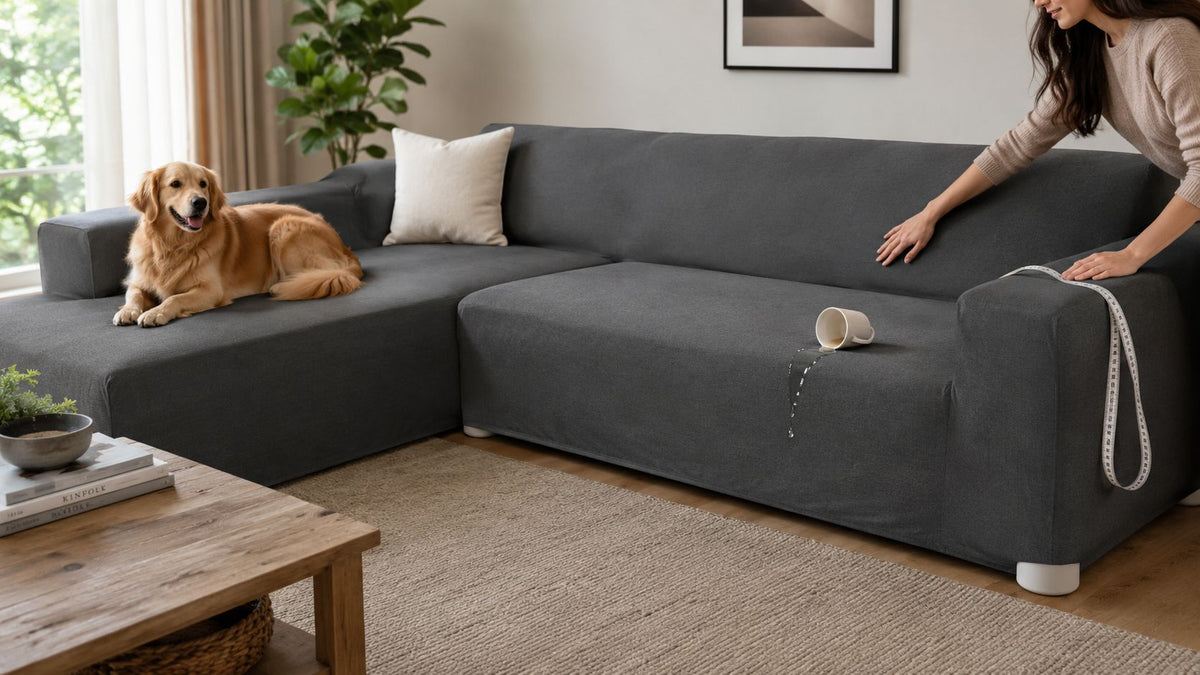
A toddler tips juice across the lounge, the dog comes home wet and sandy from the beach, or a Friday-night guest drops red wine on the rental sofa. An extra large waterproof sofa cover gives you a fitted buffer that slows liquid reaching the upholstery, but it isn't a magic barrier. The best choice for Australian homes is a correctly measured, washable cover with a genuine moisture-resistant layer, secure fitting, and care instructions you'll follow.
Pet owners get protection from fur, muddy paws and accidents. Renters get a removable layer for heavily used furniture and bond-conscious cleaning. Airbnb hosts get a practical way to reduce upholstery wear when guests and spill habits are outside their control. Australian home-textile costs also matter, with household textiles rising 4.5% year-on-year in the September 2025 Monthly Consumer Price Index Indicator from the Australian Bureau of Statistics data summary. Protecting an existing lounge can make more sense than replacing it.
The buying decisions are straightforward once you separate them properly: choose the construction, measure every section, install the cover so it cannot ride up, and use a cleaning routine that protects the waterproof layer.
Table of Contents
- What an Extra Large Waterproof Sofa Cover Actually Does
- Which Waterproof Construction Fits Your Household
- How to Measure an Extra Large Sofa and L-Shaped Sectional
- Installing and Securing Your Cover for a Smooth Fit
- Fixing the Most Common Fit Problems
- Care, Washing and Spill Response Without Damaging the Layer
- Picking the Right Cover for Your Situation
What an Extra Large Waterproof Sofa Cover Actually Does
An extra large waterproof sofa cover is a fitted fabric layer designed to slow liquid penetration into lounge upholstery. Most versions combine a face fabric with a membrane, laminated backing or coated layer. That construction buys you time to blot a spill before it reaches the couch beneath.
That time matters in ordinary Australian homes. A child's juice doesn't stay neatly on the seat, a dog returning from a coastal walk can shake water and grit across the arms, and a guest in a short-stay property may not report a wine spill at all. The cover helps contain the mess, but seams, zips, strap openings and loose folds can still let pooled liquid through.
Practical rule: Treat waterproofing as spill delay, not a forcefield. Blot first, remove the cover when practical, and clean the affected area before liquid sits at the seams.
The three households that benefit most are clear:
- Pet owners need a washable surface that catches fur, muddy marks and minor accidents before they become upholstery problems.
- Renters need reversible protection for a lounge that may already be showing heavy soil, especially where cleaning and damage can affect end-of-tenancy discussions.
- Airbnb hosts need a replaceable, easy-care layer that limits the cost and disruption of unknown guest behaviour.
The rental angle is particularly relevant in Australia. NSW rental changes made pet approvals easier, while Victorian renter guidance says tenants must keep a property clean and avoid damage, as outlined in the Victorian Government guidance on pets in rentals. A cover won't remove your responsibilities, but it can form part of a sensible protection and cleaning system.
Look for a construction that matches the risk, measure the lounge instead of guessing from the word “extra large”, install the straps and inserts properly, then follow the care label. Those four decisions matter more than a fashionable colour or a product page promising total protection.
Which Waterproof Construction Fits Your Household
The best waterproof construction depends on whether you value liquid holdout, comfort, washing tolerance or simple wipe-clean maintenance. Australian buyers will generally encounter laminated backing, membrane-backed fabric and vinyl-coated polyester.
Laminated covers bond a TPU, PU or PVC film to a polyester or velvet-style face. They're useful for indoor rentals and short-stay properties because the barrier sits directly behind the visible fabric. The drawback is feel and heat. Poor-quality bonded layers can become brittle in harsh conditions, and excessive tumble-dry heat can damage the bond.
Membrane-backed covers place a liquid-resistant microfilm between textile layers, often with quilting or a softer face. This is the sensible choice for a family lounge with dogs because it feels less like a tarp and usually handles regular washing more comfortably. You'll pay more than for a basic coated cover, but the result is generally more liveable.
Vinyl-coated polyester is the blunt instrument. It's tough, easy to wipe and suited to utility areas, garages or outdoor furniture, but it can feel stiff and sound noisy under cushions. In humid Queensland or New South Wales conditions, that coated surface can also feel hot or sweaty.
For a broader explanation of how waterproof textile choices compare across furniture applications, read this guide to compare dining chair cover materials. For sofa-specific fabric characteristics, the discussion of waterproof breathable fabric is also useful before you buy.
Match the build to the risk
| Construction | Liquid Holdout | Comfort & Feel | Wash Durability | Best For |
|---|---|---|---|---|
| Laminated backing | Strong surface barrier when seams are covered | Medium, depending on face fabric | Good with cool, careful washing | Indoor rentals and quick Airbnb swaps |
| Membrane-backed textile | Reliable spill delay with a softer layered build | Most comfortable for everyday lounging | Strong choice for repeat washing | Families with children and dogs |
| Vinyl-coated polyester | Very good wipe-clean protection | Stiff, noisy and less breathable | Practical for utility use | Garages, outdoor settings and severe mess |
Don't accept the word “waterproof” without asking how the fabric was tested. Australian testing procedures include spray rating, hydrostatic pressure and cone testing under methods such as AS 2001.2.16, AS 2001.2.17, AS 2001.2.18, ISO 4920 and ISO 811, listed by the Standards Australia textile testing committee. A surface rating doesn't automatically prove that stitching and corners resist leaks.
My verdict is simple. Choose membrane-backed fabric for a lived-in family lounge, laminated fabric for rental practicality, and vinyl only when wipe-clean toughness matters more than comfort.
How to Measure an Extra Large Sofa and L-Shaped Sectional
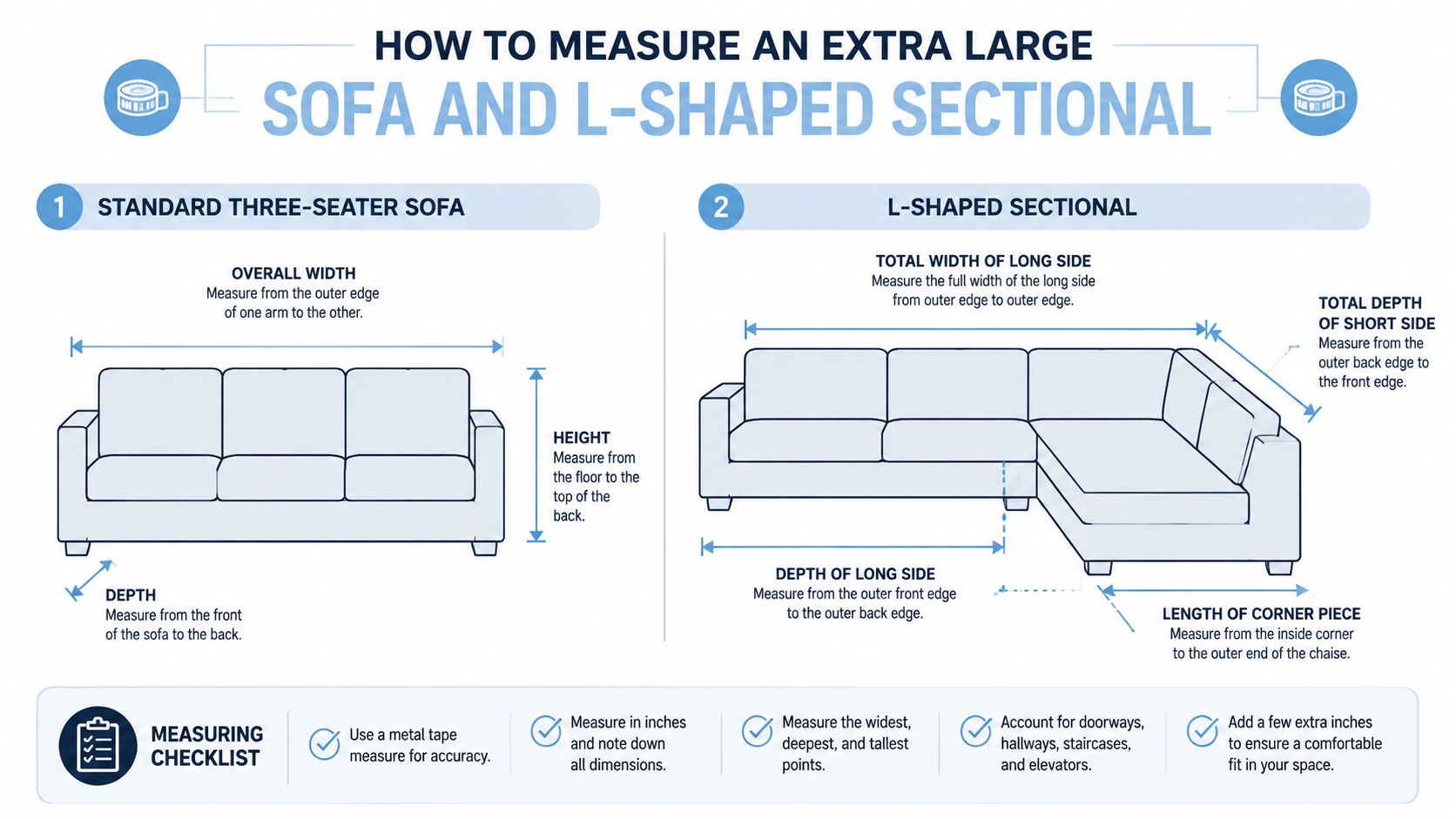
Measure an extra large sofa or L-shaped sectional seat by seat, recording every figure in centimetres before ordering. Product labels are not standardised, and “extra large” can describe the cover rather than the furniture it's meant to fit.
Start with a standard three-seater. Measure the overall width from the outside of one arm to the outside of the other. Then record seat depth from the front edge to the back cushion seam, seat height from the floor to the top of the seat, back height from the floor to the top of the back cushion, and each arm at its widest point.
Write the figures down, including the shape of the arms. A broad rolled arm and a narrow square arm can consume very different amounts of fabric even when the overall sofa width looks similar.
Measure a sectional as separate furniture
An L-shaped or modular sectional needs separate measurements for each module. Treat the long seat, short seat, chaise and corner piece as individual units rather than trying to wrap one enormous rectangle around the whole arrangement.
Record the chaise or corner-piece depth, the width of every module, and both inside and outside arm heights. Those arm heights often differ, especially where one section joins the corner. Take cushion thickness at the centre of each seat cushion with no weight on it, then subtract that thickness from the back-height reading so the cover doesn't bunch around the cushion wells.
Use this checklist before buying:
- Width: add 5 cm of ease to the measured width where the supplier's pattern requires movement.
- Depth: measure the seat flat, from the back seam to the front edge.
- Modules: record each separate section rather than one combined outside measurement.
- Photos: take one front-facing photo of every module so the seller can check arms, corners and chaise orientation.
A useful guide to the arm-to-arm measurement can help if the arms are curved or unusually deep. Don't buy by appearance. Guessing that an extra large cover “looks big enough” is the quickest way to end up with a loose hem, exposed arms or a return.
Installing and Securing Your Cover for a Smooth Fit
Install an extra large waterproof sofa cover from the backrest down, then secure the seat, arms and underside before judging the final fit. Rushing the first drape leaves excess fabric in the wrong places and makes a correctly sized cover look faulty.
Lay the cover face-down on the floor and, where the furniture is safe to move, place the sofa upside-down onto it. Centre the back panel first, then turn the lounge upright. If flipping the furniture isn't practical, identify the back panel and drape from the top of the backrest, keeping the centre seam aligned with the middle of the sofa.
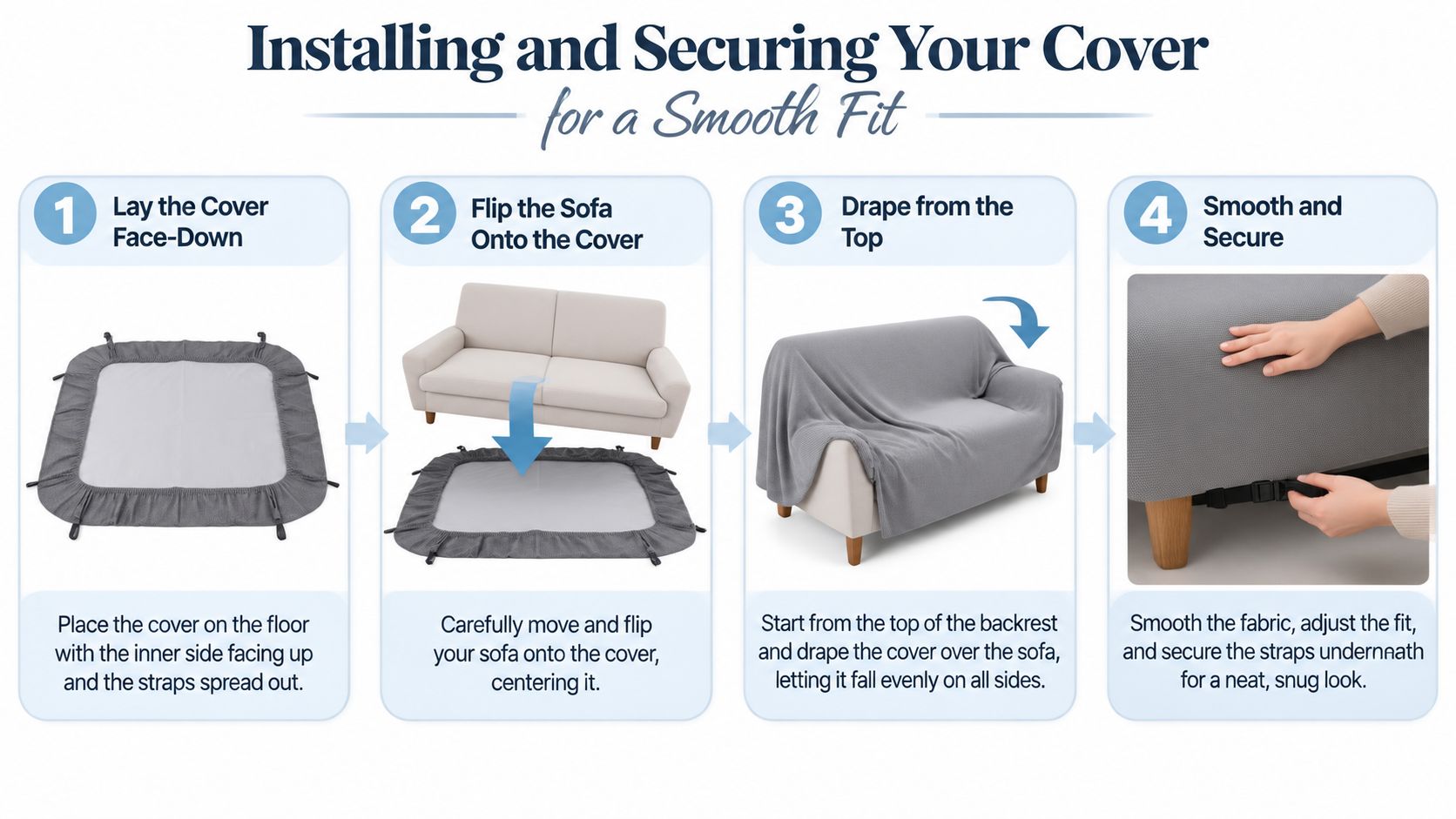
Smooth the fabric from the back towards the arms so the seams follow the original upholstery lines. Push the small foam inserts into the gaps at the armrest ends and along the top corners. These inserts fill dead space and stop the cover climbing when someone sits down.
Tuck before you tighten
Pull the seat fabric towards the front skirt, keeping it taut rather than stretched. Use a plastic spatula to push excess fabric deep into the crease between the seat and the arms. A metal tool can tear the fabric or scratch the furniture, so leave it in the kitchen drawer.
Run the elastic strap underneath the base from front to back, clip it near the rear corner and tighten until the hem grips the frame. Don't cinch so hard that the fabric bows or the waterproof layer pulls against the stitching.
Lift every cushion and re-tuck the panel beneath it. Replace the cushions, sit on each seat to settle the foam inserts, then smooth the fabric forward. Finish by re-clipping the straps under tension and jostling the sofa. If the cover shifts immediately, fix the installation before adding more straps.
The finished cover should look tensioned, not stretched. Seams should sit near the furniture's seams, the skirt should hang evenly, and no cushion well should show a large pocket of loose fabric.
Fixing the Most Common Fit Problems
A slipping cover usually means the body is too loose or the supplied elastic isn't holding enough tension. Don't keep re-tucking the same fabric forever. Shorten the strap run by clipping to the inner frame rails, replace the stock strap with elastic at least 40 mm wide, or use Y-strap clips that grip both sides of the base.
Pooling at seat seams means the foam inserts are missing, misplaced or overwhelmed by loose seat fabric. Pull the cover back, repack foam behind each cushion corner, pull the seat panel towards the front, and clip the base straps again.
| Symptom | Likely Cause | Fix |
|---|---|---|
| Cover slides during use | Loose body or weak strap tension | Shorten the strap run, use wider elastic or add Y-strap clips |
| Fabric pools at seat seams | Foam inserts are absent or misaligned | Repack foam behind cushion corners and re-tuck the seat panel |
| Front edge pulls backwards | Seat-depth option is too long | Re-measure back seam to front edge and choose a shallower option |
| Sectional join gaps | One wing is tighter than the other | Match the longest wing and consider a larger piece or connector straps |
| Arm seam stretches | Chunky arm leaves no shaping room | Add foam to the inside edge so the seam sits flush |
A pulled-back front edge is not a strap problem if the seat depth is wrong. Measure the distance from the back seam to the front edge again and choose a shallower seat-depth pattern instead of forcing the fabric forward.
L-shaped and U-shaped sectionals deserve extra suspicion at the join. One wing can pull tighter than the other, leaving the corner exposed. Match the longest wing's measurement, order that piece one size up where the pattern allows it, or connect both wings underneath with sectional straps.
Don't assume a rectangular extra large cover can solve an L-shaped configuration. If the supplier doesn't specify sectional compatibility, treat the cover as unsuitable.
Care, Washing and Spill Response Without Damaging the Layer
Read the care label before washing an extra large waterproof sofa cover, and follow the instructions for that exact fabric system. Australian care-labelling requirements apply to furnishings and upholstered furniture, so durable washing and drying directions are a proper purchasing consideration, not optional packaging detail. Guidance from Australian textile product testing and care specialists also reinforces the need to match cleaning instructions to the construction.
For most washable textile covers, use a gentle cold-water cycle and mild detergent. Skip bleach and fabric softener. Fabric softener can coat the face and interfere with the water-repellent finish, while heat can damage laminated or coated layers.
Respond to spills while they're fresh
Blot immediately with a dry microfibre cloth, pressing down rather than wiping sideways. Rubbing spreads the mark and can drive liquid towards seams, stretch points and the upholstery beneath. Australian care guidance consistently recommends blotting rather than rubbing, as explained in this sofa cleaning guide.
For a set-in mark, use a suitable diluted cleaner on the fabric face, rinse the surface carefully and wash according to the care code. Test any product on a hidden seam first and use a damp cloth rather than soaking the cover, following the practical advice in this Australian upholstery cleaning guide.
The W/S/WS/X system matters for the couch under the cover:
- W: water-based cleaner is suitable.
- S: use solvent-based cleaner only.
- WS: either water- or solvent-based cleaner is acceptable.
- X: vacuum only, with no liquid cleaner.
The cover can resist liquid while the upholstery beneath still requires an X-code treatment. Never assume a waterproof outer layer changes the care code of the lounge.
Dry and maintain the cover properly
Hang the cover in shade after washing unless the manufacturer specifically allows another method. Avoid hot tumble drying, particularly with PU or other laminated backing, because excessive heat can weaken or separate bonded layers. Vacuum weekly with an upholstery tool to prevent pet hair and grit grinding into the face fabric, and rotate cushions so wear stays balanced.
For a complete routine, use this guide to cleaning a couch cover. Re-proofing should only be done when the product instructions allow it. Test any spray on a hidden seam first, and don't apply a treatment that conflicts with the cover's care label.
Picking the Right Cover for Your Situation
Choose an extra large waterproof sofa cover by household risk, sofa shape and cleaning tolerance, not by colour alone. Renters should prioritise a removable machine-washable design with discreet straps and a non-marking backing. The cover should protect the lounge without trapping moisture or changing the furniture permanently.
Pet households need a tightly woven face, reinforced seams and a waterproof membrane that still feels comfortable for daily use. Airbnb hosts should choose a neutral, quickly removable cover that suits the measured seat depth and can be cleaned under clear Australian care instructions.
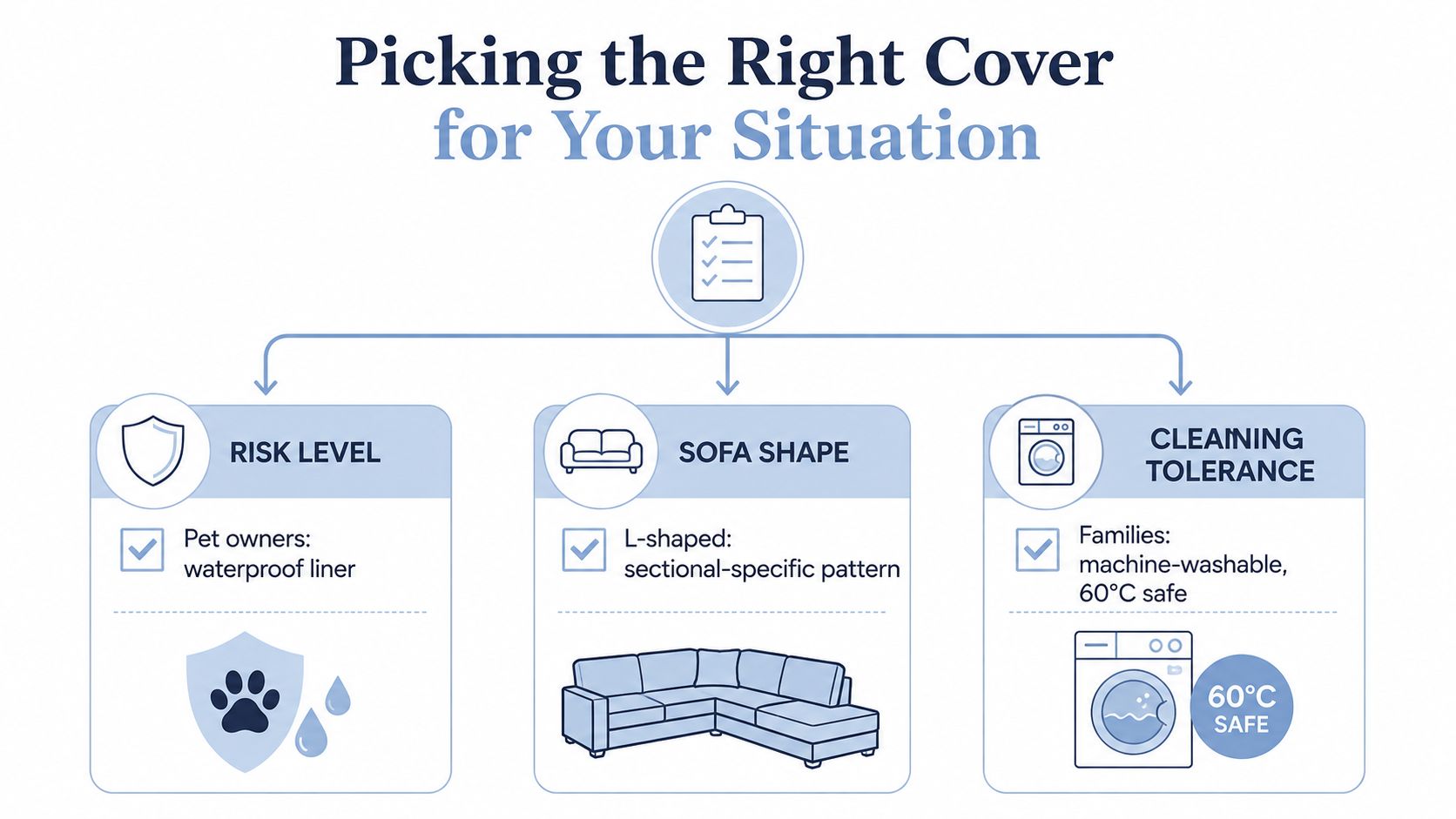
A thicker laminated design makes sense for busy family rooms where liquid accidents are common. Vinyl is easier to wipe but can feel hot or sticky, so reserve it for utility settings rather than the main lounge. L-shaped sectionals generally need separate seat covers or a configurable sectional set, not one oversized rectangle.
Before paying, check:
- every module's measurements
- arm and back coverage
- whether dimensions describe the furniture or the cover
- the care code and drying instructions
- seam, strap and corner construction
- whether the likely mess calls for a membrane rather than basic washable fabric
For a practical Australian option, Casamé Home offers stretch-fit sofa covers, waterproof options, foam inserts and under-sofa fastening clips for measured sofa configurations. Visit the range with your measurements ready, choose a construction that matches your spill risk, and confirm the care instructions before ordering.


