


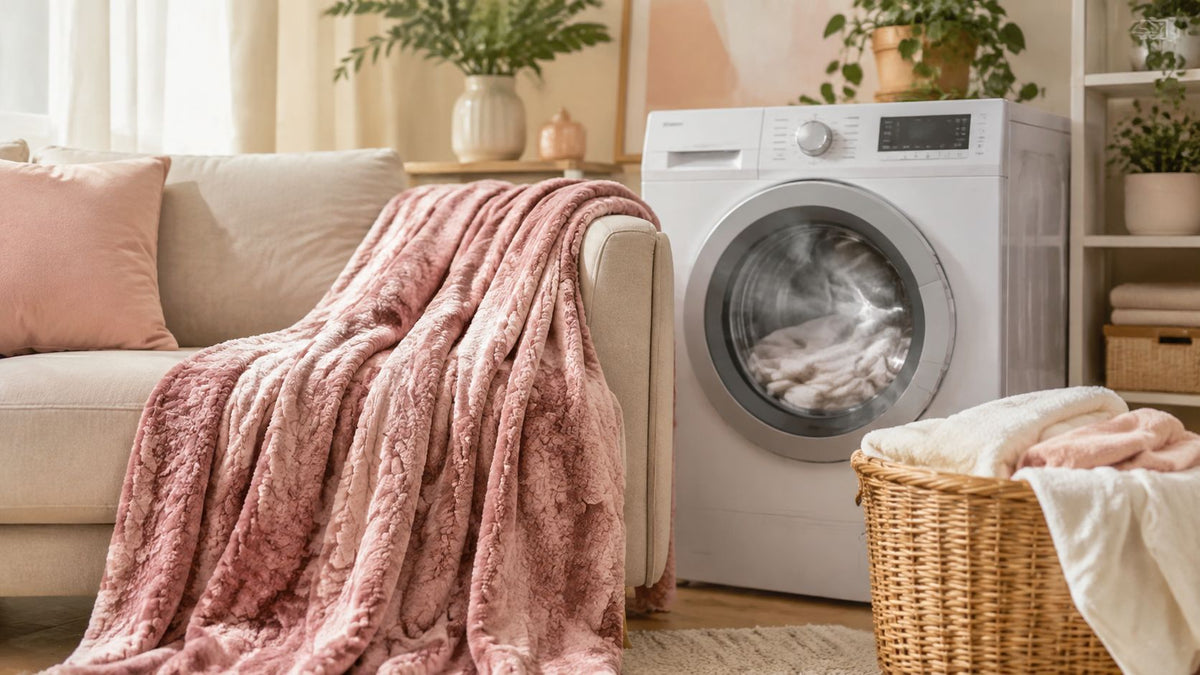
You've come home to muddy paw prints, a coffee spill, and a throw blanket that has become the sofa's first line of defence. A machine washable throw blanket is the practical answer, but “machine washable” doesn't automatically mean effortless. The fibre, construction, care label, washing machine capacity, and Australian drying conditions all determine whether a throw stays soft and presentable or comes out stretched, matted, and disappointing.
Table of Contents
- What Makes a Throw Blanket Truly Machine Washable
- Which Throw Fabrics Survive the Washing Machine Best
- How to Machine Wash a Throw Blanket Without Ruining It
- How Do You Remove Pet Hair and Stains from a Washable Throw
- Are Waterproof and Heat-Resistant Throws Worth the Trade-Off
- How Can You Style and Layer Throws with Sofa Covers
- What Should Australian Buyers Look for When Choosing a Throw
- Frequently Asked Questions About Machine Washable Throws
What Makes a Throw Blanket Truly Machine Washable
A throw is machine washable when its construction and permanent care label specify a safe washing method that your household can realistically follow. The claim alone isn't enough. A thick faux-fur blanket might tolerate a washing machine but still require a gentle cycle, cold water, and careful drying to prevent matting, while a loosely knitted throw can distort even when the product listing uses the same washable wording.
Consider a busy living room with children, a dog, and a throw used every evening. Polyester fleece or a stable synthetic blend generally fits that routine better than a delicate yarn because it tolerates regular low-temperature washing and air drying with less risk of losing its shape. Washability is a combination of fibre behaviour, weave density, edge finishing, and the treatment allowed on the label.
Read the permanent care label first
Australian rules require new textiles to carry clear care information, using English wording, internationally recognised care symbols, or both. The system covers washing, bleaching, drying, ironing, and professional care, so the label should guide you towards the most severe safe treatment for the specific blanket. The Australian care-labelling guide explains how buyers should use these instructions to avoid irreversible damage.
The label must be permanent, legible, and accessible. Australian guidance also requires a textile that can't be washed or dry-cleaned to state that clearly and describe the appropriate treatment in words. That distinction matters when a retailer's marketing sounds broader than the actual care instructions. A blanket labelled “machine washable” but marked for cold gentle washing and shade drying is washable, but it isn't a rapid-turnaround laundry item.
Practical rule: Treat “machine washable” as permission to use a machine, not permission to use every cycle, temperature, detergent, or dryer setting.
Australia's broader home-textiles market provides useful context for this buying decision. The blanket and quilt market was valued at USD 421.4 million in 2024 and is forecast to reach USD 821.2 million by 2033, with a projected 6.9% CAGR from 2025 to 2033, according to IMARC's Australia blankets and quilts market reporting. Throws sit within that wider demand for decorative, functional, and easy-care textiles, so they're becoming a practical way to refresh a room without replacing furniture.
Which Throw Fabrics Survive the Washing Machine Best
Polyester blends and fleece usually offer the most dependable machine performance for Australian homes, especially when washed cold and dried gently. Cotton can feel fresher and more natural, but it may shrink or crease more readily, while chenille, faux fur, and loose knits need more careful handling because their texture can flatten, mat, stretch, or shed.
Australian laundry habits favour this easy-care approach. 75% of respondents in an Australian laundry survey wash at 30°C or below, and 58% wash cold, as reported by Electrolux Australia's laundry survey. Among dryer owners, 72% believe air drying is better for clothes, while 73% are reluctant to dry wool and 45% would never put wool in a dryer, according to the same source. A throw that performs well in cold water and air drying fits existing behaviour rather than asking you to change your routine.
Throw Fabric Comparison for Australian Homes
| Fabric Type | Wash Performance | Drying Speed | Pet Hair Resistance | Best Use Case |
|---|---|---|---|---|
| Polyester blend | Usually stable on a cold gentle cycle | Fast to moderate | Moderate, depending on surface | Daily family use and frequent washing |
| Fleece | Generally reliable, but can pill or hold hair | Fast | Moderate to good on a smooth face | Rentals, pets, and quick refreshes |
| Cotton | Comfortable, breathable, and prone to creasing or shrinkage if mishandled | Moderate | Moderate | Warm-weather styling and relaxed rooms |
| Chenille | Washable in some constructions, but texture can flatten or pull | Moderate to slow | Often lower because the pile catches hair | Decorative layering in lower-wear areas |
| Faux fur | Needs gentle handling to reduce matting and texture loss | Slow | Often poor because hair clings to the pile | Plush accent styling and occasional use |
| Knitted yarns | Highly dependent on yarn and stitch structure, with stretching a common risk | Slow | Variable | Textural décor where careful care is acceptable |
A smooth fleece or polyester surface is generally easier to lint-roll than a deep chenille pile. Faux fur looks luxurious but can be frustrating in a home with shedding pets because loose hair settles into the nap rather than sitting on top. Knitted throws can look excellent over an armchair, yet their open structure makes them less forgiving when pulled, overloaded, or hung wet.
For a broader visual guide to textures, weights, and decorative uses, compare these types of throw blankets before choosing a fabric. The right option isn't the one with the softest feel in the shop. It's the one whose care requirements match how often you'll use, wash, and dry it.
How to Machine Wash a Throw Blanket Without Ruining It
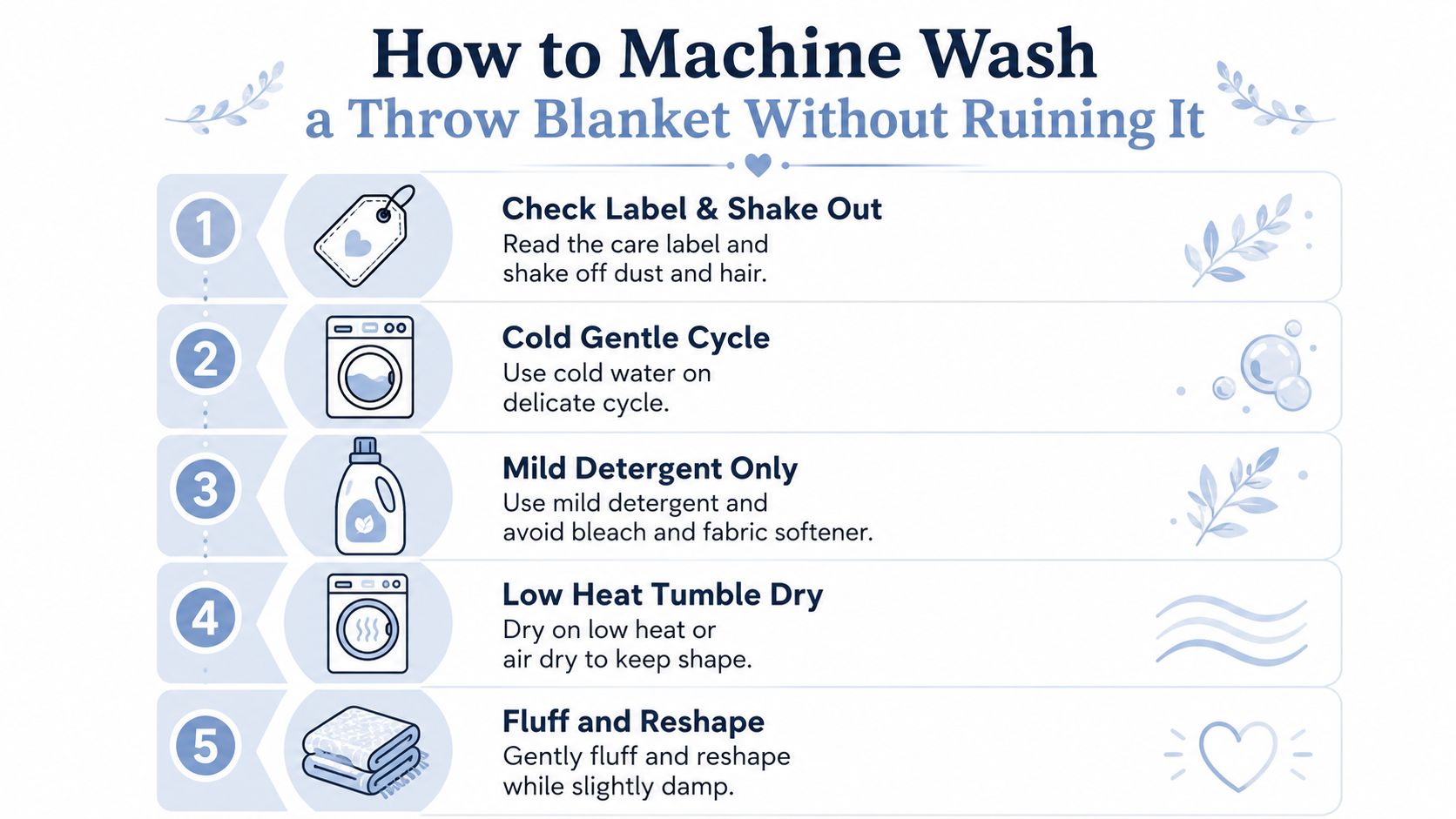
Wash a machine washable throw blanket in cold water on a gentle cycle, with mild detergent and enough room for the fabric to move freely. The safest routine protects the fibres before the wash starts, avoids aggressive chemistry, and gives the blanket enough airflow to dry completely.
Follow the care label, then prepare the blanket
- Check the label and shake out the throw. Remove cushions, crumbs, dust, and loose pet hair before the blanket enters the machine. Close any fasteners and turn heavily textured or printed throws inside out if the label permits.
- Use a cold gentle cycle. Cold water reduces the risk of shrinkage and colour loss, while a delicate or gentle programme limits mechanical stress. The machine-wash temperature guide provides further guidance for matching temperature to fabric care.
- Choose mild detergent only. Use a small amount of liquid detergent that dissolves readily. Skip bleach unless the care label specifically permits it. Fabric softener can leave a coating on synthetic fibres, flatten absorbent textures, and reduce the clean, soft feel you're trying to preserve.
- Avoid overloading the washer. An oversized throw needs space to circulate and rinse properly. If the blanket fills the drum before water reaches the fibres, use a larger machine at a laundrette rather than forcing it into a standard domestic load. Wash thick throws separately, as towels and heavy garments add friction and weight.
- Dry according to the label. Low-heat tumble drying is suitable only when the care instructions allow it. Otherwise, reshape the blanket and dry it flat or on a broad support in a well-ventilated, shaded place.
Australian conditions make the final step important. Humid weather can slow evaporation, so don't fold or return a throw to the sofa while the centre is still damp. Check seams, folded edges, and the underside before storage or use, because trapped moisture can create an odour and encourage mould.
A retailer's “easy care” wording doesn't override a cautious label. If the listing says machine washable but the label says cold gentle wash, no tumble drying, and shade dry, follow the label. That routine may take longer, but it protects the construction that makes the throw worth keeping.
How Do You Remove Pet Hair and Stains from a Washable Throw
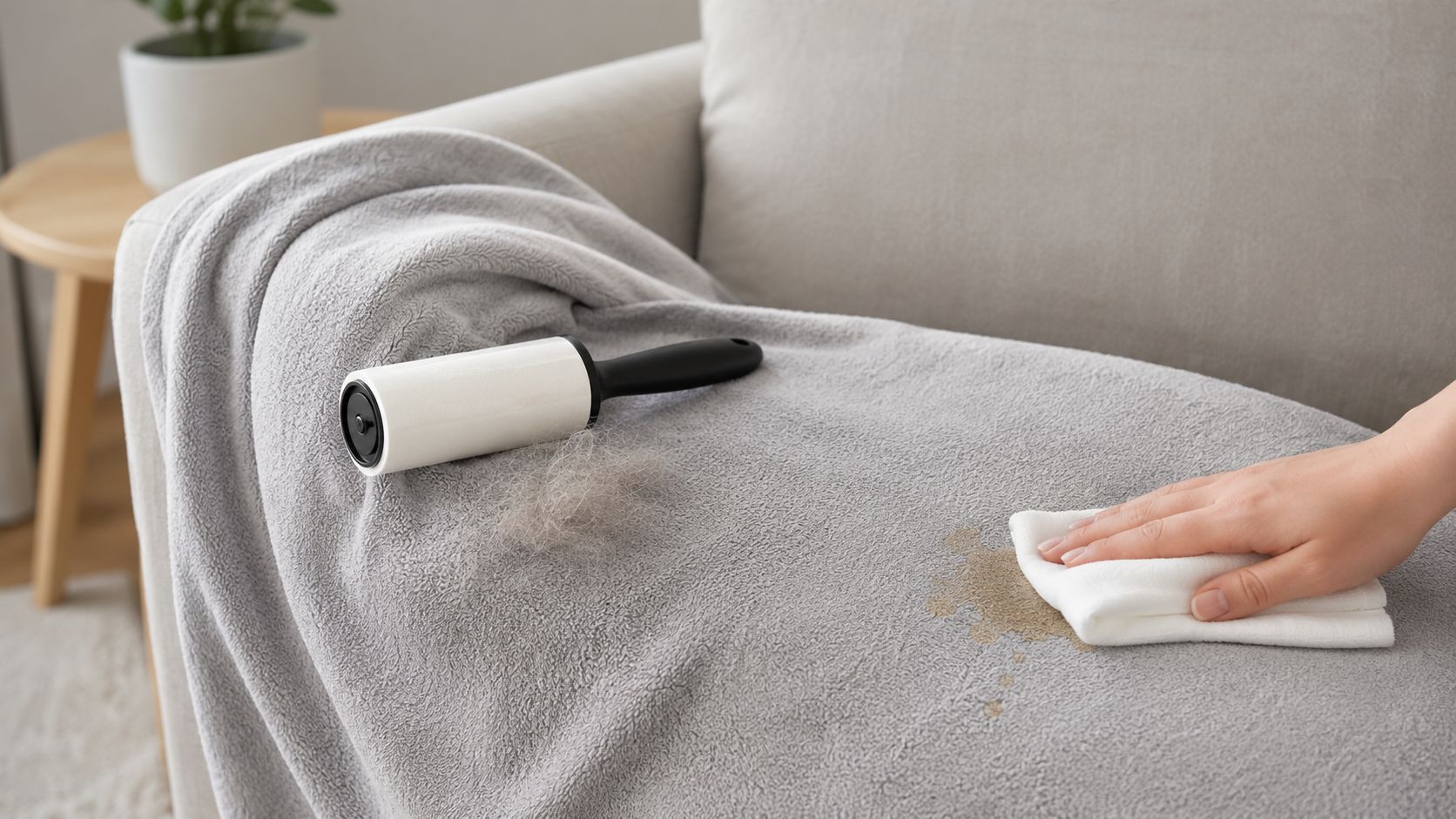
Remove loose pet hair and treat stains before washing a machine washable throw blanket. A washing cycle can clean fabric, but it may tighten hair into the fibres or set an untreated mark deeper into the surface.
Deal with hair before adding water
Start with the throw dry. Shake it outdoors or over a hard floor, then use a rubber pet-hair brush, fabric brush, or lint roller. Smooth fleece usually responds quickly to a roller, whereas faux fur and chenille need gentle brushing in the direction of the pile. Don't attack a loose knit aggressively, because the tool can catch the yarn and pull the stitch structure.
For a stubborn layer, work in small sections and lift the hair away rather than grinding it into the surface. Wash pet-heavy throws separately, since hair released in the machine can settle on other garments and restrict the blanket's rinse.
Treat stains without spreading them
Blot coffee, wine, and muddy paw prints with a clean cloth. Work from the outside of the mark towards the centre, using a small amount of suitable stain treatment or mild detergent. Rubbing can spread liquid through the weave and roughen a plush surface, so patience is more useful than pressure.
A refillable option such as the refillable stain remover from Fillaree can be useful for targeted pre-treatment when the product is compatible with the blanket's care instructions. Test any treatment on an inconspicuous area first, particularly on dark colours, printed fabrics, or textured piles.
For odours: Air the dry throw in shade before washing, then make sure the blanket dries completely after the cycle. Fragrance can mask dampness, but it won't solve moisture trapped inside thick fabric.
Choose colours with daily life in mind. Heathered greys, oatmeal, muted blue, and other broken tones tend to disguise light hair and small marks better than a completely flat dark or pale colour. That doesn't replace cleaning, but it keeps the sofa looking composed between washes.
Are Waterproof and Heat-Resistant Throws Worth the Trade-Off
Waterproof and heat-resistant throws are worthwhile for spills, pet accidents, or outdoor use, but a standard machine washable throw blanket is usually softer and more comfortable for everyday lounging. Specialised layers solve a specific problem by adding a barrier or insulation, and those additions can change the hand feel, breathability, drying routine, and price.
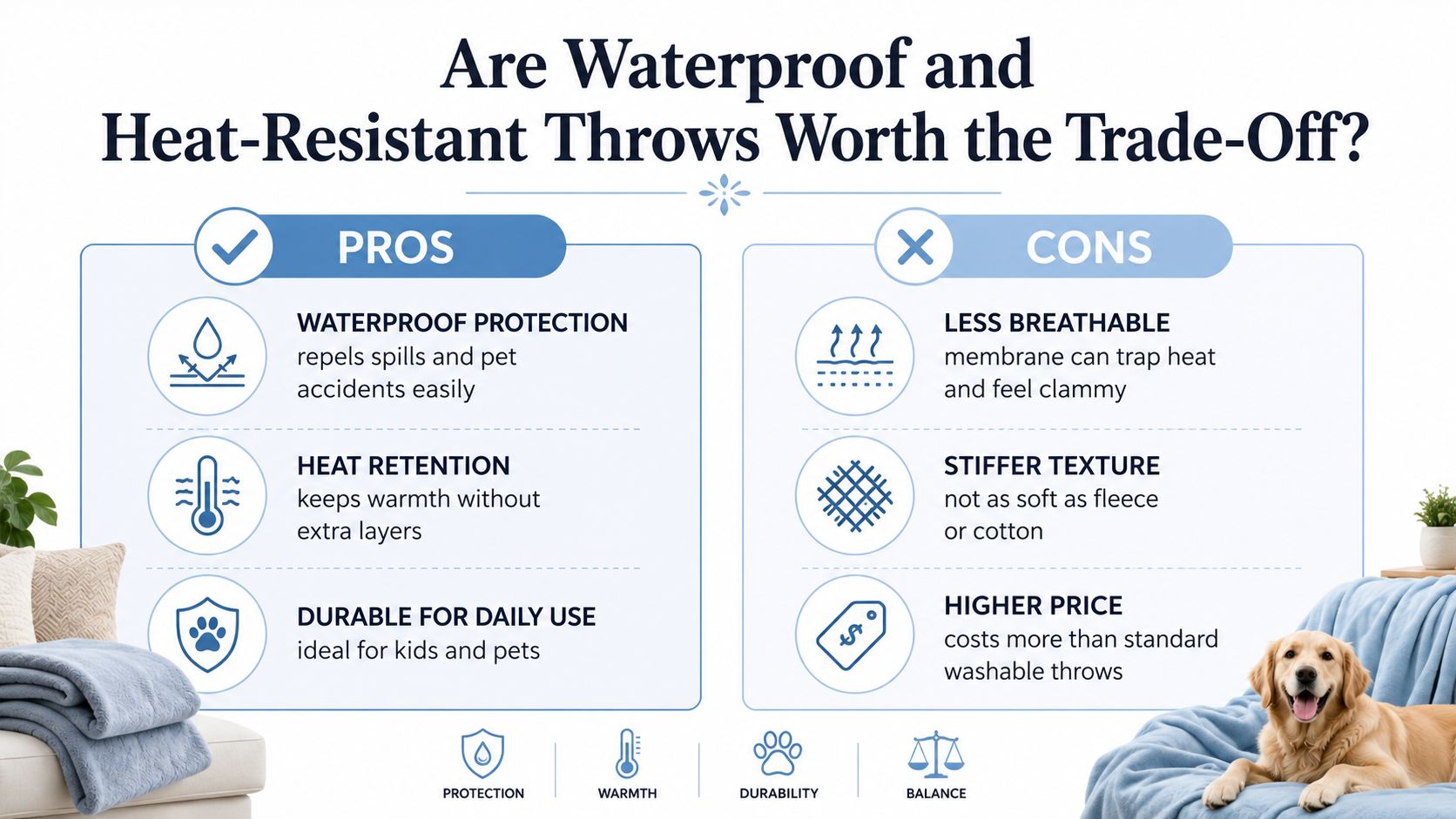
A waterproof membrane helps liquids stay on the surface rather than reaching the sofa or underlying upholstery. That makes it useful beneath a child's seat, under a pet's usual sleeping spot, or during outdoor entertaining. The same membrane can feel less breathable and less flexible than fleece or cotton, particularly when someone is wrapped in it for a long period.
Heat-resistant wording also needs careful interpretation. A throw may tolerate low-temperature drying or ordinary warmth, but that doesn't make it suitable for direct contact with a heater, hot appliance, open flame, or an electric blanket. Follow the permanent care label and any safety instructions supplied with the product.
Where specialised throws work best
A waterproof layer makes sense when protection matters more than softness. For a family sofa, pairing a protective layer with a removable decorative throw can be more practical than expecting one textile to provide comfort, spill resistance, and fast drying at once.
In humid Australian weather, the membrane and thicker construction may slow drying. The blanket must be fully dry before folding, stacking, or placing it against upholstery. If you need rapid turnaround for a rental or short-stay property, a lighter synthetic throw can be easier to manage than a heavily coated one.
Waterproofing is a useful barrier, not a shortcut around laundering. Liquid protection reduces the chance of penetration, but the surface still needs prompt cleaning and the blanket still needs complete drying.
How Can You Style and Layer Throws with Sofa Covers
Layer a machine washable throw blanket over a fitted sofa cover by keeping the throw intentional, compact, and easy to remove. The cover protects the larger upholstery area, while the throw adds colour, texture, and a washable contact layer where people and pets sit.
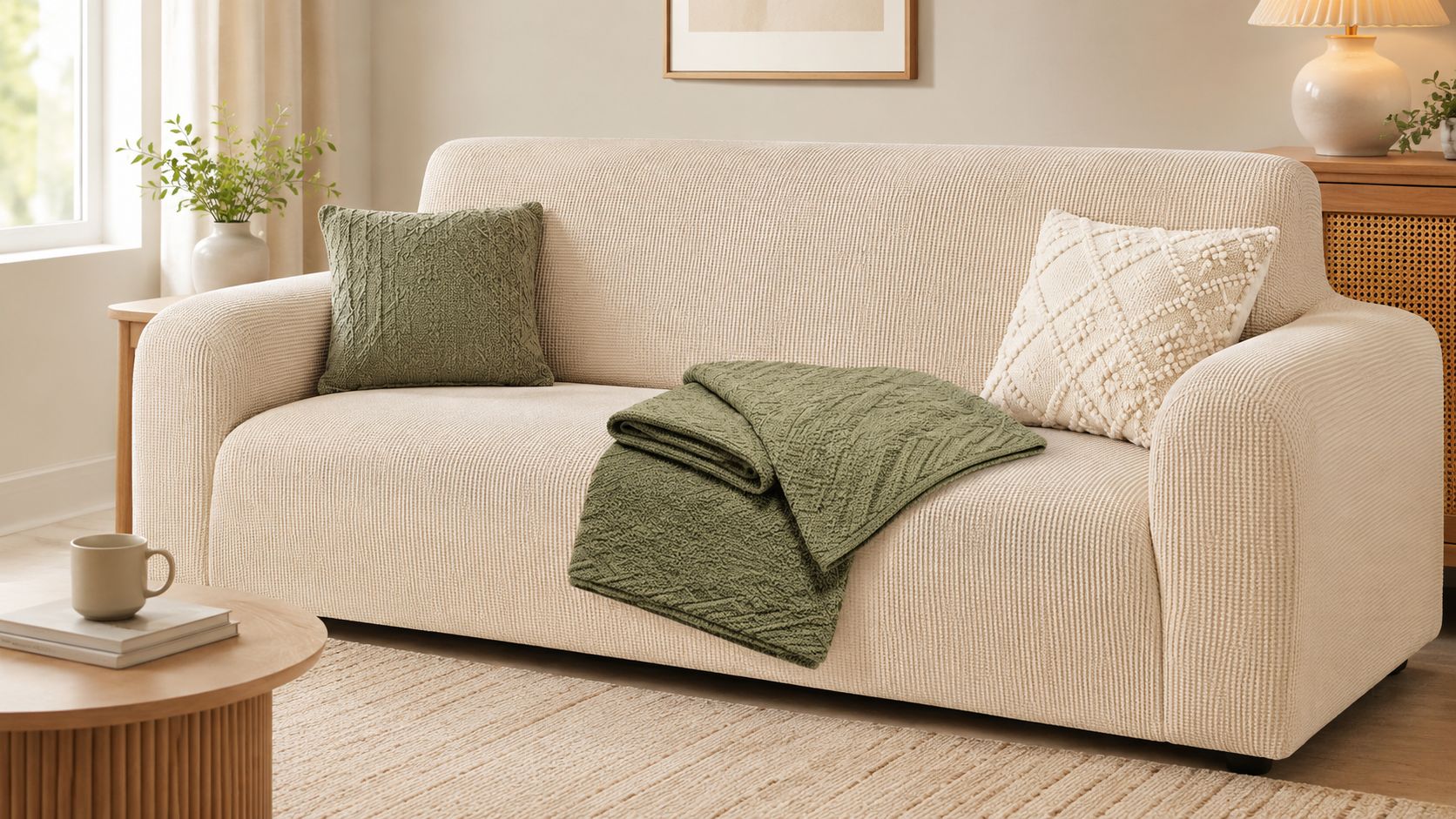
A coastal Australian living room might use a light cotton-style throw over a neutral stretch cover, with the fabric folded over one arm rather than spread across every cushion. The arrangement feels relaxed without hiding the sofa's shape. In an urban modern room, a charcoal or stone cover can take a warmer chenille accent, provided the texture doesn't compete with patterned cushions or a busy rug.
Match texture to the season
Use lighter, breathable-looking textures during warmer months and reserve plush fleece for cooler evenings. Chenille can introduce tactile depth in autumn, while a soft synthetic layer works well when pets share the sofa because it can be removed for laundering without disturbing the underlying cover.
Throws also rescue a cover that has become visually tired. A long, narrow fold across the seat can disguise the highest-contact area, while a diagonal drape over one corner creates movement. Avoid spreading a small throw too thinly across the whole sofa. It will slide, crease, and look accidental.
For practical folding and placement ideas, use this guide to style a throw blanket on a sofa. On leather or slick upholstery, tuck a small section between the seat and back cushion, or place the throw over a cover with a more textured surface. Foam inserts and under-sofa straps on a fitted cover can help keep the base layer smooth while the throw remains removable.
Keep the room coordinated
Repeat one colour from the throw in a cushion, artwork, or rug, but vary the texture rather than matching every surface exactly. A pale cover with a deeper throw creates contrast; a darker cover with a warm neutral throw softens the room. If the sofa and throw both have a strong pattern, use plain cushions to give the eye somewhere to rest.
Regular textile care also works as a system. If the sofa itself has accumulated embedded dust or odour, understanding the benefits of expert carpet cleaning can help you decide when a removable throw and cover are enough and when the underlying upholstery needs professional attention.
What Should Australian Buyers Look for When Choosing a Throw
A throw that survives the washing machine can still be a poor buy if it will not fit the drum, dry properly in your home, or stay in place on the sofa. Choose for your actual laundry routine, household mess, and cover arrangement rather than softness alone.
Use this buying checklist
- Read the permanent care label: Check the permitted wash temperature, cycle, bleaching limits, drying method, and ironing instructions. Australian care information should remain clear and accessible after purchase. Keep those instructions in mind when choosing a throw for frequent use.
- Match fabric to the job: Smooth polyester blends and fleece handle regular family or pet use with less fuss. Cotton suits a lighter decorative layer. Faux fur, chenille, and loose knits need gentler handling, especially when placed where they will rub against a sofa cover.
- Check how it will dry: “Machine washable” does not automatically mean tumble-dryer safe. In humid areas or homes with limited outdoor space, a lighter construction is easier to dry completely. A throw that stays damp can develop an unpleasant smell and is less practical for quick sofa resets.
- Assess washer capacity: Dense, oversized throws may overload a domestic machine even when the label allows machine washing. If the blanket fills the drum before water can circulate, use a larger laundrette-sized machine instead.
- Match the sofa configuration: An armchair needs a compact layer that folds neatly over one side. A sectional needs useful coverage without becoming a floor-length sheet. An “oversized” description does not guarantee that a throw will cover or stay secure on an L-shaped sofa.
- Plan for pets and guests: Choose a surface that accepts brushing or lint-rolling, and select a colour that does not make everyday wear too obvious. For Airbnb use, repeatable washing and reliable air drying matter more than a delicate premium texture.
Your laundry setup should also guide the styling choice. On a frequently used sofa, a washable throw works best as a removable top layer over the cover, protecting high-contact areas without making the whole arrangement look temporary. Choose a lighter throw if you need to wash and air-dry it often, and reserve bulkier textures for lower-contact decorative placement.
Australia's home-textiles market reflects broad demand for comfort and décor, but a higher price does not guarantee better wash performance. Inspect the seams, pile, and label, then choose according to how your household washes, dries, sits on, and restyles the sofa.
Frequently Asked Questions About Machine Washable Throws
Can a machine washable throw blanket be washed with other laundry?
A machine washable throw blanket can be washed with similar colours and lightweight fabrics when the care label permits it, but washing separately is safer for bulky or textured designs. Avoid combining a thick throw with heavy towels, rough garments, or items that may catch on its surface. Give the blanket enough room to circulate and rinse.
What should you do if a machine washable throw blanket loses softness?
If a machine washable throw blanket loses softness, check whether excess detergent, fabric softener residue, high heat, or over-drying caused the change. Run the care-approved rinse routine, avoid aggressive products, and reshape the blanket while it's slightly damp. Some fibres recover after gentle handling, but heat or friction damage may be permanent.
Does a machine washable throw blanket ever need dry cleaning?
A machine washable throw blanket generally doesn't need dry cleaning when its permanent care label provides a safe machine-washing method. Dry cleaning becomes relevant only when the label specifies professional care or excludes washing. A retailer's marketing description can't override the sewn-in care instructions.
Can a machine washable throw blanket be stored while slightly damp?
A machine washable throw blanket shouldn't be stored or folded while damp. Check the centre, seams, and folded edges, especially in humid weather, because trapped moisture can create odour and mould. Air the blanket until it's completely dry before returning it to a cupboard or sofa.
Protect your sofa with a practical base layer, then add comfort and seasonal colour with a washable throw chosen for Australian living. Casamé Home offers machine-washable sofa covers and throw blankets for everyday homes, renters, families, pets, and short-stay spaces. Visit Casamé Home to explore protective covers and easy-care layers that refresh your living room without replacing the furniture.


