


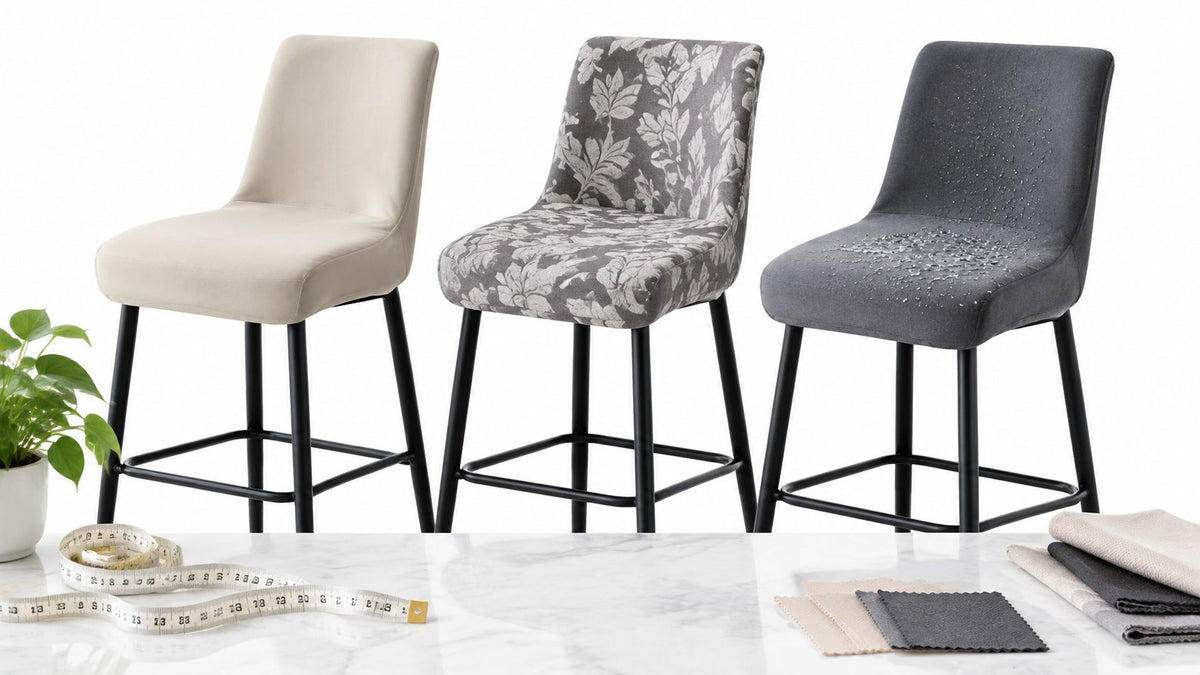
You're probably staring at stools that still work, but look tired, stained, or a bit off in your kitchen. Bar stool covers make sense when the seat shape is decent and you want a faster, cheaper refresh than replacement, but they're a waste of money when the stool is already wobbly, oddly shaped, or better solved with a wipe-clean seat. In Australia, that choice sits inside a real spending category, not a throwaway fix, with furnishings and household equipment accounting for 7.9% of the CPI basket and the component rising 1.6% over the 12 months to July 2026 according to the ABS, so you're dealing with a genuine household decision, not just a styling whim (ABS).
The right cover comes down to fit first, fabric second, style third. Get the size wrong and no amount of nice texture will save it. Get the fabric wrong and you'll be babying the cover every week instead of using the kitchen normally.
Table of Contents
- How Do You Measure a Bar Stool for a Cover
- What Types of Bar Stool Covers Exist
- Which Fabric Should You Choose for Your Bar Stool Covers
- How Do You Install Bar Stool Covers So They Stay Put
- When Are Bar Stool Covers Worth It and When Are They Not
- How Do You Wash and Care for Bar Stool Covers
- Styling Bar Stool Covers for Australian Homes and Rentals
- Frequently Asked Questions About Bar Stool Covers
How Do You Measure a Bar Stool for a Cover
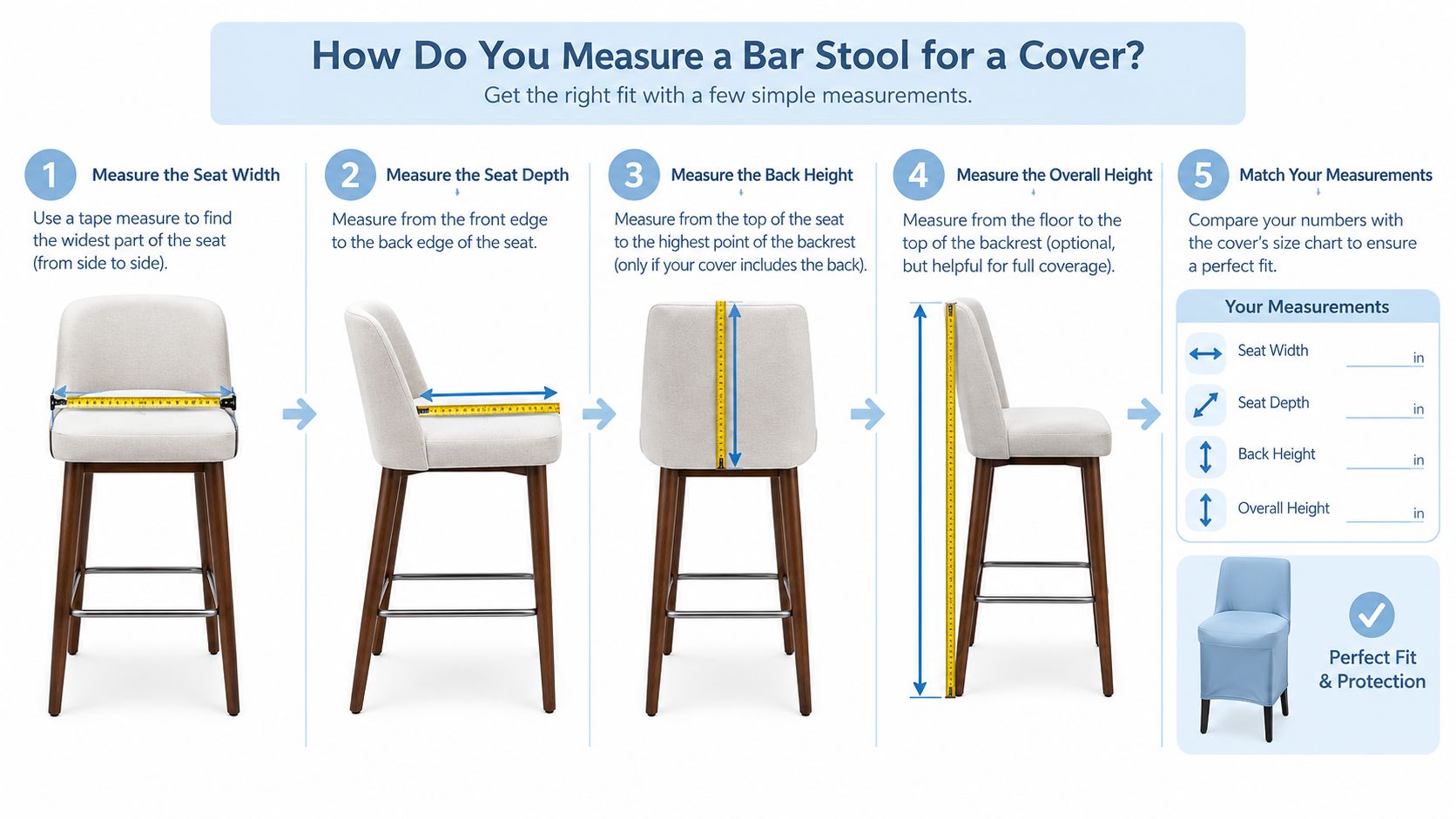
Measure the stool height first, because counter-height and bar-height stools live in different sizing pools. In Australian homes, standard kitchen counters are commonly about 90 cm high, and the comfortable stool seat height usually lands in the 62 to 69 cm range (Temple and Webster). True bar-height counters are commonly about 100 to 105 cm high, with a seat height around 75 to 82 cm for a 105 cm bar (Provincial Home Living). If you buy a cover sized for the wrong height family, the seat can fit while the overall look and tension still fail.
Measure the seat width at the widest point, then measure the depth front to back. Add a little room if you're buying a stretch-fit cover, but don't assume extra slack will improve the fit. On a fitted cover, sloppy measurements usually show up as puckering, pulled seams, or a seat that slides when someone sits down.
What shape matters most
Round seats, square seats, and seats with arms behave differently under a cover. A round stool needs the cover to wrap evenly around the back-tuck, while armrests can block a simple slip-on design. Check the apron height under the seat too, because skirts, straps, and elastic hems need clearance to sit flat.
Practical rule: if the seat edge is heavily curved or the stool has arms, don't guess. Photograph the stool from above with a tape measure in frame, then send that image to the supplier before you order.
If you're comparing different stool builds or setting up a matched seating run, a good cross-check is choosing bar table legs for your store, because height compatibility starts with the base furniture, not the fabric. For a broader benchmark on kitchen seating height, the guide at https://casamehome.com/blogs/sofa-cover-ideas/standard-bench-height is useful for working out how the cover sits relative to the furniture underneath.
What Types of Bar Stool Covers Exist
There are four main types, and only one suits every room poorly. Stretch-fit, loose slipcovers, fitted jacquard, and waterproof or wipe-clean covers each solve a different job, so choose by use case, not by the prettiest product photo.
Bar Stool Cover Types Compared
| Cover Type | Best For | Limitations |
|---|---|---|
| Stretch-fit | Rental kitchens, Airbnb turnovers, mixed stool models | Can look cheap if the stool shape is unusual |
| Loose slipcover | Traditional kitchen nooks, low-pressure seating | Shifts under sliding users |
| Fitted jacquard | Owners who know the exact stool footprint | Less forgiving if measurements are off |
| Waterproof or wipe-clean | Cafés, families, spill-prone zones | Usually less soft and less structured in look |
Stretch-fit covers use flexible fabric, usually spandex blends, and they suit homes that swap stools between properties or replace mismatched seating. They go on fast, come off fast, and make sense for rentals and short-stay accommodation. They are a poor fit for stools with arms, odd curves, or anything that needs a cut built around the frame.
Loose slipcovers suit traditional kitchen seating where a little movement is acceptable. They are easier to forgive on measurements, but they can drift when people slide on and off them all day. For backless stools, loose styles often look fine until real use starts pulling them out of place.
Fitted jacquard is the sharpest option if you know your stool model and want the cover to look intentional. If you want a more upholstery-like finish, this is the family to look at. For pet owners and mixed-use kitchens, this category pairs well with the practical advice in Nandog Pet Gear's guide to animal covers for furniture, because the same logic applies, tight fitting surfaces hide less and hold up better when the seating gets used hard.
Waterproof and wipe-clean covers are the right call where spills happen daily and cleaning time is short. They suit cafés, families with toddlers, and food prep zones, but they usually trade away softness and visual finesse. If you want a tougher surface in a similar category, the internal guide at https://casamehome.com/blogs/sofa-cover-ideas/waterproof-stretch-fabric is the right place to compare backed fabrics before you buy.
Which Fabric Should You Choose for Your Bar Stool Covers
Jacquard is the safest all-round choice for bar stool covers in Australian homes. It weaves the pattern into the cloth, which gives the cover a more finished look and helps it hide minor wear better than flat, shiny alternatives. If you want a cover that reads as furniture, not costume, start there.
The fabrics that actually hold up
Spandex-polyester blends are the workhorse for stretch-fit covers. They deliver the flexible fit buyers expect, but they can feel hot in summer kitchens and can bobble after repeated heavy washing. If you're the kind of household that launders everything hard and often, that matters.
Chenille feels soft and plush, but it's the wrong answer for shedding pets and crumb-heavy kitchens. It traps debris, holds lint, and starts looking tired sooner than buyers expect. Leather-look PU looks sharp and wipes clean, but flex points can crack over time and it's a poor choice in direct sun.
For pet-friendly Australian homes, a tight jacquard with a stain-resistant finish is the most defensible pick. It balances appearance, wear resistance, and everyday cleaning better than the trendier options that look good in product photography but fail in a busy kitchen.
Practical rule: if the stool gets used daily, prioritise surface recovery and easy cleaning before softness. Softness is pleasant, but durability is what keeps the cover from looking shabby.
| Fabric | Durability | Feel | Pet-Friendly |
|---|---|---|---|
| Jacquard | Strong | Structured, polished | Good |
| Spandex blend | Moderate | Stretchy, practical | Fair |
| Chenille | Moderate to low in busy kitchens | Plush, warm | Poor |
| Leather-look PU | Moderate, then prone to cracking at flex points | Smooth, firm | Fair for spills, weak for sun exposure |
For buyers comparing cloth options by fibre and finish, the cotton fabric guide is useful as a reference point for how natural fibres behave before you narrow down the cover style. If you want a softer installed finish, pair the fabric choice with a product that has a snug construction and enough recovery to stay tidy.
How Do You Install Bar Stool Covers So They Stay Put
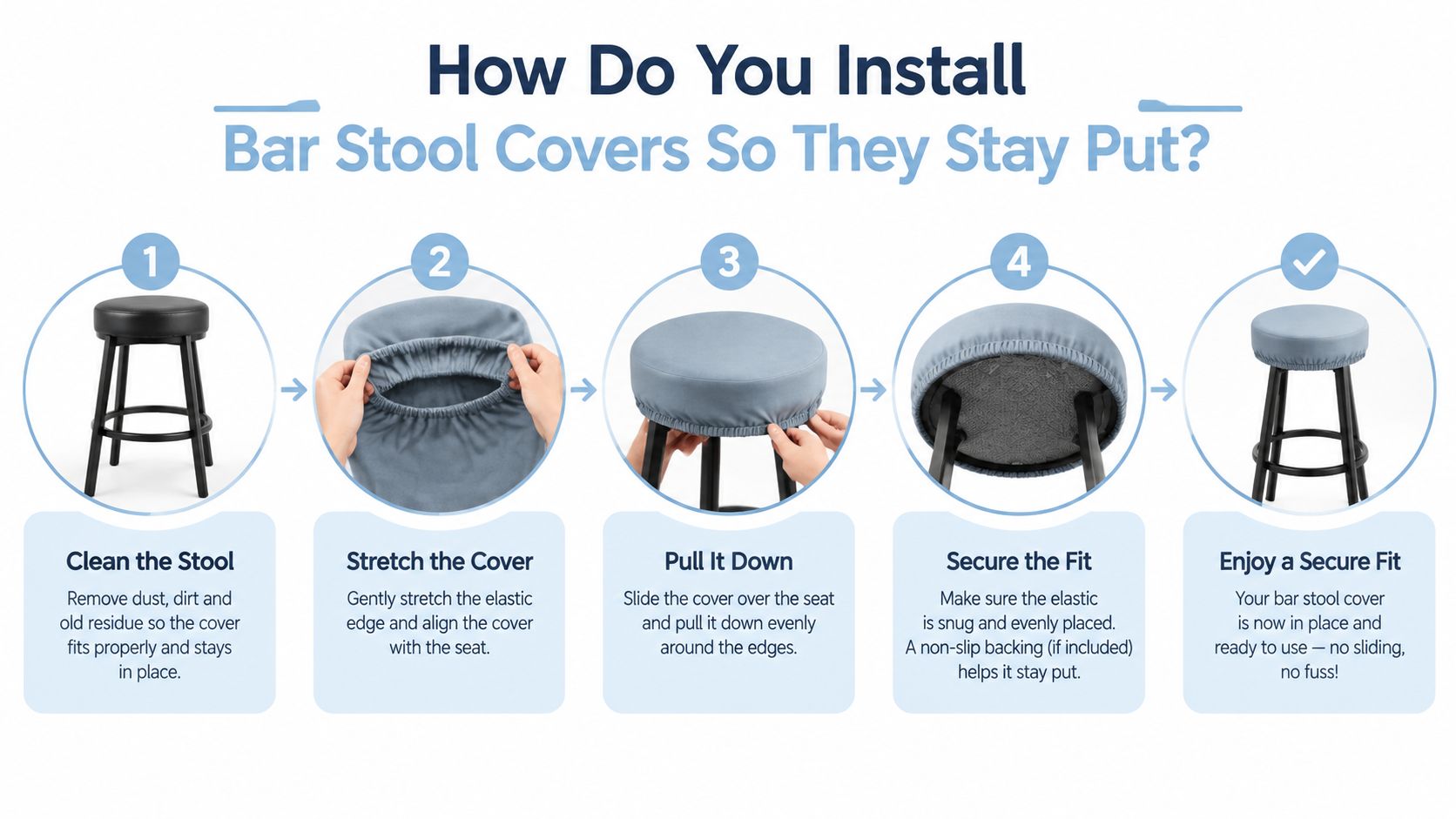
Install bar stool covers by removing the old seat layer, cleaning the surface, and then fitting the cover evenly from front to back. If you rush the pull-on step, the fabric twists, the seams skew, and the cover starts riding up the first time someone sits on it. A clean, flat starting surface makes the whole job easier.
Start with the existing seat pad if there is one, then check whether the stool needs a foam insert or can work without one. Foam helps build a smoother top line on thin seats, but it also adds bulk, so don't force a cover designed for a slim profile over a thick cushion. Pull the cover forward with even hand pressure rather than yanking one corner hard.
After the main shell is seated, anchor any under-seat elastic straps, then fasten ties or close the zipper if the cover has one. Use both palms to smooth from the centre outward, because that releases tension lines before they become permanent wrinkles. Round seats need the back-tuck checked carefully, or the cover will slowly creep.
Don't declare the job done until someone sits on the stool under real load. A cover that looks neat empty can still shift the moment weight and movement hit it.
The common mistakes are predictable. People skip the foam layer when the seat needs it, stretch spandex too far and lose recovery, ignore the back-tuck on round stools, and never test the chair after installation. The installation guide at https://casamehome.com/pages/installation-guide is worth checking if you're fitting multiple stools and want the same tension across the set.
When Are Bar Stool Covers Worth It and When Are They Not
Bar stool covers are worth it when the seat is structurally sound but visually tired, or when protection matters more than a perfect furniture match. Families with small children, pet-heavy homes, short-term rental properties, and rentals with dated stools all get real value from a removable cover. In those settings, the point is to buy time, reduce cleaning pressure, and keep the seating presentable between guests or school lunches.
When covers earn their keep
A cover makes sense when spills are routine and you need a quick reset. It also makes sense when the underlying stool can't be replaced because of lease rules, budget, or the simple fact that the landlord owns the kitchen fit-out. For Airbnb hosts, covers help keep a room looking deliberate between turnovers.
When to skip them
Skip bar stool covers when the stool itself is already tired, loose, or unstable. Skip them when a wipe-clean vinyl seat would outlast several cover cycles, because then you're paying for maintenance without solving the core problem. Skip them too when the shape is strange enough that only custom reupholstery will give a proper result.
A cover that pills quickly, fades badly, or photographs shabby within months isn't a solution, it's a delay. That's the hard truth.
| Scenario | Covers Worth It | Skip Covers | Try This |
|---|---|---|---|
| Family kitchen with spills | Yes | No | Washable fitted cover |
| Pet claws and daily use | Yes, if fit is tight | No if loose or fuzzy | Tight jacquard or wipe-clean seat |
| Airbnb turnover | Yes | No | Removable stretch-fit cover |
| Worn-out, unstable stool | No | Yes | Replace the stool |
| Odd stool shape | No | Yes | Tailored reupholstery |
| Wipe-clean vinyl seat available | No | Yes | Choose the vinyl seat |
The only time I'd choose a cover over a replacement without hesitation is when the stool is worth saving and the seat shape is normal. If either of those things fails, you're better off spending the money once.
How Do You Wash and Care for Bar Stool Covers
Wash bar stool covers gently, dry them flat, and protect coated finishes from harsh treatment. That keeps the fabric stable and helps the cover keep its shape across repeated use. Australian textile care guidance warns against solvent use, abrasive powders, hard rubbing, and stiff-brush scrubbing for upholstery fabrics, so the practical answer is always mild care, not aggressive cleaning (training.gov.au).
The cleaning routine that works
For machine washing, use cold water on a gentle cycle and put the cover inside a mesh laundry sack. Separate darker jacquards from lighter fabrics so dye transfer doesn't ruin the set. Leave bleach and fabric softener out of the wash, especially on waterproof or backed fabrics, because those products can strip the finish.
For daily spills, use a microfibre cloth with mild detergent and blot the mark before it sets. Don't scrub in circles, because that only pushes the spill deeper into the fibres. On coated covers, treat the surface like a protective layer, not a dishcloth.
Dry the cover flat and keep it out of direct sun. Harsh sun will wear down elastane and can flatten the finish faster than indoor drying. Avoid hot tumble drying, wringing stretch fabrics, harsh stain removers on coated surfaces, and ironing any waterproof membrane.
Useful habit: clean small marks the day they happen. A cover that gets spot-treated early stays presentable much longer than one that gets “properly” washed after every stain has already sunk in.
If the cover is removable and the label allows it, follow the label first and your judgment second. The gentlest routine usually wins because protective treatments survive longer when they're not being battered every wash.
Styling Bar Stool Covers for Australian Homes and Rentals
Style only matters after fit, but the right colour and texture can make a basic stool look intentional fast. Australian interiors are leaning towards curved forms, tactile surfaces, and warm neutrals, so bar stool covers in sand, clay, eucalypt green, coastal white, and deep navy sit comfortably in current kitchens without looking forced. Timber stools like warmth. Black powder-coat likes contrast. Rattan can take softer, lighter fabric tones without disappearing.
Rental-friendly choices that photograph well
In rentals, removable covers do more than decorate. They protect existing upholstery from bond headaches, avoid drilling or permanent fixes, and make the seating look cleaner in listing photos. Stay away from adhesive foam that can mark timber seats, and choose covers that come off cleanly when the lease ends.
For Airbnb properties, the colour choice should support fast room turnover and clear photos, not just match a mood board. Mid-tone neutrals hide incidental wear better than very pale fabrics, and a tidy fitted cover signals care before a guest even sits down. A hard bench seat is still the smarter landlord call when the furniture needs to survive abuse, but covers are a strong middle path where the stool itself is staying.
Casamé Home makes removable, machine-washable covers for seating that needs protection without a full replacement, and that kind of product is exactly what rental styling often calls for. Use that sort of solution when you need a presentable surface, not a permanent remodel.
| Cover Style | Trend Match | Renter Safe | Airbnb Friendly |
|---|---|---|---|
| Jacquard fitted cover | Strong | Yes | Yes |
| Stretch-fit cover | Strong | Yes | Yes |
| Waterproof cover | Moderate | Yes | Yes |
| Loose decorative cover | Variable | Sometimes | Sometimes |
| Permanent reupholstery | Strong | No | No |
The best-looking rental kitchen is usually the one that looks maintained, not over-designed. A cover that stays tight, washes well, and doesn't fight the room will always beat a decorative choice that looks good for two weeks and then turns scruffy.
Frequently Asked Questions About Bar Stool Covers
Do bar stool covers fit backless stools?
Yes, many bar stool covers work on backless stools, but only if the seat shape is simple and the cover is cut for that footprint. Round and square seats are the easiest match. Anything with a lip, heavy curve, or unusual thickness needs closer checking before you buy.
How do I stop bar stool covers from riding up on rounded seats?
Choose a cover with enough recovery, then pull it evenly from front to back and smooth the fabric from the centre outward. Rounded stools need the back-tuck checked carefully, because a sloppy tuck is usually why the cover slips. Under-seat straps help too, but only if they sit flat and aren't twisted.
Are bar stool covers safe around pets and food prep zones?
They can be, if you choose a tight weave or a wipe-clean finish and keep the fit snug. Loose, fuzzy fabrics are a poor choice around claws and crumbs because they trap mess and snag more easily. In food prep zones, easy-clean surfaces make far more sense than decorative textures.
What should I expect from a good cover warranty or replacement policy?
A good policy should be clear about fit, faults, and return timing, because the main risk with bar stool covers is mismatch. Read the product notes carefully before you order, especially for covers designed for a specific shape. If a seller won't explain fit details, assume the risk sits with you.
If your stools are worth saving, Casamé Home gives you a practical way to protect them without replacing the whole set. Visit Casamé Home if you want a removable, washable cover solution that suits real Australian kitchens, rentals, and busy homes.


