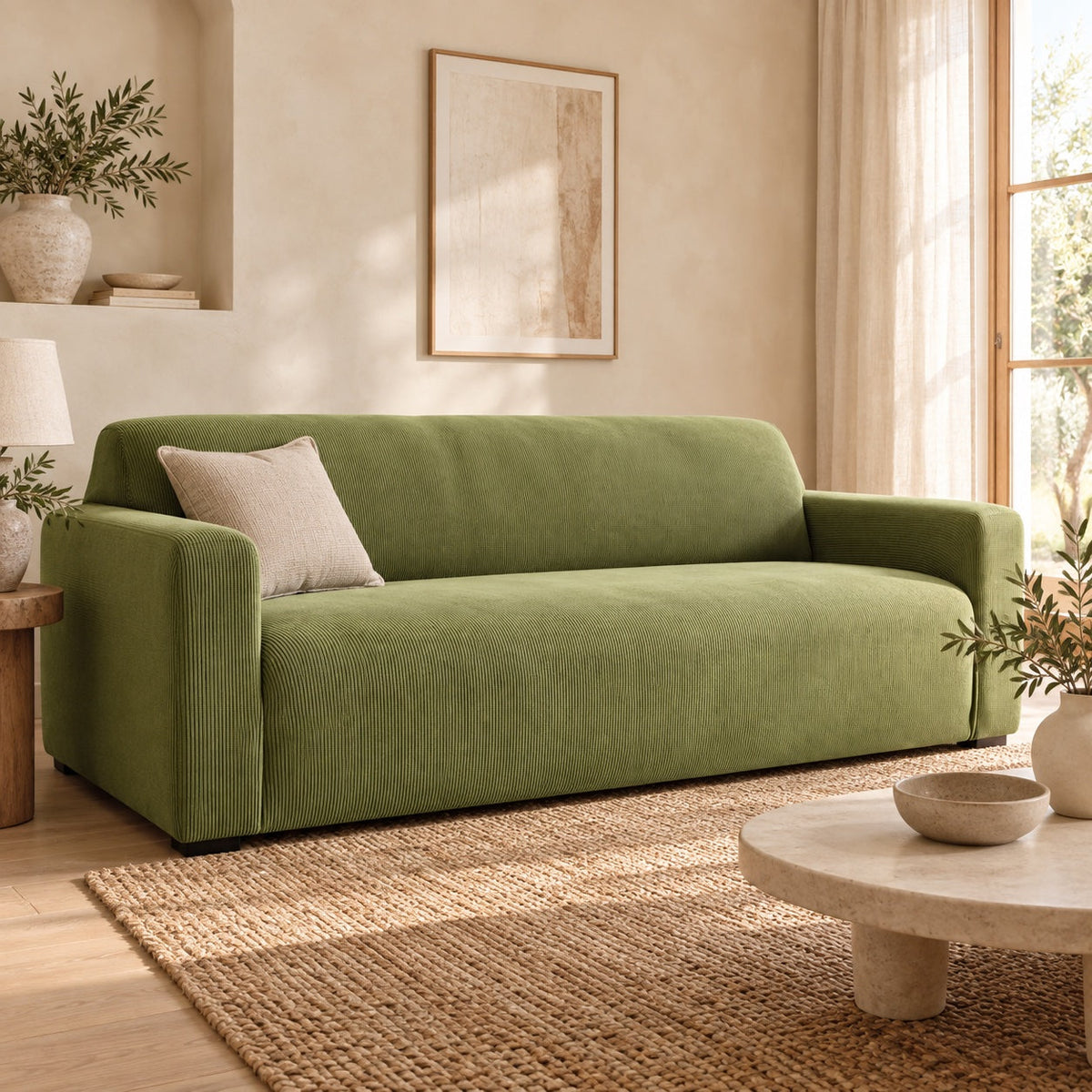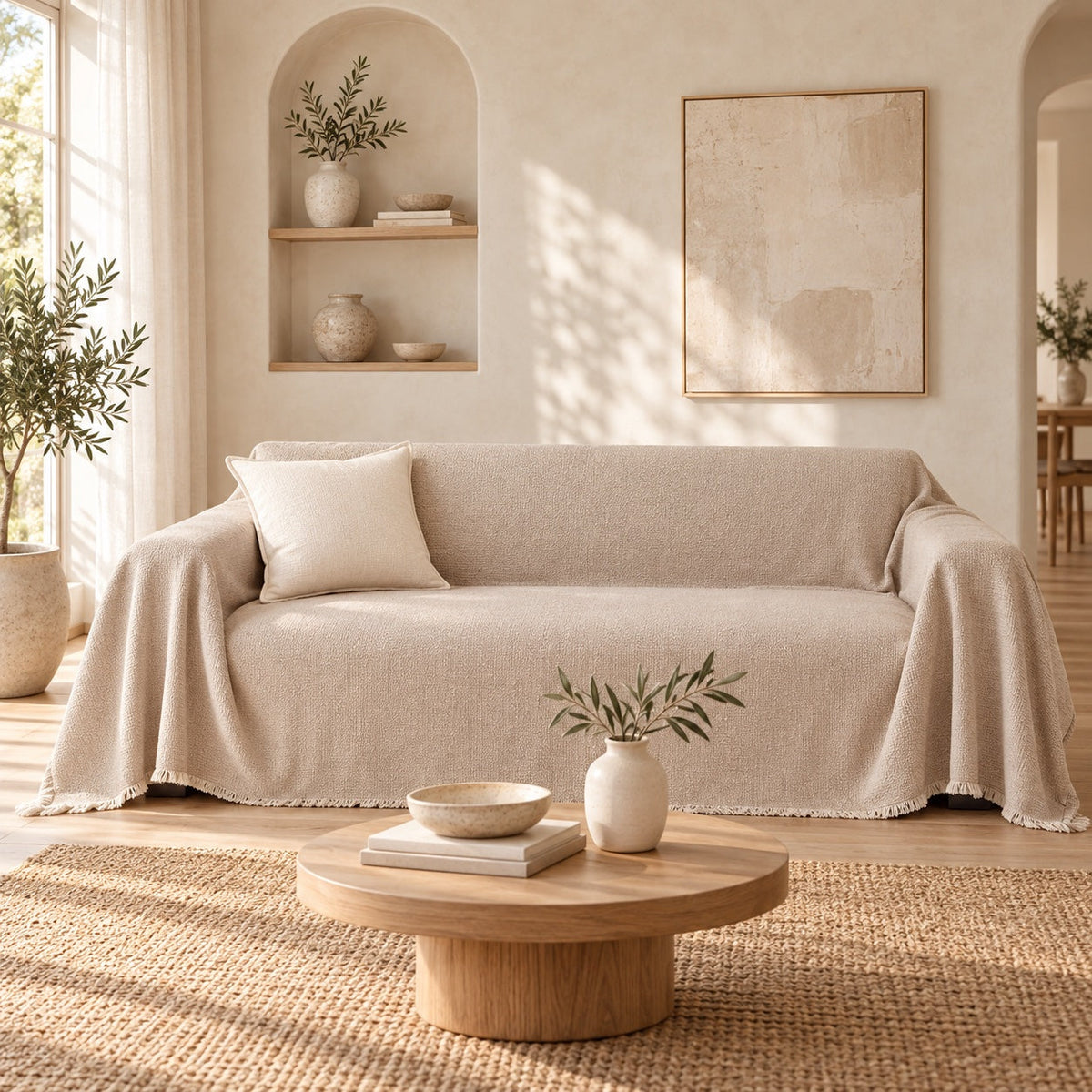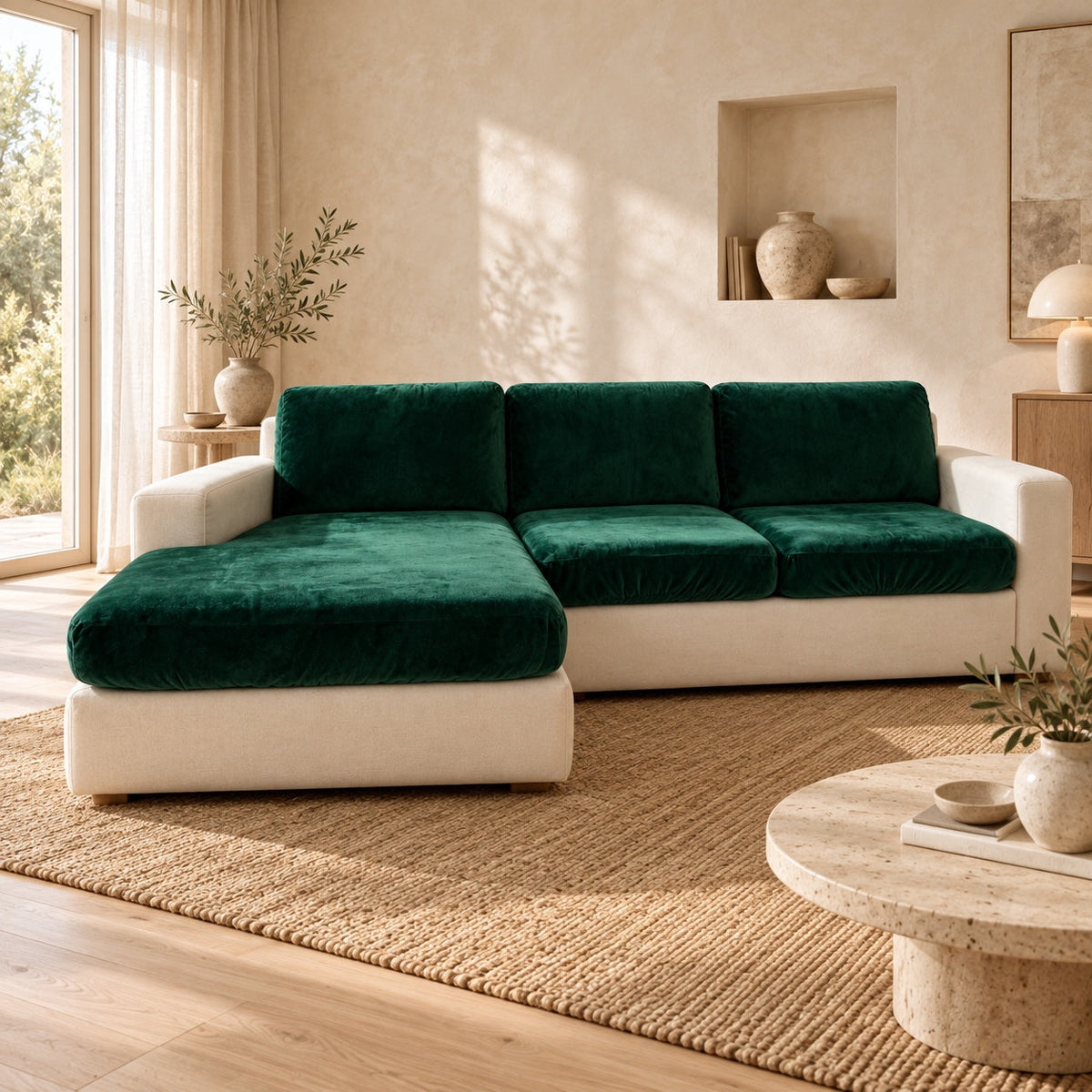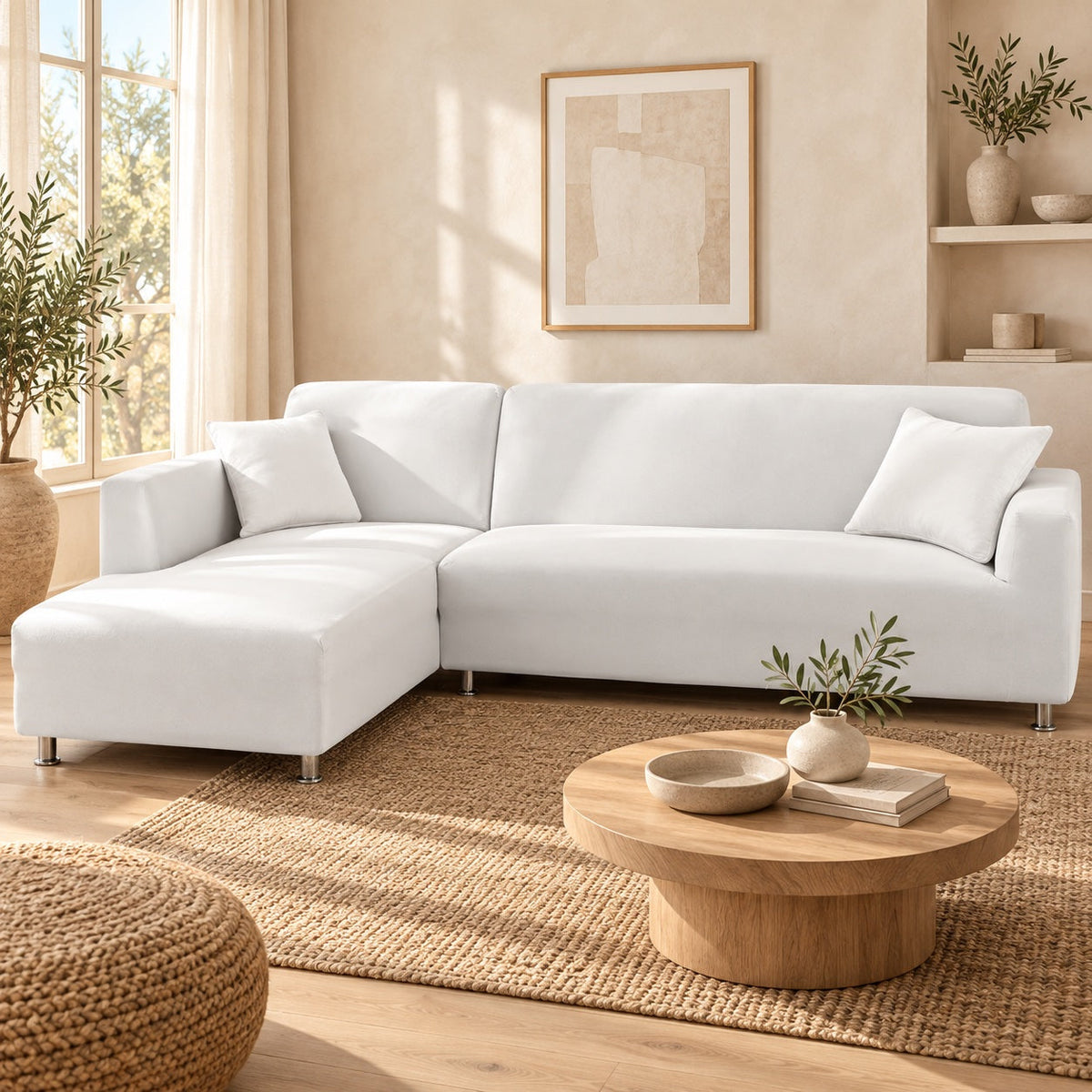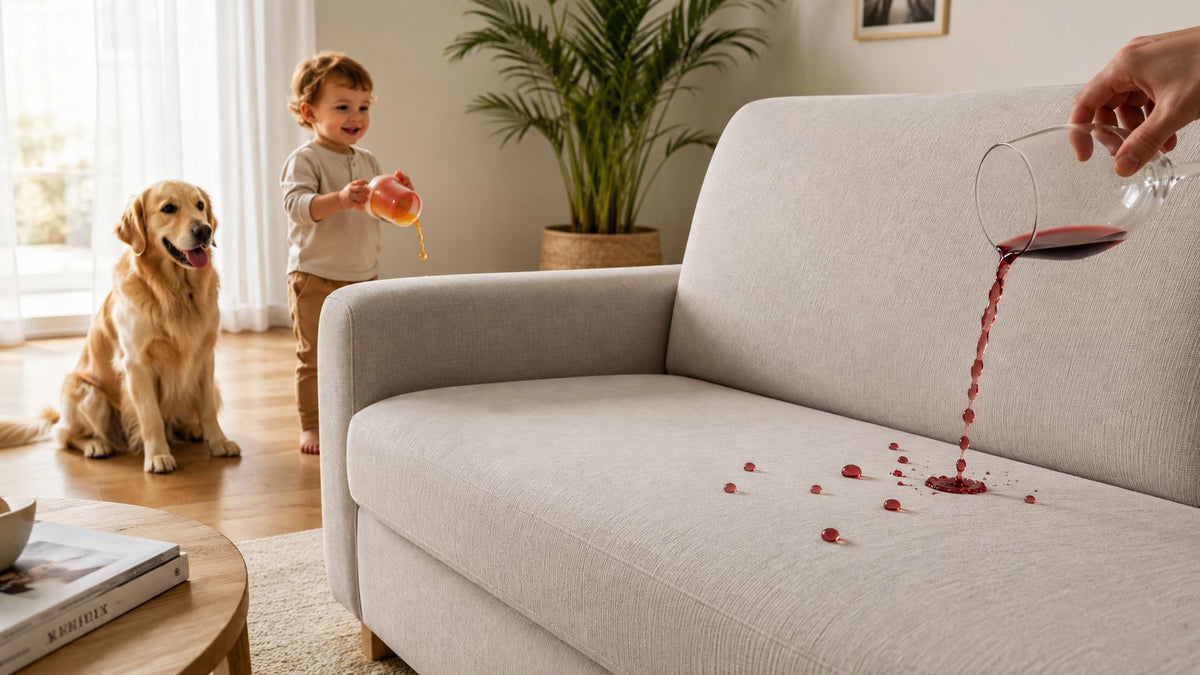
A glass of red wine tips onto the sofa, tomato sauce lands beside it, or a muddy paw leaves a mark before you can reach for a cloth. A stain resistant sofa cover gives Australian households a removable barrier that protects existing upholstery, refreshes the room and avoids replacing the entire sofa. The right choice depends on more than a label, though. You'll need to understand how the fabric handles spills, washing, abrasion, sunlight and humid conditions before deciding whether stretch, jacquard or waterproof construction suits your home.
Key Takeaways Stain Resistant Sofa Covers
Not Always Waterproof: Stain resistance helps with spills but doesn't block all liquid.
Check Durability: Look for specific test data, not vague adjectives.
Suits Busy Homes: Removable, washable covers suit families, pets and hosts.
Table of Contents
- Why Your Sofa Needs a Stain Resistant Cover
- What Does Stain Resistant Actually Mean for a Sofa Cover
- Which Fabric Should You Choose for a Stain Resistant Sofa Cover
- How Do You Know a Cover Is Durable Enough for Daily Life
- Are Stain Resistant Covers Right for Kids, Pets and Airbnb
- How Do You Clean and Care for a Stain Resistant Sofa Cover
- Pros, Cons and Common Questions About Stain Resistant Covers
Why Your Sofa Needs a Stain Resistant Cover
A good sofa often becomes the busiest surface in the house. Children eat snacks on it, pets sleep on it, guests bring drinks into the living room and renters may need to protect furniture that belongs to someone else. When a spill reaches the original upholstery, cleaning can become awkward because the cushion covers may not be removable and the fabric may react badly to vigorous scrubbing. If spills or pet accidents are a worry, our spill-proof couch covers have a genuine waterproof backing that keeps liquids from soaking through.
A stain resistant sofa cover changes the job. Instead of trying to protect every fibre of the sofa permanently, you add a washable outer layer that can be removed when life gets messy. That makes a cover a practical, lower-cost way to protect upholstery and give an ageing lounge a new colour or texture without buying replacement furniture.
The everyday test: A useful sofa cover should make an ordinary spill less stressful, not promise that every stain will disappear without prompt care.
The phrase stain resistant doesn't mean stain proof. It generally describes a fabric, weave or finish that slows absorption, helps liquid remain on the surface or makes marks easier to remove. The result still depends on the type of spill, how long it sits and whether you follow the care instructions.
Australian upholstery already shows that buyers want both performance and appearance. Baresque's Australian commercial upholstery listings include fabrics promoted for stain resistance, stain repellence, bleach cleanability and easy cleaning with water or mild detergent. Those products are available in colour ranges containing 10, 11, 12 or 18 colourways, showing that protective textiles aren't treated as purely utilitarian products in Australian interiors.
That balance matters for sofa covers. A protective layer that looks temporary or clashes with your décor may not stay in place for long. A cover in a suitable colour, with a reliable fit and manageable washing routine, is more likely to become part of the room rather than an emergency sheet thrown over the sofa.
If you're comparing options for a three-seat sofa, browse three seat settee covers to see how removable protection can work as a practical furniture-refresh approach. Before ordering, measure the sofa carefully and check the seller's stated configuration requirements. Covers aren't automatically interchangeable between standard sofas, corner designs, sofa beds or recliners.
This guide focuses on four buying questions: what stain resistance really means, how stretch compares with jacquard and waterproof materials, how Australian durability standards can help you assess quality, and how cleaning changes for families, pets, rentals and short-stay accommodation.
What Does Stain Resistant Actually Mean for a Sofa Cover
A built-in stain resistant sofa cover has protection in the material or its finish, while a topical spray protector adds a temporary coating to an existing fabric surface. The distinction is similar to choosing between a raincoat and reproofing a jacket. A raincoat is made as a protective outer layer, while reproofing adds a treatment that may need refreshing after use or cleaning.
Fabric-level performance can come from the fibre choice, the tightness of the weave, a coating or a combination of these features. A removable cover also provides a physical advantage: when the surface becomes dirty, you can take the cover off rather than treating the sofa underneath.
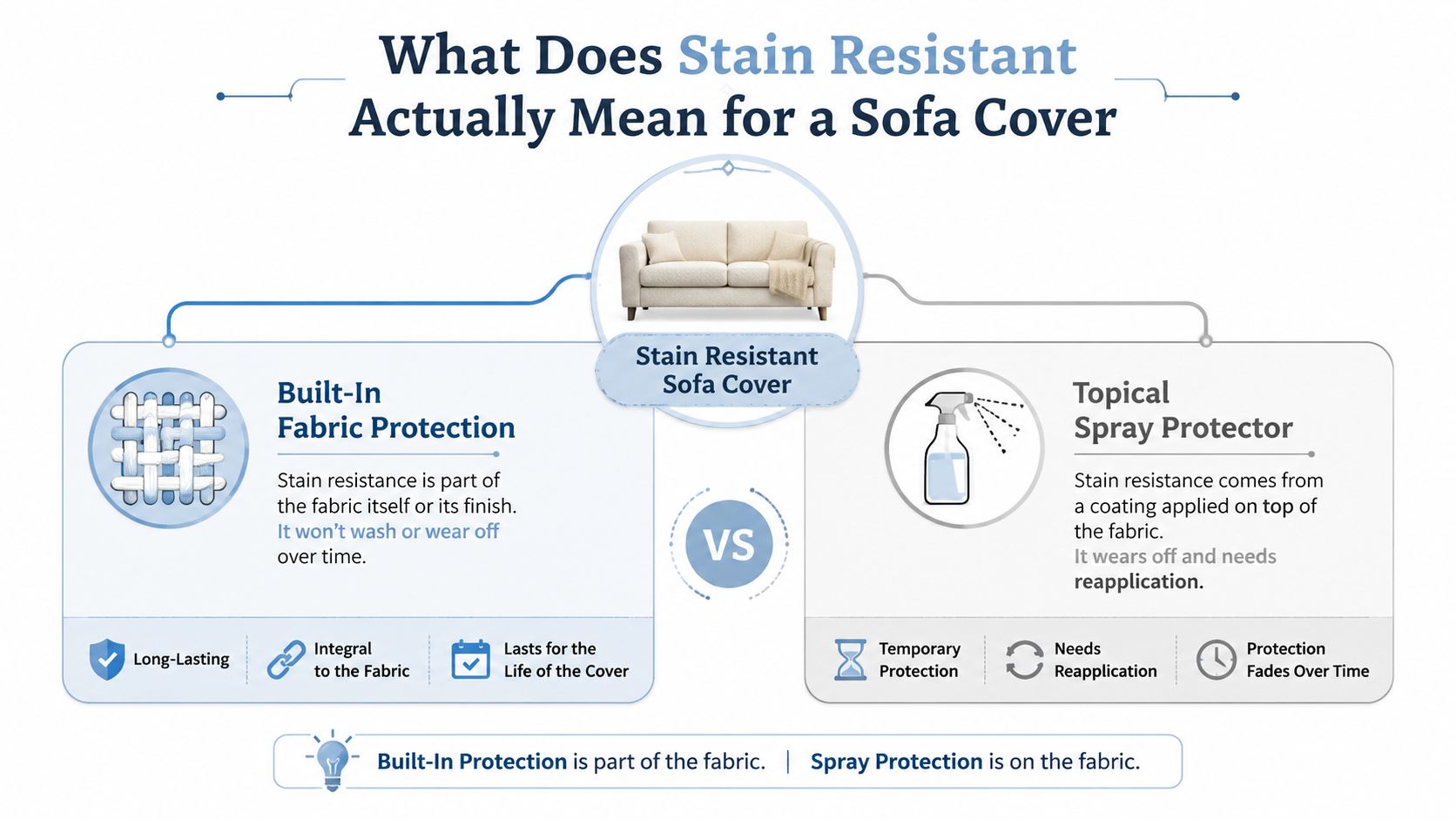
Sprayed protection has a different maintenance profile. Independent Australian fabric-protection guidance describes protection as temporary rather than permanent. It may slow absorption, but it isn't a guaranteed stain cure, and typical protection may need reapplication after cleaning or every 3–5 years, depending on the product and the amount of wear.
That doesn't make topical protection useless. It can be sensible when you want to keep the original sofa exposed, preserve its existing appearance or protect upholstery that can't accept a removable cover. The trade-off is that treatment becomes part of the sofa's ongoing care, and cleaning can affect when another application is needed.
Is stain resistance the same as waterproofing
No, a stain resistant sofa cover isn't automatically waterproof, because resisting a mark and stopping liquid from passing through are separate performance goals. A woven fabric may help a drink bead or remain on the surface long enough to blot, while a waterproof construction usually relies on a membrane or coated backing to block liquid movement.
Waterproofing can help with toddler accidents, incontinent pets or large spills that are likely to reach the cushions. It can also reduce breathability and may feel warmer or less flexible than a soft stretch textile. That makes waterproof fabric a targeted solution rather than the right answer for every living room.
Why removable covers suit low-commitment homes
Renters, families and households that rearrange furniture often benefit from a cover they can remove, wash and replace. You can change the room's colour without altering the sofa, and you can inspect the original upholstery instead of repeatedly saturating it with a treatment.
The sensible expectation is simple: a stain resistant sofa cover buys you time and makes cleaning easier. It doesn't cancel the need to act quickly, use the approved products or accept that some spills and household habits will challenge the fabric.
Which Fabric Should You Choose for a Stain Resistant Sofa Cover
A stretch spandex blend usually suits shoppers who want a close-fitting, flexible cover for a standard sofa, while jacquard offers a more textured appearance and a waterproof membrane prioritises liquid protection. No construction wins every category, so choose according to the mess your household creates and the comfort you expect from the sofa.
Stretch covers feel soft and adaptable. Their close fit can create a tidier appearance than a loose throw, but the fit depends on the sofa's shape, dimensions and cushion arrangement. They're useful for households that want frequent removal and washing, provided the care label supports machine washing. Our washable couch covers come in stretch, velvet, cotton and water-repellent fabrics, so you can match the look to your room.
Jacquard covers use a patterned or textured weave that can disguise everyday visual wear better than a very smooth plain surface. They often feel more substantial and decorative, making them suitable when the cover is expected to look like part of the room. Don't assume a textured weave is automatically waterproof or suitable for every sofa configuration.
Waterproof membrane covers offer a stronger barrier against liquid reaching the upholstery. They're particularly practical where spills are predictable, but the surface can feel less breathable and may trap more heat or odour in warm, humid rooms. A waterproof layer also needs careful washing and drying according to its instructions, because excessive heat may affect its backing.
| Fabric type | Look and feel | Stain and spill behaviour | Washing | Best for |
|---|---|---|---|---|
| Stretch spandex blend | Smooth, flexible and close-fitting | Helps shield upholstery and makes surface marks easier to remove | Often convenient for routine washing, subject to the care label | Families, renters and everyday living rooms |
| Textured jacquard | Decorative, woven and more substantial | Texture can make minor wear less noticeable, while performance depends on the specific fabric | Washability varies, so check the label before purchase | Style-focused homes and guest areas |
| Waterproof membrane | Protective, sometimes firmer or less breathable | Blocks liquid more effectively than an ordinary woven cover | Requires careful temperature and drying control | Toddlers, incontinent pets and high-spill settings |
Australian testing can provide more useful evidence than a vague “easy-clean” promise. Austex Fabrics' Fusion Brocade lists stain resistance testing under ISO 105 A03 and reports removal scores of 5, meaning complete removal, after 24 hours for artificial blood, artificial urine, betadine, iodine and tomato sauce. See the Fusion Brocade performance information when you want an example of documented stain testing rather than general advertising language.
Buying rule: Select the softest construction that handles your household's likely spills. Move to a waterproof membrane only when liquid penetration is the main risk.
Colour deserves attention alongside technical performance. Australian commercial fabrics demonstrate that stain-resistant textiles can be offered in substantial colour ranges, so you don't have to choose between a protective cover and a room that feels organised. For more ideas on evaluating fabric construction, compare the discussion of performance fabric, then confirm the exact fit and care requirements for your sofa.
How Do You Know a Cover Is Durable Enough for Daily Life
A durable stain resistant sofa cover must withstand rubbing, movement, washing and sunlight as well as spills. The Australian reference point is AS 2687:1997, which grades domestic and commercial upholstery fabrics into five performance categories using criteria including abrasion resistance, shrinkage, strength, seam slippage, pilling and colourfastness, as outlined in Warwick Fabrics' upholstery-care guidance.
Those terms describe different ways a cover can fail. Abrasion resistance relates to repeated contact from people sitting down and standing up. Shrinkage affects whether a washed cover still fits. Seam slippage shows how the yarns behave around stitched joins, while pilling concerns the small balls that appear after friction. Colourfastness matters when the cover is washed or exposed to light.
A fabric can perform well against spills and still disappoint on the sofa if its seams stretch, its surface pills or its dimensions change after washing. Think of stain resistance as the cover's first line of defence, not its complete durability report.
What should you check on the product page
Look for specific information rather than broad adjectives. A reliable listing should help you answer these questions:
- What has been tested: Check whether the seller identifies a test method, performance category or measurable cleaning result.
- How the cover is washed: Confirm the recommended water temperature, cycle, detergent and drying method.
- What the construction is: Identify whether you're buying a woven fabric, stretch blend, coated textile or membrane-backed cover.
- How the cover is secured: Look for elastic edges, foam inserts, straps or another system that matches the sofa's design.
- What happens to colour: Ask whether the product gives care advice for direct sun and whether the colour is expected to fade.
- What isn't covered: A stain claim won't tell you how the cover handles claws, sharp furniture edges, rough play or repeated pulling.
A product page doesn't need to publish every laboratory result to be useful, but it should make the important limitations visible. If the seller only says “durable” and “stain proof” without explaining construction or care, treat those terms cautiously.
Why standards help with Australian furniture
AS 2687:1997 gives shoppers a local framework for discussing upholstery quality. It doesn't turn a domestic sofa cover into commercial furniture, and it doesn't guarantee a particular product will suit your household. It does remind you to assess the whole fabric system, including abrasion, shrinkage, strength, seams, pilling and colourfastness, rather than treating stain performance as the only measure that matters.
Are Stain Resistant Covers Right for Kids, Pets and Airbnb
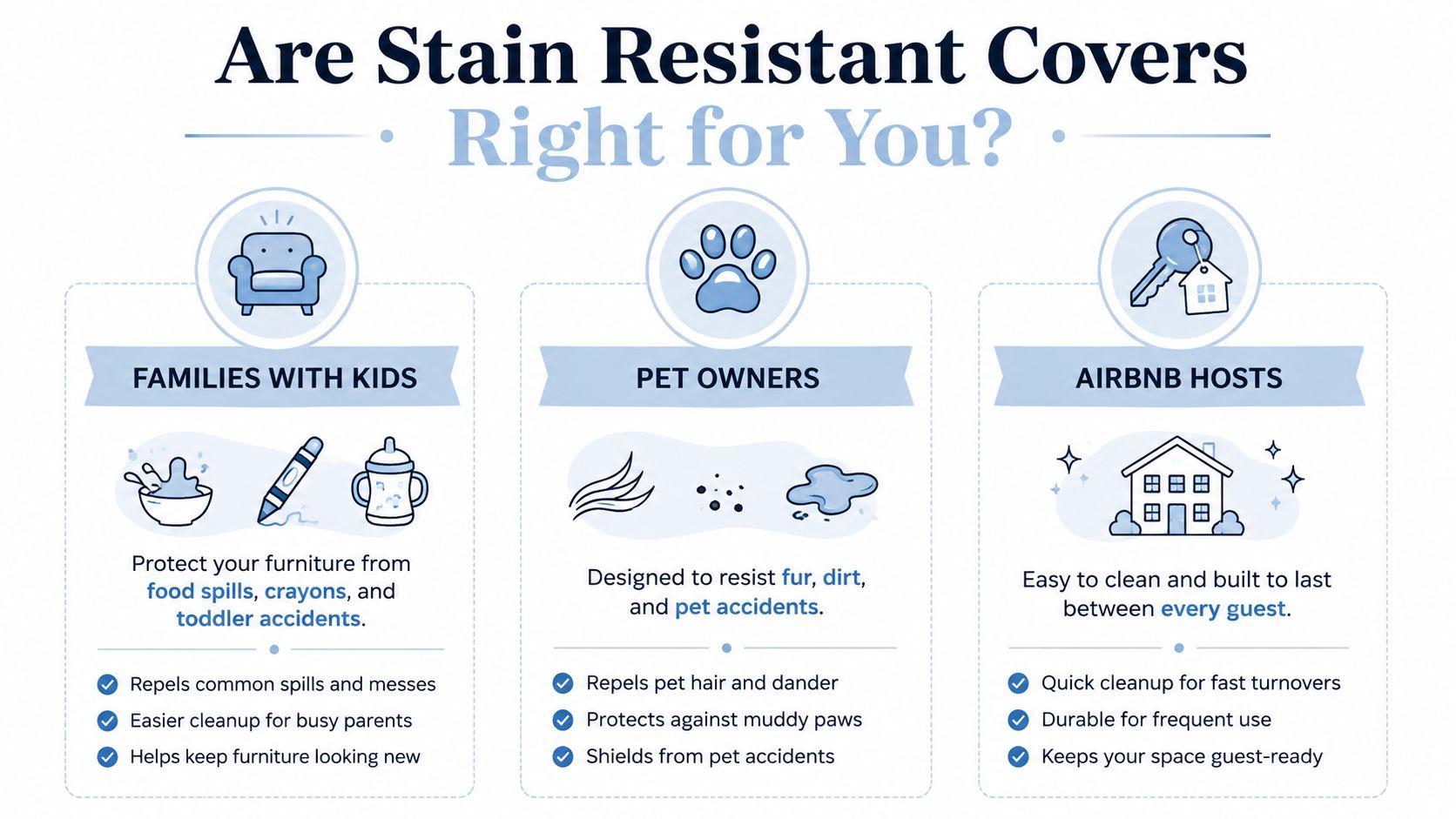
Stain resistant sofa covers suit families, pet owners and Airbnb hosts when the priority is removable protection and straightforward cleaning, but the best construction differs by household. A waterproof cover is more suitable for serious liquid accidents, while a machine-washable stretch or jacquard cover often gives a more comfortable everyday finish.
Families with children
Toddlers bring food, crayons, drinks and accidents into the living room. A waterproof cover can protect the cushion surface when liquid penetration is the main concern, while a stretch cover may feel more natural for everyday sitting and routine food spills.
Removability matters because the mess isn't always a single dramatic accident. Crumbs, greasy fingerprints and drink marks build up gradually, and a washable layer lets you reset the sofa without treating the underlying upholstery. A cover won't stop a child from drawing on the wall or grinding a stain into the fabric, but it reduces the number of spills that reach the original sofa.
Pet owners
Dogs and cats add fur, dirt, claws and occasional accidents. A machine-washable stretch or jacquard cover is practical for fur and general grime, while a waterproof option makes more sense for incontinent pets or repeated wet accidents.
A cover won't solve chronic scratching. Cats can catch loops, dogs can dig at seams and energetic pets can pull a poorly secured cover out of position. Before buying, consider whether you need a snug fit, a smoother surface or a protective membrane. If training is part of the wider furniture plan, guidance on how to train your dog to use pet equipment can sit alongside a sensible sofa-protection routine.
Airbnb and short-stay accommodation
Hosts need a cover that can be removed between guests, washed according to its care label and returned to the sofa without a complicated reset. A durable stretch cover may provide a polished fit, while jacquard can add visual texture in a guest room or lounge. The right choice depends on the sofa configuration and the cleaning time available between bookings.
Australian commercial upholstery listings show that performance and style can coexist. Baresque lists stain-resistant fabrics with claims including bleach cleanability and cleaning with water or mild detergent, alongside colour ranges containing 10 to 18 colourways. That supports a useful design principle for short-stay furniture: protective materials don't have to look clinical.
For a stronger barrier against wet spills, compare waterproof sofa cover construction, then check whether the fabric will remain comfortable in your room. A removable cover generally offers more control than relying on a permanent treatment, especially when different people and pets use the sofa every day.
How Do You Clean and Care for a Stain Resistant Sofa Cover
Clean a stain resistant sofa cover by removing excess liquid, working from the outside of the mark towards the centre with water and neutral soap, then drying the area with a clean cloth. Speed matters most, especially for acidic spills such as alcohol and citrus, because prompt attention can reduce the chance of permanent staining.
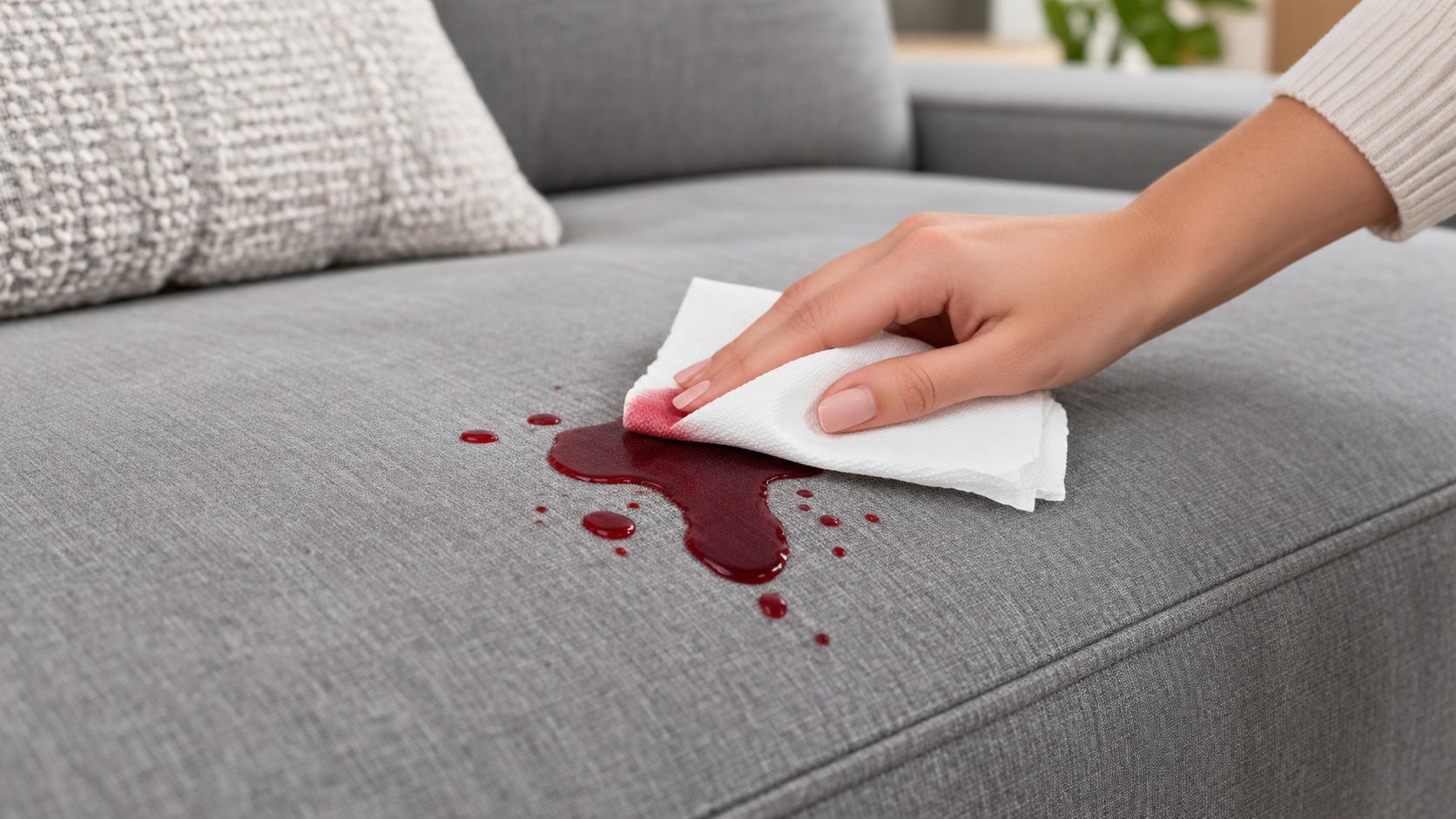
Use this routine for oils, fats, makeup, chocolate and beverages. It follows Australian furniture-care guidance from Coco Republic's cleaning instructions, which recommends dabbing first, wiping from the outer edges towards the centre with a cloth dampened in water and neutral soap, and finishing with a dry cloth.
- Lift the excess: Use a clean absorbent cloth or paper towel and dab rather than rub. Rubbing can spread a liquid mark and work particles further into the weave.
- Work outside-in: Apply a small amount of water and neutral soap to a cloth, not directly onto the cover. Start at the outer edge and move towards the centre to keep the mark contained.
- Remove residue: Use a separate cloth lightly dampened with clean water if the care instructions allow it. Avoid soaking a stretch cover or forcing water through a membrane.
- Dry gently: Press with a dry cloth and allow the area to dry according to the manufacturer's instructions. Don't use harsh heat unless the care label specifically permits it.
- Wash the whole cover when needed: Follow the stated machine cycle, detergent and drying instructions. Refit the cover only when it is fully dry and check that seams and elastic have returned to their intended shape.
For broader upholstery advice, consult cleaning upholstery the right way rather than experimenting with bleach, solvents or aggressive brushes. A useful reference for cover-specific routines is couch cover cleaning, especially when you're comparing removable fabrics.
The following video can help visualise a careful cleaning approach, but the product care label should always take priority.
Golden rules: Dab quickly, work from the outside towards the centre, use mild products, avoid harsh scrubbing and dry the cover completely before refitting it.
Pros, Cons and Common Questions About Stain Resistant Covers
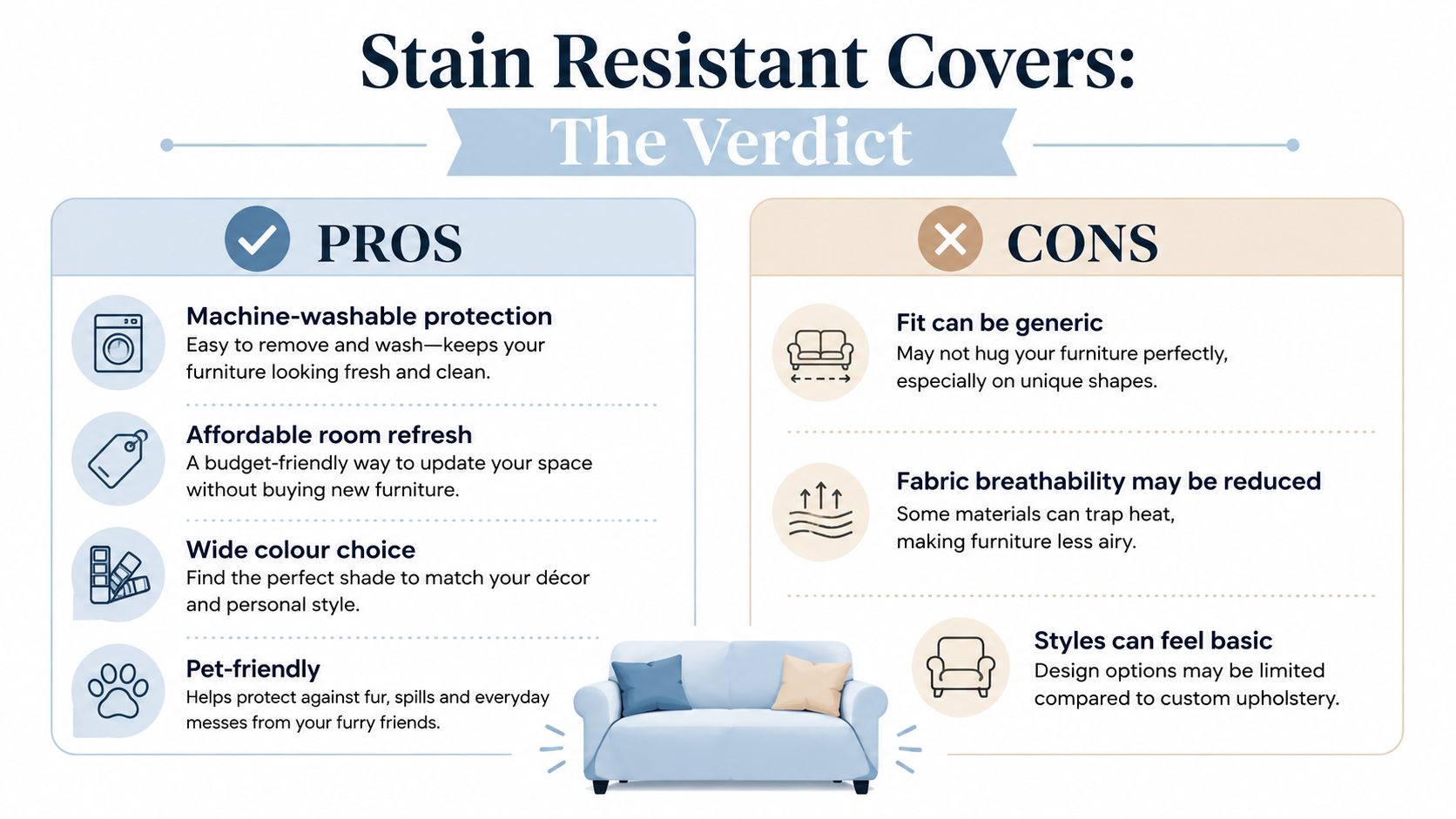
A stain resistant sofa cover is a strong choice when you value washable protection, an affordable room refresh and easier pet or family care, but the trade-offs include fit limitations, laundering effort and reduced breathability in some waterproof constructions. The best result comes from matching the cover to the sofa and the household rather than buying based on the word “stain resistant” alone.
The main advantages are practical:
- Machine-washable protection: A removable layer can be cleaned away from the sofa, subject to the product's care instructions.
- Affordable room refresh: Changing the cover can update colour and texture without replacing the furniture.
- Wide colour choice: Australian performance upholstery listings show that protective fabrics can be offered across multiple colourways, not only neutral utility shades.
- Pet-friendly convenience: Covers can collect fur and everyday dirt before those materials settle into the original upholstery.
The limitations deserve equal weight. Generic covers may not sit neatly on unusual shapes, deep cushions or complicated reclining mechanisms. Waterproof membranes can feel warmer and less breathable, while any washable cover creates a laundering task. Some textured styles may also feel more basic or less custom-fit than professionally upholstered furniture.
Australian fabric-protection guidance also points to features beyond stain resistance, including UV defence, antimicrobial protection and mould or mildew resistance, as described by Wundaguard's fabric-protection information. Those features matter because Australian rooms can face strong sunlight, coastal humidity and frequent airing or washing. A cover that resists spills but fades quickly in a sunny room may not be the right long-term purchase.
Can a waterproof sofa cover trap heat or odours in humid rooms
A waterproof sofa cover can feel warmer and less breathable than a woven stretch or jacquard cover because its membrane limits air movement. In humid coastal rooms, choose a construction with clear washing and drying guidance, and allow the cover and sofa to dry fully after cleaning.
Does stain resistance protect a sofa from Australian sun
Stain resistance alone doesn't prevent fading from sunlight. A sofa in a bright room may need a cover with stated colourfastness or UV-related performance, along with sensible placement, curtains or blinds that reduce direct exposure.
Is a jacquard sofa cover suitable for pet hair
A jacquard sofa cover can suit pet households when the weave is secure and the care label supports regular washing. It won't prevent scratching or guarantee that fur won't collect, so inspect the texture and seams before choosing it for a cat or dog that claws at furniture.
What is the most practical choice for renters
A removable machine-washable stretch sofa cover is often the simplest rental option because it protects the original upholstery without permanent alteration. Renters should still confirm the cover fits the exact sofa configuration and keep the original care requirements available.
For Australian households, the honest verdict is straightforward. Choose stretch for flexible everyday coverage, jacquard when appearance and texture matter, and waterproof construction when liquid protection outweighs breathability. Match the fabric to your actual messes, your washing routine and the room's sunlight rather than relying on a stain claim by itself.
Casamé Home offers machine-washable stretch-fit covers, waterproof options and textured jacquard fabrics designed to refresh and protect sofas in Australian homes. Measure your sofa, compare the construction that suits your household and visit Casamé Home to explore covers in colours and styles suited to your living space.