


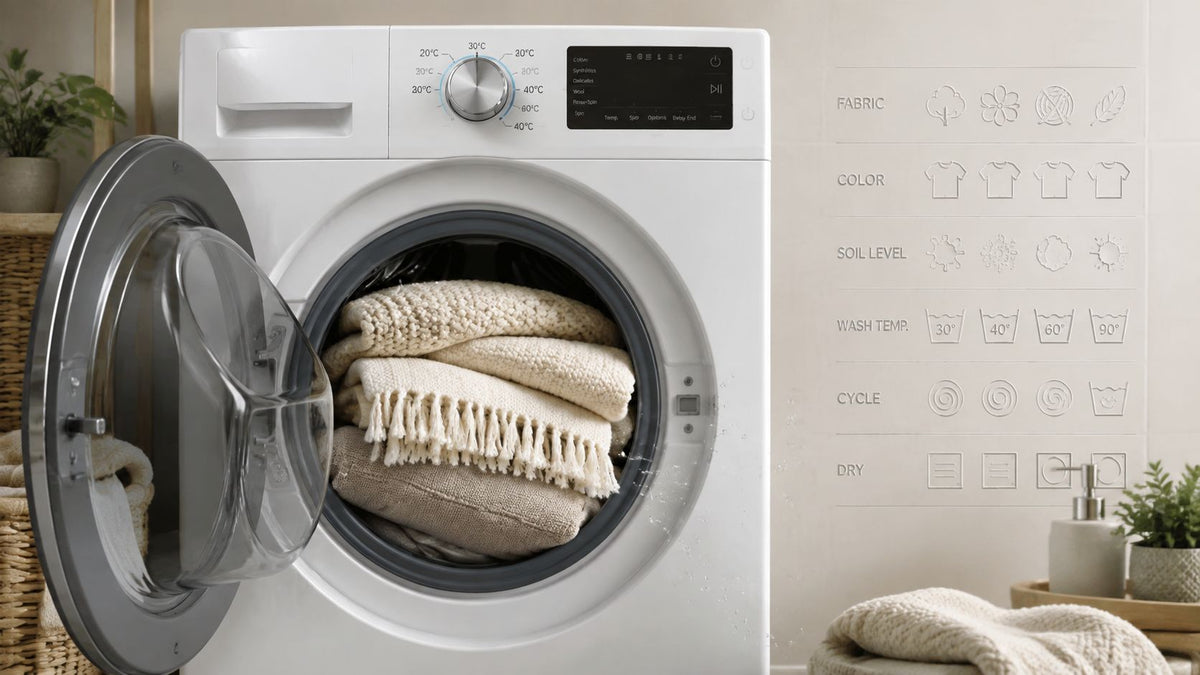
You've taken the washable sofa cover off after a muddy-paw incident, and the label says 40°C. Should you choose the 40°C button, or can you wash cooler? For most sofa covers and throws, 30–40°C on a gentle cycle is the safer choice, and the number inside the care-label washtub is always a maximum, not a required target.
That ceiling rule protects the details that make home textiles attractive and comfortable. Excess heat can shrink spandex blends, flatten velvet pile and encourage colour loss in jacquard. Once you read the label as a limit rather than a prescription, machine washing becomes much less mysterious. This machine wash temperature guide takes you from the Australian care symbol to fabric-specific settings, stain pretreatment and drying.
Table of Contents
- Your Machine Wash Temperature Guide at a Glance
- How Do You Read Australian Care Labels Before Washing?
- Which Wash Temperature Suits Each Fabric Type?
- Can You Machine Wash Stretch Spandex Sofa Covers Safely?
- How Should You Wash Jacquard and Velvet Sofa Covers?
- When Do Pet Homes and Guest Turnover Need a Hotter Wash?
- What Is the Best Way to Pretreat Stains Before a Cold Wash?
- How Should You Dry Sofa Covers and Throws After Washing?
- Your Quick-Reference Washing Checklist
Your Machine Wash Temperature Guide at a Glance
For most washable sofa covers and throws, choose 30°C or 40°C, use a gentle or mild cycle, and never exceed the temperature printed in the washtub symbol. A label marked 40°C doesn't tell you to wash at 40°C every time. It tells you that the fabric shouldn't be washed hotter than 40°C. Cooler water is permitted, and it often offers better protection for colour, stretch and surface texture. Choice explains that the number is a maximum rather than a required temperature.
The quick decision
Use this order before you load the machine:
- Read the label. Find the washtub number and any bars underneath it.
- Choose the lowest useful temperature. Light soil and ordinary dust usually suit a cooler wash.
- Match the cycle to the fabric. Stretch, velvet and woven textures need gentler movement than sturdy cotton.
- Plan the drying method. For delicate covers, the dryer can cause more damage than the wash.
A cotton-blend throw may cope with a warmer setting if its label allows it. A stretch cover or velvet throw generally deserves a cooler cycle, even when the machine offers a hotter option.
Practical rule: A higher label number gives you permission to wash up to that temperature. It doesn't make that temperature the best everyday choice.
Temperature is only one part of the laundering decision, but it's the variable most likely to cause irreversible trouble. Heat can reduce the recovery of elastane, make a pile surface look flattened and encourage dyes in richly coloured jacquard to move. For broader guidance on keeping bedding and household textiles fresh, these expert bedding hygiene tips provide useful background, while machine-washable couch cover ideas can help you compare washable options before buying.
How Do You Read Australian Care Labels Before Washing?
Australian care labels show the maximum wash temperature inside the washtub symbol, so a sofa cover marked 40°C can be washed at 30°C or cold, but never hotter than 40°C. Australia's mandatory care-labelling standard permits instructions in English or the five internationally recognised care symbols, making the washtub symbol the main temperature reference on many textile labels. The Australian Product Safety Commission outlines the mandatory care-labelling requirements.
Decode the washtub
A number inside the tub is a ceiling in Celsius. The Australian Product Safety Guide distinguishes normal, mild and very mild processes, and it recognises hand washing with a maximum of 40°C. A bar beneath the tub signals a gentler process, so don't select a vigorous cotton programme just because the temperature appears safe. The government's care-labelling guide explains the temperature and process symbols.
Some labels use dots instead of numbers. One dot means cold, two dots mean warm and three dots mean hot, while numbered tubs provide more precision across the recognised scale of 30°C, 40°C, 50°C, 60°C, 70°C and 95°C. The number still works as a maximum, not a target. A 60°C label allows a cooler wash when the fabric is lightly soiled or colour preservation matters. The Australian industry care-labelling guide covers the numbered and dot-based systems.
Check the whole label
Washing instructions don't stand alone. Drying, ironing and bleaching symbols form one care system, so a cover that tolerates a particular wash temperature may still need air-drying or no ironing.
Before every wash, turn the cover inside out and locate the sewn-in label. Note the maximum temperature, count the bars under the tub, check whether tumble drying is allowed, then compare the fabric with the reference table below. If the label is missing or unreadable, choose a cool, gentle cycle and air-dry rather than guessing upwards.
Which Wash Temperature Suits Each Fabric Type?
Spandex-blend stretch covers and velvet generally suit 30°C gentle cycles, jacquard suits a mild cycle up to 40°C, and cotton-blend throws may tolerate 40–60°C only when the care label permits it. The construction matters as much as the fibre name. A waterproof backing, raised weave or quilted filling changes how the item responds to heat, agitation and spinning.
| Fabric type | Max temperature | Recommended cycle | Key caution |
|---|---|---|---|
| Stretch spandex blend | 30°C | Gentle or delicate | Heat can reduce stretch recovery |
| Jacquard | 40°C | Mild cycle | Snagging, colour loss and seam stress |
| Velvet | 30°C | Very mild or delicate | Heat, wringing and high spin can crush pile |
| Quilted throw | Follow label, commonly 30–40°C | Gentle cycle | Filling can bunch if overloaded |
| Cotton-blend throw | Label dependent, up to 60°C where allowed | Normal or mild, according to construction | Hotter washing can shrink or fade |
| Waterproof-backed cover | Follow label, commonly cool to warm | Gentle cycle | Heat may damage the backing or coating |
Stretch and surface texture
Spandex blends need low heat because elastane can lose its spring when exposed to excessive temperature. Velvet needs a similarly cautious setting, but its main enemy is surface pressure and movement. A low temperature won't prevent every problem if the drum is packed tightly or the spin is aggressive.
Jacquard's raised pattern can catch on zips, hooks and rough items. Keep it with similar colours, use a laundry bag when the construction allows, and select the mild process shown on the label. Quilted throws need enough room to move, otherwise the filling can settle unevenly.
Waterproof-backed covers deserve special attention. The face fabric may be washable while the backing reacts poorly to heat, strong detergents or vigorous spinning. Follow the sewn-in instructions rather than borrowing a setting from an unbacked cotton throw.
The same habit applies to other washable household items. If you're comparing care routines for a washable yoga mat in a washing machine, check its construction and label instead of assuming that a cover-safe programme suits every textile. For sofa-specific cleaning steps, see this guide to couch cover cleaning.
Can You Machine Wash Stretch Spandex Sofa Covers Safely?
Yes, stretch spandex-blend sofa covers are machine washable at about 30°C on a gentle cycle when the care label allows machine washing, but heat is the main factor that can make elastane lose its recovery. Polyester provides the durable base, while spandex supplies the stretch that helps a cover sit neatly over the sofa. Excessive heat can leave that stretch feeling tired or make the cover fit less smoothly.
Start by removing foam inserts, straps and any rigid fittings. Turn the cover inside out, close zips and fasteners, and wash it with similar colours. A mild liquid detergent is usually a sensible choice for a close-fitting cover. Skip fabric softener because its coating can interfere with fibre feel and stretch recovery.
Choose a gentle or delicate programme and avoid a fast spin where your machine offers a lower option. Don't cram a full sofa cover into a crowded drum. The fabric needs room for water and detergent to pass through, and compressed folds can leave sections poorly rinsed.
For a pet household, regular washing can be practical when the cover is designed for it, but inspect the label before settling into a routine. A seasonal deep clean still deserves the same cool setting. Cooler water remains within a higher labelled ceiling, so a 40°C label doesn't force you to use 40°C.
Care habit: If the cover looks clean but carries loose hair or crumbs, remove that debris before washing. Less debris in the drum means less rubbing during the cycle.
Drying deserves equal attention. A spandex cover can survive a careful cool wash and still come out baggy after a hot tumble cycle, so use the air-drying routine later in this guide. For practical guidance on maintaining reusable household fabrics, you can also review these ideas to extend cloth life with wipes.
How Should You Wash Jacquard and Velvet Sofa Covers?
Both jacquard and velvet sofa covers can be machine washed, but they should use a mild or very mild cycle at 30°C or below when the care label permits it. Jacquard needs protection from snags and colour movement, while velvet needs protection from crushed pile and changes in surface direction.
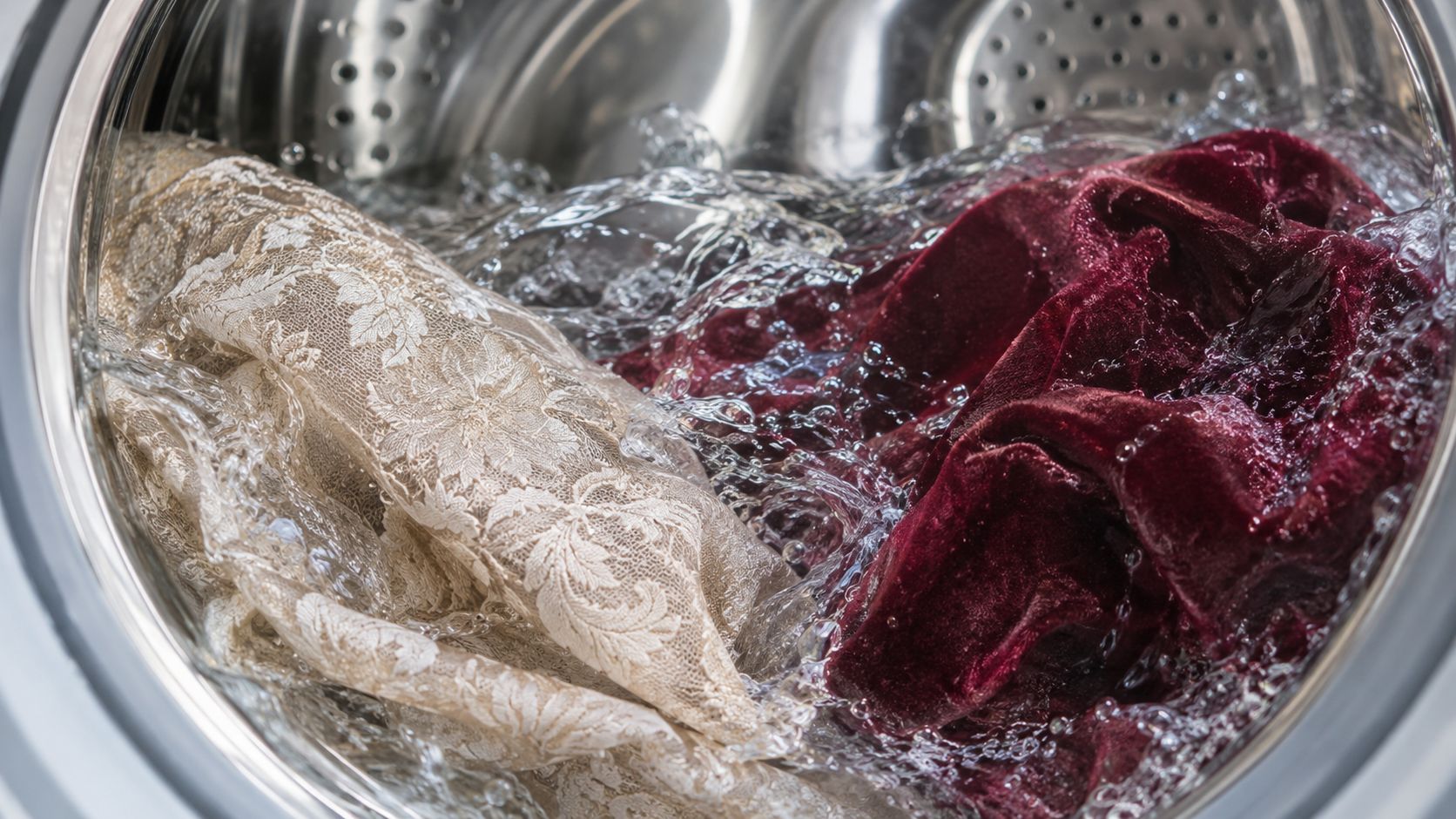
Jacquard needs controlled movement
Turn a jacquard cover inside out before loading it. Wash it separately or with smooth, similar-coloured textiles, and use a laundry bag if the item fits comfortably. Zips, hooks and rough towels can catch the raised woven pattern, while a forceful cycle can make the design look less crisp.
Keep bleach away from patterned jacquard unless the care label specifically permits a product. Colour loss isn't always obvious while the fabric is wet, so inspect the cover in good light before drying.
Velvet needs gentle handling
Velvet is especially sensitive to pressure. Wash it inside out, choose very mild movement, and don't wring it by hand after the cycle. Lift it from the drum rather than pulling one wet corner, then reshape it while damp and smooth the pile in one direction.
High spin and hot water are poor choices for both fabrics. Pretreat marks lightly instead of scrubbing hard, because aggressive spot-cleaning can create a visible patch before the machine wash even begins. Air-drying is usually the safer finish, particularly for deep-pile velvet and richly coloured jacquard.
When Do Pet Homes and Guest Turnover Need a Hotter Wash?
For routine cleaning of sofa covers and throws, 30–40°C is generally suitable, but true thermal disinfection requires the load to be held at at least 65°C for more than 10 minutes or 71°C for more than three minutes. Those thresholds come from Australian laundry protocols, and they sit well above ordinary care-label temperatures used for many home textiles. Australian laundry protocols state the thermal-disinfection thresholds.
That creates a real fabric-care trade-off. A stretch cover, velvet cover or waterproof-backed textile may not be designed for a disinfection cycle, even when a cotton towel or sturdy cotton throw can tolerate a hotter setting. Never override the label to chase a hygiene temperature. Use the hottest cycle the item explicitly allows, and reserve true thermal-disinfection procedures for compatible textiles and suitable laundry systems. Australian laundry guidance gives the same distinction between routine washing and thermal disinfection.
Make the decision by use and soil
Pet hair, odour, food residue and guest turnover don't all require the same response. Remove hair and debris first, pretreat visible soil, wash with an appropriate detergent and dry the textile completely. A warmer cycle may help a label-approved cotton item with heavy soil, but it isn't a universal answer for a delicate cover.
For a rental property or family room, keep spare washable covers available so a soiled cover can be removed and cleaned without rushing the drying stage. Pet owners can also prioritise fabrics with a clearly stated machine-wash process. These pet-friendly couch cover options are relevant when choosing protection before accidents become a wash-day emergency.
Odour that remains after washing may signal detergent build-up, trapped moisture or an item that needs better pretreatment, not automatically a need for hotter water. If the cover can't safely reach a thermal-disinfection threshold, protect the fabric and manage the hygiene gap through cleaning technique, complete drying and sensible replacement.
What Is the Best Way to Pretreat Stains Before a Cold Wash?
Pretreat stains before a cold or cool wash because hot water can set some protein stains, including blood, pet mess and certain food marks, rather than removing them. A cooler wash with careful preparation often outperforms a hot wash that sends an untreated stain deeper into the fibres. Always obey the care label, especially on velvet, jacquard and fabrics with elastic.
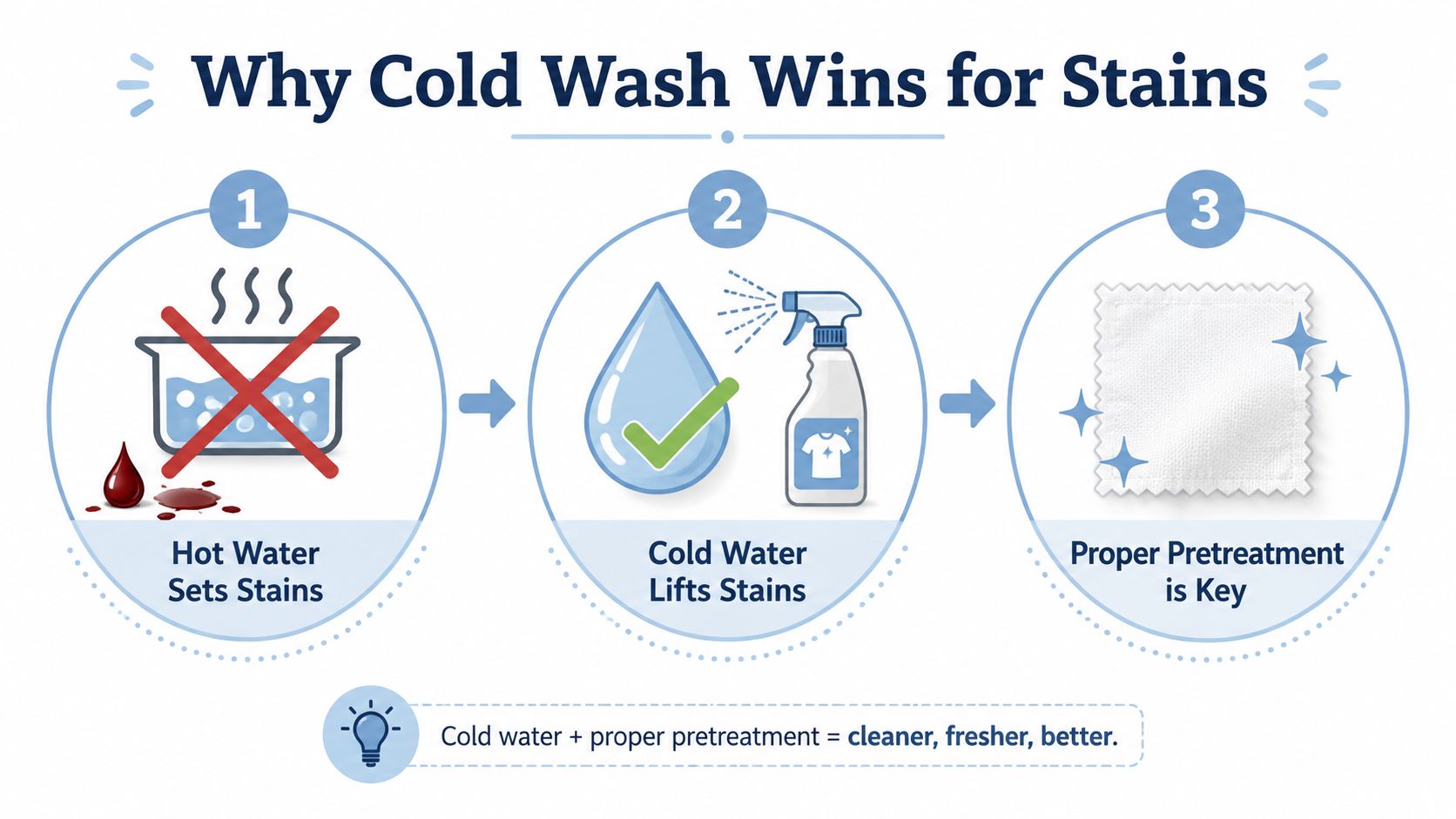
Use this sequence:
- Remove solids. Lift dried food or mud with a spoon or dull edge. Don't grind it into the weave.
- Blot the liquid. Press with a clean cloth rather than rubbing. Rubbing spreads the mark and roughens textured surfaces.
- Test first. Apply any detergent or paste to a hidden seam and check for colour change.
- Apply sparingly. Use a small amount of liquid detergent, or a cautious baking-soda paste where the fabric permits it.
- Let it work briefly. Keep the area damp while the treatment loosens the soil, then run the gentle cycle.
Match the treatment to the mark
Coffee is a tannin stain, so blotting and a small amount of liquid detergent are a safer starting point than vigorous scrubbing. Grease needs lifting rather than spreading, so press away excess oil before applying detergent. Pet accidents need prompt blotting, a fabric-safe treatment and a thorough wash within the labelled limit.
Velvet and jacquard need restraint. Don't saturate a large section of either fabric just to treat a small mark, and don't scrub across velvet pile. After pretreatment, wash at the cool temperature selected from the care label. Check the stain before using heat to dry, because heat can make a remaining mark harder to remove.
How Should You Dry Sofa Covers and Throws After Washing?
Air-drying is the safest default for spandex-blend, jacquard and velvet sofa covers, while durable cotton throws can usually tolerate low-heat tumble drying only when the care label permits it. The drying symbol matters as much as the wash temperature because heat can shrink elastane, crush velvet pile and encourage jacquard seams to pucker.
Take the cover from the machine promptly. Reshape it while damp, align seams and smooth stretched areas before placing it on a line or drying rack. Dry deep colours in shade, since strong sunlight can fade them, and keep velvet pile facing in one direction as it dries.
Flat drying suits pieces that may lose their shape when hanging wet. Line drying can work for lighter covers if the weight doesn't pull the fabric out of alignment. Don't hang a heavy, saturated quilted throw from one small point, because the filling and seams can distort.
A low-heat tumble setting may suit a sturdy cotton-blend throw, but only if the label shows tumble drying is allowed. Avoid assuming that a machine-washable cover is automatically dryer-safe. Spandex sections and velvet sections above explain why the same wash temperature can produce very different results once heat and tumbling enter the process.
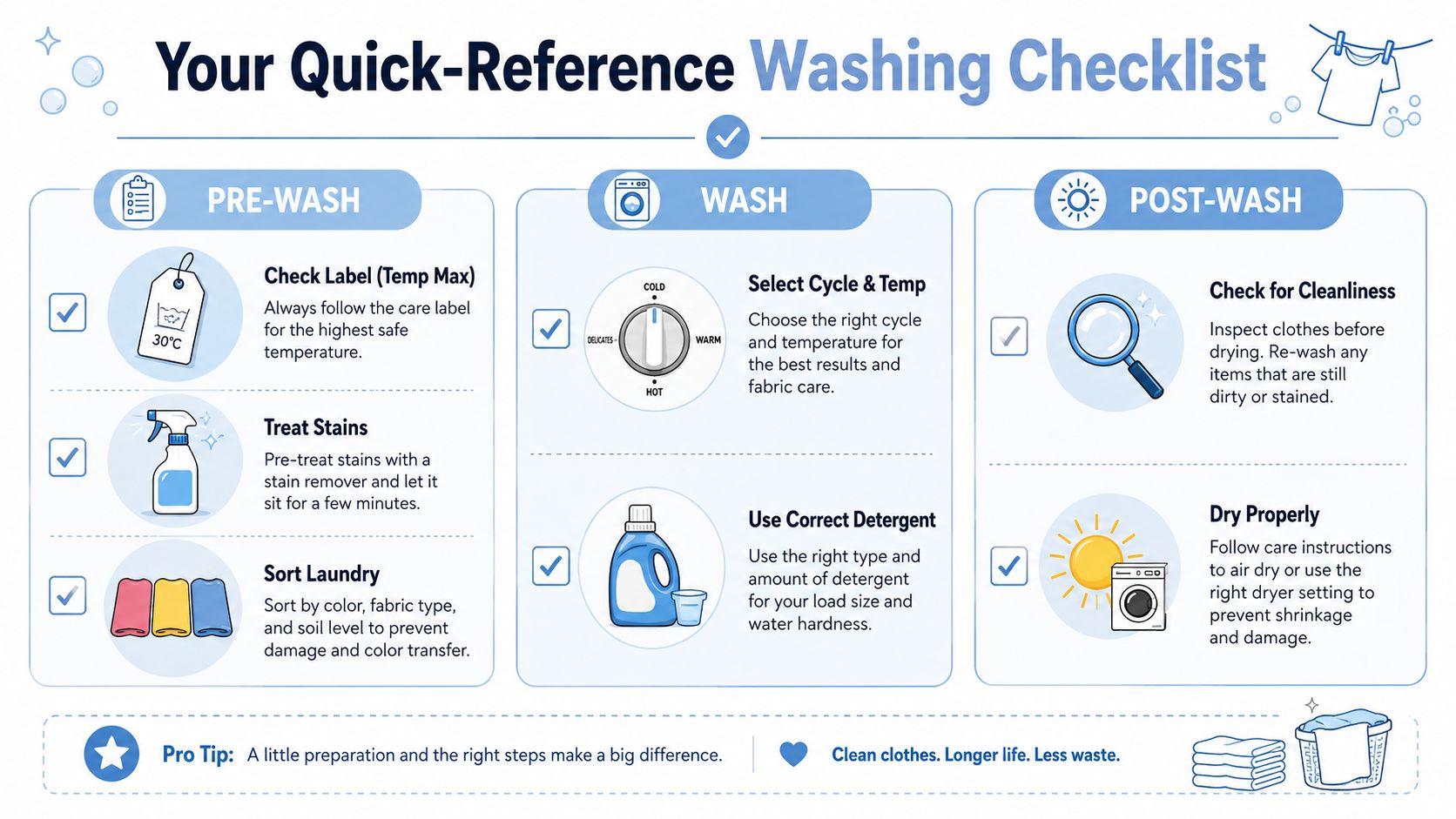
Your Quick-Reference Washing Checklist
Use this checklist beside the machine before pressing start.
Pre-wash
- Check the label: Treat the washtub number as the maximum temperature, not a target.
- Inspect the cover: Remove foam inserts, straps and loose debris.
- Treat stains: Blot first, test treatments on a hidden seam and pretreat before washing.
- Sort carefully: Separate deep colours, delicate textures and bulky items.
Wash
- Choose the setting: Select 30–40°C and a gentle or mild cycle for most sofa covers.
- Protect stretch: Skip fabric softener on spandex blends and choose a moderate spin.
- Respect construction: Follow the label for waterproof backings, quilted throws and woven jacquard.
- Use the table: Return to the fabric comparison table when the material or ceiling is unclear.
Post-wash
- Check the result: Look for remaining stains before applying dryer heat.
- Reshape promptly: Align seams and smooth velvet pile while the cover is damp.
- Dry gently: Air-dry delicate fabrics in shade, and tumble-dry cotton only when labelled safe.
- Follow the flow: Use the stain-pretreatment process above when a cool wash needs extra help.
Casamé Home offers machine-washable stretch-fit sofa covers, waterproof options, textured jacquard designs and cosy throws for Australian homes, including spaces shared with children, pets or guests. Visit Casamé Home to choose a cover or throw, check the care guidance and refresh your living room without replacing the furniture.


