


Modern Australian interiors are warm, light-filled, indoor-outdoor spaces built around earthy neutrals, natural materials, and lived-in texture, and furnishings and household equipment sit at about $60 billion in the ABS spending framework. In the ABS's July 2026 release, spending in that category rose 0.8% month-on-month after a 0.6% rise in June 2026, which tells you Australians are still refreshing homes even when conditions are mixed.
That matters if you're staring at a tired sofa, a dog on the cushions, or a rental lounge that needs a lift without a full overhaul. The look you want is not cold, not precious, and not showroom-perfect, it's practical, relaxed, and easy to live with.
Table of Contents
- What Modern Australian Interiors Actually Look Like
- How Australian Interior Style Evolved Into Today's Look
- The Core Elements That Define the Style
- Balancing the Trend Look With Real Life
- Room by Room Styling Tips That Work
- Three Modern Australian Moodboards to Steal From
- Sourcing, Measuring, and Caring for Your Pieces
What Modern Australian Interiors Actually Look Like
Modern Australian interiors look like sunlit, easy rooms with earthy colour, natural texture, and enough softness to survive real life. They're not the sterile Scandinavian clone people often mistake them for. In an Australian home, the point isn't to erase warmth, it's to make a space feel calm under strong daylight, changing heat, and everyday mess.
The palette should feel grounded, not icy
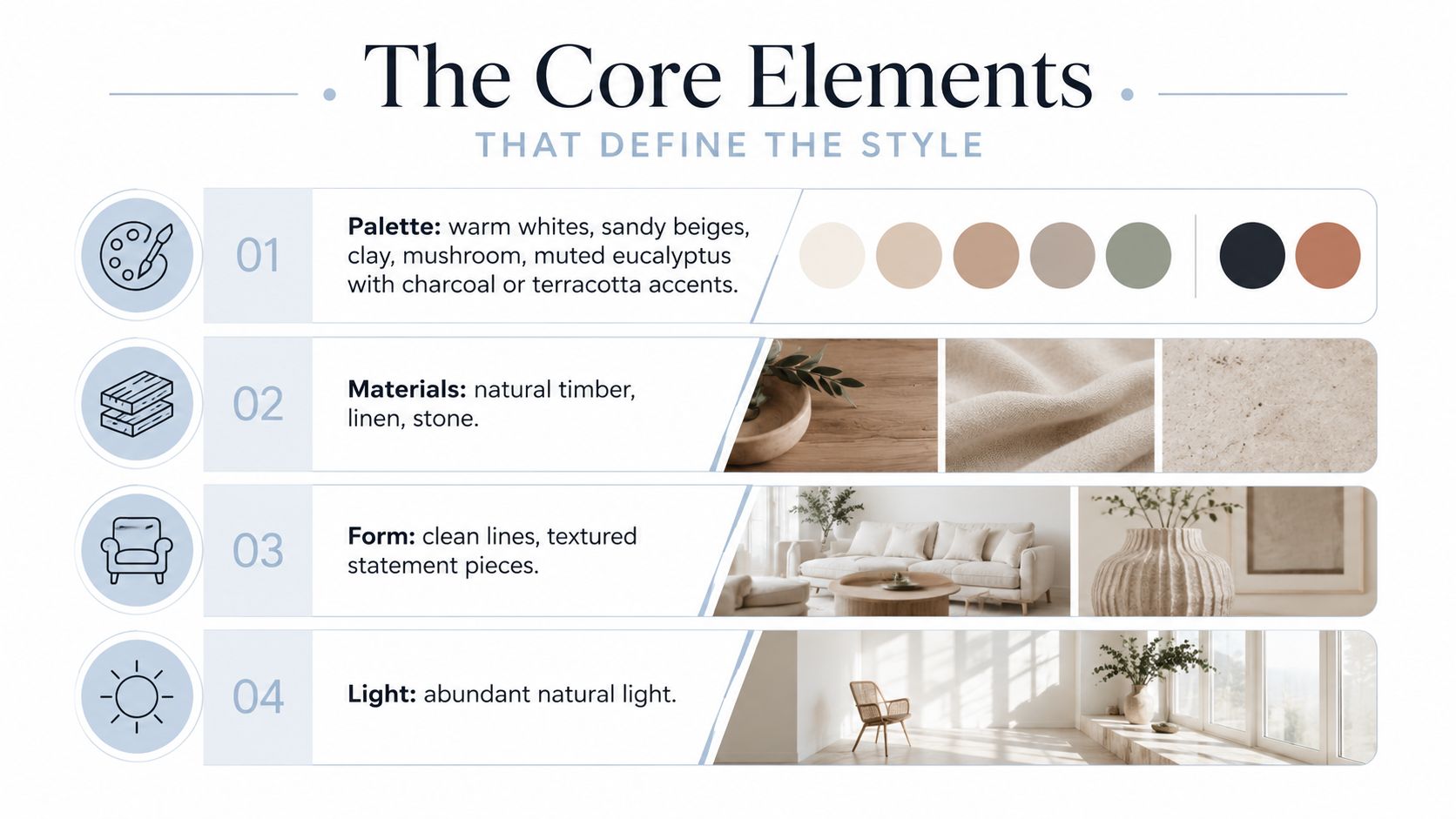
Start with warm whites, sandy beige, clay, mushroom, eucalyptus green, and olive. Those tones work because they soften the hard edges of Australian light instead of fighting it. Add charcoal or terracotta sparingly, because the contrast should feel grounded, not graphic.
The materials need to earn their keep
Choose oak, blackbutt, stone-look porcelain, linen, boucle, jute, and rattan where they make sense. The reason these materials keep showing up in modern Australian interiors is simple, they read as relaxed without looking flimsy. If you want a tiled surface that carries this mood without feeling fussy, the practical guidance in tips from Tiles Mate is a useful starting point for choosing finishes that sit well in Australian homes.
Practical rule: If a material looks great but can't handle dust, spills, or strong sunlight, keep it as an accent rather than the hero.
This guide is for families managing spills, pet owners trying to protect upholstery, renters who need reversible changes, and homeowners who want a refresh without a renovation. If you've been hunting for a room that feels polished without feeling untouchable, that's the target. For colour direction, the internal guide on colour schemes for interiors lines up neatly with this approach.
The practical move is to build from texture outward. A sofa in oat, clay, or stone, a washable throw, a timber table, and a low-glare lamp will get you far closer to the modern Australian feel than buying every matching piece in one store.
How Australian Interior Style Evolved Into Today's Look
Modern Australian interiors did not come from imported formality that lasted. They grew out of homes that needed to work harder for daily life. Early rooms still carried European habits, dark timber, heavy drapes, and layouts made for display rather than use. Then the 1970s pushed things in a different direction. Open-plan kitchens, bolder colour, and wallpaper became common in many homes as noted in this Australian design history overview.
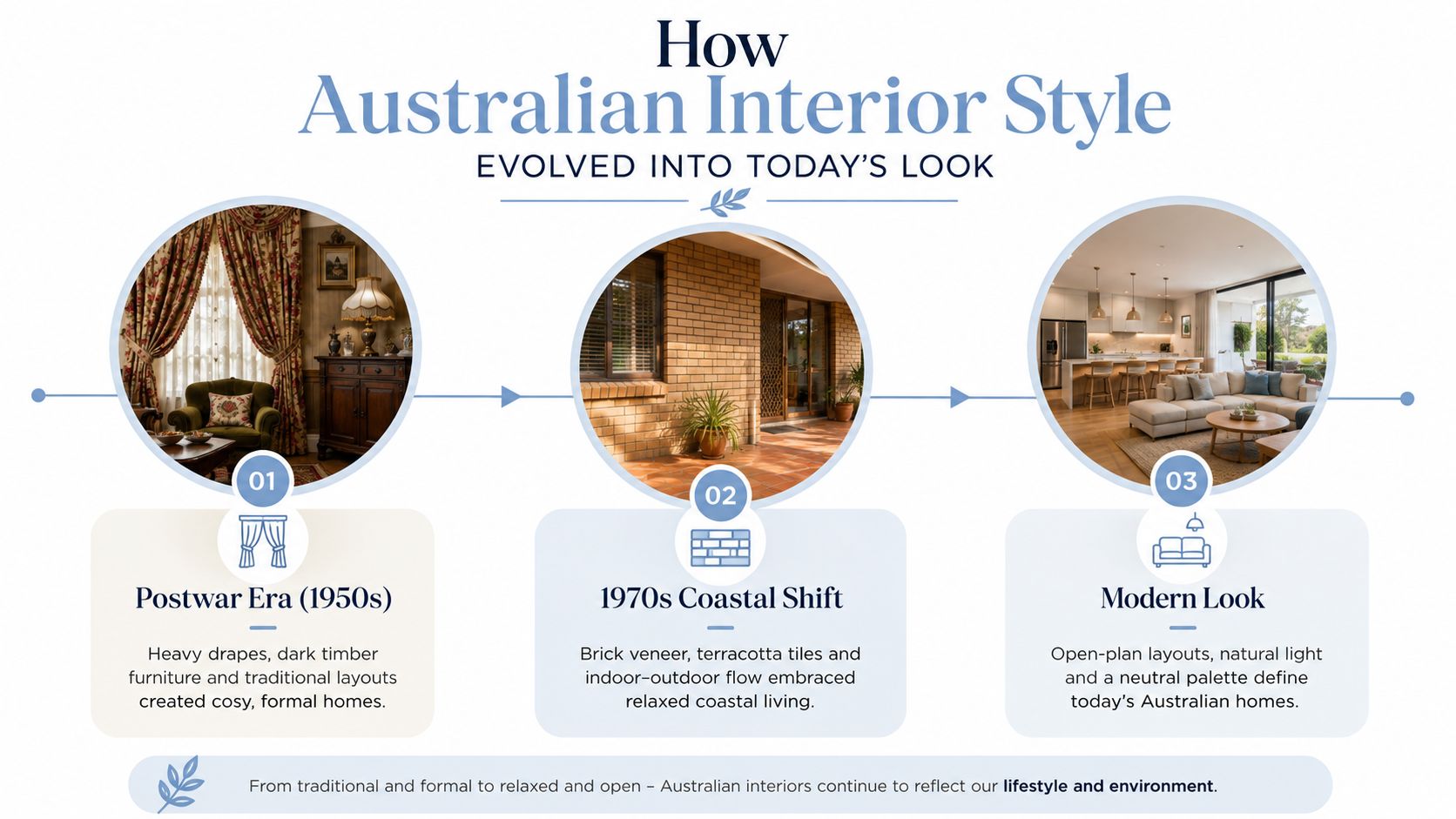
That shift changed how Australians used their homes. Rooms stopped being sealed-off showpieces and started becoming shared spaces for cooking, talking, and moving through the day.
The 2000s added another layer. Homes became more personal, more willing to mix old pieces with new ones, and less precious about matching everything. That made the style feel less rigid and more lived-in. It also gave people permission to put character ahead of strict coordination.
Homes that feel most Australian usually avoid forced symmetry. They give you breathing room, then add one or two clear focal points.
The current version brings in warm minimalism, dopamine decor, earthy palettes, and softer curves, but it keeps the energy under control. The best rooms borrow from trend reporting without turning into a showroom. They feel easy to live in, with enough personality to stop the space going flat as reflected in current local design commentary.
That lived-in approach matters most in real homes. Families, pets, and renters need rooms that can handle mess and change, so stretch sofa covers, throws, and washable layers do real work here. They keep the room polished without locking you into permanent decisions. That is the practical edge of modern Australian style. It looks relaxed because it has to function.
The Core Elements That Define the Style
Modern Australian interiors work because the pieces support each other. Warm colour without texture goes flat. Good materials without daylight can feel heavy. You need the whole setup, not one pretty object.
Palette first, then texture
Use the warm neutrals established above, then let texture do the rest of the work. If your room already has a lot of white, soften it with warm-toned textiles instead of piling on more stark contrast. That keeps the space calm in bright light and less harsh once the sun drops.
Materials that suit Australian conditions
Timber still carries the look, but the species and finish matter. Oak and blackbutt bring warmth without feeling too rustic, while stone-look porcelain, limewash, micro-cement, brushed brass, and powder-coated aluminium give you durability where sun and daily use hit hardest. If you want a clearer view of hard-wearing surfaces, start with the broader tile guidance from tips from Tiles Mate.
Softening the room matters just as much as the hard finishes. For that, Casamé Home's colour schemes for interior styling shows how the same palette can translate into a softer, more liveable setting without losing the modern Australian feel.
Texture prevents the room from going flat
Layer boucle, slubby linen, wool, jute, and rattan. A room with only smooth finishes starts to feel clinical, and that is a common mistake in new builds and renos. One boucle chair, one linen throw, and one jute rug is usually enough to make a space feel finished without overdoing it.
Light has to work with the palette, not against it. Filtered northern light, linen shades, ribbed glass pendants, and warm dimmable LEDs keep the room comfortable after dark. In living areas, skip cool light, it makes beige look flat and timber look dull.
Practical rule: If a finish is matte, textured, and warm to the eye, it earns its place. If it fights for attention, use it sparingly.
Greenery should read as hardy, not precious. Fiddle leaf figs, monstera, bird of paradise, and potted eucalyptus suit the broad, casual feel of modern Australian interiors. For indoor-outdoor flow, keep floor levels aligned where possible, repeat materials across thresholds, and use large pivoting doors or wide openings to blur the line between inside and out.
Families, pets, and renters need the look to survive real use. That is where stretch sofa covers, throws, and washable layers do real work. They keep the room polished without locking you into permanent choices, which is why the style feels relaxed instead of staged.
Balancing the Trend Look With Real Life
A room can look polished on day one and still fail a family by week three. Modern Australian interiors only hold up in real homes if the pretty pieces can handle stains, claws, muddy shoes, and repeated washing. Boucle, white linen, jute, light oak, and indoor plants all suit the look, but they should not carry the same level of risk. Keep the hard-wearing pieces permanent, then let the softer, trend-led layers do the seasonal work.
Trend element versus daily reality
| Trend Element | Family Durability | Pet-Friendliness | Renter Suitability | Budget Refresh Swap |
|---|---|---|---|---|
| Boucle sofa | Low unless protected | Low with shedding and claws | Medium if it's a removable cover version | A performance fabric sofa with a stretch-fit cover |
| White linen drapes | Moderate if washable | Low near dirty paws | High if curtain tracks are already allowed | Washable cotton-linen blends |
| Jute rug | Moderate in low-traffic zones | Low if pets scratch or soil it | High if floor-safe | Jute with a rug pad on slippery floors |
| Light oak timber | High with basic care | High if surfaces are sealed | High if moveable furniture is needed | Coasters, felt pads, and regular dusting |
| Indoor plants | High if the pot is stable | Low if pets chew leaves | High if freestanding | Durable greenery or potted stems |
Spend on what gets touched. Save on what people only look at.
Boucle can be copied with a washable cover. Linen softness can come from blends. An expensive rug only makes sense if the room will not punish it. That applies just as much in a rental as it does in a busy family home.
Colour deserves the same blunt treatment. A fashionable palette is pointless if the sofa marks at first use or the curtains turn grubby near the floor. Choose the finish that supports daily life, then let the style read through shape, texture, and tone.
Spend where the room gets touched. Save where the room only gets looked at.
If you want the look without a permanent commitment, removable and washable layers do the heavy lifting. A sofa cover, a throw, and a proper rug pad keep the room composed without forcing you into expensive replacements. That is the practical side of warm minimalism and earthy, lived-in styling. It looks calm, and it survives daily use.
Room by Room Styling Tips That Work
A modern Australian home looks better when each room has one clear anchor and the rest stays calm. Start with the sofa, bed, or table, then build around it with texture and restraint. Overstyling makes rooms feel forced, especially in homes with strong light and no patience for visual clutter.
Living room
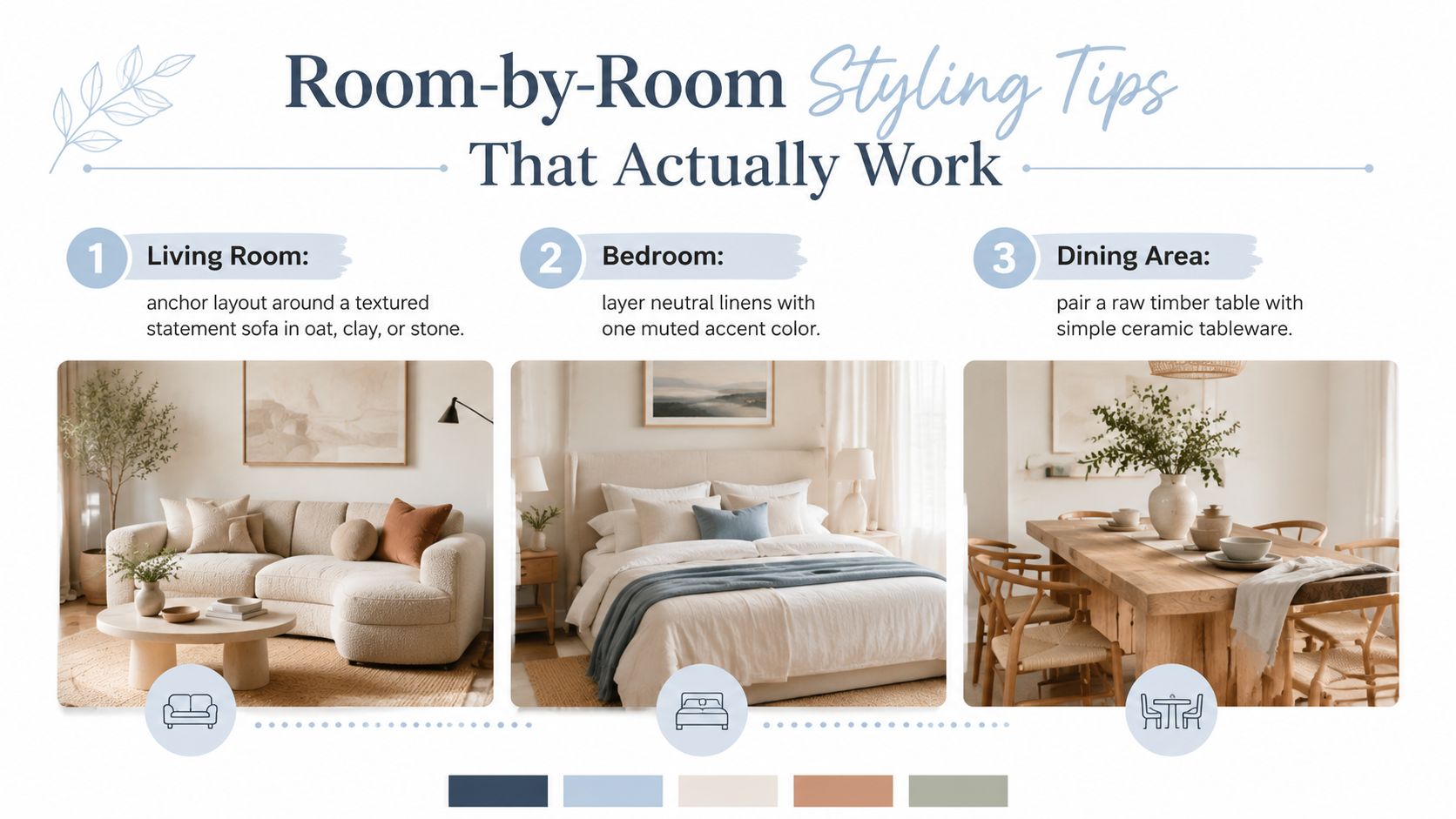
Choose one textured statement sofa in oat, clay, or stone. If the colour is wrong, a stretch-fit cover gives you the same relaxed look without the cost of reupholstery, and it suits family rooms and rentals far better. Layer two throws, one chunky knit and one washed cotton, then bring in a curved timber coffee table and a low-pile rug so the room still feels open.
If you want a useful reference for this kind of setup, this modern Australian living room guide shows how to keep the room relaxed without making it look unfinished.
Bedroom
Use stonewashed linen bedding in a warm neutral, then add one muted accent through a cushion or lamp base. A rattan or solid timber bedside table adds texture without crowding the room. One leafy plant is enough. Any more and the room starts to feel busy.
Dining and outdoor areas
A dining room works best with a generous timber table, turned legs, bentwood or canvas chairs, and a linen runner. Outside, repeat the same palette with weather-rated teak, ceramic planters, and string lighting so the transition feels deliberate rather than decorative. For a broader sense of proportion and atmosphere, the top art districts in New Orleans offer a good reminder that strong rooms usually come from repetition, not excess.
Here's the practical truth. Refresh the living room with a cover and throws. Fix the bedroom with better bedding before you buy more decor. Ground the dining room with furniture that feels solid, not with a table full of small objects.
Textiles are the safest affordable swap in any of these rooms. Replace the cover, not the sofa. Change the bedding, not the bed. Swap the runner, not the table.
Three Modern Australian Moodboards to Steal From
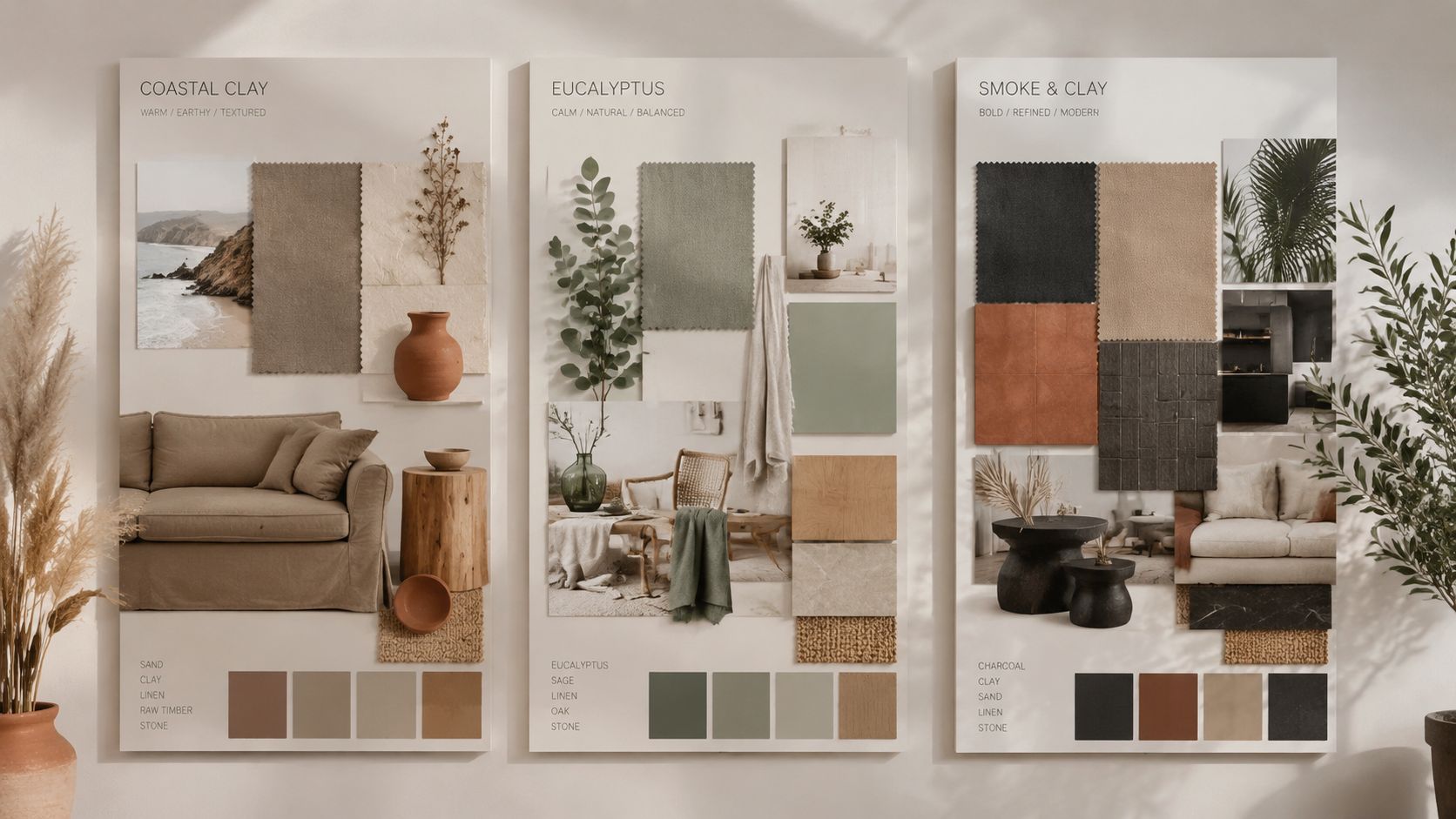
The easiest way to make modern Australian interiors feel coherent is to commit to a moodboard and stop mixing every trend you see online. Each of these combinations works because it repeats colour, texture, and scale without becoming matchy. The room feels edited, not decorated for approval.
Coastal Clay
This one is for people who want warmth without going full beach house. Use a sand-toned sofa with a taupe stretch cover, a raw timber side table, terracotta ceramics, a single Banksia-print artwork, and a softly textured neutral rug. The textile swaps are simple, a washed cotton throw, a linen cushion, and a boucle-look accent pillow.
Lighting should stay restrained. Pick one shaded floor lamp and one ribbed glass pendant so the room glows rather than glares. The effect is calm, not coastal cliché.
Urban Bush
This version feels stronger and more architectural. Pair charcoal performance upholstery with a stonewashed linen throw, black steel and oak shelving, and eucalyptus stems in a stoneware vessel. Use a washable cushion cover, a heavier weave throw, and a wool or cotton rug to keep the space from feeling cold.
The lighting can be a little moodier here. A dimmable lamp and a pendant with a warm globe are enough. The palette reads modern, but the textures keep it human.
Soft Scandi
This is the gentlest version, and it works well in apartments and family homes. Start with an off-white boucle-look sofa with a washable cover, pale oak floors, sheer linen curtains, and a soft round jute rug. Swap in a cotton-linen cushion, a pale throw, and one muted sage accent so the room doesn't disappear into beige.
The lighting should be warm. A paper or linen shade plus a small bedside lamp usually does the job. If your home gets hard afternoon light, this is the moodboard that benefits most from softness and layered fabric.
Sourcing, Measuring, and Caring for Your Pieces
Buy the look where it makes sense, and don't be precious about mixing new and secondhand. Stores like Freedom, Provincial Home Living, West Elm, Fenton & Fenton, Trit House, and Cultiver cover a lot of the modern Australian palette, while Facebook Marketplace, Gumtree, and op shops are better for vintage timber and rattan if you're patient. Secondhand pieces often bring the character new rooms lack.
Measure the sofa before you order anything
For a stretch-fit sofa cover, measure seat width, depth, arm height, and back height carefully. Don't guess, especially if the sofa has deep seats or T-cushions, because those shapes often need more careful checking and can look sloppy if the fit is off. If the sofa is unusually deep or has a complicated shape, choose a cover system that can be adjusted rather than forcing a standard size.
Care is part of the style
Wash slipcovers, throws, and linen bedding on cool cycles, then line-dry in shade so UV doesn't fade the fabric. Rotate cushions weekly so wear spreads evenly, and shake out throws before folding them back into the room. The home stays fresher, and the fabrics last longer.
The internal guide on fitted sofa slipcovers is useful if you want to understand how a snug cover changes the look of a living room without reupholstery.
Small seasonal shifts keep the room alive
Swap throw colours, add heavier rugs in winter, and rotate greenery between indoor and outdoor pots when the weather changes. Those are cheap moves, but they stop a room from going stale. If you want a practical living-room refresh that fits the modern Australian brief, Casamé Home offers stretch-fit sofa covers, waterproof options, textured jacquard fabrics, and cosy throws designed to update a space without replacing furniture.
If you're ready to give your living room the warmer, more practical modern Australian look, start with the sofa and the layers around it. Visit Casamé Home for stretch-fit covers and throws that make the style easier to live with, not just easier to photograph.


