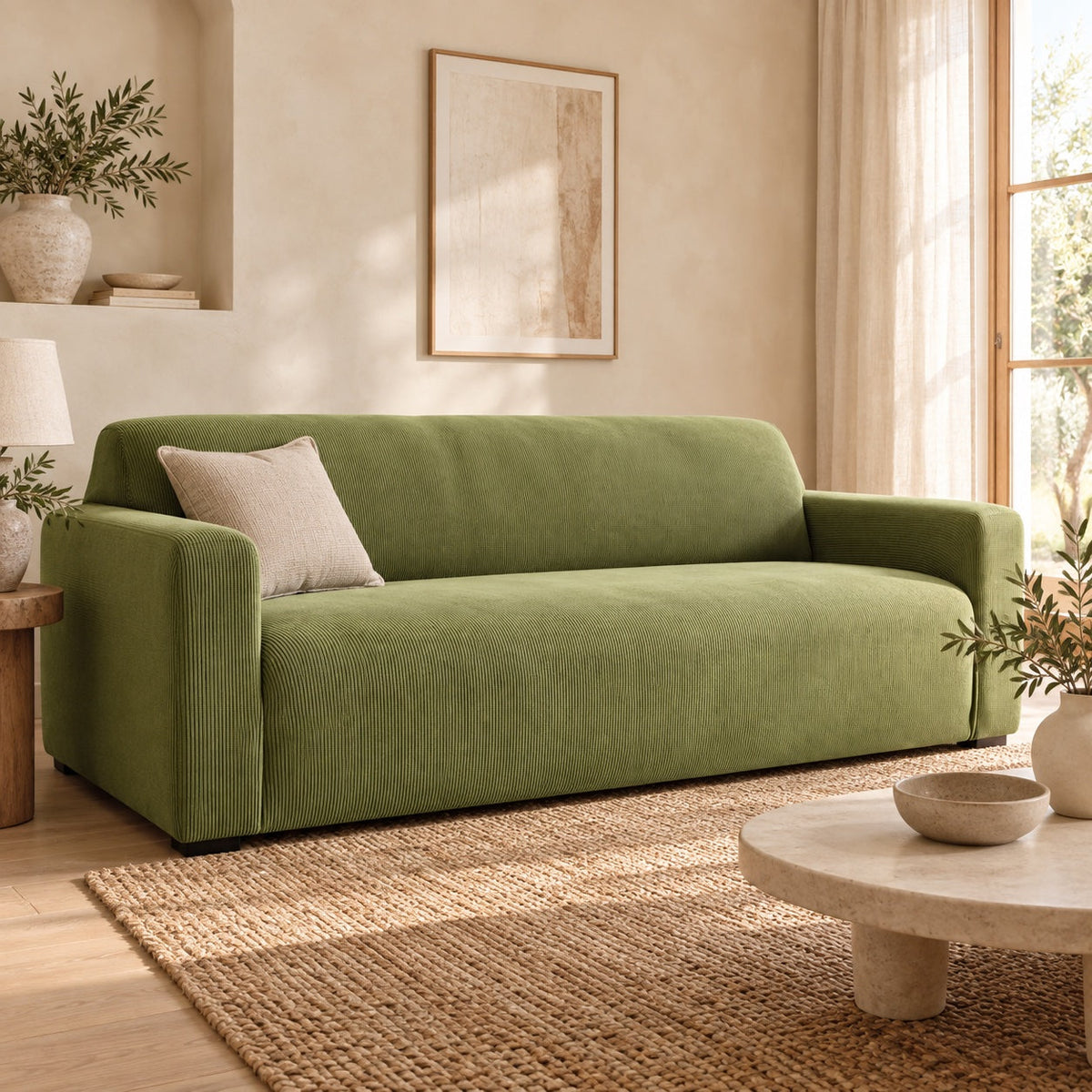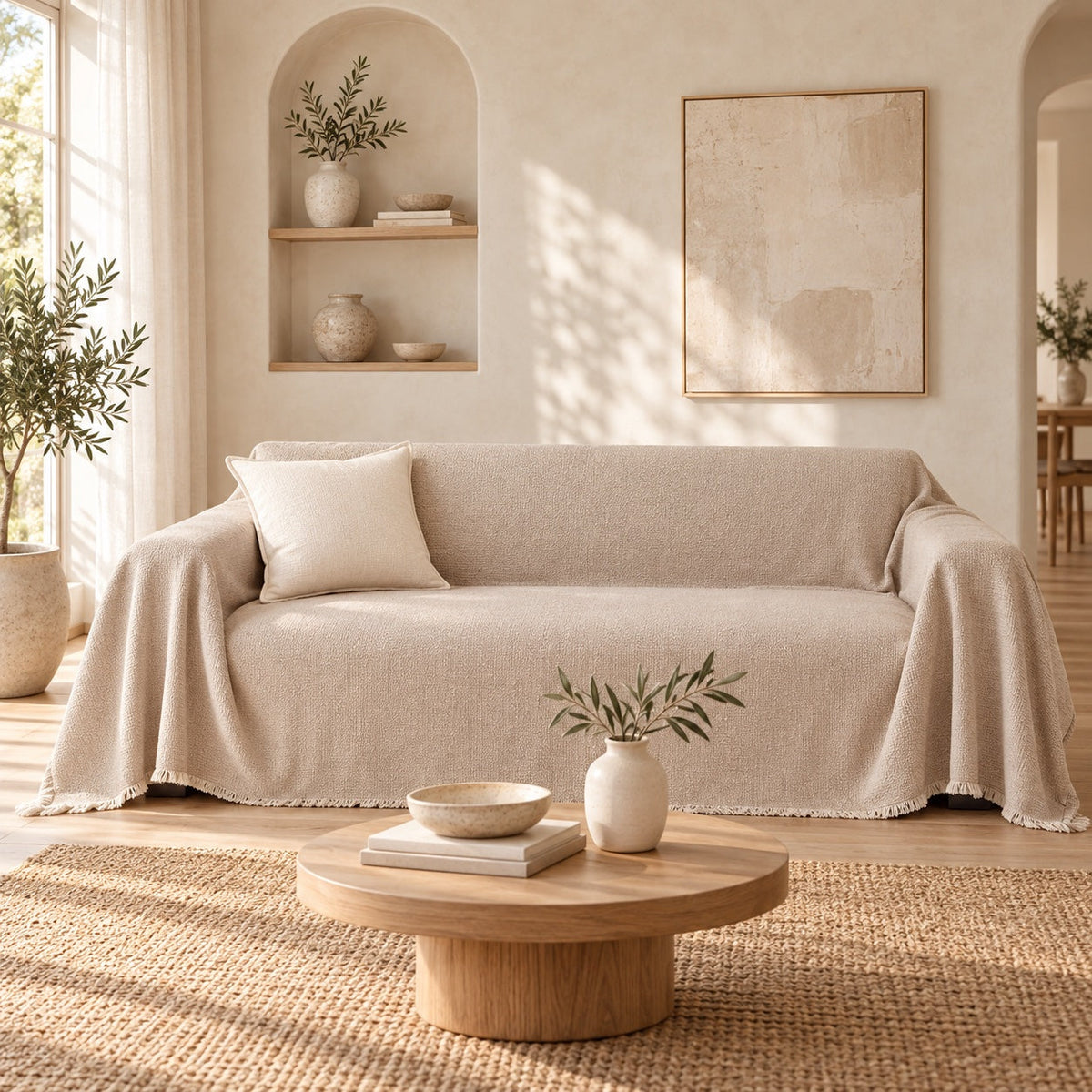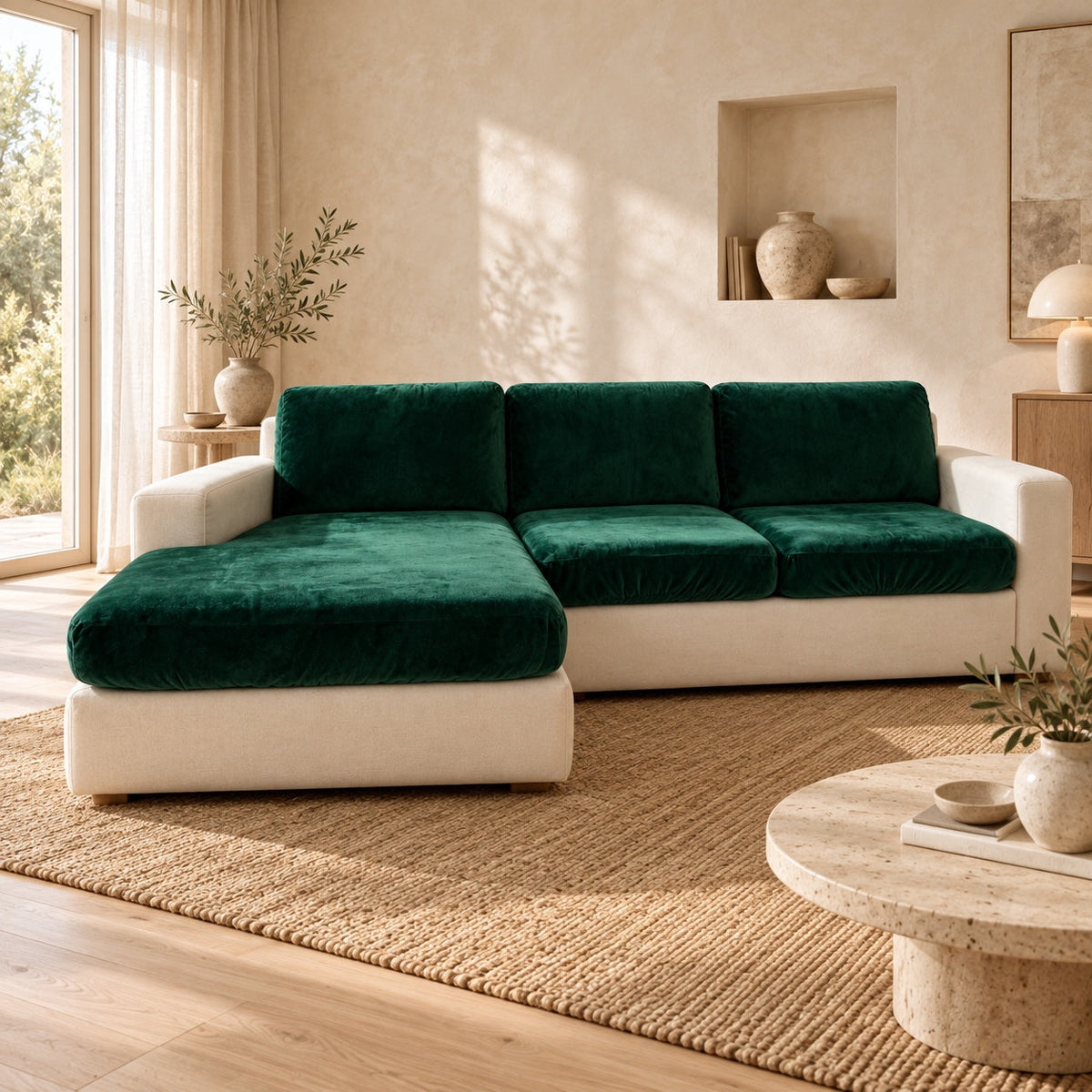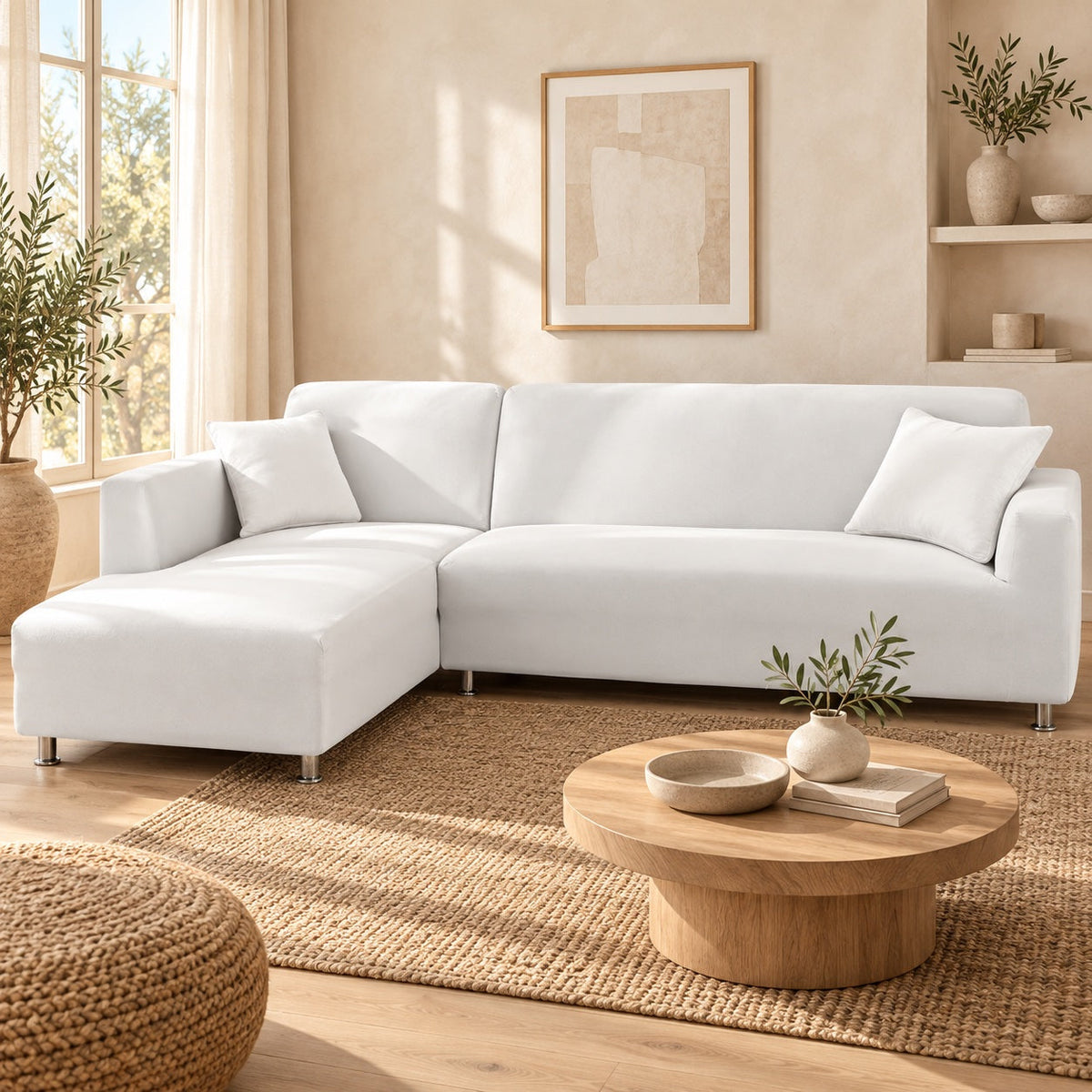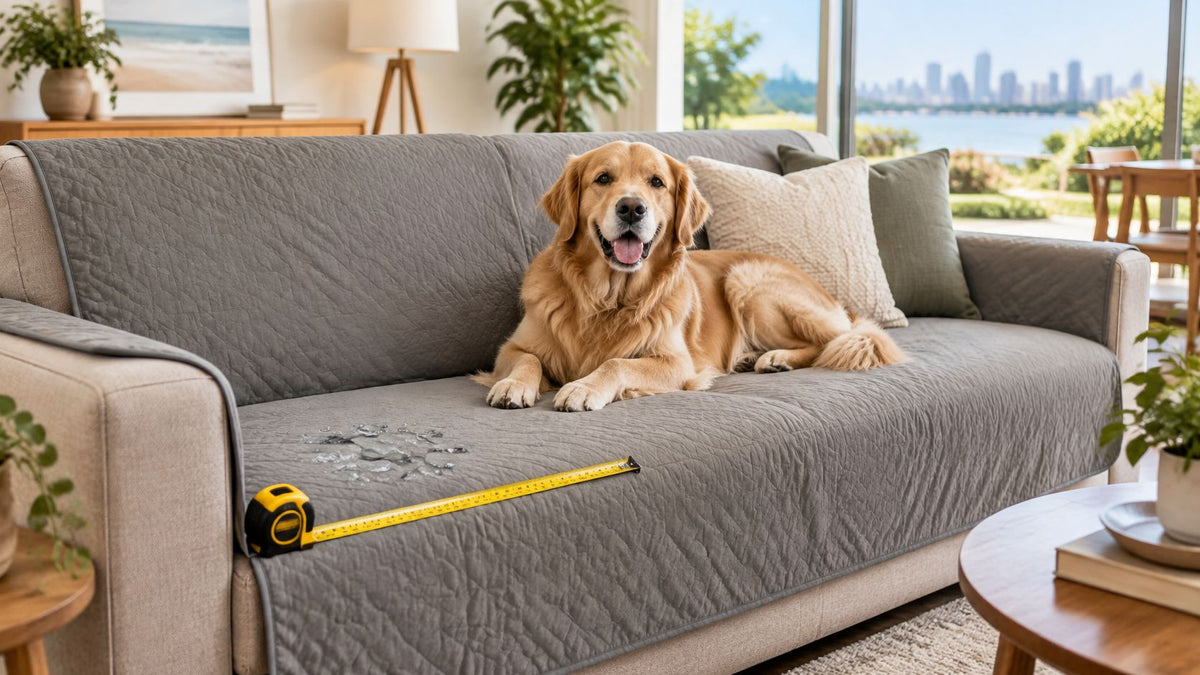
Your dog is asleep in the warm spot you just vacated, your cat is kneading the armrest, and the couch underneath is taking all of it. The right Pet Couch Cover Australia choice depends on the damage your pet does, not on a generic pet proof promise. Buy for accidents, claws, hair or muddy paws first, because those four problems need four different pieces and sometimes pull against each other.
Table of Contents
- Which Pet Couch Cover Does Your Problem Need?
- Can a Waterproof Couch Cover Handle Pet Accidents?
- Which Fabric Is Less Likely to Catch Pet Claws?
- How Can You Remove Hair Without Making It Worse?
- What Should You Do About Muddy Paws After Rain?
- How Do You Stop a Pet Couch Cover from Moving?
- Can These Covers Fit Sectionals, Recliners and L-Shaped Couches?
- What Should You Check Before Buying or Returning?
Which Pet Couch Cover Does Your Problem Need?
No single pet couch cover solves accidents, claw snagging, hair and mud equally well, so you need to name your dominant problem before you choose fabric or colour. A puppy that still has accidents needs a waterproof barrier. A cat that kneads before settling needs a flat, tightly woven face. A shedding dog needs a smooth surface hair can leave. A dog racing in from a wet backyard mainly needs a washable layer you can strip fast.
That is not a niche concern in Australia. Over 70% of Australian households own a pet, according to Australian pet population figures reported by Agriculture and Agri-Food Canada. Sofas sit in the middle of that daily contact, which is why vague protection claims fail in real homes.
The four problem test
- Accidents: Choose a waterproof couch cover or a separate waterproof seat cushion cover.
- Claws: Choose a flat Jacquard or Diamond Jacquard cover with fewer loops to hook.
- Hair: Choose a smooth, tight face and remove hair dry with a reusable lint roller.
- Muddy paws: Put a throw on the favourite spot and let mud dry before you touch it.
Practical rule: Protect the exact seat your pet uses first. Covering the whole lounge is wasted effort if your dog only sleeps on one cushion and that cushion is not the protected piece.
Start small where you can. A separate cushion cover or throw can solve a local problem without replacing a cover that already works for the rest of the couch.
Can a Waterproof Couch Cover Handle Pet Accidents?
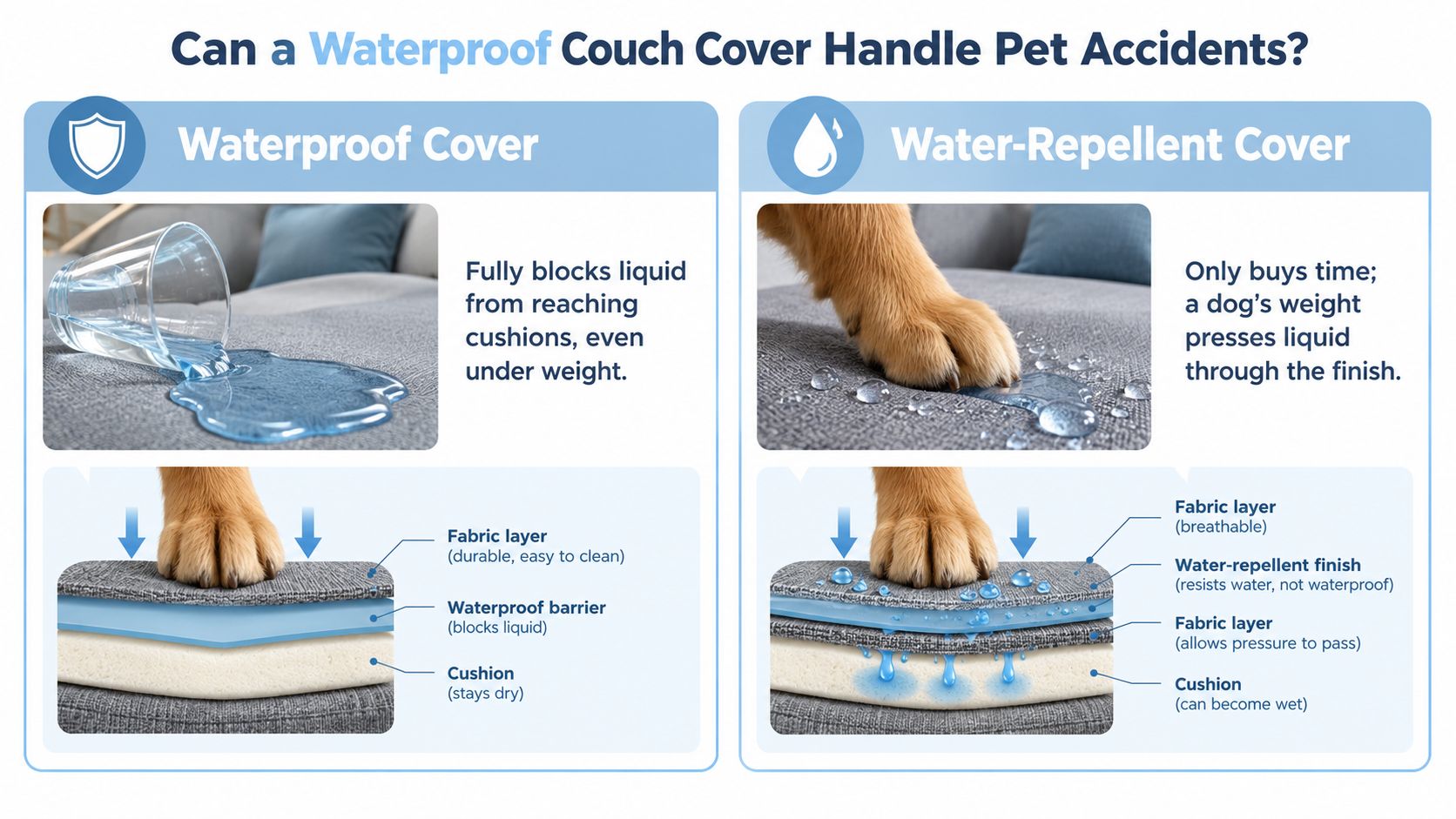
A waterproof couch cover can stop liquid reaching the couch, while a water repellent cover only buys time to grab a cloth. That distinction matters because pets don't spill and walk away. A dog lies in a puddle, turns around in it and presses liquid down with its body weight, and that pressure pushes liquid through a finish that only repels.
The comparison below shows why pressure changes the job.
For broad coverage, the Pebble-Textured Waterproof Couch Cover comes in 1 seater 90 to 130 cm, 2 seater 135 to 175 cm, 3 seater 180 to 220 cm and 4 seater 225 to 300 cm. Its colours are Bean Green, Bright Blue, Goose Yellow, Indigo, Light Blue, Light Grey, Mist Pink, Pine Green and Taro Purple. Charles M., on the Pebble-Textured Waterproof Couch Cover in Goose Yellow, said: “we've got a dog who's partial to jumping up, and it's held up without any issues at all.” Treat that as one owner's experience, not proof for every dog.
Why is a separate cushion cover often smarter?
A Waterproof Couch Cushion Cover protects the seat your pet lies on, so you can strip and wash that piece without removing the whole couch cover. Sizes are Standard S, M, L and XL, Deep S, M and L, plus Chaise Narrow and Chaise Wide. Colours are Emerald Green, White, Purple, Medium Grey, Goose Yellow, Forest Green, Light Blue, Light Grey and Bright Blue.
Two smaller options also qualify as waterproof, the 45 cm x 45 cm Pebble-Textured Waterproof Cushion Cover and the 45 cm x 45 cm Waterproof Cushion Cover in Emerald Green. A Velvet Couch Cushion Cover · Brown · Stretch Fit is a separate cushion option in the catalogue, but don't confuse a cushion cover format with the waterproof products named here.
| Protection area | Recommended product | Why it fits |
|---|---|---|
| Whole standard couch | Pebble-Textured Waterproof Couch Cover | Broad liquid barrier in measured seater bands |
| One favourite seat | Waterproof Couch Cushion Cover | Strip and wash only the affected cushion |
| Scatter cushion | 45 cm x 45 cm waterproof cushion covers | Local protection for a small, defined surface |
Browse Casamé Home waterproof covers only after you've decided whether you need whole couch or single seat coverage. Buying the larger piece by default just gives you more fabric to wash after every accident.
Blot accidents promptly, pressing without rubbing, then remove the affected cover and follow its care label. A waterproof layer buys protection for the couch underneath. It doesn't clean itself, and liquid left sitting on seams or openings still needs attention.
Which Fabric Is Less Likely to Catch Pet Claws?
The Jacquard Couch Cover and Diamond Jacquard Couch Cover are less likely to catch pet claws because their flat, tightly woven faces offer fewer raised loops or long floats for a claw to hook. Claw damage is snagging, not rubbing. A claw catches one raised thread, drags it sideways and turns a single pull into a visible run.
Think about how your pet uses the couch. A cat kneads the same patch before sleeping, working claws in and out of the surface. A dog scrambles up the arm or digs at a cushion to make a nest. Both actions hunt for something raised to catch, which is why surface shape matters more here than softness.
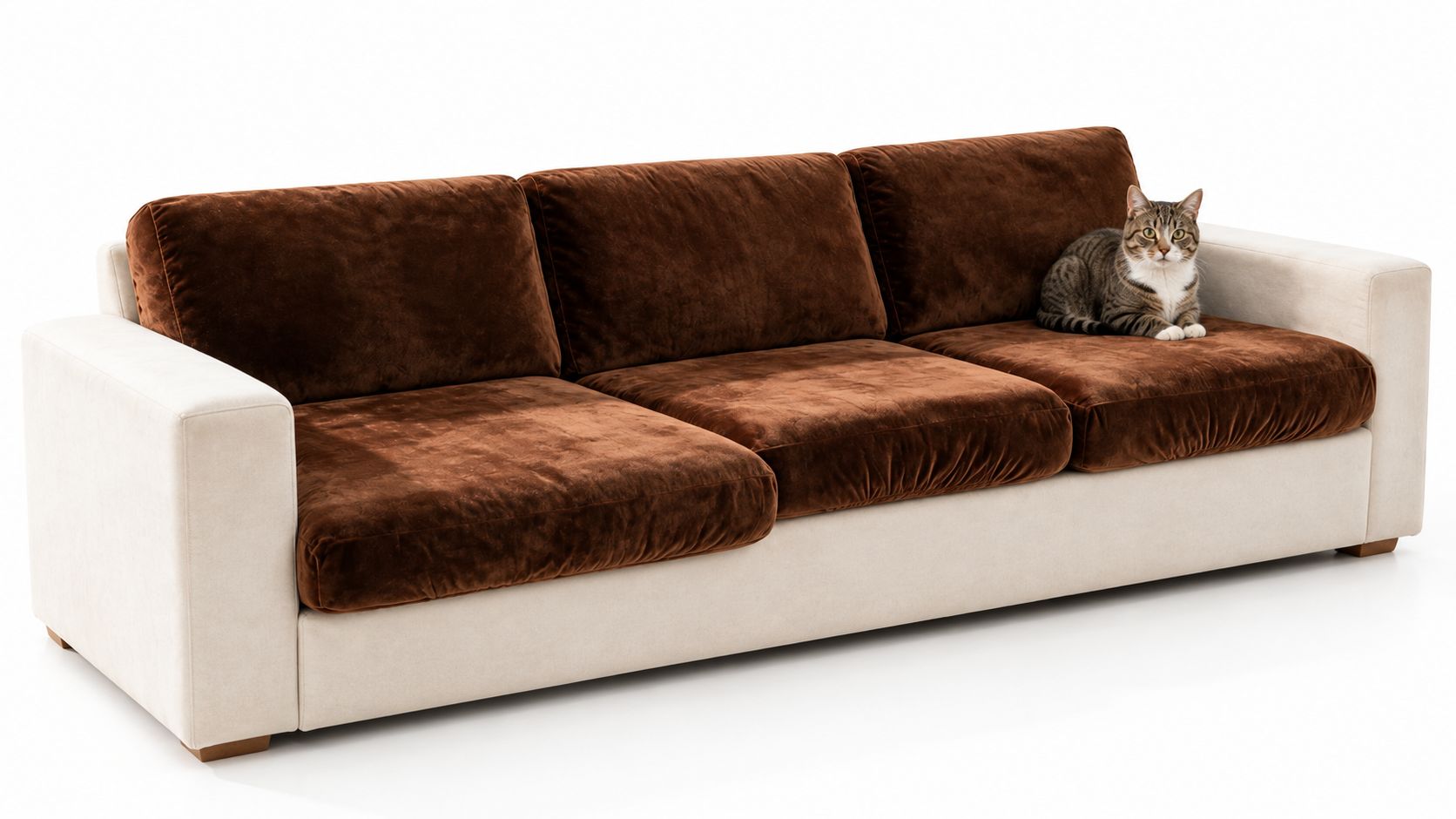
The catalogue image below shows a cushion cover format for scale, not a claw resistant rating.
Where does a raised texture lose?
A raised loop texture such as bobble gives a claw exactly what a flat face denies it, a loop to hook. That doesn't make a textured cover wrong for every home. It makes it the wrong first choice when a scratching cat is your main problem and accidents aren't.
- Flat woven face: Fewer catch points for kneading or scrambling claws.
- Raised loop face: More texture to feel, and more loops a claw can pull.
- Broken pattern: Hides a pulled thread better than a plain surface does.
- Plain surface: Shows every snag, paw mark and thread out of place.
A pattern doesn't prevent a pull. It just stops one pulled thread from announcing itself across the room.
Be honest about the conflict. If your home has claws but no accidents, lean to the flat Jacquard face. If your home has recurring accidents, take one of the explicitly waterproof products and accept that you've prioritised liquid over snagging. Don't pretend a flat woven cover is liquid protection, and don't expect a waterproof choice to be chosen for its weave. One problem has to lead.
There's no claw resistance rating behind this advice, and you shouldn't buy as if there were one. You're choosing a surface shape that gives a claw less to catch. That's a sound mechanical reason, not a guarantee that a determined cat can't damage fabric.
How Can You Remove Hair Without Making It Worse?
Your retriever shakes once in the hallway and the couch wears the evidence for a week. Hair removal starts with the surface, not the tool. A smooth, tight faced couch cover such as flat Jacquard or Diamond Jacquard lets hair rest on top, where a brush, vacuum pass or lint roller lifts it in long strokes. Velvet pile does the opposite: strands sink into the fibres, paw prints show where a pet crossed, and the same job takes noticeably more passes.
| Cover face | How hair sits | What removal looks like |
|---|---|---|
| Flat Jacquard | Rests on the surface | A couple of roller passes |
| Velvet pile | Settles between fibres | Repeated passes, and strands still left behind |
Velvet can still suit a home where looks come first and shedding is light. Choose pile knowingly, then accept the extra rolling that comes with it.
Whatever the surface, work dry. Roll or vacuum loose hair before any damp cloth touches the fabric, because moisture presses strands into the weave and makes them harder to lift. Check cushion gaps, piping and the front edge, where hair packs into lines. Take a removable throw or cushion cover outside and shake it so the hair falls on the lawn instead of resettling indoors. Launder only when odour or grime calls for it, following the care label.
For tools, Casamé Home stocks the Reusable Sticky Lint Roller for the couch and the Mini Reusable Lint Roller in Matcha Green for a smaller, quick job. Keep the full size roller within reach of the couch. A tool you have to fetch from the laundry is a tool you will skip on a busy morning.
Hair gone usually means smell remains. Couch deodorising advice for pet owners covers cleaning approaches for the couch itself, which applies to the furniture underneath. If the cover is what holds odour, the cover is what goes in the wash.
Colour is the other half of the problem, and owners often choose it backwards. Match the cover to your pet's coat, not to your cushions. White hair on charcoal and black hair on cream both advertise every strand. Mid grey and broken mid tone patterns balance the trade off well, since pale shades show dirt and dark hair while very dark shades reveal lint and pale hair.
No colour makes hair disappear. The right one stops a normal day of shedding from looking like a cleaning emergency.
What Should You Do About Muddy Paws After Rain?
You should let mud on a pet couch cover dry completely before you brush it off, shake the cover outside and then wash it. Don't wipe wet mud. Wiping pushes wet soil into the weave, spreads the mark wider and turns a dry, brushable problem into a ground in stain.
Australian backyards after rain make this a weekly event, not an accident. Your dog comes through the back door, crosses the tiles at speed and lands on its favourite cushion before you've reached a towel. The paw prints look urgent. They aren't. Waiting is the cleaning method.
The dry first routine
- Let it dry: Leave paw prints alone until the mud is completely dry to touch.
- Brush it off: Brush dried soil from the surface so loose dirt falls away.
- Shake it outside: Take the cover or throw outdoors and shake out what brushing loosened.
- Wash it properly: Follow the care label once dry dirt is gone.
For the landing zone itself, add a Throw Blanket on your pet's favourite spot. It's the cheapest extra layer you can buy, and sizes run 180 x 130 cm, 180 x 230 cm, 180 x 300 cm and 180 x 420 cm. A throw localises mud to one removable piece you can shake and wash on its own.
Rule of thumb: Wet mud gets patience, dry mud gets a brush. Reverse that order and you'll do twice the work for a worse result.
A throw doesn't make a non waterproof cover waterproof. If wet paws arrive with a soaked dog shaking water everywhere, that's an accident problem wearing muddy clothes, and the seat underneath still needs the right barrier.
How Do You Stop a Pet Couch Cover from Moving?
Your dog launches off the seat front for the tenth time that day, and the cover has crept forward again. Pulling it tighter won't fix it. Stretch alone can't hold against that kind of repeated force. The grip that works comes from the tuck.
Push spare fabric down between the seat cushions and along the back and arm crevices until it sits well below the surface. Then push Foam Rods into that tucked crevice. The rods fill the space the fabric wants to creep back through, so repeated jumping and turning can't work the cover loose as easily.
Run a sit test before you call it done. Drop onto each seat, get up, and check whether the fabric has pulled free anywhere. If it has, tuck deeper rather than reaching for a bigger size.
A migrating cover causes more trouble than a crooked look suggests. Movement creates fold lines, and folds trap hair, grit and dried mud. Loose fabric also gives claws more material to bunch and catch. More than two thirds of Australian households own a pet, according to Australian Institute of Health and Welfare reporting on common pets. That volume of daily movement makes fit a cleaning issue as much as a looks issue.
If the seams sit crooked after tucking, work through crooked seam cover repair tips before assuming the size is wrong. Small fitting faults usually trace back to uneven tucks rather than bad measurements.
Match the fix to the failure. A cover that slips everywhere needs deeper tucks and rods. A single favourite seat taking the wear needs a separate cushion cover. A cheap removable layer for mud and hair needs a throw, and a tighter cover won't do that job.
Know the limits before you plan around them. Casamé Home doesn't stock made to measure covers, cushion inserts, sprays, fabric treatments, pet beds, crate covers or pet specific furniture. If the movement problem comes from a couch shape no standard cover can grip, no accessory here will turn the wrong tool into the right one.
Can These Covers Fit Sectionals, Recliners and L-Shaped Couches?
Your dog has claimed the chaise end of an L shaped lounge, and now the cover you need has to grip a corner join, two seat runs and cushions of three different sizes. A pet couch cover fits that furniture only when the named cover is made for that configuration and your measurements match. A three seater label tells you nothing about width, arm shape or cushion layout.
The hard limit first. There is no waterproof L shaped cover in this range. Classic Stretch, Velvet, Flecked, Luma, Crosshatch and the printed designs are not waterproof, so never buy one as accident protection. Browse the L Shaped Sofa Cover range for fit and style, then solve the liquid problem separately.
The practical fix for accidents on an L shaped lounge is a Waterproof Couch Cushion Cover on the seats, where the size options suit your cushions. The barrier sits exactly where your pet lies and where accidents land. The back, arms and exposed chaise fabric gain nothing by association.
For a standard couch, check your span against the Pebble-Textured Waterproof Couch Cover width bands:
| Seater label | Width your cover must span |
|---|---|
| 1 seater | 90 to 130 cm |
| 2 seater | 135 to 175 cm |
| 3 seater | 180 to 220 cm |
| 4 seater | 225 to 300 cm |
Measure the full width, then confirm arm height and cushion arrangement on the product page. If your couch falls outside a band, don't stretch your way to a hopeful fit. Slack folds trap hair and grit, and overstretched fabric works loose under a jumping dog.
Recliners and sectionals need the same discipline. Moving parts, split backs and corner joins each change what a cover has to do. A cover sized for a standard three seater won't become a recliner cover through optimism.
If the catalogue doesn't offer your configuration with the protection you need, the product doesn't exist here. Protect the seats you can and don't mislabel the rest.
What Should You Check Before Buying or Returning?
You should check a pet couch cover against your dominant pet problem, your measured couch dimensions and its care instructions before you order. Colour, fit and protection are three separate decisions. Getting one right doesn't rescue the other two.
Run through the conflicts one last time. A flat Jacquard surface reduces claw catch points but isn't waterproof. An explicitly waterproof product handles liquid but doesn't guarantee your couch configuration exists in that range. A throw or separate cushion cover protects a local area, not the arms, back and every cushion your guests use.
Your pre purchase checklist
- Name the lead problem: Accidents, claws, hair or mud, in that order of damage if you're torn.
- Measure the furniture: Use actual widths and cushion sizes, not seater labels.
- Check the piece: Whole cover, separate cushion cover, throw or accessory.
- Match colour to coat: Favour mid grey or a broken mid tone for mixed hair and dirt.
- Read the care label: Confirm washing suits how often your pet will force a wash.
Start from the full Couch Covers range when claws or hair lead, and from Couch Cushion Covers when one seat needs targeted, washable protection. That order keeps you buying the smallest useful piece instead of defaulting to the largest one.
Protecting a couch also delays replacing it, which matters at household scale. The Australian Bureau of Statistics reported households generated 12.4 million tonnes of waste in 2018 to 2019 and nearly 90% of Australia's textile waste, estimated at 247,000 tonnes, in its Waste Account Australia experimental estimates. A maintained, reused cover that extends sofa life fits that resource picture better than treating covers as disposable.
Returns need the same clear eyes. Australian Consumer Law doesn't generally require a retailer to accept a return when a buyer changes their mind, but online purchases retain consumer guarantees for faulty, unsafe, not fit for purpose or materially different goods, as explained in NSW Small Business guidance on returns under Australian Consumer Law. Change-of-mind returns at Casamé Home carry a published 30 day window from delivery, return postage paid by you and a 10% restocking fee, so check current terms before ordering and don't use a return policy as your measuring tape.
Renters, one final warning. A cover can reduce wear on upholstery, but it isn't a bond solution and it can't protect arms, flooring or walls, and Queensland's Residential Tenancies Authority states pet damage is not fair wear and tear in its guidance on renting with pets in Queensland. Photograph condition at move in, clean regularly and check your state rules. Buy the cover for the couch problem it solves, and nothing more.
Measure your couch, name your pet's worst habit, then choose the waterproof cover, flat Jacquard cover, separate cushion cover, throw or accessory built for that job at Casamé Home. Start with the seat your dog or cat claims, protect that piece properly, and add layers only where the animal proves you need them.