


A standard Australian queen blanket is usually 228 x 228 cm, which is about 90 x 90 inches. That size is designed to sit properly over a 153 x 203 cm queen mattress, giving you usable drape at the sides and enough length at the foot for coverage rather than a skimpy, mattress-only fit.
The short version: if you want a blanket that fits a standard queen bed well in Australia, 228 x 228 cm is the baseline size to look for. Some retailers list 228.6 x 228.6 cm because they convert directly from 90 x 90 inches, and a few brands stretch the length slightly beyond 228 cm for extra foot coverage. In practice, those small differences are normal and rarely change the fit in a noticeable way.
How We Chose the Right Queen Size Blanket Dimensions
We judged fit against the dimensions of a standard Australian queen mattress: 153 x 203 cm, which matches the measurements used by major bedding references and mattress retailers in Australia. For inch conversions and queen-to-mattress comparisons, we also checked how broader bedding references define queen blanket sizing, including the common 90 x 90 inch standard and longer queen options listed by Parachute and Purple.
Our method was simple: compare blanket width and length to the mattress, then judge whether the result gives enough side drop, enough foot coverage, and enough flexibility for different preferences. We looked at five practical factors readers actually care about: mattress depth, expected overhang, whether you tuck the blanket or let it drape, whether one or two people are sleeping under it, and how brands handle minor size variations.
I also sanity-check these numbers the same way our team reviews blankets in real rooms: on a standard queen setup, on a deeper mattress, and folded over a sofa to see whether the blanket still feels proportionate rather than oversized in the wrong way. That matters because a blanket can look correct on a size chart and still feel short once a taller mattress uses up the side drop.
Queen Size Blanket Dimensions in CM and Inches
If you want the fastest possible answer, start here: in Australia, a queen blanket is usually 228 x 228 cm, which is roughly 90 x 90 inches. That matches the sizing shown by retailers such as Bed Bath N' Table and Australian bedding brands such as Ecosa, while North American guides often show the same size as 90 x 90 in or a longer 90 x 100 in option in references from Parachute and Purple.
A standard queen mattress is about 153 x 203 cm in Australia and about 152 x 203 cm in many US references, so the blanket needs extra width and length to cover the bed properly rather than lying flat like a fitted layer. The blanket is meant to be bigger than the mattress by design, not by accident.
ItemDimensions (cm)Dimensions (inches)What it means in practiceQueen mattress153 x 20360 x 80Standard Australian queen bed sizeCommon AU queen blanket228 x 22890 x 90Typical all-round fit for a standard queenExact inch conversion228.6 x 228.690 x 90Same fit category, just not roundedLonger queen option229 x 25490 x 100More foot coverage and fuller drapeApprox. side drop with 228 cm width37.5 per side15 per sideBefore adjusting for mattress depthApprox. foot coverage with 228 cm length25 total10 totalBefore tucking or allowing for mattress height
Those longer queen formats are not invented edge cases. A number of bedding guides now treat 229 x 229 cm as the classic square queen size and 229 x 254 cm as the better choice when you want more coverage at the foot, as outlined in this queen blanket dimensions reference and this historical sizing overview. That extra 25 cm of length is noticeable on the bed, especially if you hate waking up with the blanket riding short overnight.
So how big is a queen blanket? In plain terms, it is usually about 228 x 228 cm in Australia, sometimes listed as 228.6 x 228.6 cm, and occasionally sold in a longer queen format for more drape. In Australia specifically, 228 x 228 cm is still the easiest default size to buy confidently.
Understanding Standard Queen Size Blanket Dimensions
The standard queen size blanket dimensions most Australian shoppers will see are 228 x 228 cm, or about 90 x 90 inches. That measurement lines up closely with the queen sizing published by Ecosa, Bed Bath N' Table, and international bedding guides from Parachute and Purple.
What matters more than the label is the fit math. A standard Australian queen mattress is 153 x 203 cm, so a 228 x 228 cm blanket gives you 75 cm more width than the mattress. Split evenly, that works out to about 37.5 cm of side drop per side before you account for mattress depth. Length-wise, the blanket gives you about 25 cm beyond the mattress length, which is enough for basic foot coverage on a regular-height queen bed.
You will also see small retailer variations:
-
228 x 228 cm: the most common Australian listing
-
228.6 x 228.6 cm: exact conversion from 90 x 90 inches
-
229 x 229 cm: common rounded North American reference
-
229 x 254 cm: longer queen option for extra drape
For everyday buying, I treat the first three as effectively the same fit category. The only variation that changes the experience in a visible way is the longer 229 x 254 cm format, because it adds real extra coverage at the foot rather than a rounding difference.
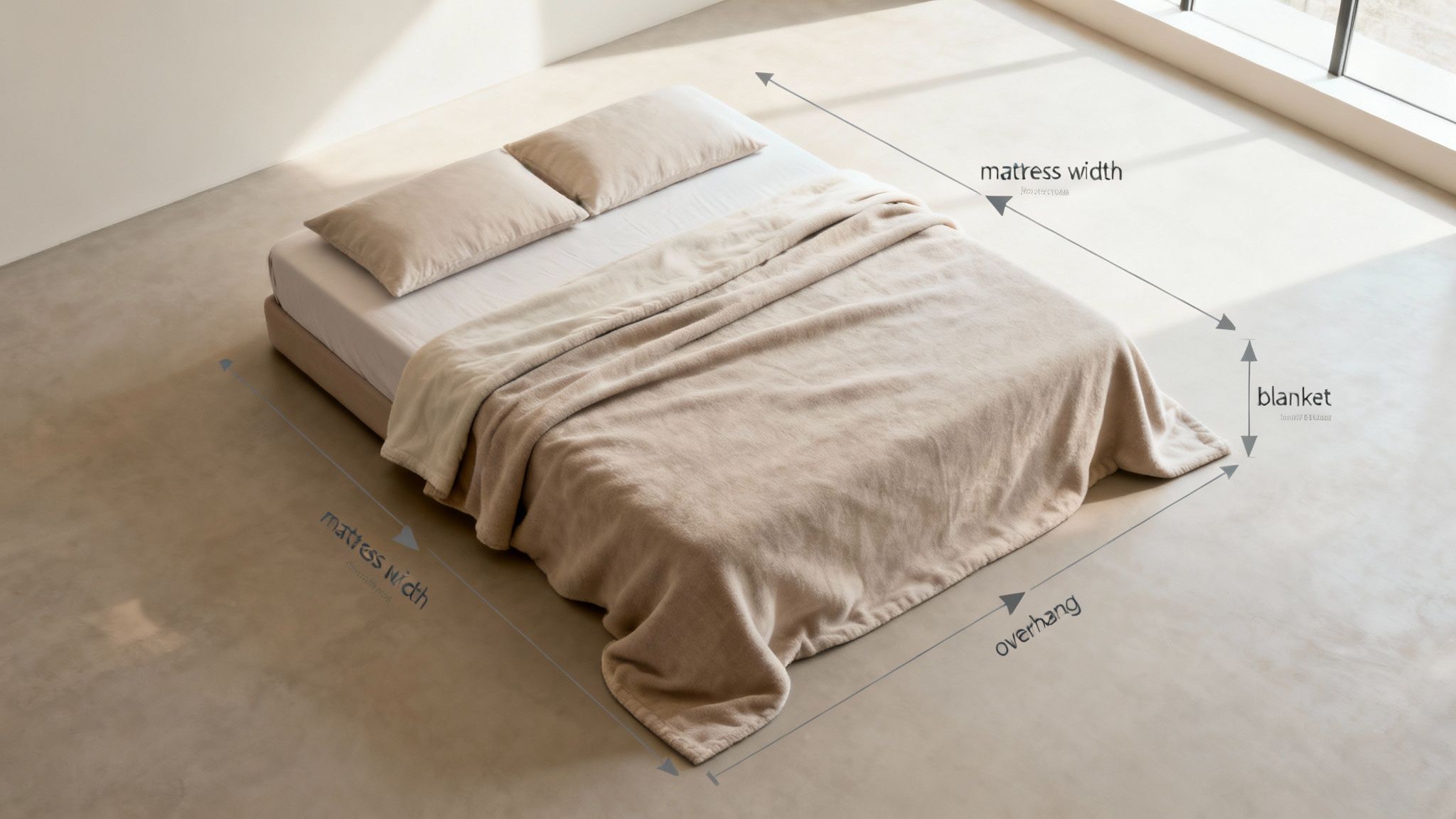
Standard Size vs Retailer Variation
“Standard” does not mean every brand prints the exact same number. It means the blanket will land in the same practical fit range. A blanket listed at 228 cm, 228.6 cm, or 229 cm wide is still a standard queen in use. Retailers are usually doing one of three things: rounding a metric figure, converting directly from inches, or extending the length for a different drape preference.
I pay closest attention to width first, then length second. Width determines whether the blanket feels stingy on the sides. Length determines whether the foot of the bed looks finished or slightly short. That is why a square 228 x 228 cm blanket feels balanced on a standard queen, while a 229 x 254 cm version feels more generous without moving into king territory.
Why Blanket Size Exceeds Mattress Size
A blanket that matched the mattress exactly would not work well for real use. It would barely clear the edges, leave no room for movement, and look undersized as soon as you added any mattress depth. That is why a queen mattress around 152 to 153 cm wide is usually paired with a blanket around 228 to 229 cm wide in bedding guides such as Purple's size chart.
I also like the practical explanation in That Blanket Co's guide: queen bedding is sized for coverage, not just for matching the mattress label. That is the easiest way to think about it if you are comparing products across brands.
Quick Guide Queen Blanket vs Queen Mattress Dimensions
| Item | Dimensions (cm) | Dimensions (inches) | What it means on a queen bed |
|---|---|---|---|
| Queen Mattress | 153 x 203 | 60 x 80 | The mattress itself, before overhang |
| Queen Blanket | 228 x 228 | 90 x 90 | About 37.5 cm side drop per side, plus roughly 25 cm beyond mattress length |
| Long Queen Blanket | 229 x 254 | 90 x 100 | Similar side drop, but much better foot coverage |
If your main question is whether 90 x 90 fits a queen bed, the answer is yes. On a standard queen, it is the normal baseline. A more useful question is whether that baseline still works once you factor in a tall mattress, a topper, or two people sharing the blanket.
| Item | Dimensions (cm) | Dimensions (inches) | What it means on a queen bed |
|---|---|---|---|
| Queen Mattress | 153 cm x 203 cm | 60" x 80" | The mattress itself, before any overhang |
| Queen Blanket | 228 cm x 228 cm | 90" x 90" | About 37.5 cm side drop per side, plus roughly 25 cm beyond mattress length |
| Item | Dimensions (cm) | Dimensions (inches) |
|---|---|---|
| Queen Mattress | 153 cm x 203 cm | 60" x 80" |
| Queen Blanket | 228 cm x 228 cm | 90" x 90" |
Queen Blanket Size Compared With Double, King, and Common Retailer Variations
Queen sits in the middle of the bedding range, which is why comparison shopping gets confusing fast. Some blankets marketed as queen are square, some are longer, and some dimensions overlap with what another brand would call oversized or even light king coverage.
Here is the practical comparison:
| Size label | Typical dimensions (cm) | Typical dimensions (inches) | Best use |
|---|---|---|---|
| Double blanket | around 180 x 230 | around 71 x 91 | Better for a double bed; can look skimpy on a queen |
| Queen blanket | 228 x 228 | 90 x 90 | Standard queen fit in Australia |
| Long queen | 229 x 254 | 90 x 100 | Better foot coverage on queen beds |
| King blanket | often 274 x 228 or similar retailer variation | around 108 x 90 | Fuller side drape on a queen or standard king use |
| Retailer crossover size | 240 x 220 | about 94 x 87 | Usually still queen-adjacent, but check width vs length carefully |
A double blanket can work on a queen in a pinch, but it usually looks narrow because the mattress itself is already 153 cm wide. A king blanket on a queen bed, by contrast, is often the better choice when the mattress is deep or the sleepers want more side coverage.
The tricky one is retailer crossover sizing like 240 x 220 cm. That can still function like a queen blanket, but it is not a perfect substitute for a square 228 x 228 cm in every situation. It gives you more width, but less length than a 229 x 254 cm long queen. I always look at both numbers, not just the word “queen” on the product page.
The biggest takeaway is simple: a blanket still counts as queen if it fits the queen-coverage job. Minor retailer differences do not matter much. A meaningful jump in width or length does.
The Secret to Better Sleep and a More Stylish Bed? It’s All About the Blanket Size.
The issue is not style in the abstract. It is whether the blanket gives enough coverage for the way the bed is used. I break that into three situations.
Standard-depth queen mattress
On a standard queen mattress measuring 153 x 203 cm, a 228 x 228 cm blanket gives you about 37.5 cm of width on each side before depth is considered. If the mattress is a fairly typical 25 cm deep, some of that drop is used just covering the side wall of the mattress, leaving roughly 12.5 cm of visible drape below the edge.
That sounds modest on paper, but on a normal bed frame it usually looks balanced rather than skimpy. In my experience, this is the setup where a standard queen blanket works exactly as expected: neat, usable, and not overly bulky.
Deep or pillow-top queen mattress
Now change only one variable. Keep the blanket at 228 x 228 cm, but put it on a deeper mattress around 35 cm tall. Your original 37.5 cm side drop is now almost entirely consumed by mattress depth, leaving only about 2.5 cm of visible drape if the blanket is centred and untucked.
That is the moment a blanket starts to feel smaller than the label suggests. It is also why mattress standards from references such as Purple and blanket fit advice from Parachute are more useful when you read them together: the mattress size tells you the baseline, but mattress height tells you whether that baseline will still look good.
If your bed has a pillow-top, topper, or chunky ensemble, I would seriously consider either a longer queen or a king blanket. A tall mattress eats drape faster than most size charts make obvious.
Two-person or shared-use sleeping
Shared use changes the recommendation again. A centred 228 x 228 cm blanket technically fits the bed, but each person is still drawing from the same side drop and foot allowance overnight. If one sleeper runs hot, shifts around, or pulls the blanket across the bed, the standard queen can feel just adequate rather than generous.
For couples, I usually treat 228 x 228 cm as the minimum comfortable queen size and look more favourably on either 229 x 254 cm or a king if the sleepers want more forgiveness. That extra length helps at the foot, and extra width helps stop the blanket from being tugged off one side.
When sizing up to king makes sense
A king blanket on a queen bed makes the most sense when at least one of these is true:
- the mattress is deep
- the bed base is tall and you want more visual drop
- two people share the blanket nightly
- you prefer a fuller hotel-style drape rather than a tidy, close fit
I would stay with queen on a standard-depth bed if you like a practical, uncluttered look. I would size up if visible drape is important to you, because that is where the difference becomes obvious.
Mastering The Art Of Blanket Overhang
Overhang is easier to get right once you treat it like a simple calculation instead of a styling mystery.

Use this formula for side drop:
(blanket width − mattress width) ÷ 2 = raw side drop
Then adjust for mattress depth:
raw side drop − mattress depth = visible drape below the mattress edge
For foot coverage, use:
blanket length − mattress length = total extra length
With a queen bed, that usually means:
-
228 − 153 = 75 cm extra width
-
75 ÷ 2 = 37.5 cm raw side drop per side
-
if mattress depth is 25 cm, visible side drape is about 12.5 cm
-
228 − 203 = 25 cm extra length at the foot
That last number is why a standard queen blanket fits, but does not feel especially long. If you want more foot coverage, the longer 229 x 254 cm format changes the result much more than a tiny decimal conversion ever will. Modern mattress profiles also matter here because many mattresses now sit well above older low-profile depths, a fit issue echoed in general bedding guidance from Purple.
Finding Your Signature Style
Instead of thinking in vague style terms, pick the result you want and match the numbers to it.
| Target look on a queen bed | Visible side drape goal | Practical blanket choice |
|---|---|---|
| Minimal drop | 5-10 cm | Standard queen on a deeper mattress |
| Standard drape | 10-20 cm | Standard queen on a regular-depth mattress |
| Fuller hotel-style coverage | 20 cm+ | Longer queen or king blanket |
I use this table as a quick reality check. If someone wants a plush, low-hanging look on a thick mattress, a standard square queen usually will not produce it. The maths says so before you even open the package.
The Most Overlooked Detail: Mattress Depth
Mattress depth is the variable that changes everything. Two identical blankets can look completely different on two queen beds if one mattress is slim and the other is a thick pillow-top.
That is why I always measure depth before recommending a size. A blanket can be “correct” on the label and still look short in the room because the mattress used up most of the available drop.
A Simple Guide To Measuring Your Bed or Sofa
Getting the right measurements is the single most important step to finding the perfect blanket, but it doesn't need to be complicated. Forget the guesswork. Following these simple steps will ensure your new blanket fits flawlessly, whether it’s for a queen bed or your favourite sofa. Armed with a tape measure, you can shop with total confidence.
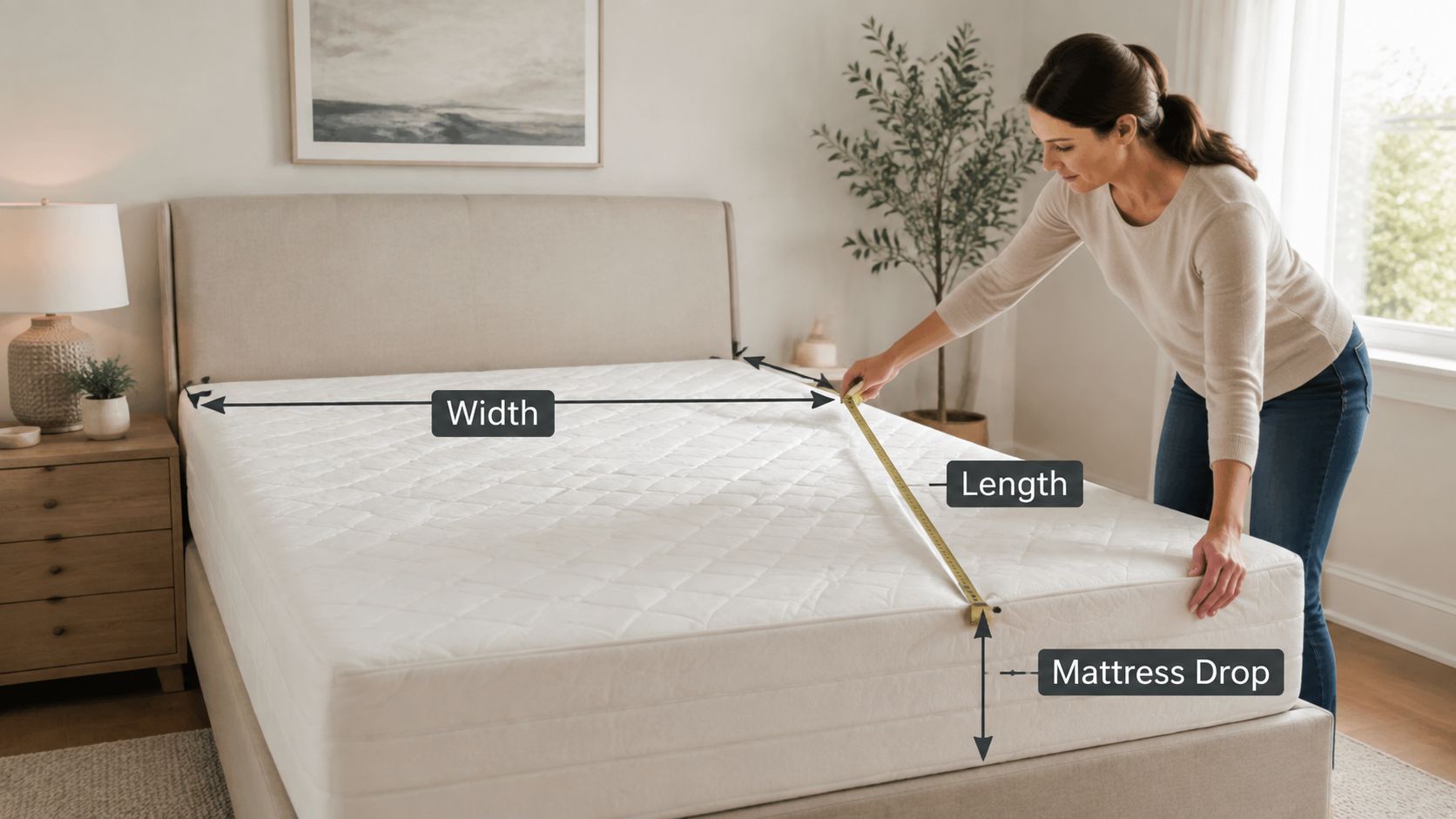
This process removes all doubt and helps you choose the right queen size blanket dimensions for your specific needs, not just what the label says.
Measuring Your Queen Bed
To find your ideal blanket size, you need three key measurements. This ensures you account for the mattress itself and the stylish drape you’re hoping to achieve.
- Measure the Width: Run your tape measure across the top of your mattress from one side to the other. A standard Australian queen is 153 cm wide.
- Measure the Length: Next, measure from the head of the mattress all the way to the foot. This should be around 203 cm.
- Measure the Drop: This is the most important step for getting the style right. Measure from the top edge of your mattress down to where you want the blanket to end. This could be just past the bottom of the mattress, halfway down the base, or even all the way to the floor.
To calculate your ideal blanket width, simply double your desired "drop" measurement and add it to the mattress width. For example: 153 cm (mattress width) + 35 cm (drop) + 35 cm (drop) = a 223 cm wide blanket.
How to Measure Your Sofa for a Blanket
The same principles apply when you’re measuring a sofa for a throw or blanket, but your goal might be a little different. Are you after a small, stylish accent, or something that offers full coverage for snuggling?
- For a Decorative Drape: If you just plan to fold the blanket casually over the back or arm of the sofa, measure the area you want it to cover. A standard throw is often more than enough for this stylish, effortless look.
- For Full Coverage: If you want a blanket to cover the entire seating area, measure the width of the sofa cushions from arm to arm. Then, measure the depth from the back cushions to the front edge. Adding these together will give you the dimensions needed for a cosy, functional cover.
If you’re looking for even more detailed instructions, check out this handy sofa cover size guide that can also help with your blanket measurements.
Decoding Throws, Blankets, and Quilts
Have you ever wondered why a ‘queen throw’ is so much smaller than a ‘queen blanket’? It’s a common point of confusion, but the answer is all about their job description. Navigating the world of bedding can feel like learning a new language, with terms like throws, blankets, and quilt covers often used interchangeably. But in practice, each one has a very distinct role and size.
Think of it this way: a quilt cover is like a perfectly fitted suit for your duvet. It has to fit just right to look sharp and do its job. A blanket, on the other hand, is more like a versatile, oversized coat. It’s all about warmth and generous coverage, giving you plenty of flexibility. And a throw? That’s the decorative scarf, an accessory meant to add a pop of colour, texture, and a bit of casual warmth.
Understanding the Key Differences
The main distinction really comes down to function versus fashion. A blanket is primarily designed for warmth and to cover the entire bed, with plenty of overhang to tuck in or drape. A throw blanket is smaller and more decorative, designed to be casually draped over the arm of a sofa or folded at the foot of a bed as a stylish accent. You can dive deeper into how to choose the perfect throw blanket for you in our detailed guide.
Meanwhile, a quilt cover (or duvet cover, as it’s also known) is a protective and decorative case for your quilt insert. Its dimensions are much less flexible because they are dictated by the size of the quilt it needs to house.
The core idea is simple: blankets provide primary warmth and coverage for sleeping, while throws are smaller, multi-purpose accents for styling and light warmth in any room.
Australian Queen Size Guide: Blanket vs Throw vs Quilt Cover
Here in Australia, these differences are clearly reflected in their standard dimensions. It's helpful to have a clear picture of how they stack up, so you know exactly what you’re buying.
A standard queen-sized quilt cover in Australia is a very specific 210 cm x 210 cm. This square dimension sets the benchmark for much of our bedding. With this in mind, let's compare it to the other layers you might be considering.
| Textile Type | Typical Australian Dimensions (cm) | Best Use Case |
|---|---|---|
| Queen Blanket | 228 cm x 228 cm | Main bedding layer for warmth and full bed coverage |
| Queen Quilt Cover | 210 cm x 210 cm | Protective and decorative cover for a quilt insert |
| Standard Throw | 130 cm x 170 cm | Decorative accent for sofas, armchairs, or bed ends |
Knowing these differences in queen size blanket dimensions helps you choose the right piece for the right job. It’s the secret to making sure your bed and living spaces are not just functional and cosy, but beautifully styled too.
How To Style A Queen Blanket In Your Living Room
A queen blanket is usually oversized for casual sofa styling, but it can be useful when you want broad coverage across a larger couch, a sectional corner, or a full-body lounging blanket for two people. On a standard sofa, I would fold it rather than let the full size hang loose, because 228 x 228 cm can overwhelm the seat visually. If you want a more decorative look, a throw is still the cleaner choice; if you want practical wraparound coverage, a queen blanket earns its size. See 3-seat sofa dimensions if you want to compare sofa width before deciding, or browse https://casamehome.com for blanket options that work across both beds and living spaces.
Frequently Asked Questions
What is the size of a queen blanket?
A standard queen blanket is typically 228 x 228 cm in Australia, which is about 90 x 90 inches. Some brands sell slightly longer versions, but 228 x 228 cm is the most common reference point.
What size is a queen size blanket in Australia?
In Australia, a queen size blanket is usually 228 x 228 cm. You may also see 228.6 x 228.6 cm, which is the exact metric conversion of 90 x 90 inches.
Will a 90x90 blanket fit a queen bed?
Yes, a 90 x 90 inch blanket fits a standard queen bed well. On a 60 x 80 inch queen mattress, it gives roughly 15 inches of side overhang per side and around 10 inches of extra length at the foot before mattress depth is factored in, which is why it is such a common queen size standard according to Parachute.
Can I use a queen blanket on a double bed?
Yes, and it usually gives a fuller, more generous drape than a double blanket. I often like this option for styling because the extra width makes a smaller bed look more finished rather than barely covered.
Can I use a king blanket on a queen bed?
Yes, if you want extra overhang or have a deep mattress, a king blanket can work very well on a queen bed. The trade-off is that it will look much fuller and may hang lower than you want on a low bed frame.
Is queen blanket size the same in Australia and the US?
Not always. Australian queen blankets are commonly listed around 228 x 228 cm, while US queen blankets are often shown as 90 x 90 inches or 90 x 100 inches, so it is worth checking the exact dimensions before buying internationally.
What size throw blanket is best for a queen bed?
For styling, a throw around 130 x 170 cm works well folded at the foot of the bed. For actual lounging or extra warmth, I’d look closer to an oversized throw around 150 x 200 cm so it feels useful rather than purely decorative.
Ready to add that perfect layer of comfort and style to your home? Explore the beautiful and cosy collection of throw blankets at Casamé Home and find the ideal accent for your bed or sofa. Visit us at https://casamehome.com to see our latest range.


