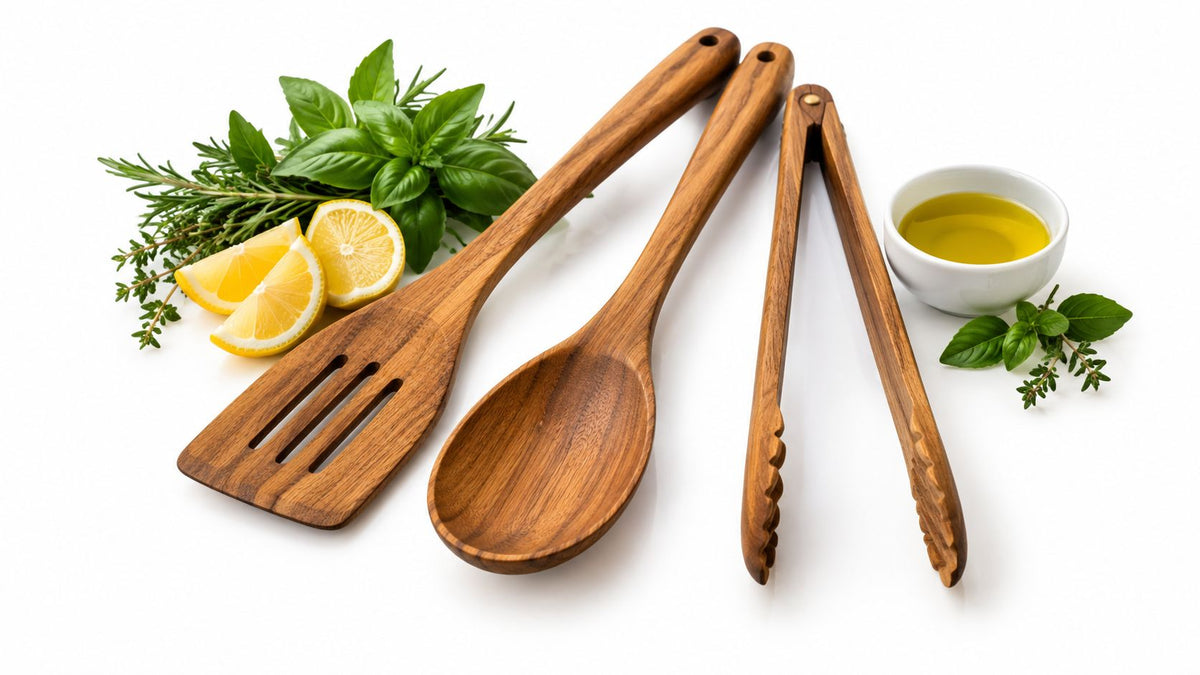
A teak wooden utensil set is a collection of kitchen tools made from dense, naturally water-resistant teak hardwood, typically including spatulas, spoons, and tongs, chosen for durability and non-stick safety. In Australian product descriptions, teak sets are commonly sold as 4-piece, 9-piece, 10-piece, and larger accessory bundles, so the category is already well established rather than being a rare specialist buy.
Anyone shopping for one is usually trying to solve a simple problem, the kitchen needs tools that won't scratch pans, feel flimsy, or fall apart after regular washing. Teak earns attention because it behaves like a sturdy workhorse in daily cooking, but the value comes from understanding what the wood does, how it compares with other materials, and how to care for it so the set lasts.
Table of Contents
- What Is a Teak Wooden Utensil Set?
- Why Teak Is a Superior Choice for Kitchen Utensils
- How Does Teak Compare to Bamboo, Beech, Olive Wood, and Silicone?
- What Should You Look for When Buying a Teak Utensil Set?
- How to Care for and Maintain Your Teak Wooden Utensils
- Conclusion - Is a Teak Utensil Set Right for Your Kitchen?
What Is a Teak Wooden Utensil Set?
A teak wooden utensil set is a grouped collection of wooden cooking tools made from teak, a tropical hardwood native to South and Southeast Asia. In practice, that usually means a mix of spoons, turners, spatulas, forks, and tongs for stirring, flipping, serving, and scraping without marking cookware.
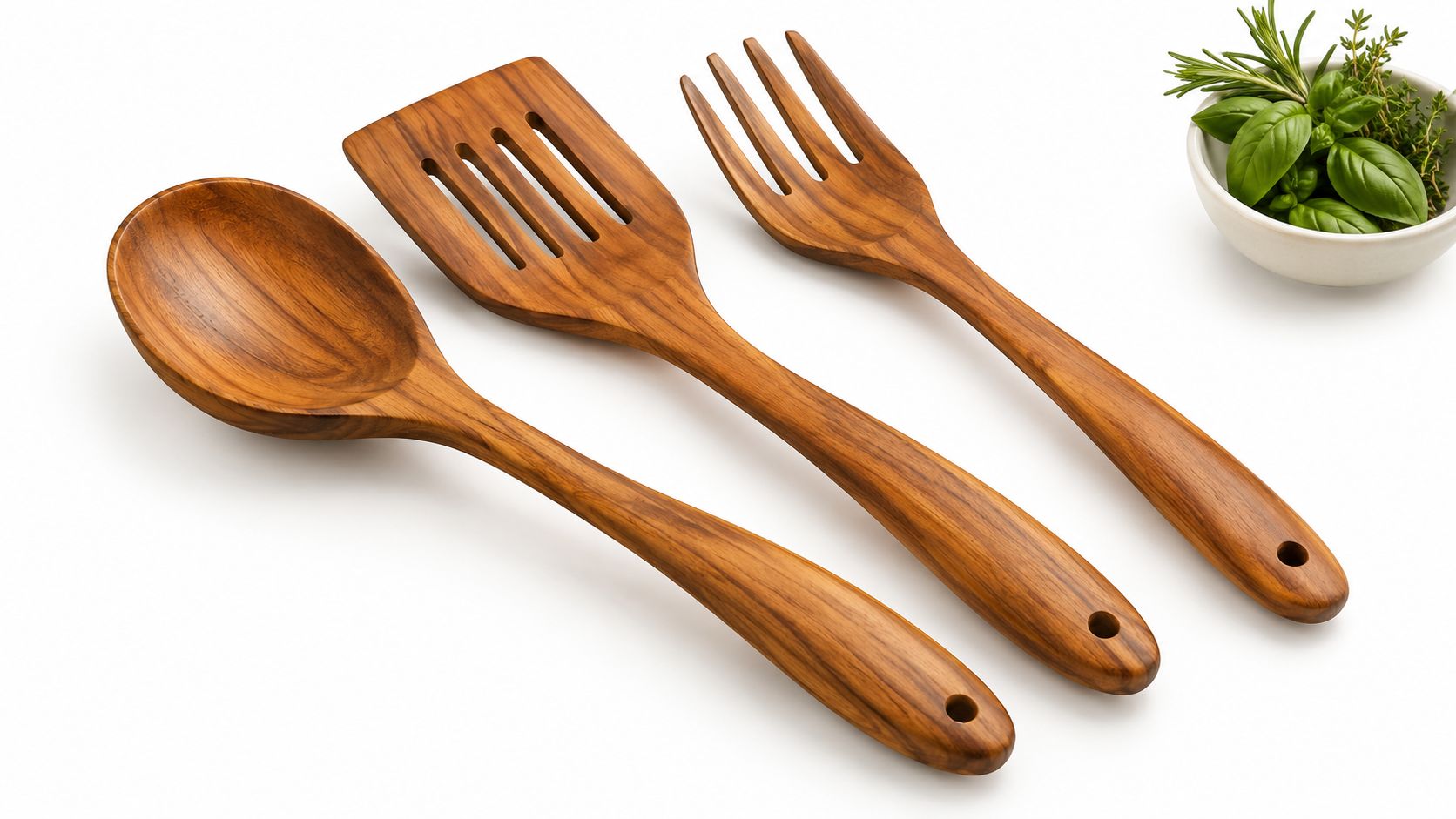
What usually comes in the box
A set can be small and practical or broad enough to cover most everyday cooking tasks. Australian marketplace listings commonly show 4-piece, 9-piece, 10-piece, and 10-piece-plus accessory bundles, which is a useful clue that shoppers want either a starter kit or a fuller bench set, not a single novelty spoon. The mix matters more than the headline piece count, because a good set should cover stirring, sautéing, serving, and turning food without forcing a cook to reach for metal tools.
Why teak shows up so often
Teak is popular because it is dense, close-grained, naturally water-resistant, and durable. Those qualities matter in a kitchen because utensils get washed, dried, stored, used near steam, and handled again and again. A tool that stays dimensionally stable feels better in the hand and keeps working longer, which is why teak has become a familiar choice in Australian kitchenware coverage.
Practical rule: a good teak wooden utensil set should feel solid without feeling bulky, and the pieces should look made for repeated use rather than display only.
Casual buyers often confuse “wooden” with “fragile”. Teak is the opposite of that assumption when it's properly made and properly cared for.
Why Teak Is a Superior Choice for Kitchen Utensils
A teak utensil set earns its place in a working kitchen because the timber's physical properties suit repeated cooking, washing, and drying. Queensland timber data describes teak as moderately dense and firm, with low shrinkage as moisture levels change, which helps explain why it feels steady in the hand instead of soft or twitchy Queensland teak timber data.
Why density and hardness matter
Dense hardwood behaves like a well-made cutting board. It takes knocks without bruising as quickly as softer woods, so the spoon edge, turner face, and fork tines hold their shape better through everyday use. In practical terms, that means less rounding, less surface damage, and a tool that still feels purposeful after regular contact with pans, bowls, and benchtops.
Why teak handles moisture better
Teak is an oily timber, rated termite-resistant and in the top above-ground durability class in Queensland timber data, which is why it copes well near sinks, steam, and repeated hand washing Queensland teak timber data. That oily structure limits how much water the timber takes on, so the wood is less likely to swell, move, or develop surface checking. The trade-off is simple. Teak still needs sensible care, because leaving any wooden utensil wet for long periods works against it.
A cook who rinses, dries, and stores the set properly gives the timber the conditions it needs to last.
What heat resistance adds
Teak is commonly described as heat-resistant. For everyday cooking, that gives a teak utensil set enough tolerance for stirring sauces, turning vegetables, and working through a hot pan without the same risk of softening that comes with less durable materials.
That matters in ordinary kitchen use. A spoon in a simmering pot, or a spatula working through a sticky risotto, needs to stay comfortable, steady, and gentle on cookware.
A note on coatings and finishes
Some shoppers judge quality by shine. With teak, a smooth, clean finish matters more than a glossy one, because the wood itself provides the working performance. A good set should feel finished in the hand, not coated in a way that hides the timber. The grain should still look natural, and the surface should feel made for repeated use.
Teak is valued less for decoration than for its ability to keep its shape, resist moisture, and keep working through ordinary kitchen use.
How Does Teak Compare to Bamboo, Beech, Olive Wood, and Silicone?
Teak is usually the most balanced choice when the priority is durability, moisture resistance, and a traditional wooden feel, but the right material still depends on how a kitchen is used. Bamboo, beech, olive wood, and silicone each solve part of the problem, yet none of them combines teak's stability and density in quite the same way.
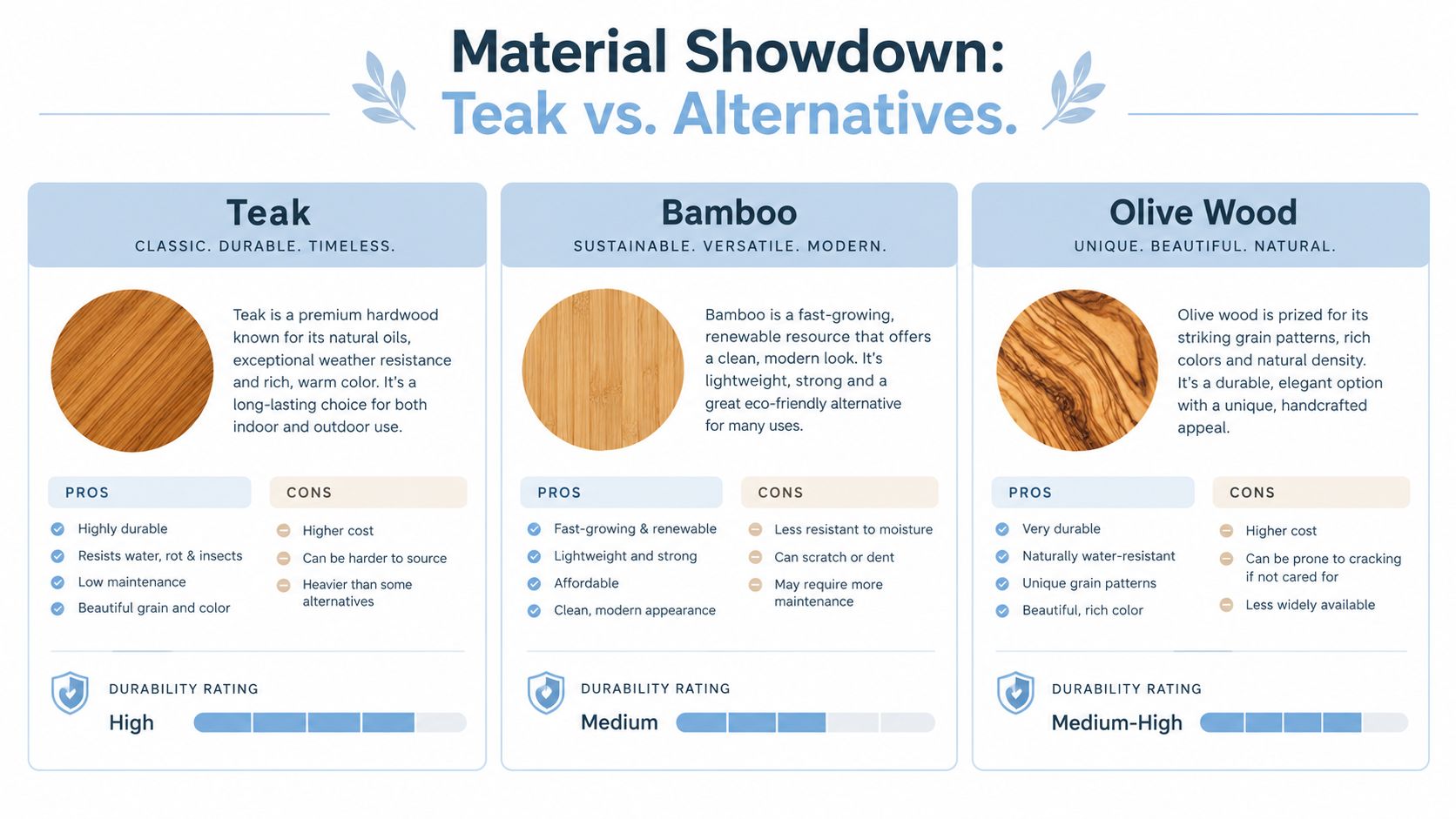
Teak against bamboo and beech
Bamboo appeals to many buyers because it feels light and familiar, but it tends to be less durable under repeated kitchen use than teak. Beech can be affordable and pleasant in the hand, yet it is more likely to show wear and moisture-related movement over time. A teak wooden utensil set makes more sense when the buyer wants tools that feel sturdier and less likely to get rough quickly.
Teak against olive wood
Olive wood has a beautiful grain and a strong handcrafted look, which is why it often attracts style-focused shoppers. The trade-off is that decorative character can come with more concern about cracking if the wood is not maintained carefully. Teak is usually the safer everyday choice for cooks who want the set to work hard rather than sit out as a display piece.
Teak against silicone
Silicone has its own strengths. It handles heat well, is gentle on non-stick cookware, and is easy to rinse clean. The downside is feel, because silicone lacks the firmness and tactile tradition of wood, and some cooks prefer the control and feedback of a wooden tool.
Best fit rule: teak suits cooks who want a wooden utensil set that feels substantial, protects cookware, and stays stable through ordinary use.
One useful way to think about the choice is this, bamboo is light, beech is practical, olive wood is beautiful, silicone is flexible, and teak is the material that most often sits in the middle as the dependable all-rounder.
What Should You Look for When Buying a Teak Utensil Set?
A good teak utensil set should have a smooth finish, a solid join between parts, and a shape that feels balanced in the hand. Those three checks catch most of the quality differences that matter in real cooking.
Check the join and the grain first
The join between handle and head should look tight, clean, and even. If the tool has a glued or joined section, that area shouldn't look chunky, misaligned, or rough. Grain direction matters too, because clean grain and careful shaping reduce the chance of weak spots where the tool meets pressure during stirring or scraping.
Look closely at the finish
The finish should feel smooth enough to wash and use comfortably, but not so heavy that it looks sealed under a plastic-like coating. A good teak surface still looks like wood, with the grain visible and the edge transitions rounded rather than sharp. Rough patches, loose fibres, or uneven sanding usually point to rushed production.
Judge the set by the tasks it can actually cover
A practical set should include pieces that suit the cook's daily habits. For example, a spoon, a turner, and a slotted tool cover many pans and pots; a larger set can add specialty pieces, but extras only matter if they are used. Function should come before the label on the box.
Think about sourcing, not just appearance
Australian timber-selection guidance recommends asking whether timber comes from a certified sustainable forest, with NSW educational material listing certification schemes such as FSC and PEFC NSW timber selection guidance. That doesn't make every attractive set equal, but it does give buyers a sensible sourcing standard to ask about before they commit.
How to Care for and Maintain Your Teak Wooden Utensils
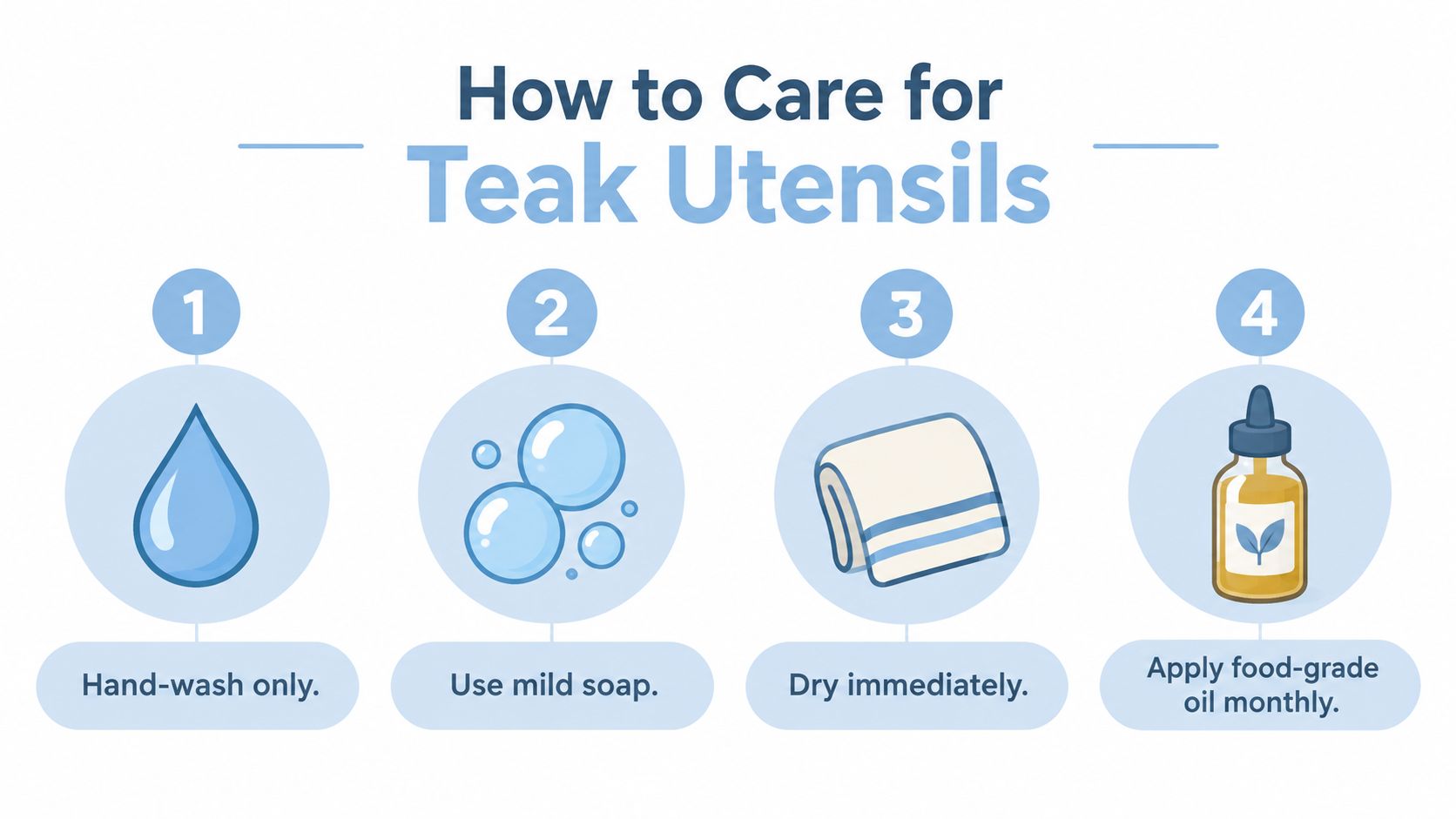
A teak spoon that is washed well and dried properly can last far longer than one left to sit in the sink. Teak earns that reputation because its density and natural oils help it handle moisture better than many other woods, but the care routine still matters. Hand-washing, quick drying, and no dishwasher use are the habits that protect the surface and reduce warping, cracking, or splintering ABC guidance on wooden kitchen utensils.
The daily routine
Use hot, soapy water, wash each utensil by hand, then dry it straight away. That simple cycle matters because wood absorbs moisture at the surface, and standing water gives fibres time to swell. Short, regular care works better than fixing damage later.
Why soaking and dishwashers cause problems
Soaking and dishwasher cycles are hard on teak because repeated wetting and heating make the wood expand and contract. Over time, that movement can open small cracks or roughen the grain. Food-safety guidance for wooden cutting boards makes a similar point: surfaces should stay in good condition and be cleaned thoroughly, because deep grooves and cuts can trap residue and become harder to clean safely NSW Food Authority cutting board guidance.
Keeping the surface healthy
Teak usually benefits from occasional re-oiling with food-safe mineral oil to help keep the surface from drying out. A thin coat, left to absorb and then wiped back, helps the wood stay smoother and less prone to cracking. Some people also use food-grade beeswax or a similar finish, but the main rule stays the same, keep the utensil set clean, dry, and lightly conditioned.
Wooden utensils don't need complicated care, they need consistent care.
This short demonstration shows the wash-and-dry routine in practice:
Conclusion - Is a Teak Utensil Set Right for Your Kitchen?
A teak wooden utensil set suits cooks who want a durable, moisture-resistant, non-stick-friendly set of tools that feels substantial in daily use. It makes the most sense for people who cook often, wash carefully, and want wood that stays stable instead of looking tired after a few weeks.
The material's strength is practical, not decorative. Teak's density, natural oils, and heat tolerance give it a better chance of coping with ordinary cooking than softer, less stable woods, while silicone remains the better choice for anyone who wants flexibility above all else. A buyer who values natural wood, but still wants a set that can work hard in an Australian kitchen, will usually find teak the most convincing middle ground.
That said, the best set is the one matched to the cook's habits. A careful hand-washer can make teak last well, while someone who wants zero-maintenance cleanup may prefer another material entirely. The point is to choose with clear eyes, not just by colour or grain pattern.
Casamé Home is an Australian home-textiles store — covers for lounges, armchairs and cushions, and throw blankets — so this guide is about choosing a set, not about anything we make.