


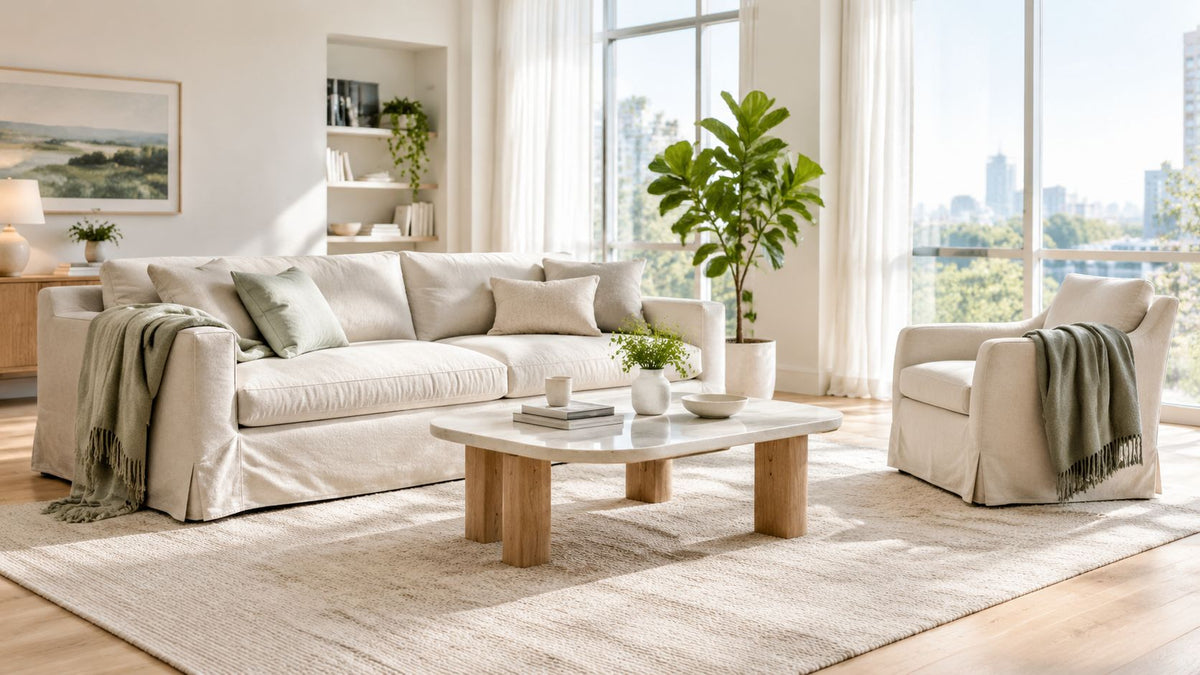
A dog has claimed the sofa, the children have left crumbs between the cushions, and the dining chairs need attention before guests arrive. Low maintenance furniture can make those everyday problems easier to manage, but only if the piece combines durable materials, practical finishes, removable protection, and care instructions you can follow without guesswork. The right choice reduces cleaning friction while helping existing furniture last longer in busy Australian homes.
Table of Contents
- What is low maintenance furniture?
- Which materials and finishes require minimal upkeep?
- What low maintenance furniture works best in each room?
- How do you maintain low maintenance furniture easily?
- How can you transform existing furniture into low maintenance pieces?
- What buying checklist do families pet owners and renters need?
- How do sofa covers and throws simplify furniture upkeep?
- Putting low maintenance furniture into practice
What is low maintenance furniture?
Low maintenance furniture is furniture designed to withstand regular use and remain easy to clean, protect, or refresh. A low-fuss piece combines a durable frame or surface with upholstery that tolerates abrasion, a finish that releases ordinary marks, and a care routine that suits the household using it.
That definition matters because “easy-care” can mean different things. A vinyl dining chair may wipe clean quickly but feel less comfortable in a living room. A beautiful untreated fabric may feel soft but demand careful spot treatment. A sofa with a removable cover may be more practical than a stain-resistant fixed cover if children, pets, or renters create frequent mess.
The Australian Bureau of Statistics classifies furnishings and household equipment as discretionary household spending, and its methodology includes furniture, curtains, and blinds within that division. The ABS Monthly Household Spending Indicator also notes roughly $60 billion in annual spending for furnishings and household equipment, making replacement and refreshing an established household spending pattern rather than a niche concern. The ABS methodology explains the furnishings and household equipment category.
Why upkeep affects the real cost
A low maintenance sofa isn't necessarily the cheapest sofa at purchase. Its value comes from reducing the effort and disruption associated with repeated spot cleaning, reupholstery, replacement, or professional attention. A washable cover, for example, turns some upholstery problems into a laundry task, while a durable surface can prevent minor marks from becoming permanent-looking wear.
Longer product life also has a waste benefit. NSW EPA textile research recorded average annual textile imports of 328,904 tonnes into NSW between 2005 and 2019, alongside estimated annual textile disposal of 305,531 tonnes. Furnishings and homewares represented about 26.03% of NSW textile imports, which gives durable, repairable, and easier-care furniture practical relevance in Australian households. The NSW EPA Thread Count report details textile inflows, disposal, and furnishing categories.
What qualifies as low fuss
Look for furniture that offers:
- Wear tolerance, so repeated sitting, sliding, and pet traffic don't quickly create visible abrasion.
- Straightforward cleaning, with a care label that clearly states whether the fabric needs water-based cleaning, special treatment, or dry cleaning.
- Replaceable or removable protection, such as covers, liners, and throws.
- A layout-friendly design, particularly for apartments, rentals, and broken-plan rooms that serve several purposes.
Low maintenance doesn't mean maintenance-free. It means the routine is realistic enough that busy households can keep up with it.
Which materials and finishes require minimal upkeep?
Microfibre, performance polyester, vinyl, textured jacquard, and appropriately treated leather generally offer the easiest upholstery care, but the best option depends on use, touch, pets, and the care label. A fabric's appearance alone won't tell you whether it will cope with a busy lounge room.
Comparing common upholstery choices
Microfibre has a dense, smooth surface that can make everyday vacuuming and spot treatment manageable. Performance polyester is often a strong all-rounder because it can combine colour retention, abrasion resistance, and practical cleaning characteristics. Textured jacquard can disguise small marks and add visual depth, although its weave still needs the correct cleaning method.
Vinyl is particularly useful for dining chairs, playroom seating, and other surfaces where wiping matters more than a soft hand feel. Treated leather can also simplify spill response, but it needs suitable leather care and shouldn't be treated as interchangeable with water-cleanable fabric.
For Australian upholstery, Martindale abrasion testing under AS 2687 provides a useful durability benchmark. Domestic-light-duty fabrics are around 10,000 rubs, while domestic-heavy-duty fabrics are around 20,000 rubs to endpoint. Australian upholstery testing guidance explains Martindale abrasion categories.pdf). A higher rating doesn't guarantee stain resistance or comfort, but it can indicate better resistance to visible wear from repeated contact.
| Material | Durability, Martindale rubs | Cleaning ease | Care label |
|---|---|---|---|
| Microfibre | Check the product specification, with heavier domestic ratings preferable for high-use rooms | Usually practical for routine vacuuming and careful spot cleaning | Follow the stated water-based or solvent guidance |
| Performance polyester | Select a domestic-heavy-duty specification for demanding rooms, around 20,000 rubs where stated | Often easy to spot clean, but finishes vary | Confirm the exact cleaning code before using products |
| Vinyl | Martindale figures vary by product and application | Wipe-clean surface suits dining and family areas | Use only the cleaning method listed by the manufacturer |
| Textured jacquard | Select a higher abrasion specification for pets and frequent use | Texture can disguise minor marks, but woven surfaces need careful treatment | Check whether the label permits water-based cleaning |
| Treated leather | Use the supplier's stated durability information | Spills can often be removed promptly, but leather needs dedicated care | Follow the leather-specific care instructions |
The performance fabric guide from Casamé Home is useful when comparing upholstery behaviour, finishes, and household suitability. For surrounding soft furnishings, a specialist resource such as Rubber Ducky Rug Cleaning Birmingham can also help you think beyond the sofa, particularly when washable or easily maintained rugs need to work alongside family seating.
Care labels matter more than marketing language
Australian upholstery specification sheets distinguish between heavy domestic or general commercial performance at roughly 20,000 to 39,000 Martindale cycles and heavy commercial performance at 40,000 or more cycles. The same specifications can separate routine water-based spot cleaning from dry-clean-only treatment, so “stain resistant” doesn't automatically mean “machine washable”. Warwick's explanation of fabric specification sheets shows why performance and care must be assessed together.
Australian mandatory care-labelling rules apply to upholstered furniture. The label should give buyers relevant information about how the product is cleaned and maintained, which makes the care instructions part of the buying decision, not an afterthought. The Australian product-safety guidance covers care labelling for upholstered furniture and textiles.
Practical rule: Choose the highest suitable abrasion rating you can find, then verify the cleaning method separately. Durability and washability solve different problems.
What low maintenance furniture works best in each room?
The most suitable low maintenance furniture changes by room, because each space creates a different pattern of spills, contact, dust, and movement. A living room needs upholstery that tolerates repeated use, while a dining area usually benefits more from wipeable surfaces and easy access around chair legs.
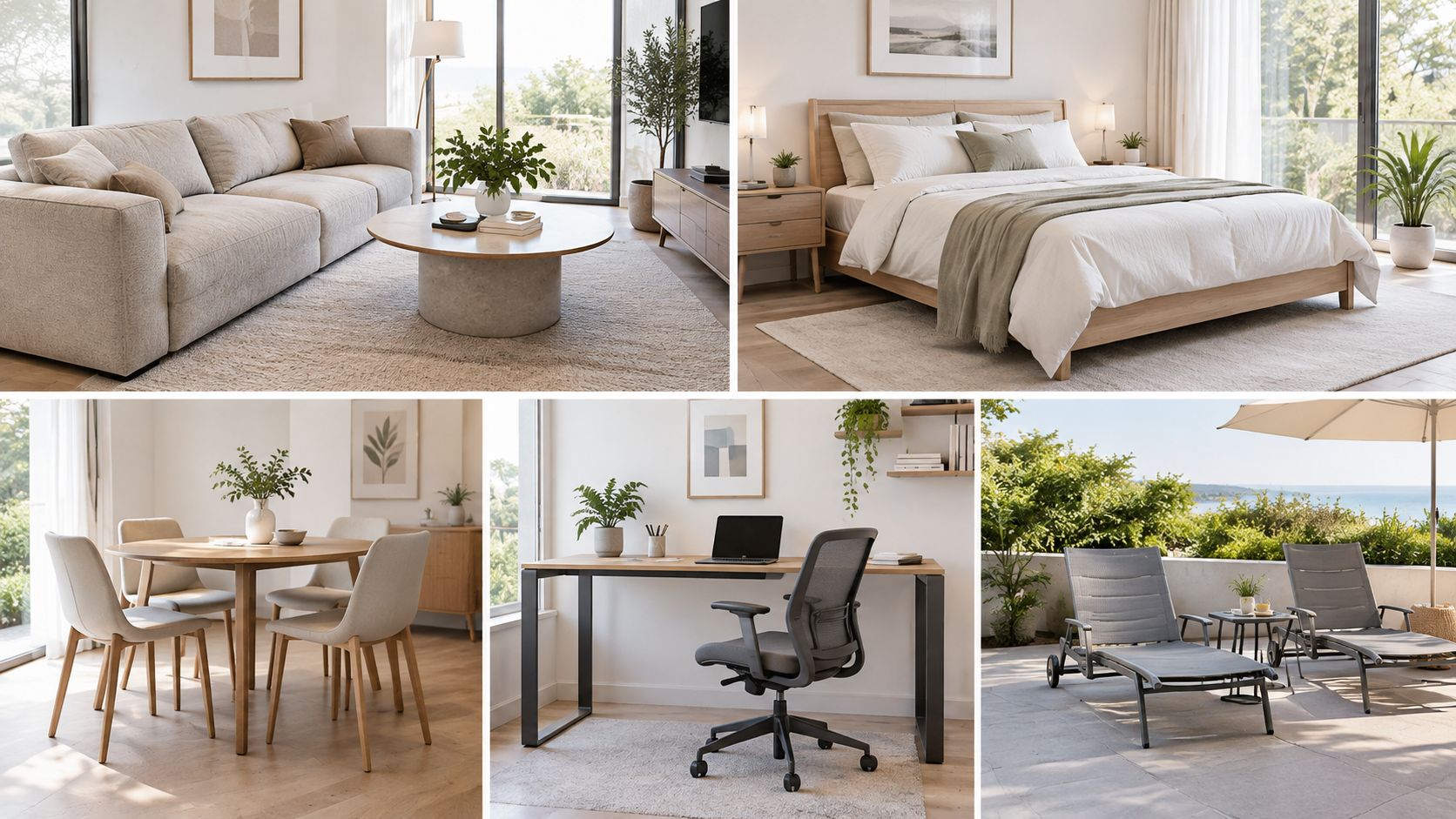
Living rooms
For a high-traffic lounge, choose a sofa with a durable domestic specification, a clear care label, and removable protection where possible. A slipcovered sofa suits households that want to change or wash the outer layer, while a fixed sofa can still work if its upholstery has a realistic spot-cleaning routine and sufficient abrasion performance.
Raised legs can simplify vacuuming beneath the sofa, but they also expose more of the floor and may not suit every room or pet. In a small apartment, avoid choosing a bulky piece solely because it has a “family” label. Check that the configuration leaves a workable path for cleaning and daily movement.
Bedrooms
A bedroom bench, ottoman, or upholstered bedhead should use a surface that tolerates clothing contact and occasional dust. A removable or washable bench cover is particularly practical when the piece is used for dressing, storing bags, or holding folded laundry.
Dining areas and home offices
Vinyl or wipeable upholstery works well on dining chairs because food and drink marks can be addressed without removing the seat. In a home office, choose a chair with a finish suited to repeated contact and a base that allows the floor beneath it to be cleaned without awkward repositioning.
Outdoor patios
For covered patios, powder-coated metal, synthetic wicker, and weather-suitable upholstery can reduce routine effort, but outdoor exposure still demands attention to the supplier's instructions. Don't assume a fabric designed for indoor furniture belongs outdoors because it looks durable.
A short visual guide can help you compare room layouts and finishes before buying.
In multifunctional Australian homes, flexibility is part of maintenance planning. A sofa that can handle television, work, reading, and guests without constant rearranging is often more useful than a delicate statement piece that must be protected from ordinary living.
How do you maintain low maintenance furniture easily?
Maintain low maintenance furniture with frequent light care, immediate blotting, and strict adherence to the care label. Small actions prevent soil, hair, and spills from becoming a deep-cleaning project.
A simple routine that fits busy homes
- Every day, deal with fresh marks. Lift crumbs, remove loose pet hair, and blot liquid with a clean absorbent cloth. Don't rub a spill deeper into the upholstery.
- Each week, vacuum upholstery. Use a soft, non-metallic brush attachment, including seams, cushion gaps, and contact areas where hair and grit collect.
- As needed, wash removable covers correctly. Australian furniture care guidance recommends a cold cycle for machine-washable removable covers, followed by air drying rather than using a dryer. The Australian furniture care guidance sets out vacuuming, spot cleaning, cold washing, and air drying advice.
A cover can look washable but still require a particular temperature, cycle, or detergent. The Australian care-label guide distinguishes washable and dry-clean-only treatments and includes temperature instructions, so a machine-washable sofa cover should always be washed within the range printed on its label. The national care-labelling guide explains textile washing instructions and temperature limits.
Spot-clean without creating a larger mark
Start by checking the manufacturer's instructions. Test any approved cleaning solution on a hidden area, apply it sparingly, and work from the outside of the mark towards the centre. Excess water can leave tide marks, distort backing materials, or lengthen drying time.
For removable covers, close fasteners before washing and reshape the fabric while damp if the label permits it. Air drying helps avoid heat damage, but don't return a damp cover to the sofa, as trapped moisture can create an unpleasant odour.
The aim is not to make every item pristine after one accident. It is to stop ordinary household use from becoming a permanent-looking defect. For broader household tasks, residential cleaning services may be useful when furniture care needs to sit alongside a larger cleaning routine. For a sofa-specific process, this guide to couch cover cleaning provides a practical reference point.
Cleaning advice: If the label says dry clean only, treat that as a real restriction. A stronger product or hotter wash won't make the fabric more washable.
How can you transform existing furniture into low maintenance pieces?
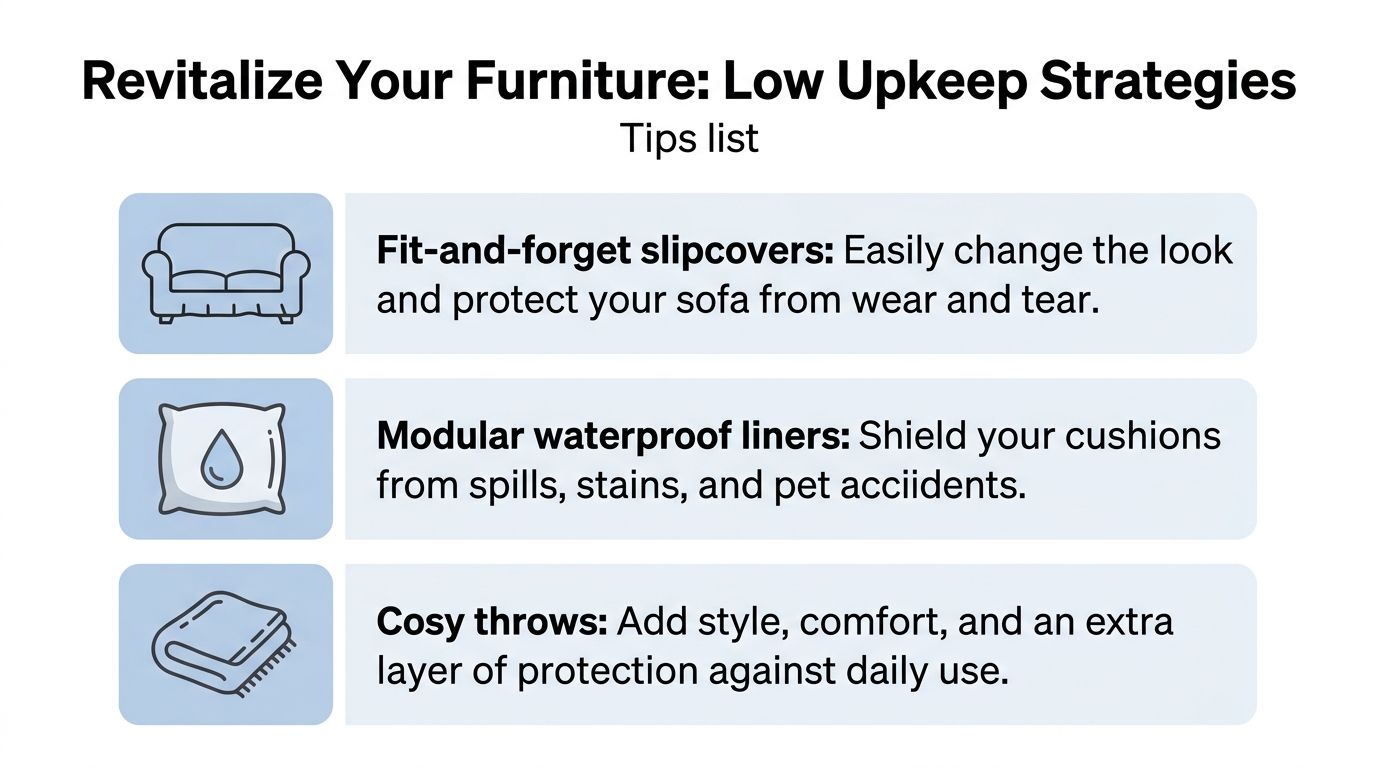
You can make existing sofas, armchairs, and lounge pieces easier to maintain by adding a secure slipcover, a washable or waterproof liner, and targeted throws. These upgrades protect the areas that receive the most contact without requiring immediate reupholstery.
Start with the layer that solves the real problem
A fitted slipcover is useful when the upholstery is structurally sound but looks tired or needs protection. Measure the sofa carefully before ordering, because a cover designed for a standard sofa shouldn't be assumed to fit an L-shaped sectional, sofa bed, recliner, or unusual arm profile. Where a product supports a particular configuration, use its measuring guide rather than relying on a general size description.
Foam inserts can push fabric into cushion gaps, while under-sofa straps help limit movement. These features support a neater appearance, but they won't correct an unsuitable base size. A loose throw may be quicker to place, yet it generally shifts more readily on frequently used seating.
Use liners where accidents happen
A modular waterproof liner can sit beneath a decorative cover or over selected cushion sections, depending on the product design. This is particularly useful for pet beds, children's seating, removable seat cushions, and areas where drinks are regularly placed. Waterproof protection can reduce penetration, but seams, zips, and uncovered sections still need attention.
A throw offers a different advantage. Place one over the pet's preferred corner, the seat used for afternoon naps, or the arm that receives the most contact. It can hide existing wear, introduce colour and texture, and be removed for washing without changing the entire sofa.
For storage or moving, Heavy-duty furniture protectors can protect furniture from dust and handling damage. They're not a substitute for an everyday sofa cover, but they're valuable when furniture is temporarily stored, transported, or kept away from routine use.
Layering works best when every piece has a job. Use the fitted cover for overall protection, the liner for liquid risk, and the throw for concentrated wear. That combination is more practical than covering every surface with loose fabric that needs constant repositioning.
What buying checklist do families pet owners and renters need?
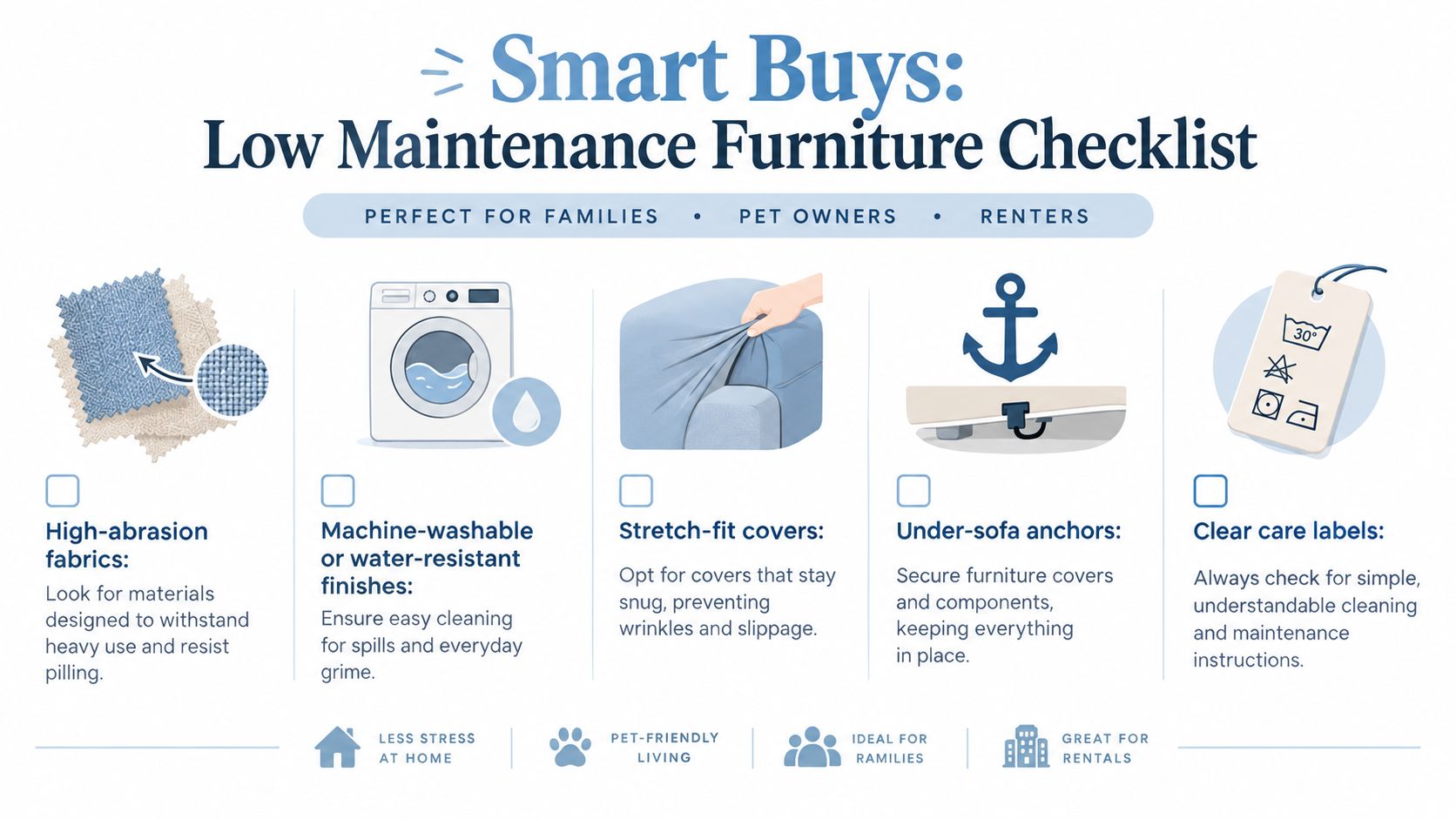
Families, pet owners, and renters should prioritise high abrasion performance, washable or water-resistant protection, secure fit, reversible installation, and clear care instructions. The correct combination reduces routine effort without assuming that one fabric or cover suits every sofa configuration.
Check the fabric before the colour
Ask for the Martindale result and intended use category. A family lounge with daily sitting and pet traffic needs a stronger specification than an occasional chair in a quiet bedroom. Also inspect the weave. A textured surface can disguise minor marks, but loops may interact differently with claws and snagging than a tighter, smoother construction.
Confirm how cleaning actually works
“Easy clean” isn't enough. Look for a care label that explains whether the upholstery accepts water-based spot cleaning, needs a specialist treatment, or has removable sections suitable for washing. If a cover is machine washable, check the stated cycle, temperature, drying method, and whether all panels can be removed.
Independent Australian pet-care guidance emphasises immediate blotting, regular vacuuming, and routine cleaning, but the more useful buying question is how often those tasks can be completed without disturbing the whole room. Washable covers and removable fabrics can reduce total maintenance in homes dealing with frequent shedding and repeated washing. Guardsman Australia's pet-damage guidance covers practical protection and cleaning considerations.
Use this household-specific checklist
- For families, prioritise resilient upholstery. Choose a surface that tolerates repeated sitting and can be spot cleaned without elaborate equipment.
- For pet owners, inspect seams and contact points. Look for removable covers, a practical weave, and protection that can be lifted away for cleaning.
- For renters, choose non-permanent solutions. Stretch-fit covers and throws can refresh furniture without altering the original upholstery or fixing hardware to walls.
- For Airbnb hosts, value repeatable presentation. A cover that can be removed, cleaned, dried, and refitted consistently is more useful than a finish that only looks good before the first guest.
- For small homes, check movement and storage. A cover or liner should be manageable to remove, fold, and store without taking over a cupboard.
- For every buyer, read the label first. Clear instructions tell you what the material can tolerate and what will invalidate its low-maintenance promise.
A secure cover should stay in place during normal use, but no generic cover can be guaranteed to fit every sofa shape. Measure the back, seat, arms, cushions, and depth, then confirm compatibility with the supplier.
How do sofa covers and throws simplify furniture upkeep?
Sofa covers and throws simplify upkeep by placing a removable, washable layer between daily use and the original upholstery. Stretch-fit covers can reduce exposure to spills, pet hair, crumbs, and surface wear, while throws protect smaller high-contact areas and add a quick decorative change.
Casamé Home offers stretch-fit slipcovers for standard sofas, L-shaped sectionals, sofa beds, and armchairs, subject to measuring and configuration requirements. Its covers use spandex-blend fabrics, including textured jacquard options, with foam inserts and under-sofa straps intended to create a smoother, more secure fit. The brand also offers waterproof options and machine-washable covers, which makes the care label and correct washing method central to the purchase.
A throw works best as a targeted layer rather than a complete solution. Place it where a dog sleeps, where children snack, or across a frequently used arm. It can be lifted away quickly, washed according to its label, and replaced without removing the whole cover.
A waterproof sofa cover can be useful where liquid spills, pet accidents, or outdoor-to-indoor traffic create a higher risk, but waterproofing doesn't remove the need for correct fitting and cleaning. Review the practical details in this guide to a waterproof sofa cover before choosing a solution.
The trade-off is straightforward. Covers add a layer that may need laundering and can alter the feel of the sofa, while uncovered upholstery preserves the original finish but exposes it to every daily incident. For families, pet owners, and short-term accommodation, removable protection often makes the maintenance task more predictable.
Putting low maintenance furniture into practice
Low maintenance furniture works when material choice, room layout, protection, and care instructions all match the way your household lives. Start with the furniture you already own rather than replacing everything at once.
First, identify the problem area. If the frame and cushions remain comfortable, use a fitted cover, liner, or throw. If the upholstery is the issue, compare its care label and abrasion specification before deciding whether cleaning, covering, or replacement makes sense.
Next, set a repeatable routine. Vacuum with a soft brush, blot spills promptly, follow the label for spot cleaning, and wash removable covers only as directed. On your next purchase, use the checklist to compare durability, cleaning method, fit, and installation instead of choosing by colour alone.
A single washable cover or well-placed throw can be a practical starting point. Build from there, creating a home that supports work, rest, pets, children, and guests without making every ordinary mess feel like a major project.
Casamé Home offers stretch-fit, waterproof, and machine-washable sofa covers, along with cosy throws designed to protect and refresh everyday living spaces. Visit Casamé Home to measure your furniture, compare practical cover options, and choose a lower-upkeep layer for your home.


