You've probably got the evaporative cooler sitting idle and collecting dust, leaves, and whatever the wind throws at a roofline. A swamp cooler cover is the practical answer for the off-season, but the right choice depends on the cabinet shape, the season, and whether your unit has any bushfire compliance needs in Australia. Casamé Home makes washable covers for lounges, armchairs and cushions, not covers for appliances, so this guide points to what to look for rather than to something we sell.
Key Takeaways Swamp Cooler Covers
Match the Cabinet: Measure height, width and depth so the cover stays put.
Clean Before Covering: Only cover a unit that is clean, dry and drained.
Check WA Rules: In Western Australia, covers can be a fire-safety compliance issue.
Table of Contents
- How to Choose a Swamp Cooler Cover for Your Evaporative Unit
- Does a Swamp Cooler Cover Need to Match the Cabinet Exactly
- Which Material and Cover Style Actually Work for Off-Season Use
- Should a Swamp Cooler Cover Also Meet Australian Safety and Maintenance Rules
- How to Install and Remove a Swamp Cooler Cover Correctly
- What Else Matters for Evaporative Cooler Protection
How to Choose a Swamp Cooler Cover for Your Evaporative Unit
Autumn is when many people notice the problem. The weather cools off, the evap stops getting daily use, and the top of the cabinet starts filling with grit, gum leaves, and bird mess that you really don't want sitting there for months. If you're trying to choose a swamp cooler cover, start by treating the unit like a rigid appliance, not a soft piece of furniture.
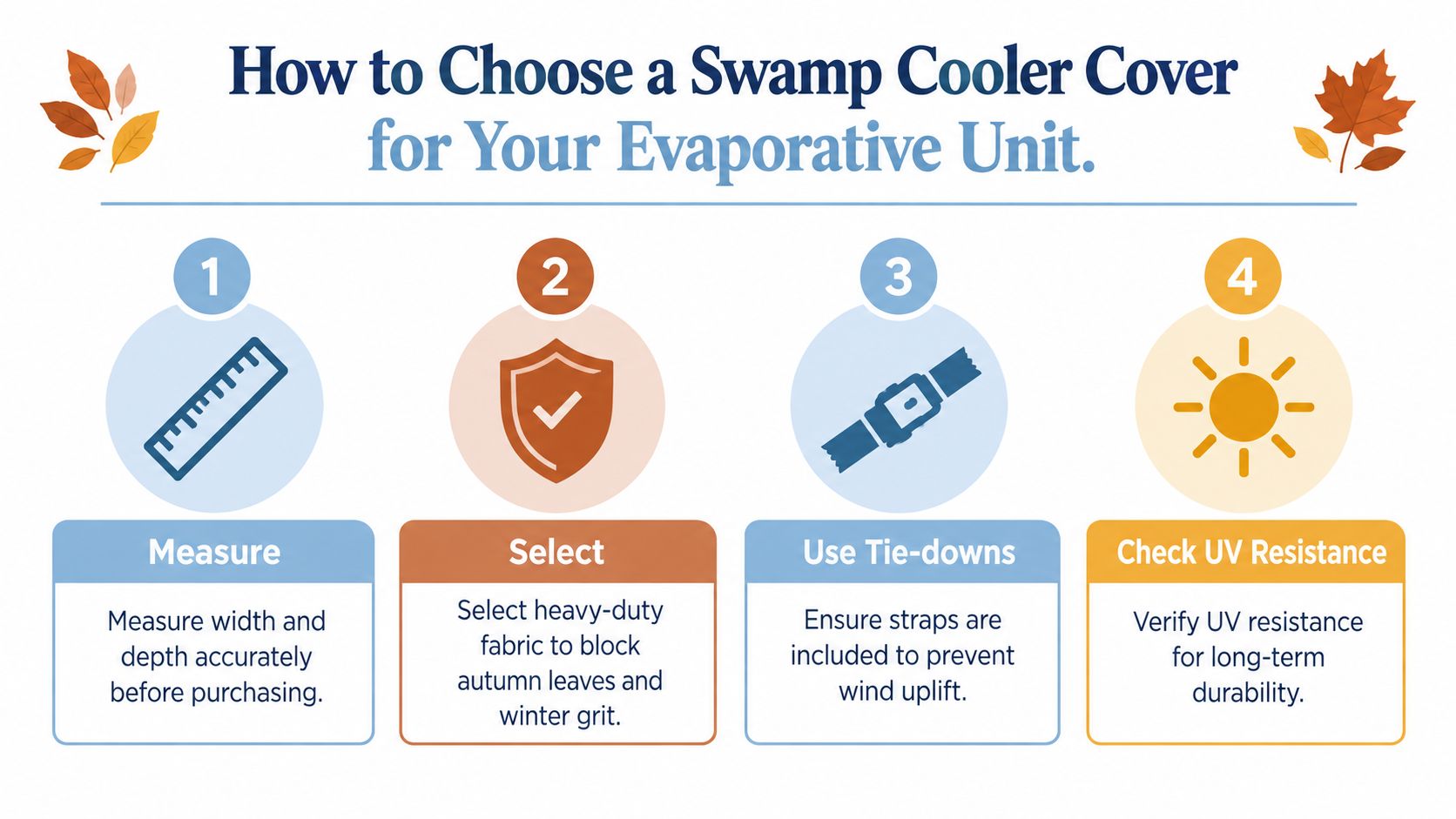
Start with the actual unit, not the old packaging
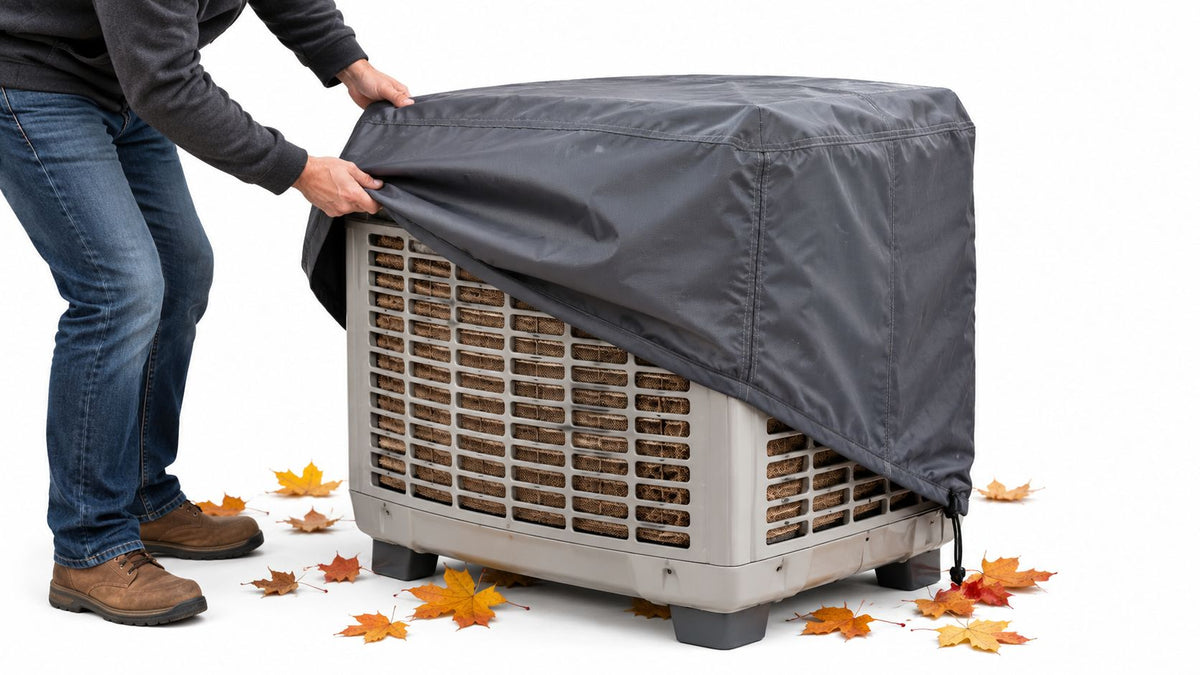
A rooftop, window, or portable evaporative cooler has hard corners, vents, and a fan housing, so the first question is whether the cover is made for that kind of boxy appliance. Generic drapes tend to sit poorly, and once wind gets under them, dust and moisture still find their way in. In Australian market listings, you'll also see model-specific formats for brands like Braemar, Coolair, and Bonaire, which is a clue that fit matters more than a one-size guess.
Practical rule: if a cover looks like a loose sheet rather than a shaped appliance cover, expect more flapping and less protection.
Check what the cover is supposed to do
For off-season use, a cover should help block leaves, dust, light rain, and vermin access, while still being easy to remove when the unit needs cleaning or restart. That means you want a cover that sits securely, doesn't sag into openings, and doesn't leave gaps around the lower edge. If the unit is only used occasionally in a mild shoulder season, a cover that's quick to pull off and refit can matter more than a bulky fully enclosed style.
Casamé Home doesn't stock evaporative cooler covers, so the right way to shop is to compare the cabinet style, the fixing method, and whether the cover is clearly sold for the exact appliance family.
Does a Swamp Cooler Cover Need to Match the Cabinet Exactly
Yes, a swamp cooler cover needs to match the cabinet closely enough to stay put and keep debris out. A cover that's too loose will flap, catch wind, and open up gaps. A cover that's too tight can stress seams and make removal awkward when you need to inspect or restart the unit.
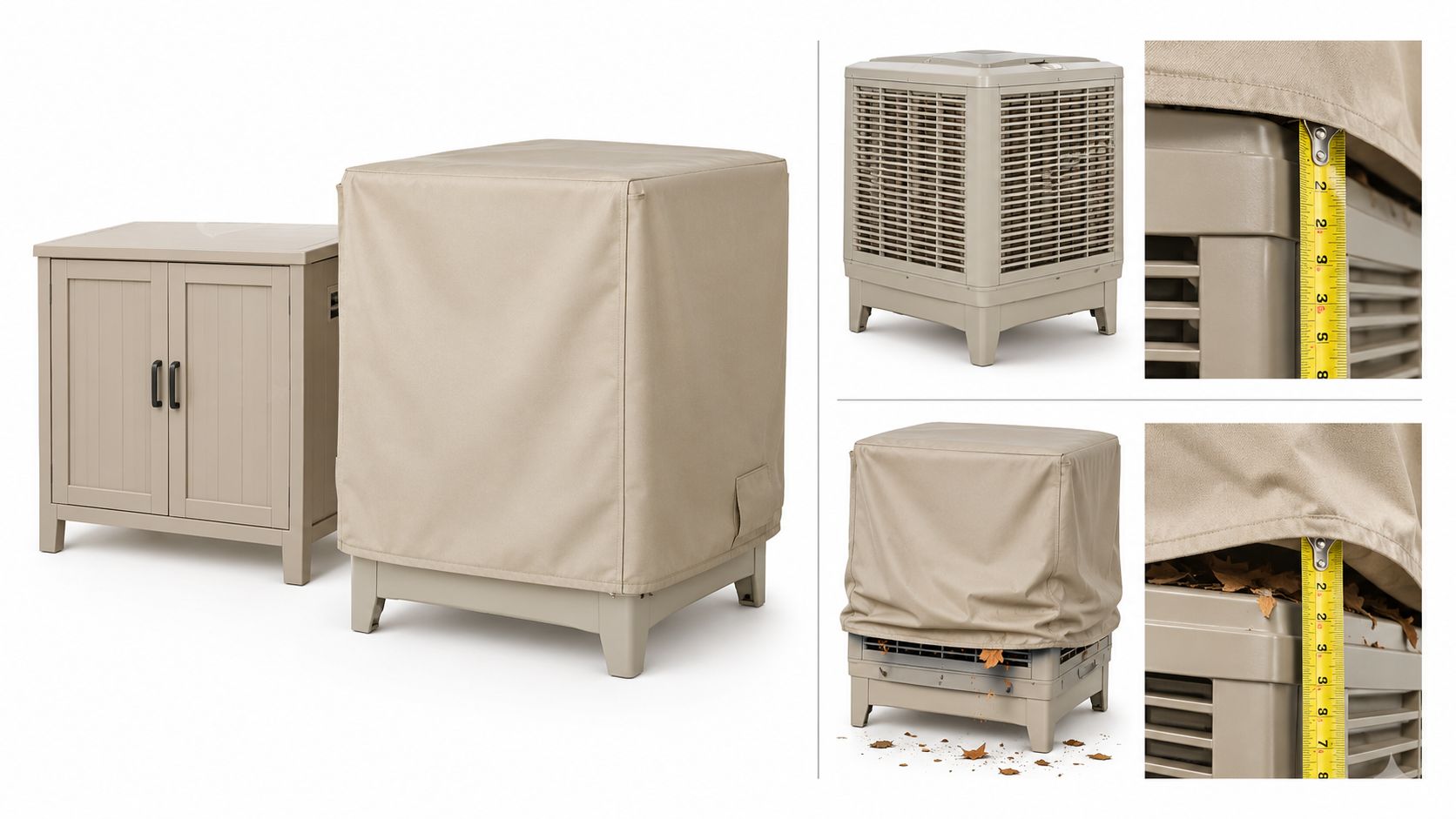
Measure the cabinet like a mechanical enclosure
Take the height, width, and depth of the outer cabinet, then check anything that sticks out, such as a fan housing, vent sections, or service access points. Don't use soft-cover logic here, because the evap is a rigid box and the fit has to clear the actual hardware. If the unit sits on a rooftop frame or against a wall, leave room for access so the cover can come off without snagging.
Choose between a fitted code and a general fit
Australian suppliers often list covers by model codes for major brands, and that's usually the safest path when the appliance has a common make. A model-specific cover is easier to trust because the cabinet shape is already known. A more general cover can work if the dimensions are clear and the fixings are strong, but it needs to be checked against the actual cabinet rather than the label on the box.
A good fit on an evaporative cooler is about clearance and grip, not just length and width.
If the measurements fall between sizes, the safer choice is usually the one that leaves a small amount of room without leaving the cover baggy. Avoid assuming a cover for one roof layout will suit another, because rooftop clearances, side vents, and service panels change how securely the cover sits.
Which Material and Cover Style Actually Work for Off-Season Use
The best material for a swamp cooler cover is the one that handles sun, wind, and debris without turning into a nuisance the moment you need to remove it. For Australian off-season use, you're balancing three things, protection, breathability, and how often you need access to the unit. A cover that looks heavy-duty but is hard to secure or remove usually becomes the wrong cover in practice.
Full enclosure, panel cover, or partial roof
A full enclosure is the most protective shape when the unit is stored through the colder months, because it gives the cabinet broad coverage. A fitted panel or partial roof can be enough when the unit still needs regular access for maintenance or short warm spells. Partial styles are easier to handle, but they rely more on good fastening and a cabinet that isn't exposed to flying debris from every direction.
What to look for in the build
Seams matter, because weak stitching is where cheap covers usually fail first. Tie-downs matter too, because a loose hem is often worse than no cover at all once wind gets under the edge. If the cover has a rigid-looking finish but no obvious fixing method, it's probably not the right pick for an exposed rooftop unit.
Material choice is mostly about exposure. In dusty inland areas, a tougher outer shell and secure straps make more sense than a soft throw-on style. In milder suburbs where the unit is tucked under eaves or behind a screen, a simpler fitted cover can be enough if it still resists movement.
For buyers comparing general fabric options, breathable construction is usually the safer long-term preference than a cover that traps damp air under it. Outdoors, the cabinet shape and the wind load matter far more than appearance.
Should a Swamp Cooler Cover Also Meet Australian Safety and Maintenance Rules
Yes, in Western Australia a swamp cooler cover can be a compliance issue, not just a seasonal convenience, for roof-mounted evaporative coolers in designated bushfire-prone residential areas. Western Australia introduced a clear requirement on 8 April 2016 for new installations in those areas, and the rule specifies non-combustible covers or butterfly closers, plus tight limits on opening size and sealing gaps. That changes the buying decision in a very practical way, because the cover has to suit both the appliance and the site conditions.
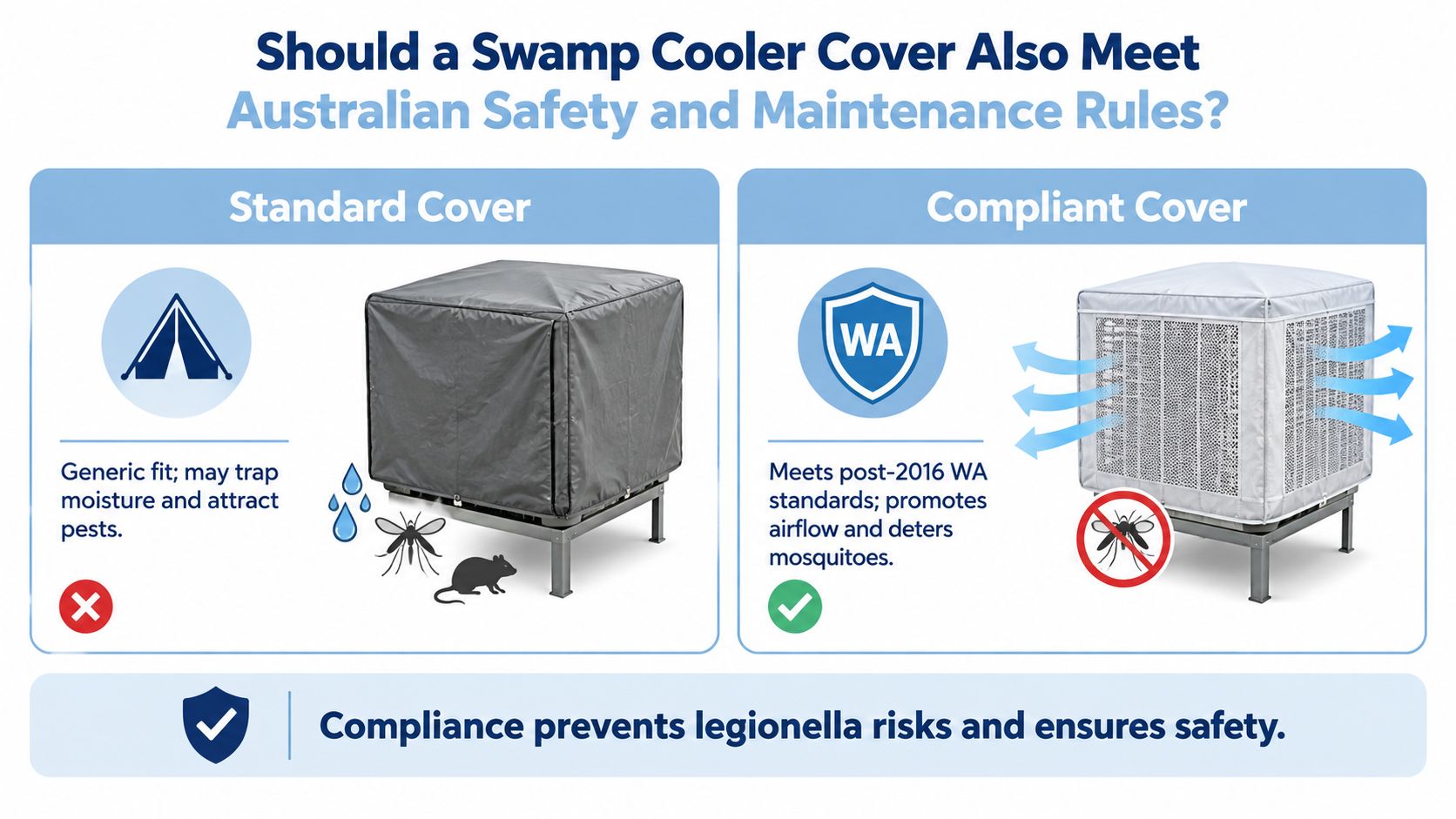
Why WA matters to cooler owners
The WA rule distinguishes between plastic and metal units, and it names corrosion-resistant steel, bronze, and aluminium as acceptable materials in the compliance context. Plastic units without a butterfly closer need to be fully encased in non-combustible covers, while metal units without a butterfly closer need ember protection screens over the air intakes. That's a very different job from a casual dust cover, and it's why owners in bushfire-prone areas need to check the setup before they buy anything.
Why maintenance timing still matters
Australian maintenance guidance usually treats covers as part of the winter shutdown routine after the unit has been drained. That makes sense because the cover is there to keep out dust, leaves, pests, and weather while the system is idle. The water-efficiency context matters too, because evaporative coolers in Australia have been estimated to use about 4 to 18 kilolitres of water per year on average, or roughly 2 to 9% of total annual household water use per the Australian technical review. That's one reason good off-season maintenance, including proper covering, belongs in the same conversation as water management.
In Australian conditions, the right cover isn't just storage gear. In the wrong district, it's part of safety compliance.
How to Install and Remove a Swamp Cooler Cover Correctly
A swamp cooler cover should go on only after the unit is clean, dry, and drained, and it should come off in a way that lets you inspect the cabinet before the cooling season starts again. The job is straightforward, but rushing it causes most of the avoidable problems, especially trapped moisture and missed pest damage.
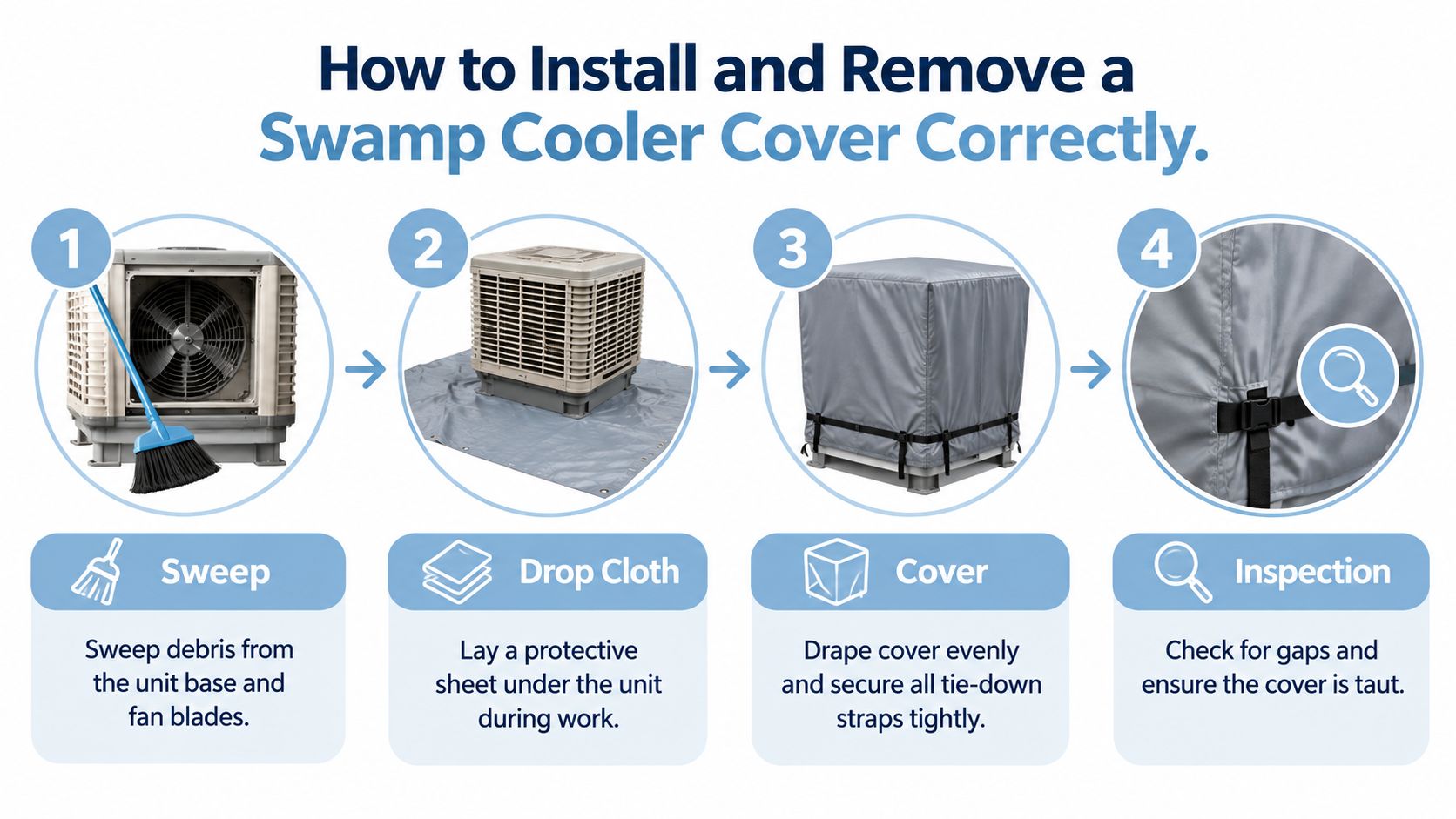
Put the unit away properly first
Clear out debris from the cabinet and the area around it, then make sure the inside is dry before the cover goes on. If the unit has standing water, don't cover over it and hope for the best. That just creates a stale, damp enclosure that's harder to restart later.
Fit the cover with the fixing points in place
Align the cover so the corners and openings line up with the cabinet, then secure every strap, tie, or closure the cover came with. If the cover has slack at the base, tighten it until the fit is snug but not strained. A loose edge is the usual reason a cover blows off or fills with wind-blown debris.
Remove it with the same care
When the cooling season returns, pull the cover off slowly and check for nesting, leaf build-up, tears, or corrosion around the cabinet edge. If the cover has been on through a damp winter, let the unit air out before you put it back into service. That's the point where you want the airflow and the access, not a cover still sitting in the way.
The basics are easy to forget: drain, dry, cover, inspect. If you keep that sequence, the cover helps rather than hinders the next season's restart.
What Else Matters for Evaporative Cooler Protection
The last thing that matters is choosing a cover that suits your actual maintenance pattern, not just your budget. A swamp cooler cover is worth buying when it protects the cabinet without making the unit harder to service. That means paying attention to fit, fastening, and whether your location needs a compliant non-combustible option rather than a casual dust sheet.
Australian buyers also run into the market reality of model-specific covers and branded fit codes. Published local pricing for branded covers tends to sit in a fairly visible retail band, and that tells you the market already expects people to buy for fit instead of improvising with a random tarp. The better question is whether you need a shaped cover, a reusable winter cover, or a simpler protection layer for a milder site.
Choose the cover that matches the cabinet, the climate, and the season, and don't skip the removal check when summer comes back. If you want practical home textiles for the rest of the house, the Casamé Home couch covers are made for furniture, not appliances.