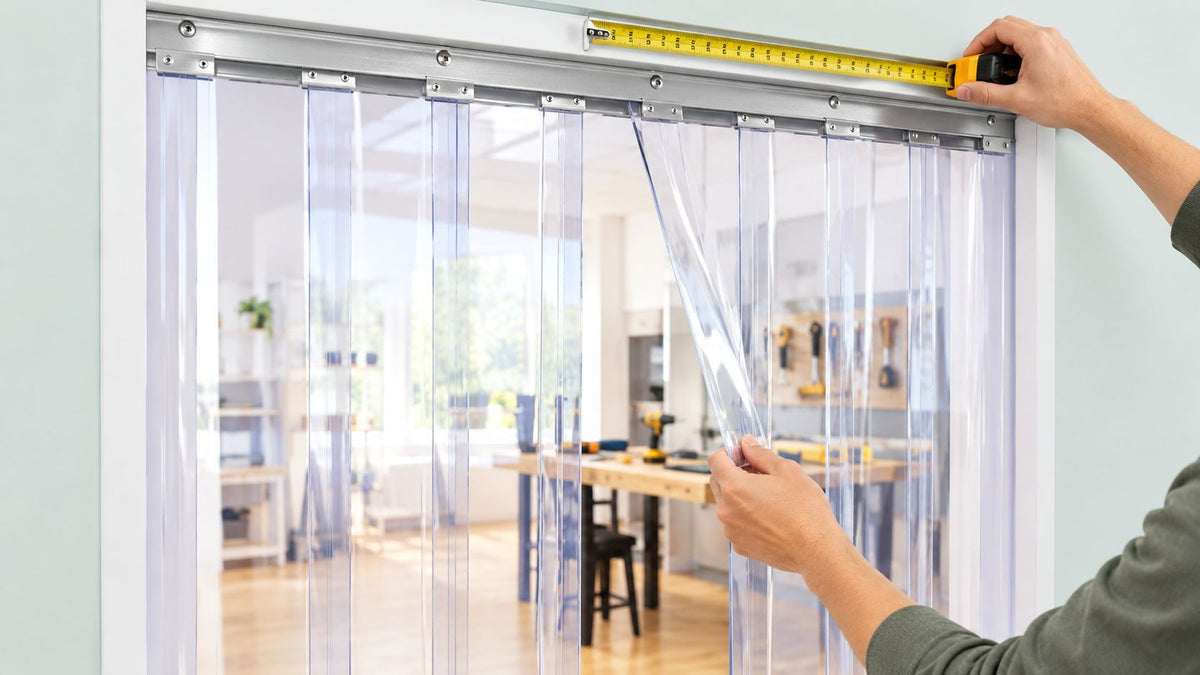
If you're standing in a garage, shed, workshop, or cool-room doorway and trying to stop dust, insects, and draughts without turning the opening into a solid wall, a plastic curtain for door can be the right tool. It works best as a flexible barrier, not as a permanent enclosure, and the details matter more than the look.
Casamé Home makes washable fabric covers for lounges, armchairs and cushions, not door curtains, so this guide is about what to look for rather than about anything we sell.
Table of Contents
- What a Plastic Curtain for Door Actually Does
- Strip Curtains or Single Plastic Sheets for Doorways
- How Thickness, Overlap and Mounting Change Performance
- How to Fit a Plastic Doorway Curtain Step by Step
- When a Plastic Door Curtain Is Not a Safe Choice
- Maintenance, Longevity and Disposal Realities
- Who Should Use a Plastic Door Curtain and Who Should Skip It
What a Plastic Curtain for Door Actually Does
A plastic curtain for door is a flexible doorway barrier that helps separate spaces while still letting people move through. In Australian use, that usually means a garage entry, shed, workshop, patio door, café back entrance, cool-room access point, or a threshold between a heated room and an unheated one.
The job is practical. A plastic doorway curtain helps slow insects, dust, odours, temperature loss, and some noise, but it does not replace a fixed wall or a compliant fire-rated door. That distinction matters because buyers often want a simple fix for comfort, not a product that promises more than it can deliver.
Australian listings show the category is built around real doorways, not décor. Product references use standard industrial sizes such as 3 m lengths, 200 mm widths, and 2 to 3 mm thicknesses, with very different price points depending on thickness, compliance, and intended use. Kits are also sold to suit common doorway sizes, which tells you the market is shaped around actual openings, not guesswork.
Practical rule: If the opening gets used every day, buy for traffic flow first and sealing second.
Strip Curtains or Single Plastic Sheets for Doorways
Strip curtains usually suit active doorways better, while single plastic sheets can make sense for low-traffic openings where you want a simpler visual barrier. The right choice comes down to how often the doorway is used, how much air exchange you can tolerate, and whether people need to walk through it repeatedly.
Australian buyers can face very different price points even when the product looks similar at first glance, including between two 3 m by 200 mm clear PVC strip curtains. That spread is a reminder that thickness, compliance, and intended use change the value proposition fast.
| Feature | Strip Curtains | Single Plastic Sheet |
|---|---|---|
| Visibility | Good, because the strips stay clear and open visually | Good when fully clear, but a larger panel can feel more obvious |
| Airflow control | Better for repeated entry and exit | Better as a simple divider, weaker for frequent passage |
| Durability | Usually stronger in busy openings when specified well | Can be adequate in light use, but often less forgiving |
| Ease of passage | Easy for people who walk through often | Can feel more intrusive if the sheet is large |
| Typical cost behaviour | Wide spread by thickness and specification | Also variable, but usually chosen for simpler needs |
For heavy doorway traffic and frequent opening, strip curtains are the safer bet. For occasional use where maximum simplicity and visibility matter more than constant passage, a single sheet can still work.
How Thickness, Overlap and Mounting Change Performance
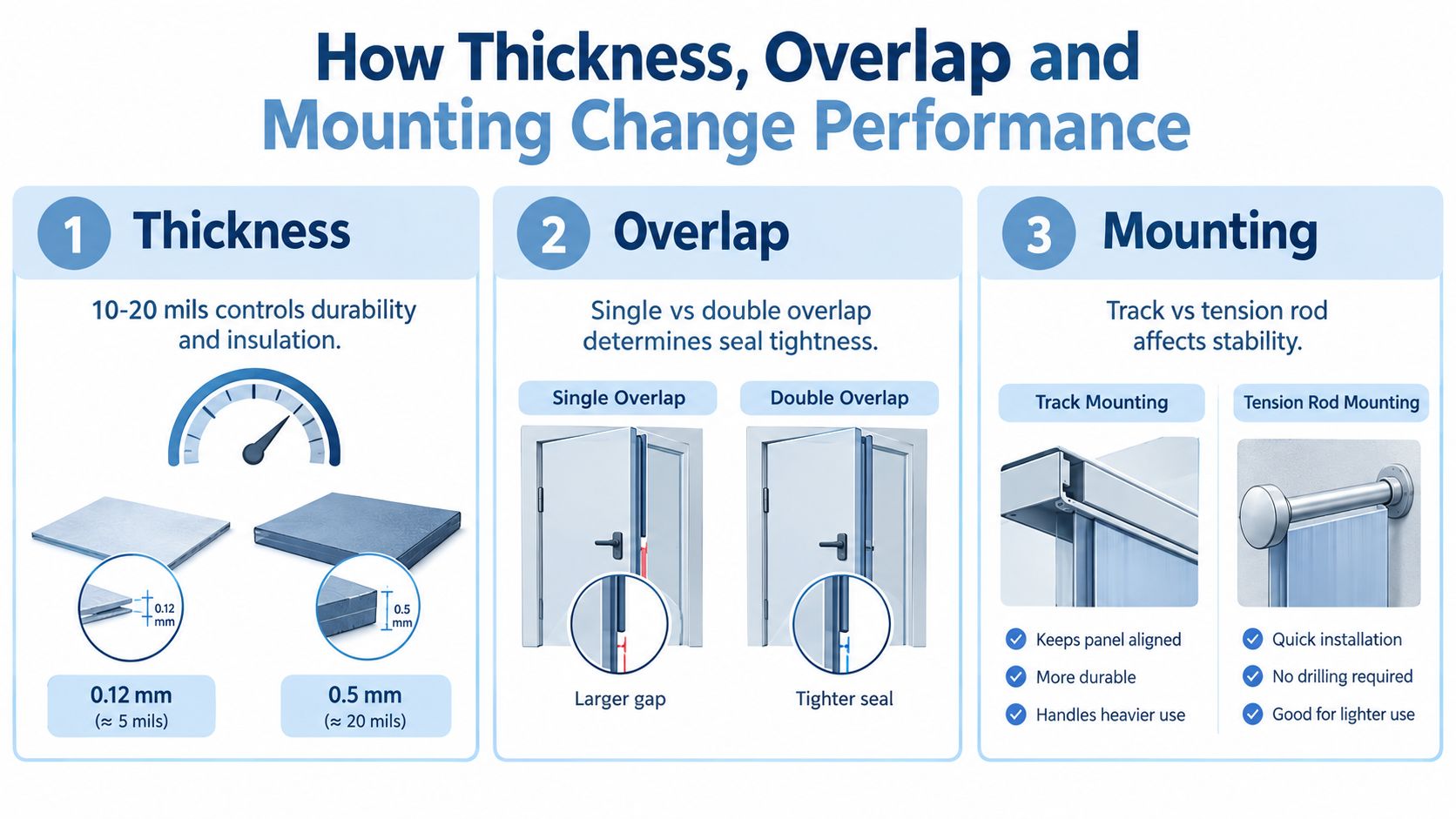
Thickness affects wear resistance, overlap affects sealing, and mounting affects whether the curtain behaves the way you expect once people start using the doorway. Those three choices do more for performance than the colour or finish ever will.
In cool-room use, PVC strip curtains are fitted to cut air movement and energy loss through an open doorway, which is why overlap and opening size can't be treated as afterthoughts. If the strips are too narrow, too light, or mounted badly, the barrier effect drops quickly.
What the specs actually mean
AU technical pages commonly show 2 mm strips for general doorway use, with 200 mm widths and about 3 m lengths, while heavier cooler and freezer systems use thicker, freezer-grade strips rated for lower temperatures. Those thicker systems are built for harder conditions, not for every household doorway.
The overlap rule is simple. A 50% overlap is the usual benchmark for normal interior doors, while 66 to 100% overlap suits freezers, outdoor entries, or windy openings with a bigger pressure difference. Insufficient overlap is one of the quickest ways to lose sealing performance.
If the curtain drags hard on the floor, it wears faster. If it hangs too high, it leaks.
Mounting choices that work
A top track or rail is the standard practical mount because it keeps the curtain controlled and lets it slide aside when needed. The bottom edge should seal close to the floor without dragging, because excess drag increases wear and makes the opening annoying to use.
A simple checklist helps before you buy:
- Match thickness to traffic: lighter use needs less bulk, while busy or colder openings need more durable strips.
- Set overlap for the environment: normal interior, freezer, or windy entry conditions all need different coverage.
- Choose a mount that suits movement: the rail has to match how people pass through the doorway.
- Check floor clearance: the curtain should seal without scraping badly across the threshold.
How to Fit a Plastic Doorway Curtain Step by Step
A good fit starts with the doorway itself. Measure the opening first, choose the mount second, and trim last. Australian product listings are usually built around standard openings, but real doorways vary enough that guesswork leads to gaps, drag, or a curtain that never sits right.
Measure at more than one point, top, middle, and bottom. Many door frames are slightly out of square, and the narrowest point usually decides whether the curtain seals cleanly or leaves a slit at one side.
A practical fitting order
- Measure width and height across the doorway at multiple points.
- Allow for overlap based on the opening and how much traffic it gets.
- Set the top rail level so the curtain hangs straight.
- Fix the strips or sheet securely so repeated use does not pull the mount out of line.
- Trim to the floor line so the bottom edge seals without bunching.
Mounting too high is a common mistake. So is choosing strips that look fine on paper but do not suit how people pass through the doorway. In homes, that usually shows up as draughts and awkward movement. In commercial cool-room settings, the same mistake wastes energy and makes the opening harder to use.
A curtain is fitted properly when it moves aside without forcing, closes back without snagging, and leaves only the opening you intended.
When a Plastic Door Curtain Is Not a Safe Choice
A plastic doorway curtain has a clear limit. If a doorway needs fire protection, certified smoke control, or compliant escape performance, use the specified door or barrier instead.
Bushfire guidance from CSIRO says plastic shutters and flyscreens should be avoided because they can melt in a bushfire and add to the hazard. The same caution applies to emergency exits, child bedrooms, and hot workshops, where convenience does not make a barrier safe.
Australian fire-door rules set a different benchmark: fire doors have to meet specific fire-resistance requirements under the National Construction Code. A plastic curtain does not do that job.
If you're dealing with a doorway that has any fire, escape, or compliance requirement, ask a qualified builder or certifier before hanging anything in it.
Maintenance, Longevity and Disposal Realities
Keep a plastic doorway curtain clean by wiping it down regularly, checking the rail or mount for wear, and replacing damaged strips before the whole opening starts to fail. Avoid abrasive tools, they scratch the surface and make the curtain go cloudy sooner.
Sun exposure, heavy traffic, and poor mounting all shorten useful life. Once the curtain stiffens, cracks, or loses clarity, it stops sealing as well and becomes less pleasant to use.
Disposal needs a clear rule. Australian soft-plastics guidance says flexible plastics that can be scrunched into a ball should be clean, empty, and completely dry before recycling, while PVC is excluded from the accepted list. That is why a PVC doorway curtain should not be assumed to belong in standard kerbside recycling, and soft plastics generally do not go in the household yellow bin. See the Australian soft plastics recycling guidance for the accepted material list.
Who Should Use a Plastic Door Curtain and Who Should Skip It
A plastic curtain for door makes sense when you want temporary or semi-permanent separation for kitchens, laundries, rentals, workshops, garages, or cool rooms, and you care more about visibility, pest control, and draught reduction than about permanent insulation. It also suits spaces where the opening is used often and you still need people to move through quickly.
It's a poor choice when the doorway has to meet fire-door rules, bushfire-safe external protection requirements, or long-term architectural sealing. In those situations, a plastic curtain is the wrong category, not just the wrong model.
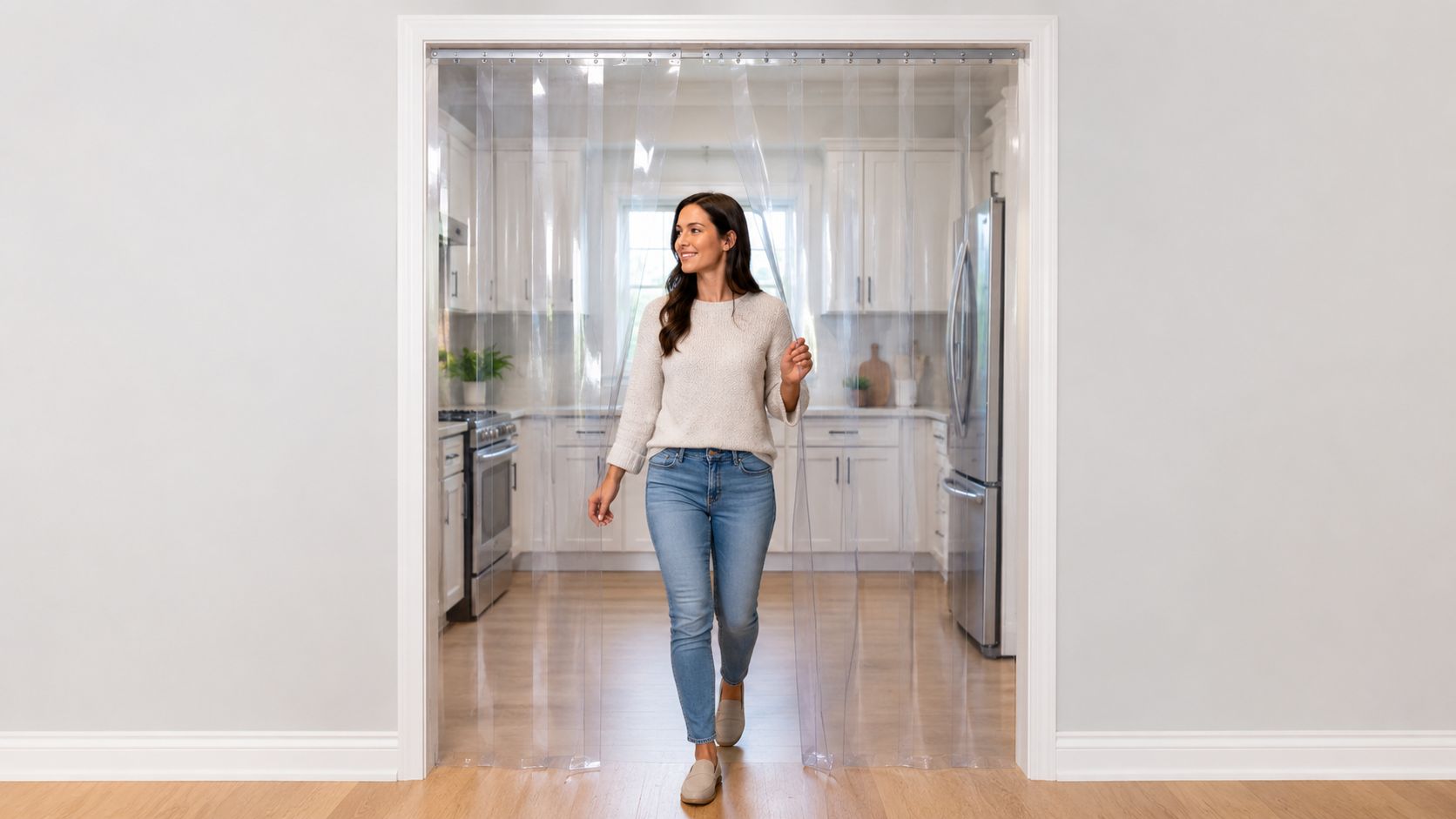
The domestic question is often simpler than the commercial one. For a normal Australian home, the decision is whether a doorway barrier is better than a flyscreen, draught sealing, or a portable partition, especially when convenience and fit matter more than warehouse-grade performance. If the opening is temporary, shared, or seasonally used, a plastic doorway curtain can be useful. If the opening needs certification, it can't do the job.
Casamé Home makes washable fabric covers for lounges, armchairs and cushions, not door curtains, so the practical takeaway here is about choosing the right doorway product, not shopping from us. If you're looking for home textiles that protect and refresh the furniture inside those rooms, browse the Couch Covers range.
Casamé Home focuses on washable, easy-care textiles for the home, not doorway curtains. If you're sorting out the room behind the doorway as well, visit Casamé Home to see covers and other practical home textile options that suit Australian living.