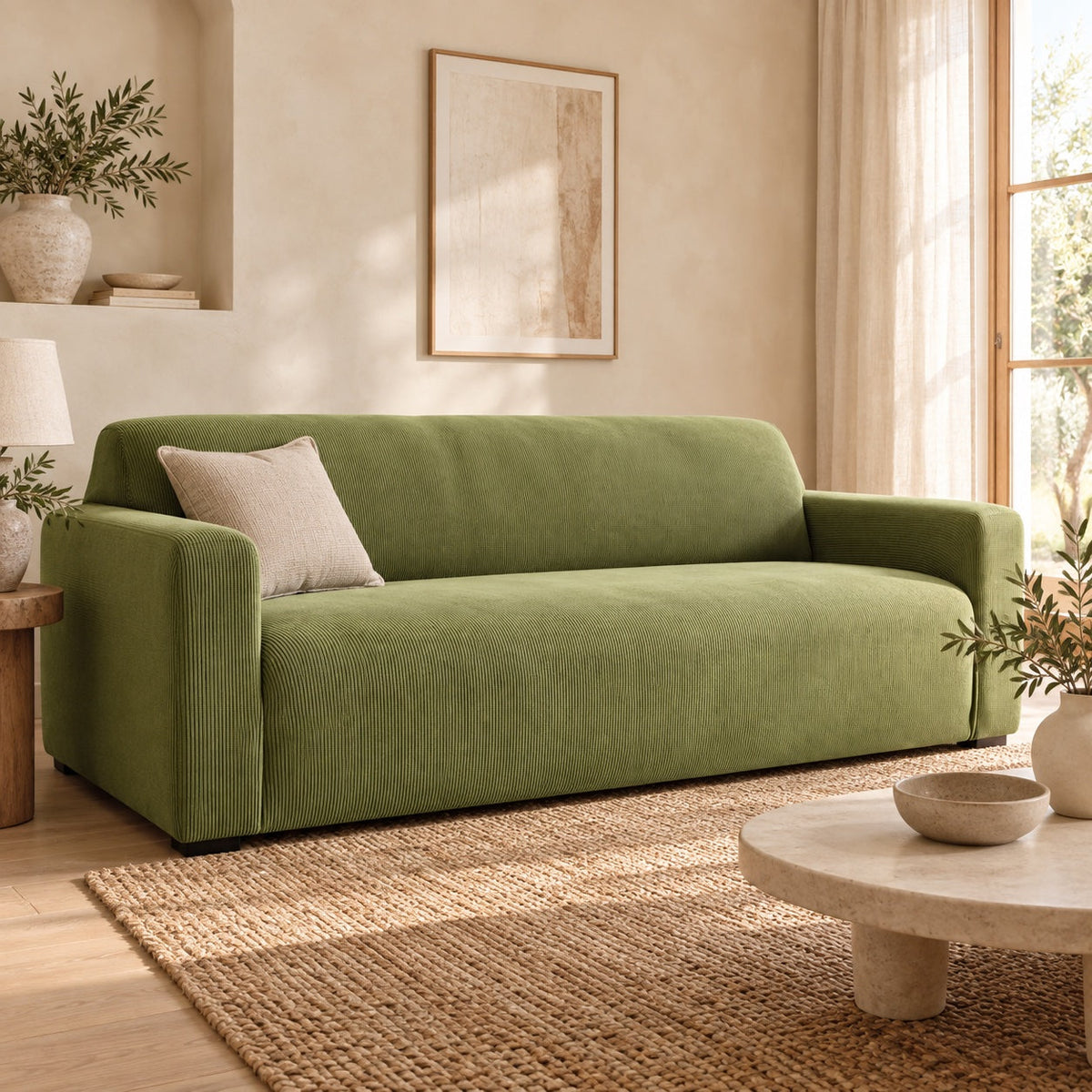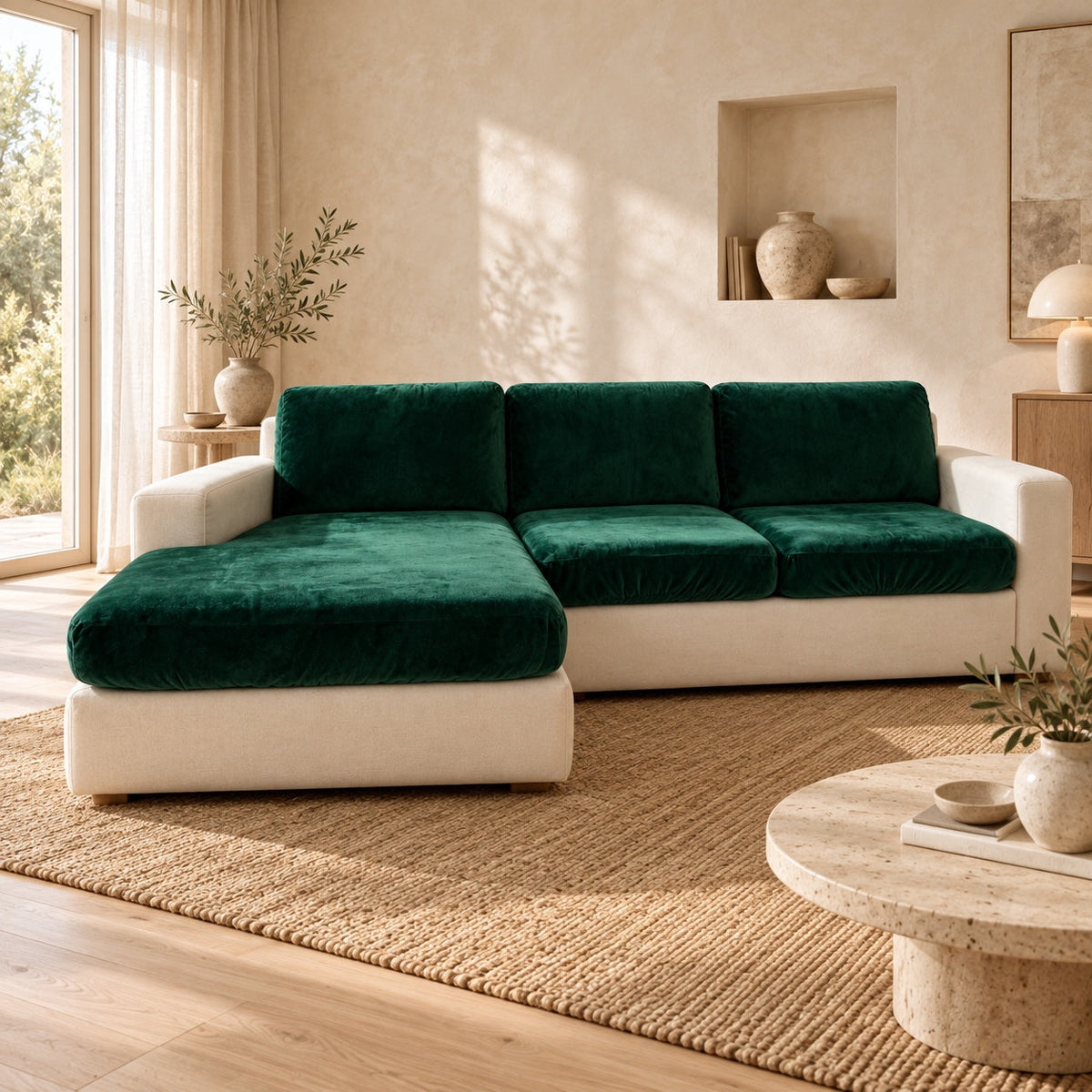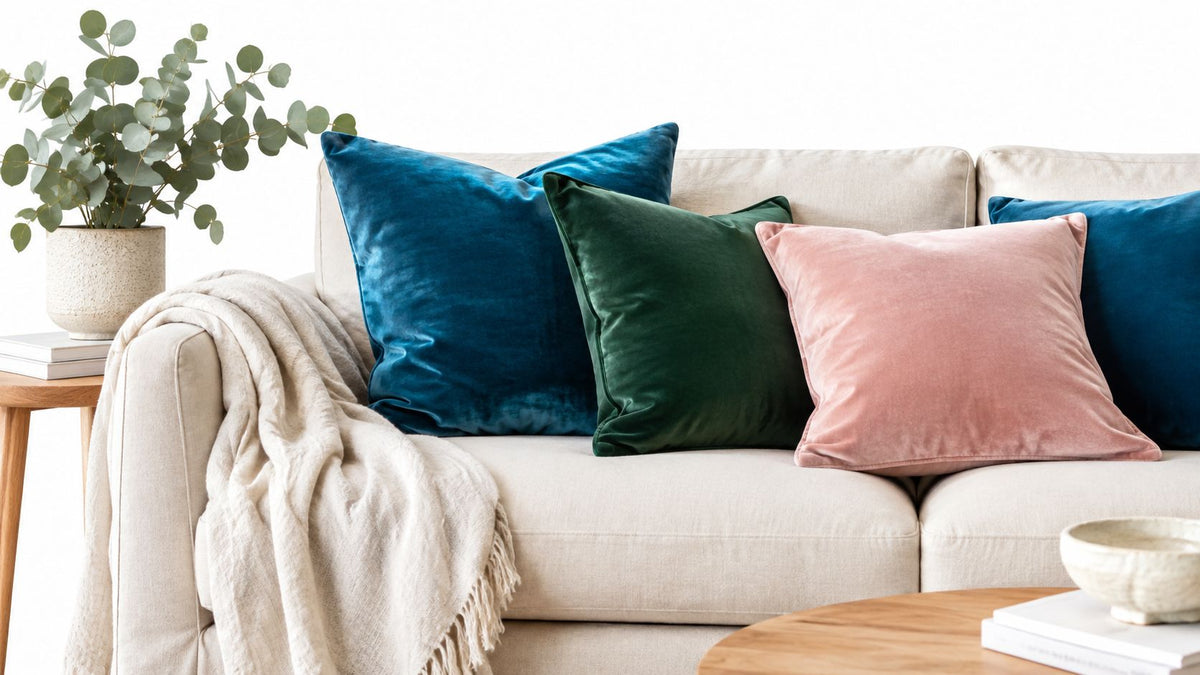
Your sofa can look tired even when the upholstery is perfectly sound. Velvet cushion covers offer a simple refresh through colour, softness and light-catching texture, without replacing the furniture. For Australian homes, the key is understanding how velvet's pile changes appearance, then choosing a shade and care routine that suit the room.
Table of Contents
- What Velvet Cushion Covers Actually Do for a Room
- How Velvet Sheen and Softness Really Work
- Which Velvet Cushion Cover Colour Fits Your Room
- Can You Restore a Patchy Velvet Cushion Cover
- Should You Choose Velvet, Stretch or Woven Cushion Covers
- How to Style Velvet Cushion Covers Across the Home
- Where to Buy and What to Check Before Ordering
What Velvet Cushion Covers Actually Do for a Room
A neutral sofa in a living room can start to feel flat after years of the same arrangement. Adding a square velvet cover to an existing scatter cushion changes the surface the eye notices first. The result isn't a structural makeover, but a more considered combination of colour, softness and sheen.
The Velvet Cushion Cover from Casamé Home is a removable velvet cover measuring 45cm x 45cm, sold as 1 piece or 2 pieces. Available colours are Light Grey, Beige, Brown, Dark Green, Grey, Lake Blue, Navy Blue, Orange and Pink. The cover goes over your own insert, so the final plumpness depends on the cushion inside, not on the cover itself.
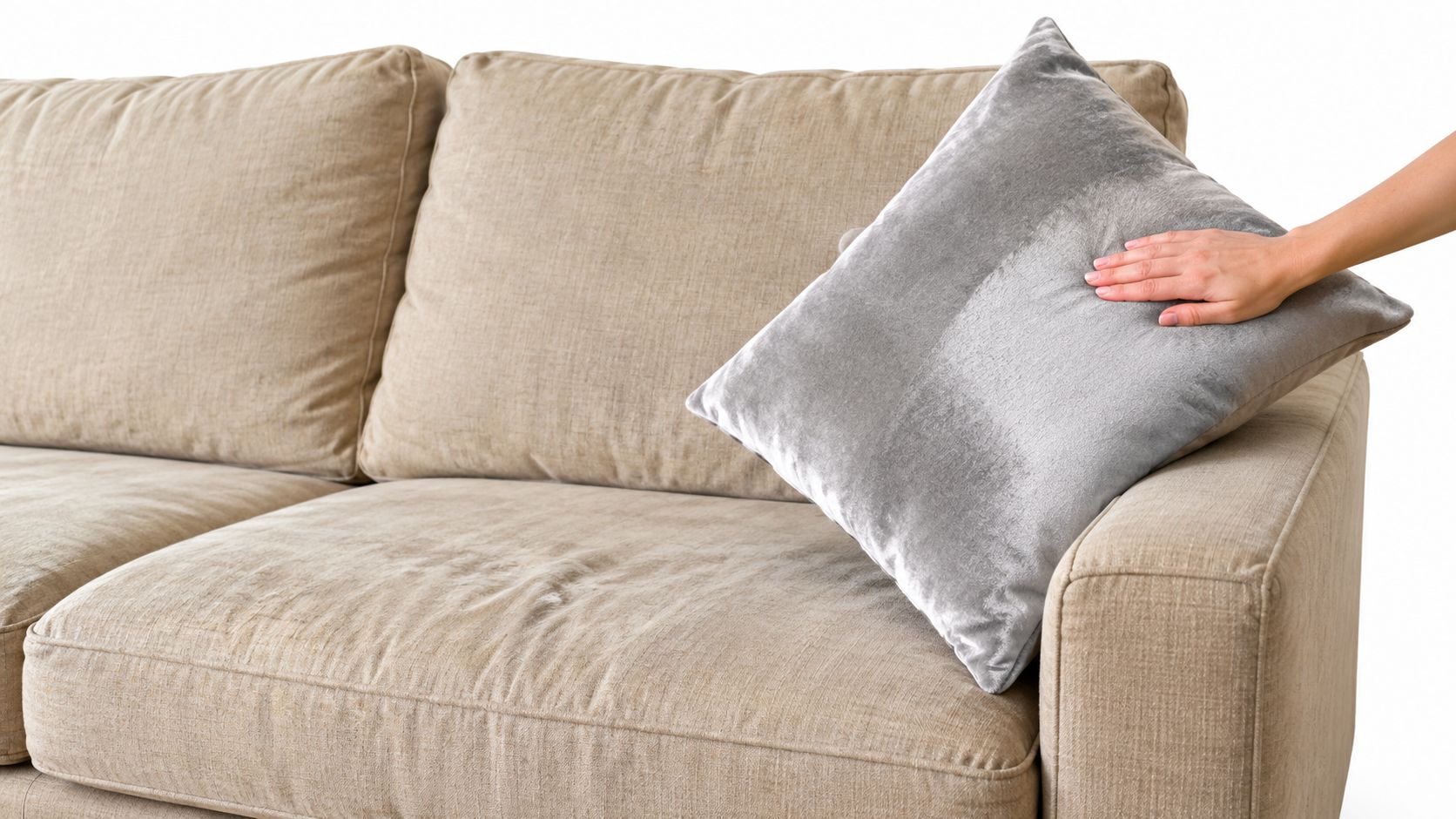
Why a removable cover can change the mood
Velvet works because it contributes two visual effects at once. Its surface feels soft when touched, while its pile reflects light differently across the cushion. A beige sofa with Light Grey or Beige covers can stay quiet and layered. The same sofa with Navy Blue, Dark Green or Lake Blue covers feels deeper and more deliberate.
A removable cover also lets you update the room without discarding the cushion insert. That matters in a country where textile waste is a substantial household issue. Clothing textiles sit on the Australian Government's product stewardship priority list. The Minister's Priority List provides useful context for choosing replaceable soft-furnishing components rather than automatically replacing complete items.
Practical rule: Treat a velvet cushion cover as a style and maintenance layer. It changes the visible surface, while your existing insert supplies the shape and fullness.
How Velvet Sheen and Softness Really Work
Velvet looks lighter or darker because of pile direction, not because the colour has changed. The pile is made from short fibres that lie in one direction. Stroke velvet with the lie and the surface appears lighter; stroke against it and the same fabric appears darker.
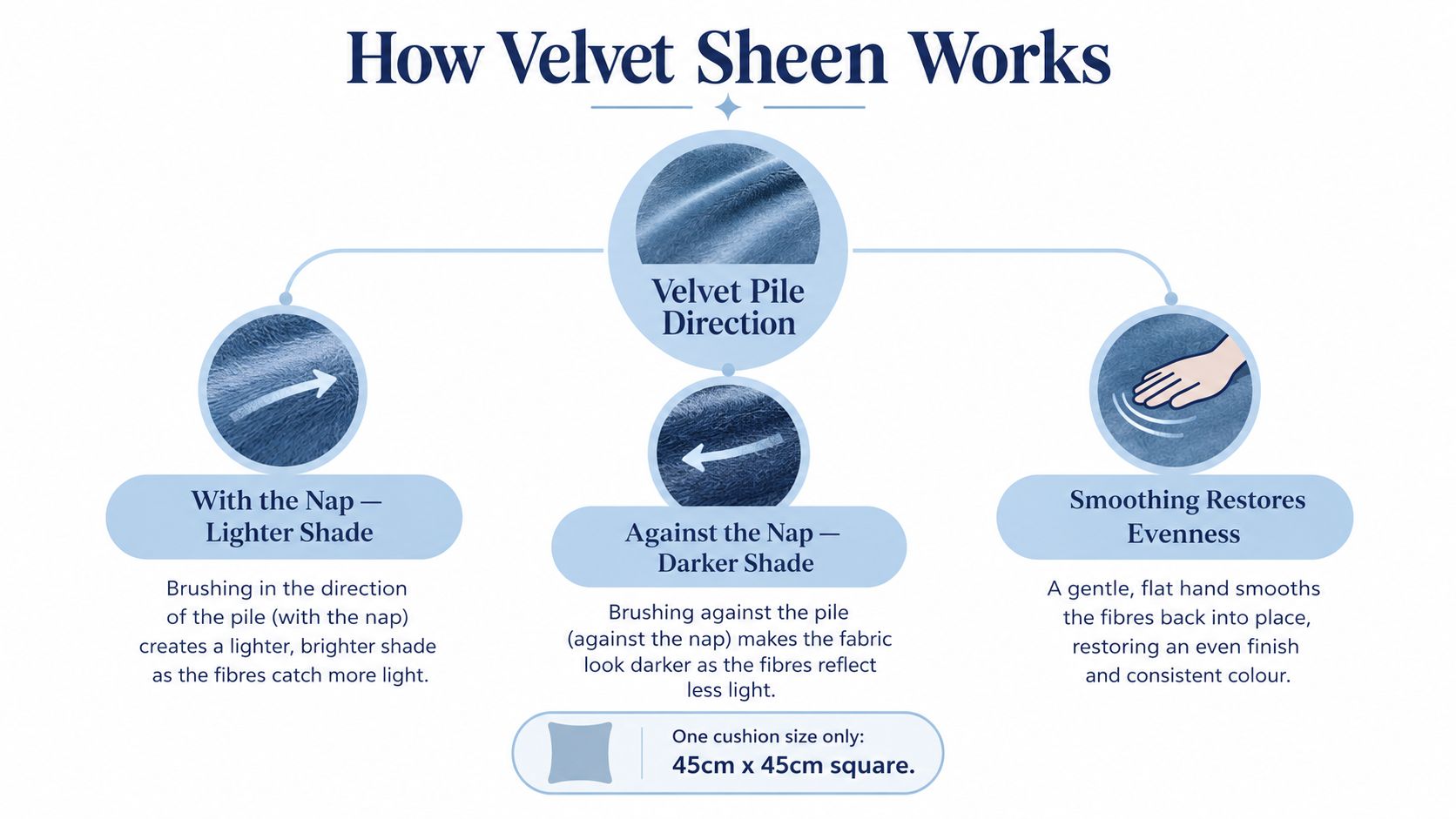
The simple mechanism explains why one cushion can look patchy after somebody leans against it. Pressure pushes sections of the pile in a different direction, creating a darker or lighter mark that can resemble a watermark. In many cases, nothing has been damaged. The fibres have only been disturbed.
A quick way to read the surface
Run a clean, flat hand gently across the cushion. If the shade changes as you move, you're seeing the nap respond to direction and light. Smooth the surface in one consistent direction and the colour usually looks more even.
Softness is part of velvet's appeal, but it shouldn't be confused with a published technical specification. Casamé Home doesn't publish a fibre composition, pile height or GSM weight for this cover, so those details shouldn't be assumed from appearance alone.
The square format also keeps the styling decision straightforward. The Velvet Cushion Cover comes in one size only, 45cm x 45cm, so the main choice is colour, quantity and how the cover will sit with the insert you already have.
Why the same colour can look different during the day
A velvet cushion can appear richer in one part of the room and softer in another because daylight and indoor lighting strike the pile from different angles. A Navy Blue cover may look almost inky in one direction and brighter in another. Dark Green can move from calm to dramatic as the surface is brushed.
This is useful when shopping online. Look at the colour name, but expect the finished cushion to have visual movement rather than a completely flat block of colour.
Which Velvet Cushion Cover Colour Fits Your Room
A velvet cushion can change the whole reading of a sofa. In an Australian home, where strong daylight can wash out some fabrics and make others glow, colour choice is not only about matching paint. It is about how velvet reflects light, how much contrast the room can carry, and whether you want the cushion to settle in subtly or act like a small accent lamp on the sofa. The available palette includes Light Grey, Beige, Brown, Dark Green, Grey, Lake Blue, Navy Blue, Orange and Pink.
| Colour | Room effect | Best matched with |
|---|---|---|
| Light Grey | Softens a room without adding strong contrast | Beige upholstery, pale timber and restrained neutrals |
| Beige | Keeps the arrangement warm and understated | Cream, tan, white and natural textures |
| Brown | Adds grounded depth | Timber, leather tones and warm neutral rooms |
| Dark Green | Creates a rich, botanical mood | Beige, cream, brass-toned accents and timber |
| Grey | Gives a cooler, tailored finish | Charcoal, white, black and blue-grey interiors |
| Lake Blue | Brings colour while staying relaxed | Beige, light grey, white and coastal-inspired rooms |
| Navy Blue | Adds contrast and visual weight | Light upholstery, timber and crisp neutral walls |
| Orange | Gives the sofa an energetic focal point | Brown, beige, cream and muted blue |
| Pink | Adds softness with a noticeable colour lift | Grey, beige, white and warm metallic details |
Start with the largest surface in the room. If your sofa already has a strong colour or texture, a quieter velvet such as Light Grey, Beige or Grey usually keeps the arrangement balanced. If the sofa and walls are fairly calm, Navy Blue, Dark Green or Orange can give the seating area more shape and weight.
Lake Blue is especially useful in rooms that feel flat but do not need a sharp pop of colour. Tommy J., who bought the Velvet Cushion Cover in Lake Blue, wrote: “The lake blue is such a lovely colour, it really brightens up the living room.” That works as a practical example of how this tone behaves. It adds freshness, but it does not shout.
At Casamé Home, over the past year the Velvet Cushion Cover is 20 percent of Pillow Cover units ordered, the most-ordered cushion cover family in the range, but popularity should not drive your choice. A better guide is the room itself. Watch how the colour sits against your sofa in morning light, then again at night under lamps. Velvet rarely reads as one flat block of colour.
For more help combining tones, see these interior colour scheme tips from Casamé Home. Start with the sofa and wall colour, then decide whether the cushion should blend in or provide the room's strongest accent.
Can You Restore a Patchy Velvet Cushion Cover
Yes, a patchy Velvet Cushion Cover can often be restored by smoothing the pile in one direction, provided the cover hasn't suffered separate damage. Pressure from leaning, rubbing or handling can push the fibres against their natural lie, making sections look darker or lighter.
The gentle restoration method
- Check the care label first. A removable cover should only be washed in the way its label permits. “Machine washable” doesn't automatically prove colourfastness or dimensional stability, so look for signs of dye transfer or distortion before treating the cover as routine laundry.
- Wash gently where permitted. Close the zip if there is one, use the gentle method the care label permits and avoid aggressive handling.
- Refit while slightly damp. After washing, refit the cover over the insert while the fabric is still slightly damp and smooth the pile in one direction, so it dries with an even nap instead of setting into crushed patches.
- Smooth the pile one way. Use a flat hand or a soft brush and work consistently in one direction. Don't scrub back and forth, because that creates more conflicting pile directions.
- Dry evenly. Keep the nap aligned as the cover dries. The insert must be completely dry before normal use, especially in humid conditions.
Never press or iron velvet. Heat and pressure can crush the pile permanently, leaving a flattened area that won't respond like a simple directional mark. For broader upholstery cleaning questions, this guide to velvet sofa cleaning offers useful context, although a removable cushion cover still needs to follow its own care label.
For a wider routine covering removable furniture textiles, keep these couch cover cleaning tips separate from decisions about pile direction. The important distinction is that the cover provides the visible velvet surface, while the insert provides fullness and must not be left damp.
Should You Choose Velvet, Stretch or Woven Cushion Covers
Choose the Velvet Cushion Cover for pile-direction sheen and a soft, richer-looking surface, the Classic Stretch Cushion Cover for stretch fabric in the 45cm range, and the Jacquard or Diamond Jacquard Cushion Covers for a woven texture.
Choose by the visual job
Velvet is the choice when you want the cushion to catch light and feel smooth against the hand. Its rich appearance comes with a specific maintenance habit, smoothing the pile after handling or washing.
Classic Stretch is the stretch-fabric option in the 45cm range. It suits shoppers who prefer a fitted stretch surface rather than velvet's directional nap.
Jacquard and Diamond Jacquard are woven cushion covers. Their interest comes from the woven pattern or texture, not from velvet's light-changing pile.
These distinctions are enough to make a practical decision without guessing at unpublished specifications. Casamé Home doesn't publish fibre composition, pile height, GSM weight or a wash temperature for the Velvet Cushion Cover, so those details shouldn't be used to rank the fabrics.
Velvet is a style decision with a care technique attached. If you like the changing sheen, smoothing the nap becomes part of keeping the cushion looking right.
Choose the fabric that matches the visual effect you want to live with. Velvet creates softness and movement. Stretch creates a fitted look. Woven designs bring pattern or surface structure without asking you to manage velvet pile direction.
How to Style Velvet Cushion Covers Across the Home
Velvet cushion covers work beyond the main sofa because the square shape suits several supportive seats and resting places. A pair on a reading chair can make a plain corner feel finished, while a single Orange or Pink cover can give a hallway bench a clear focal point.
Rooms where the texture earns its place
My favourite unexpected spot for velvet is the home office. Most offices are all hard surfaces, like desks, screens and bare walls, and they echo. Theatres hang heavy velvet curtains partly because the pile soaks up sound. A velvet cushion on the desk chair and a couple on a reading chair won't turn your office into a recording studio. But they take the hard edge off the room and make it feel less like work. Other great spots are a hallway bench, a window seat or the end of a bed. I'd skip the bathroom, though: steam and velvet pile don't get on.
Colour ideas for those spots:
- Hallway bench: Use Beige, Light Grey or Brown for a calm arrival zone.
- Window seat: Choose a colour that relates to the view or surrounding wall, while protecting the cushion from harsh direct sun.
- End of the bed: Navy Blue, Dark Green or Pink can add contrast without changing the bedding.
- Living-room sofa: Use two matching covers for symmetry, or combine nearby neutrals with one stronger accent.
For arrangement ideas that go beyond placing cushions in a row, decorative cushion arrangement tips can help you balance height, colour and texture.
For the sofa's own seat and back cushions, the Velvet Couch Cushion Cover in our couch cushion covers comes in the same nine colours, and the Velvet Couch Cover and Velvet L-Shaped Sofa Cover exist in the same colour list. That makes colour coordination possible later, but this article's focus remains on scatter cushion covers rather than whole-sofa pieces.
Where to Buy and What to Check Before Ordering
You are at checkout, the colour looks right, and then one small mismatch changes the result. With velvet, the cover size, insert fill, and pile direction matter just as much as the shade.
Start with fit. Casamé Home sells this velvet cover in one format only, 45cm x 45cm, as 1 piece or 2 pieces. If your insert is smaller, the cover can look slack. A 45cm insert in the 45cm cover fits, but it sits flat; go one size up on the insert and it fills every corner. Casamé Home also does not offer oblong, lumbar, bolster or round velvet cushion covers in this range.
A quick pre-order check helps:
- Measure the insert: Always measure flat, seam to seam, and compare it with the 45cm x 45cm square cover.
- Choose the room effect: Light Grey or Beige keep things quiet. Dark Green or Navy Blue add depth. Lake Blue, Orange or Pink bring more colour into view.
- Plan the fullness: The cover is sold without an insert, so the finished shape depends on the cushion you already own.
- Check the surface behaviour: Velvet changes appearance when the pile is brushed in different directions. After use, you may need to smooth the nap by hand so the colour reads evenly.
- Buy the right quantity: One cover works as an accent. Two can create a balanced pair on a sofa, bed or bench.
Care details deserve the same attention as colour. Follow the label instead of guessing a wash method, and check return terms and delivery details before you place the order. That matters with velvet because a shade can read cooler, darker or more reflective at home depending on daylight and the direction of the pile.
If you are pairing this purchase with other soft furnishings, throw blankets are the other easy layer for colour pairing on a sofa.
For a living room update, keep the next step simple. Browse cushion covers for home refresh, confirm the size before checkout, and choose a colour that will still look intentional after the velvet is brushed and used in everyday Australian light.