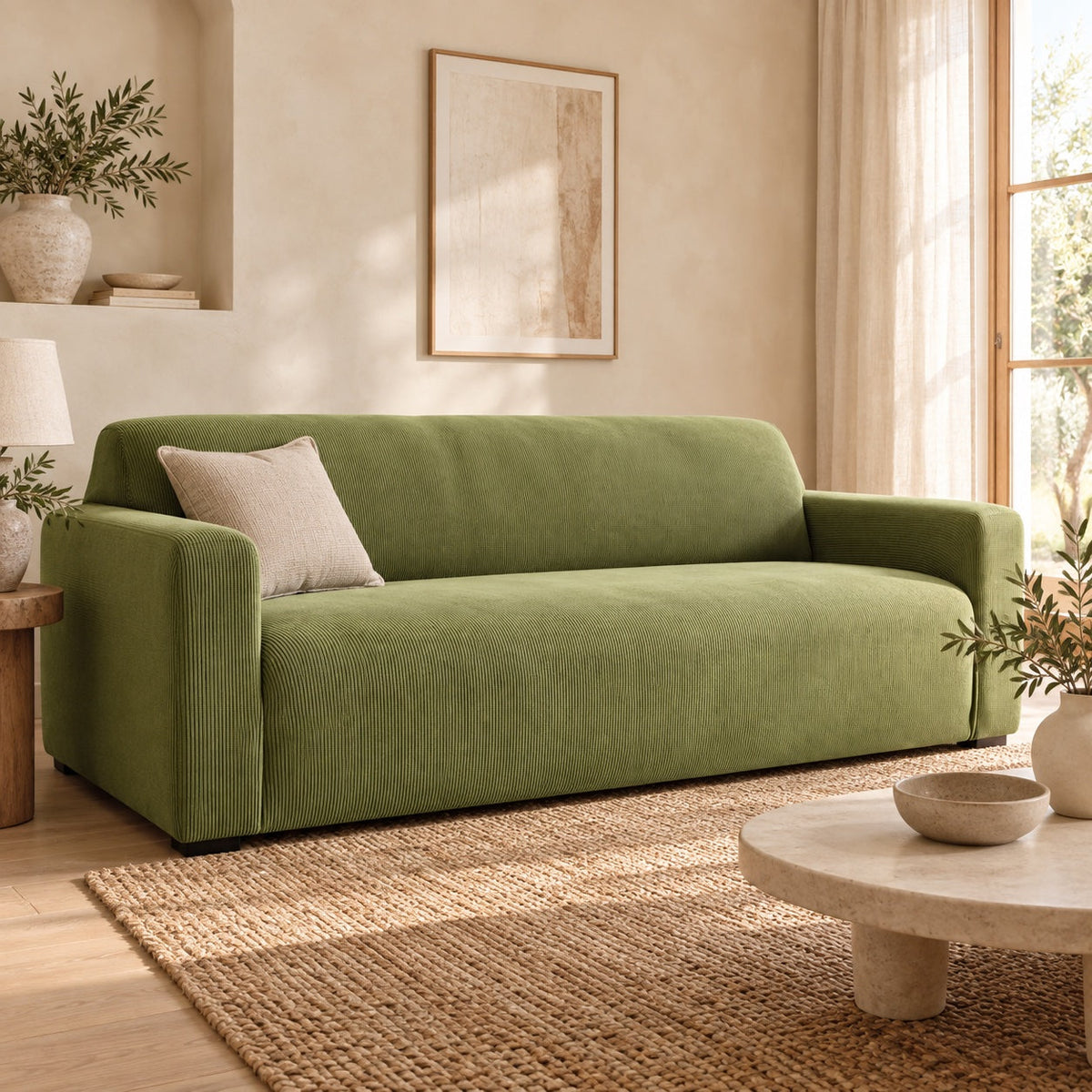
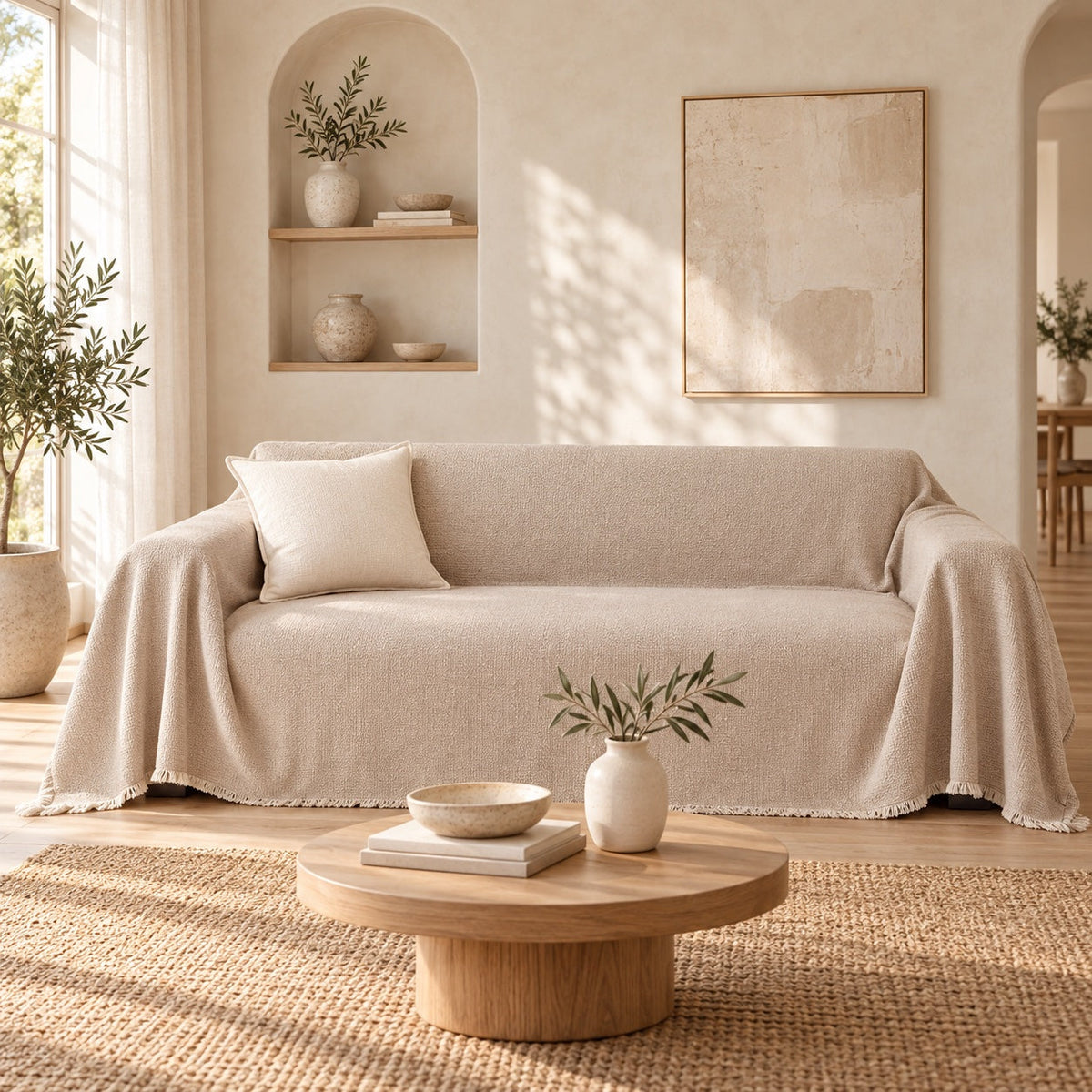
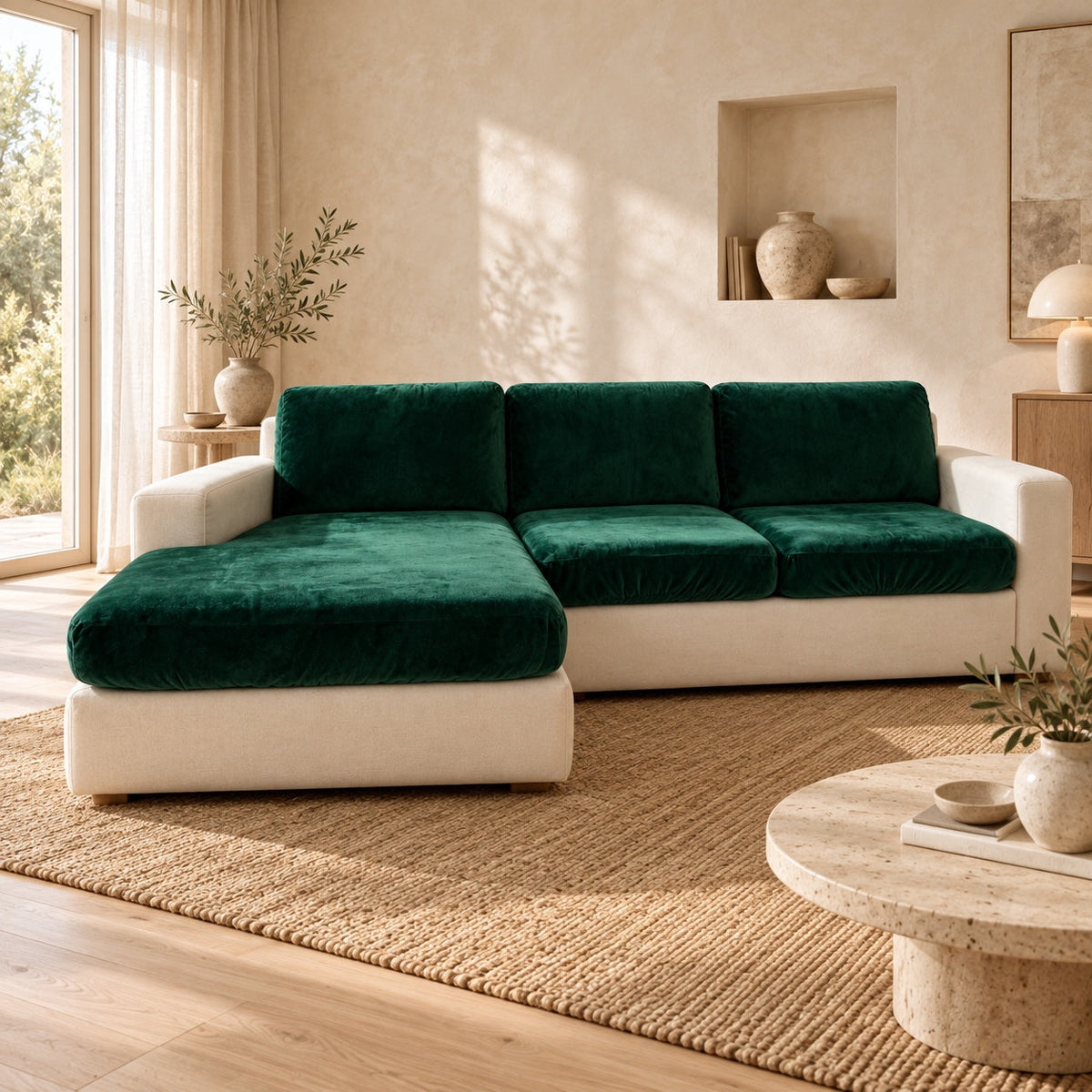
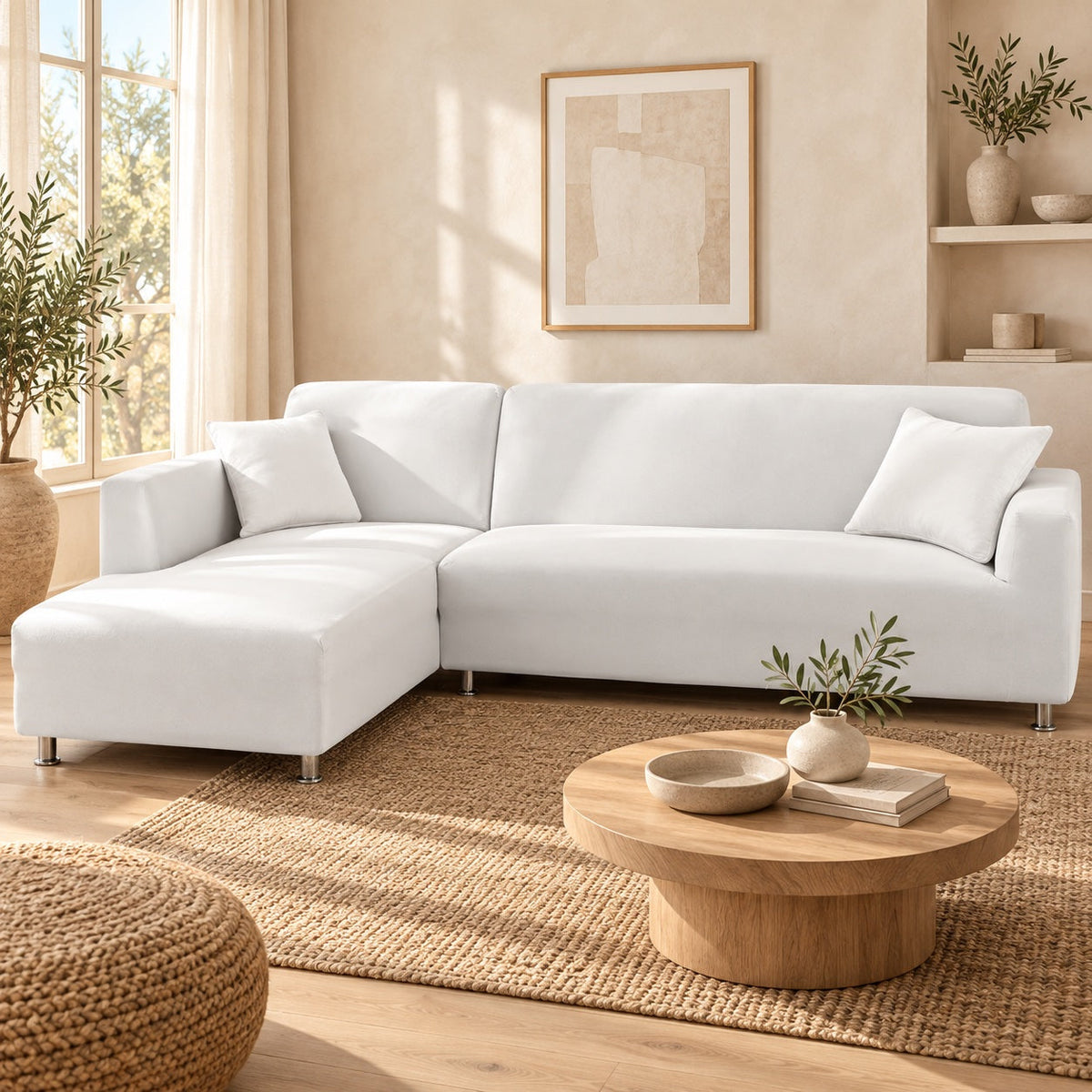
First things first, let's get one common mix-up out of the way. Jacquard isn't a type of material or fibre. It’s a way of weaving a pattern directly into the structure of the fabric.
Key Takeaways Jacquard Fabric
A Weave, Not a Fibre: Jacquard is a weaving method that builds the pattern into the fabric.
Woven, Not Printed: The pattern won't fade or peel like a printed design.
Great for Sofa Covers: Its texture hides wear, and spandex blends add a snug fit.
Table of Contents
- How We Evaluated Jacquard Fabric for Home Use
- The Enduring Appeal of Woven Patterns
- Why It Matters For Your Home
- The Weaving Magic Behind Jacquard Fabric
- The Original Coded System
- Why This Weaving Method Matters
- Jacquard Compared To Other Patterned Fabrics
- Woven-In vs Printed-On Designs
- Comparing Common Patterned Fabrics
- Woven vs Printed A Guide to Patterned Fabrics
- What Is Jacquard Fabric Made Of?
- Choosing The Right Jacquard For Your Home
- How Fibre Changes Performance
- Common Compositions for Home Textiles
- Jacquard Material Means Construction, Not One Recipe
- Why Jacquard Is Perfect For Your Sofa Cover
- Where Jacquard Performs Best
- Tradeoffs to Know Before You Buy
- Is Jacquard Thick or Thin?
- Sofa Covers Are One Strong Use Case
- How To Care For Your Jacquard Sofa Cover
- Care by Fabric Type
- When Machine Washing Makes Sense
- Heat, Drying, and Texture Preservation
- Troubleshooting Common Problems
- Still Have a Few Questions About Jacquard?
- Is Jacquard a Good Choice if I Have Pets?
- Does Jacquard Fabric Wrinkle Easily?
- How Do You Stop Jacquard Fabric From Pilling?
Think of it this way: the design isn't just stamped or printed on top. Instead, it's intricately built, thread by thread, using a special loom. This means the pattern has a beautiful depth and texture you can feel, and because it’s part of the fabric itself, it will never, ever fade away.
How We Evaluated Jacquard Fabric for Home Use
This article looks at jacquard the way homeowners use it: on sofas, cushions, curtains, throws, and other touchpoints that get handled, washed, and lived with. We focused on six factors that matter most in real interiors: fibre content, weave density, surface texture, washability, abrasion resistance, and—where stretch covers are involved—recovery after being pulled over furniture.
We also separate construction from composition. That matters because jacquard can be made from cotton, polyester, silk, viscose, wool, or blends, and the fibre changes how the fabric feels and performs even when the weaving method stays the same. In my experience, that distinction clears up most of the confusion people have when they hear jacquard described as both a weave and a material.
For home use, we rate jacquard more highly when the pattern stays legible after repeated use, the surface does not flatten too quickly, and the fabric suits its job: structured upholstery and sofa covers need different qualities than lightweight curtains or decorative cushions. A jacquard that looks gorgeous in a formal drape can still be the wrong pick for a pet-heavy family sofa.
The Enduring Appeal of Woven Patterns
Jacquard is a weaving method, not a fibre. When people talk about jacquard fabric, they mean a textile whose pattern is woven into the cloth itself rather than printed or coated on top. That is the shortest, most useful answer to what jacquard is: it is fabric made on a loom that can control individual threads to build complex motifs directly into the structure.
That is also why jacquard is often called a material. In everyday use, “jacquard material” usually means any patterned woven textile made with this construction, whether it is cotton-rich, polyester-heavy, silky, stretchy, heavy, or lightweight. The name refers to how the fabric is made, not to one fixed recipe.
A cited historical note helps explain why the term stuck. Jacquard is named after Joseph-Marie Jacquard, whose loom used punched cards beginning in 1804 to control individual warp threads, a major shift that made complex woven patterns far more efficient to produce, as outlined in this Joseph-Marie Jacquard overview. A related jacquard fabric history reference also traces this development and the broader impact of the Jacquard loom on textile production.
In practical terms, jacquard sits apart from several lookalike categories. Plain weave refers to a simple over-under structure, not a decorative system for intricate motifs. Printed fabric gets its design after weaving, so the image sits on the surface instead of being built into the cloth. Damask is a specific kind of jacquard, usually reversible and often tone-on-tone. Brocade is also jacquard-based, but it is typically more raised, ornate, and sometimes more prone to snagging because of its decorative floats.
I notice the difference most clearly in upholstery: woven texture catches light unevenly and gives a sofa more visual depth through the day, while printed upholstery often reads flatter from a few steps back. That does not automatically make jacquard better for everything, but it is a big reason it feels more substantial in living rooms.
Why It Matters For Your Home
The appeal is not just decorative. Because the motif is formed within the weave, jacquard can combine pattern, texture, and durability in a way surface printing often cannot. A textile industry guide notes that jacquard designs are formed through the interlacing of warp and weft rather than being added afterward, which is why the pattern tends to hold up better against surface wear in many home-textile applications; see this jacquard weaving guide.
- Longevity: The motif is part of the cloth, so normal friction does not remove it the way repeated rubbing can dull a print.
- Texture: Raised or recessed patterning adds a tactile layer that makes furniture, drapery, and cushions feel less flat.
- Versatility: The same weaving principle works across natural fibres, synthetics, and blends, so jacquard can range from airy to dense depending on the intended use.
For home interiors, that mix of structure and decoration is a key advantage. I would choose jacquard when I want pattern with staying power, especially on pieces that get touched constantly rather than just admired from across the room.
The Weaving Magic Behind Jacquard Fabric
To really get what makes jacquard fabric so special, we need to look past the finished product and dive into the fascinating way it's made. At its heart, all weaving is about interlocking two sets of threads: the lengthwise warp threads and the crosswise weft threads. On a basic loom, those warp threads are lifted in big, uniform groups to create simple patterns like a plain weave or a twill.
But the Jacquard loom is playing a whole different game. Its genius was the ability to control each individual warp thread independently. This unlocked a level of artistic freedom and pattern complexity that was completely impossible to achieve through weaving alone. It’s the difference between painting a wall with a wide roller and creating a detailed portrait with a fine-tipped brush.
The Original Coded System
Think of an old player piano. A roll of paper with holes punched in it tells the piano exactly which keys to play, creating a complex melody. The original Jacquard loom, invented way back in 1804 by Joseph Marie Jacquard, used a similar system with a series of punched cards. Each card corresponded to a single row of the design, telling the loom precisely which warp threads to lift.
This meant that for the first time, weavers could create detailed patterns without needing a highly skilled assistant there to manually lift thousands of threads.
The Jacquard loom is often considered a foundational step in the history of computing. Its use of punched cards to store and run a set of instructions—in this case, a fabric pattern—is a direct precursor to early computer programming.
Today, those physical cards have been swapped for digital computer files, but the fundamental principle is exactly the same. A computer now instructs the loom, allowing for even faster production and virtually limitless design possibilities.
This simplified process shows how a digital pattern gets translated into a finished jacquard fabric.
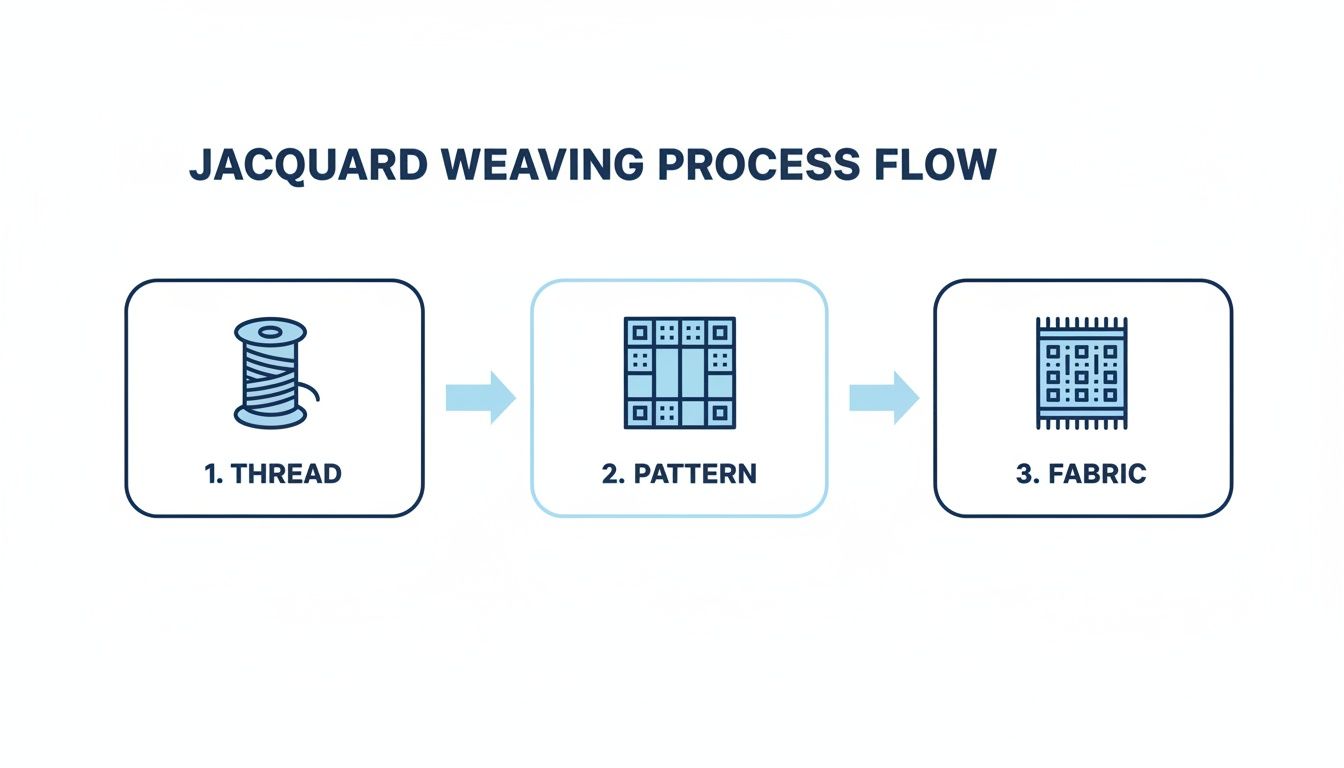
This digital control is what allows weavers to create everything from intricate florals to bold geometric patterns directly within the fabric's structure.
Why This Weaving Method Matters
This ability to control every single thread is what sets jacquard apart, making it an ideal choice for high-quality home textiles, especially sofa slipcovers.
- Unmatched Detail: It can produce patterns with a level of intricacy that simpler looms just can't replicate.
- Structural Integrity: The pattern isn't just an afterthought printed on top; it’s woven right into the fabric’s construction. This means it won't fade, peel, or rub off over time.
- Textural Depth: By lifting specific threads, the loom creates a raised, tactile pattern that adds richness and dimension to the final product. You can feel the design.
This clever weaving technique is why a jacquard slipcover can so effectively transform a piece of furniture, offering an elegant look combined with the durability needed for everyday life in a busy Australian home.
Jacquard Compared To Other Patterned Fabrics
Walking through a fabric shop or scrolling for sofa covers online can feel a bit overwhelming. You’re surrounded by beautiful patterns, but it’s not always obvious how they were created. Understanding the difference between a woven-in jacquard design and a surface-level printed pattern matters, because it can affect durability, texture, and whether you're making a smart long-term investment.
The difference comes down to how the pattern becomes part of the fabric. With jacquard, the design takes shape during the weaving process through the interplay of thousands of threads. This is a world away from printed fabrics, where colour is applied to the surface of an already-made piece of cloth.
Think of it like this: jacquard is a mosaic made from coloured tiles, while a printed fabric is a painting on a canvas. One is built from the ground up, the other is an addition on top.
Woven-In vs Printed-On Designs
A printed pattern sits on the surface of the fabric. While it can be vibrant and full of detail, it’s also the first thing to show wear and tear. Over time, especially on high-traffic spots like sofa cushions, a printed design can crack, fade in the wash, or even start to peel away. The pattern’s lifespan is completely separate from the fabric itself.
On the other hand, a jacquard pattern is part of the fabric’s DNA. It’s not something that’s been added; it’s woven right into its very structure. This means the pattern will last as long as the fabric itself, which is exactly what you want for furniture that gets used every single day. You also get a rich, textured feel that printed fabrics just can’t replicate.
The real benefit of a jacquard weave is its structural integrity. The pattern doesn’t just sit on the surface; it is the surface. This inherent durability is why it’s a premier choice for upholstery and high-use items like sofa slipcovers.
Comparing Common Patterned Fabrics
To make the differences clearer, let’s see how jacquard stacks up against some of the other popular patterned fabrics you might come across when looking for a new style for your living room.
Woven vs Printed A Guide to Patterned Fabrics
This table compares jacquard with other common patterned fabrics to help you understand their key differences in construction, durability, and appearance.
| Fabric Type | Pattern Method | Texture | Durability | Best For |
|---|---|---|---|---|
| Jacquard | Woven directly into the fabric using a special loom | Textured, raised pattern with depth | Excellent. Pattern won't fade or rub off. | Durable sofa covers, upholstery, throws, and curtains. |
| Printed Fabric | Ink or dye applied to the fabric surface | Smooth and flat to the touch | Moderate. Can fade, crack, or peel with wear and washing. | Decorative cushions, lightweight curtains, and fashion items. |
| Damask | A type of reversible jacquard weave, often tone-on-tone | Subtle, flat pattern with a slight sheen | Very Good. Similar durability to other jacquards. | Formal tablecloths, drapery, and elegant upholstery. |
| Brocade | A non-reversible jacquard weave with a raised, embroidered look | Highly textured, often with metallic threads | Good. Can be prone to snagging due to raised threads. | Ornate upholstery, decorative pieces, and formal wear. |
If you want a broader tactile overview of patterned interior textiles beyond this comparison, this short guide from Pandemonium Millinery is a useful companion read.
Knowing these differences helps you make a more informed choice. For a sofa cover that has to put up with kids, pets, and constant use in an Australian home, the built-in resilience of what is jacquard fabric makes it a clear winner. The woven-in pattern helps your investment look fantastic for years, not just for a season.
What Is Jacquard Fabric Made Of?
Jacquard fabric can be made from cotton, polyester, silk, rayon or viscose, wool, and many blends of those fibres. That range is the key point: jacquard is not one composition. It is a construction method applied to different yarns depending on whether the fabric is meant for upholstery, drapery, bedding, apparel, or stretch covers.
When people ask what jacquard fabric is made of, the most accurate answer is “it depends on the intended use.” Upholstery jacquards often lean toward polyester or polyester blends for durability and easier care. Decorative jacquards may use cotton, viscose, or silk for a softer hand and richer drape. Stretch-fit sofa covers often combine polyester with spandex so the cover can grip corners and recover its shape after washing.
A useful technical reference from the Textile Exchange materials library supports the broad property differences among fibres commonly used in home textiles: cotton is breathable and absorbent, polyester is strong and dimensionally stable, wool insulates well, and regenerated cellulosics such as viscose are known for softness and drape but may require more careful maintenance.
Choosing The Right Jacquard For Your Home
Choosing jacquard starts with fibre, because fibre determines how the woven pattern behaves in daily use. The same motif can feel airy, crisp, silky, springy, or dense depending on the yarns used to build it. For home décor, that affects breathability, sheen, wrinkle resistance, washability, and how well the fabric stands up to friction.
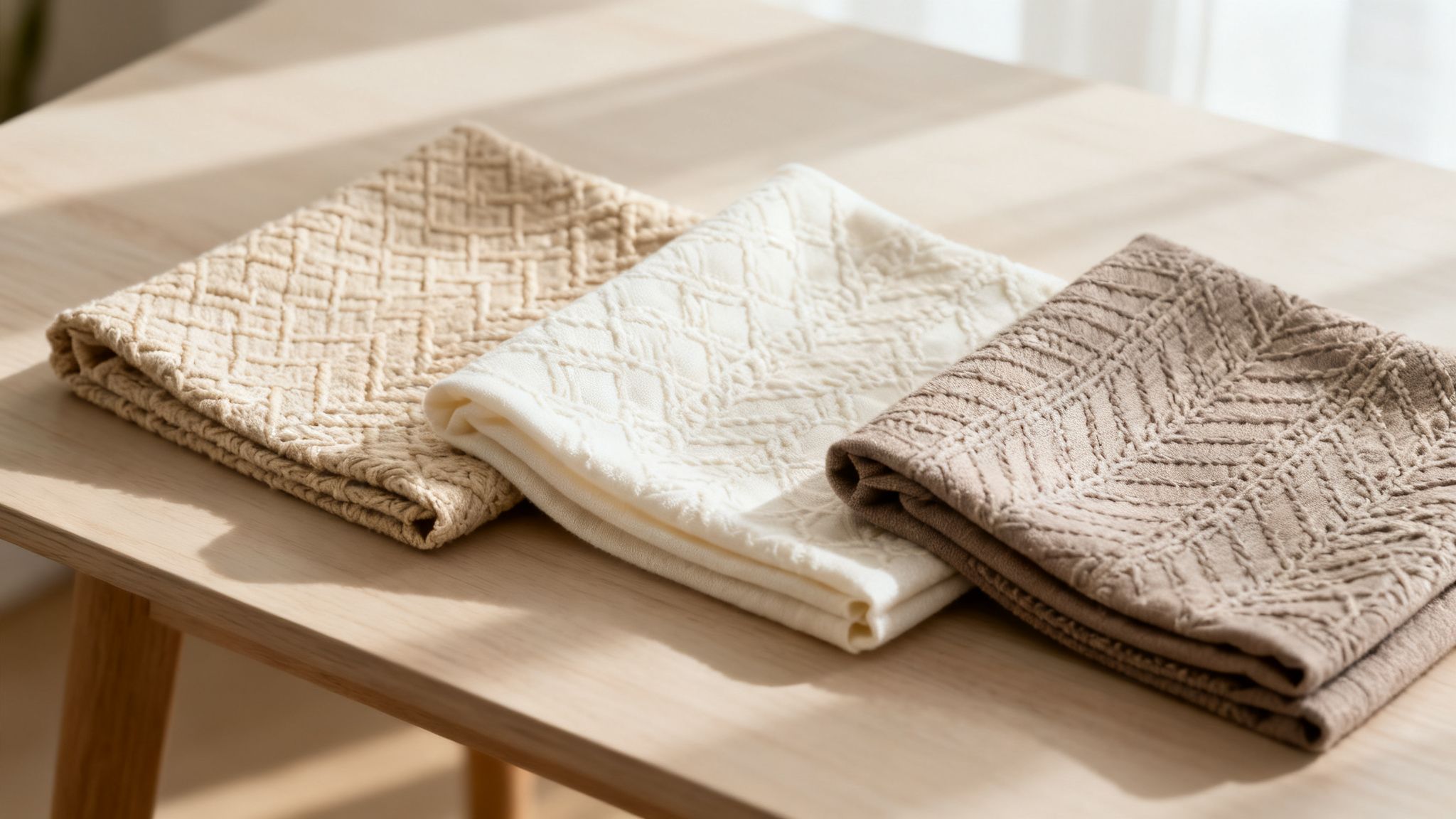
How Fibre Changes Performance
- Cotton jacquard: Usually softer, more breathable, and more comfortable in warmer weather. It tends to have a matte, natural look, but it can wrinkle more easily and may shrink if washed hot.
- Polyester jacquard: Typically more durable, more wrinkle resistant, and easier to clean. It often holds colour well and is common in hard-working upholstery and slipcovers.
- Silk jacquard: Smooth, lustrous, and elegant, with beautiful drape. It is better suited to decorative cushions, statement drapery, or low-contact pieces than to heavy everyday wear.
- Rayon or viscose jacquard: Chosen for softness and fluid drape, often with a more refined surface than basic synthetics. The tradeoff is that it can be less forgiving when wet and may need gentler care.
- Wool jacquard: Warm, structured, and naturally resilient, though less common in casual sofa-cover applications. It works well in throws, blankets, or heavier decorative textiles.
- Polyester-spandex jacquard: One of the most common sofa-cover blends because it combines pattern retention with stretch, better fit, and easier wash performance.
In my view, jacquard is often misunderstood: shoppers sometimes assume the weave alone determines softness or thickness, when fibre content often makes the bigger difference once the fabric is in your hands. Market analysis also points to growing demand for jacquard in home textiles across the Asia-Pacific region, where fibre innovation and lifestyle preferences are driving new applications; see this Asia-Pacific jacquard market report for more detail.
Common Compositions for Home Textiles
| Composition | Typical Feel | Strengths | Tradeoffs | Best Home Uses |
|---|---|---|---|---|
| 100% Cotton Jacquard | Soft, breathable, natural | Comfortable, absorbent, relaxed look | More wrinkling, possible shrinkage, slower drying | Bedding, throws, light upholstery, summer-weight décor |
| 100% Polyester Jacquard | Structured, stable, easy-care | Durable, fade resistant, wrinkle resistant, washable | Can feel less breathable than natural fibres | Upholstery, sofa covers, curtains, pet-friendly spaces |
| Polyester + Spandex Jacquard | Stretchy, springy, fitted | Great recovery, smooth fit, convenient laundering | Heat can damage elasticity; can feel warmer | Stretch sofa covers, sofa cushion covers |
| Cotton-Poly Blend Jacquard | Balanced hand, moderate structure | Better breathability than full polyester with improved durability | Properties vary by ratio | Everyday upholstery, cushions, casual drapery |
| Silk or Silk-Blend Jacquard | Lustrous, refined, fluid | Elegant sheen, premium appearance | Delicate, expensive, often dry-clean only | Formal cushions, drapery, occasional-use décor |
| Viscose-Blend Jacquard | Soft, drapey, smooth | Rich handle, decorative finish | More sensitive to moisture and abrasion | Decorative panels, cushions, accent textiles |
For sofa covers specifically, polyester-spandex and polyester-rich blends are the most common because they balance abrasion resistance, stretch, colour retention, and simpler care. That is also why many high-use covers feel more practical than luxurious at first touch: the fibre choice is doing a job.
Jacquard Material Means Construction, Not One Recipe
It helps to think of jacquard the way you would think of knitwear or denim categories: the name tells you something important about structure, but not everything about composition. “Jacquard material” can refer to a thick upholstery fabric, a lightweight curtain panel, a silky cushion front, or a stretchy slipcover. The patterning method ties those together; the fibres decide how they live in your home.
Why Jacquard Is Perfect For Your Sofa Cover
Jacquard works well for sofa covers because it offers a rare combination of pattern, structure, and wear resistance. But it is not automatically the best choice for every room or every household. Whether it is “good” or “bad” depends on what you need the cover to do: hide wear, resist constant use, fit tightly, stay cool, or feel especially soft.
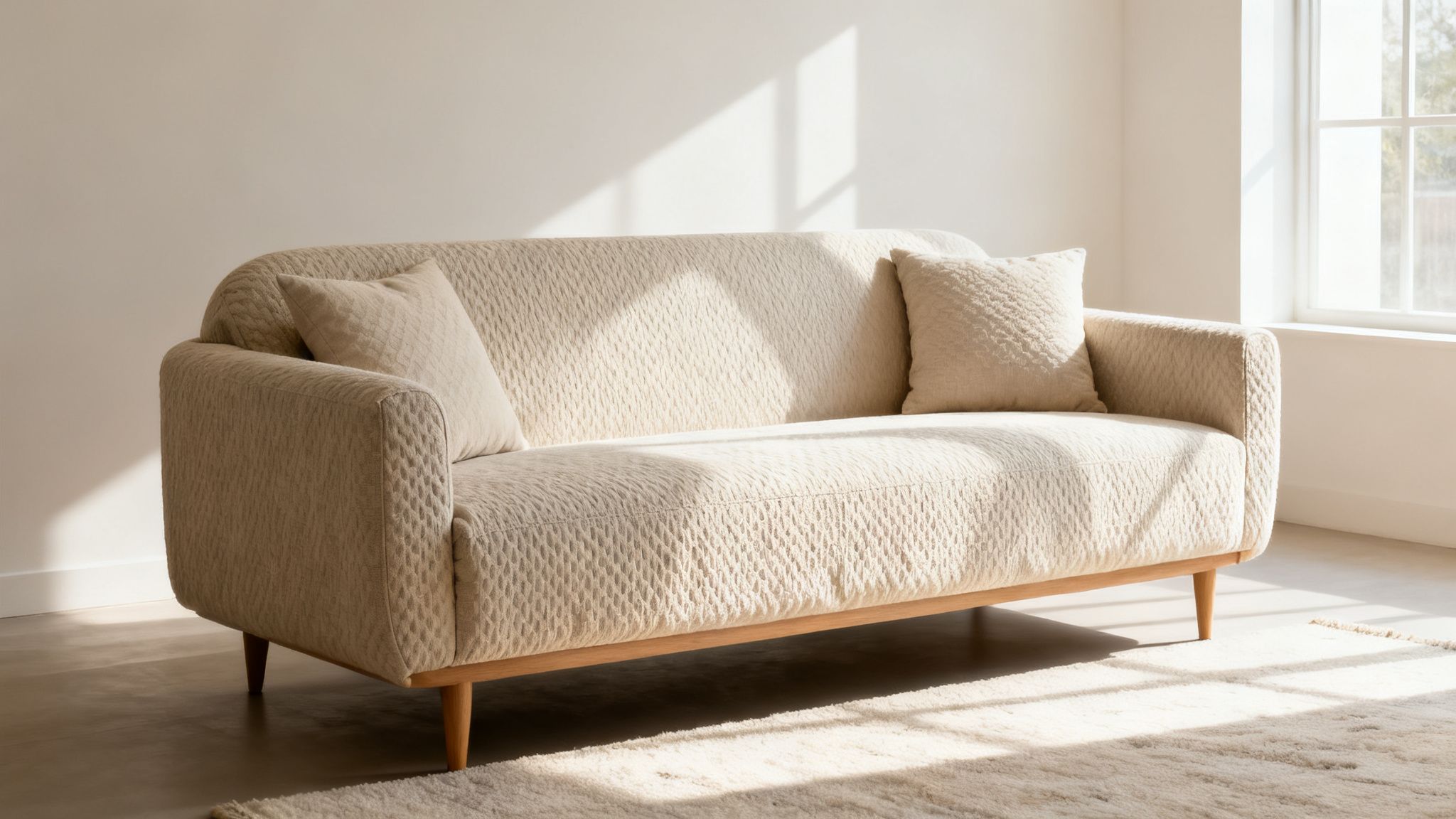
Where Jacquard Performs Best
For upholstery and covers, jacquard’s main strengths are practical:
- Durability: The motif is integrated into the cloth, so the design does not depend on a surface layer staying intact.
- Visual depth: Texture gives the fabric dimension, which helps sofas look more finished and less flat.
- Pattern longevity: Raised or tonal patterns usually age more gracefully than printed designs in high-contact spots.
- Abrasion-friendly surfaces: Many upholstery-weight jacquards are designed to handle repeated sitting, shifting, and friction better than lighter decorative fabrics.
I tend to like jacquard most on furniture that needs to hide small signs of life—creases, pet hair, light scuffs, or the slight unevenness that shows up on frequently used cushions. The texture does a surprising amount of visual work.
Tradeoffs to Know Before You Buy
Jacquard is not all upside. Some weaves can snag, especially if they have prominent floats or highly raised motifs. Fibre choice also matters: a polyester-rich jacquard can feel warmer and less breathable than cotton, while delicate silk or viscose blends may look beautiful but be less forgiving in busy homes.
There is also the question of climate. For summer or warm rooms, jacquard can still work well, but lighter cotton-rich or more breathable blends usually feel better than dense, synthetic upholstery weights. In cooler spaces, that added structure may feel like a benefit rather than a drawback.
Is Jacquard Thick or Thin?
It can be either. Fabric weight depends on fibre, weave density, and end use—not on the word jacquard alone. A curtain jacquard can be relatively light and drapey, a cushion fabric may sit in the middle, and an upholstery jacquard can feel thick and structured. For sofa covers, many versions fall into the medium-weight range so they can stretch, hold shape, and still be manageable to wash.
Sofa Covers Are One Strong Use Case
Sofa covers are where jacquard often makes the most sense because the weave offers both decoration and resilience. That said, it is also widely used in curtains, cushions, bedding, throws, and apparel. Industry forecasts vary sharply depending on how the market is defined, but they point in the same direction: jacquard remains commercially important because it combines decorative appeal with functional structure, as shown in this 2024 jacquard market estimate. A separate global jacquard fabric market trend report similarly highlights the continued growth of jacquard in upholstery and home furnishing applications.
For fitted covers, stretch blends are especially useful. A little elastane helps the fabric contour around arms, backs, and seat cushions, which is why adaptable and expandable jacquard couch covers tend to look tidier than loose throws in everyday family rooms.
How To Care For Your Jacquard Sofa Cover
Jacquard care depends less on the pattern and more on the fibre blend underneath it. A cotton jacquard does not respond to washing the same way a polyester-spandex cover does, and a silk-blend jacquard needs far gentler handling than either. The safest rule is always to check the care label first, then match your cleaning method to the composition.
The American Cleaning Institute’s fabric care guidance is a useful baseline: cooler water, gentler cycles, and attention to label instructions help reduce shrinkage, colour loss, and fibre stress across many household textiles.
Care by Fabric Type
- Cotton jacquard: Usually machine washable if the label allows it, but cold water is safer than warm or hot. Cotton can shrink, wrinkle, and lose some crispness under high heat, so air drying or low heat is the safer route.
- Polyester jacquard: Often the easiest to maintain. Machine washing on a gentle cycle is commonly fine, and polyester usually resists wrinkling and dries faster than cotton.
- Polyester-spandex jacquard: Wash gently in cold water and avoid high dryer heat. Heat is especially hard on elasticity, and once stretch recovery is damaged, the cover may bag or lose its fitted shape.
- Silk-blend jacquard: Spot cleaning is often safer than regular machine washing unless the label explicitly says otherwise. Many silk blends are better treated as delicate décor fabrics.
- Viscose or rayon blends: Use caution. These fabrics can weaken when wet and may distort if over-agitated, so gentle washing or professional cleaning may be the better call.
In my experience, the jacquard covers that hold up best to repeated washing are usually polyester-rich with enough stretch to recover shape but not so much elastane that the fabric feels over-tensioned from day one.
When Machine Washing Makes Sense
Machine washing is usually appropriate for durable cover fabrics designed for household use, especially polyester or polyester-spandex blends. Turn the cover inside out if possible, use mild detergent, and skip bleach. Overloading the machine is a common mistake: heavy rubbing from a packed drum can rough up the surface and stress the textured weave.
For decorative jacquard cushions, silk-blend pieces, or heavier upholstery textiles that are not built as removable covers, spot cleaning is often safer. I would also choose spot cleaning first for a single spill, because repeated full washes flatten texture faster than targeted cleaning does.
Heat, Drying, and Texture Preservation
Heat is where many jacquard fabrics lose ground. Hot water can shrink cotton, weaken dyes, and disturb finishing treatments. High dryer heat can damage spandex recovery, exaggerate pilling, and leave textured areas looking flatter. Air drying preserves surface definition better, especially on stretch covers and raised motifs.
If you need to smooth the fabric, use the lowest practical heat and a pressing cloth where appropriate. For many sofa covers, putting the cover back on slightly damp helps it settle into shape without aggressive ironing.
Troubleshooting Common Problems
- Pilling: Usually caused by friction. Wash on gentle cycles, avoid rough mixing with heavy items, and remove pills with a fabric shaver rather than pulling them off by hand.
- Snagging: More likely on raised or float-heavy jacquards. Trim loose threads carefully instead of tugging, and keep sharp pet claws and rough fasteners away from the surface.
- Fading: Minimise direct sun exposure when possible and avoid harsh detergents or bleach.
- Flattened texture: Common after heavy washing or high heat. Air drying and lighter wash routines help preserve relief and pattern definition.
By following these simple guidelines, you can make sure your jacquard sofa cover remains a durable, hassle-free, and stunning centrepiece in your living room. For a deeper dive into fabric care, check out our guide on how to clean your fabric sofa at home.
Still Have a Few Questions About Jacquard?
Even after diving into the details, you might still be wondering how this versatile fabric will fit into your own home. That’s perfectly normal. Let's tackle some of the most common questions that pop up, so you can feel completely confident about choosing jacquard.
Is Jacquard a Good Choice if I Have Pets?
Absolutely. In fact, it's one of the smarter choices you can make. The tightly woven structure of most jacquard fabrics, especially the durable polyester blends, makes them far more resistant to snags from claws compared to fabrics with a looser weave. This inherent toughness means they stand up beautifully to daily life with furry friends and are a breeze to machine wash to get rid of pet hair and dirt.
Does Jacquard Fabric Wrinkle Easily?
This really comes down to the fibres it’s made from. A jacquard woven from 100% cotton can definitely be prone to wrinkling, just like a cotton shirt. However, the vast majority of modern jacquard sofa covers are clever blends of polyester and spandex. These synthetic materials are brilliant at resisting wrinkles, keeping your sofa looking smooth and tidy with minimal fuss.
A common misconception is that all jacquard is thick and heavy like old-fashioned tapestries. In reality, modern jacquard looms can produce fabrics of almost any weight, from lightweight, breathable throws perfect for an Aussie summer to more structured and durable upholstery fabrics.
How Do You Stop Jacquard Fabric From Pilling?
Pilling—those annoying little balls of fibre that can form on fabric—is usually caused by friction from daily use. The best way to prevent it is by choosing a high-quality, tightly woven jacquard and giving it a little TLC.
- Wash Gently: Always use a cold, gentle cycle to minimise the agitation that can cause fibres to break and ball up.
- Air-Dry When Possible: Try to avoid the high heat of a tumble dryer, as this can damage the fibres and make them more likely to pill over time.
By choosing the right blend and caring for it properly, you can keep your jacquard looking smooth and beautiful for years to come.
Ready to experience the durable style of jacquard? Explore the stunning collection of stretch-fit, pet-friendly, and machine-washable sofa covers at Casamé Home and find the perfect look for your living room today at https://casamehome.com.