


The most effective living-room makeover may be the one that keeps your sofa. Budget makeover ideas can create a noticeable change through a fitted sofa cover, textile swaps, furniture rearrangement, better lighting and deliberate styling, rather than a new suite. That approach also fits a market where Australians are already investing in their homes. The ABS recorded furnishings and household equipment rising 1.7% in June 2026, with a 1.6% year-on-year CPI increase in July 2026 for furnishings, household equipment and services (Australian Bureau of Statistics household spending data).
The strongest sequence is practical: protect and reset the main seating first, add comfort and texture, improve the layout and light, then finish with floor definition and decluttering. The ten projects below include no-cost changes as well as targeted purchases. Renters can prioritise removable updates, while households with children or pets should favour washable, durable materials and avoid delicate finishes in the busiest zones.
- Reset the sofa with a stretch cover
- Add layered throws
- Arrange cushions for comfort and balance
- Build depth with fabric textures
- Rearrange furniture for better flow
- Declutter and add useful storage
- Improve lighting
- Style an accent wall
- Anchor the seating with a rug
- Combine the changes in the right order
Table of Contents
- 1. Can stretch fabric sofa covers transform standard seating quickly?
- 2. Can layered throw blankets make a sofa feel warmer and more considered?
- 3. How should cushions be arranged for comfort and style?
- 4. Can mixed fabric textures make inexpensive seating look more layered?
- 5. Can rearranging furniture improve a living room without buying anything?
- 6. How does decluttering make a living room feel more spacious?
- 7. Can better lighting change the mood of a living room?
- 8. Is an accent wall a sensible budget makeover idea for renters?
- 9. What area rug placement works best under living-room seating?
- 9-Point Budget Makeover Comparison
- Build Your Makeover in the Right Order
1. Can stretch fabric sofa covers transform standard seating quickly?
Stretch fabric sofa covers can refresh standard sofas, sofa beds, armchairs and some L-shaped sectionals quickly, but the exact furniture configuration must be measured before ordering. A spandex-blend cover contours around existing upholstery and gives a worn or mismatched sofa a more unified appearance without permanent alteration.
A cover works best when the sofa is structurally sound but visually tired. It can protect original upholstery from daily wear, spills and pet contact, while a textured jacquard weave often disguises creases and surface wear better than a plain cotton blend. For a rental, that makes the update removable. For a family home, it can make an older sofa more practical to keep.
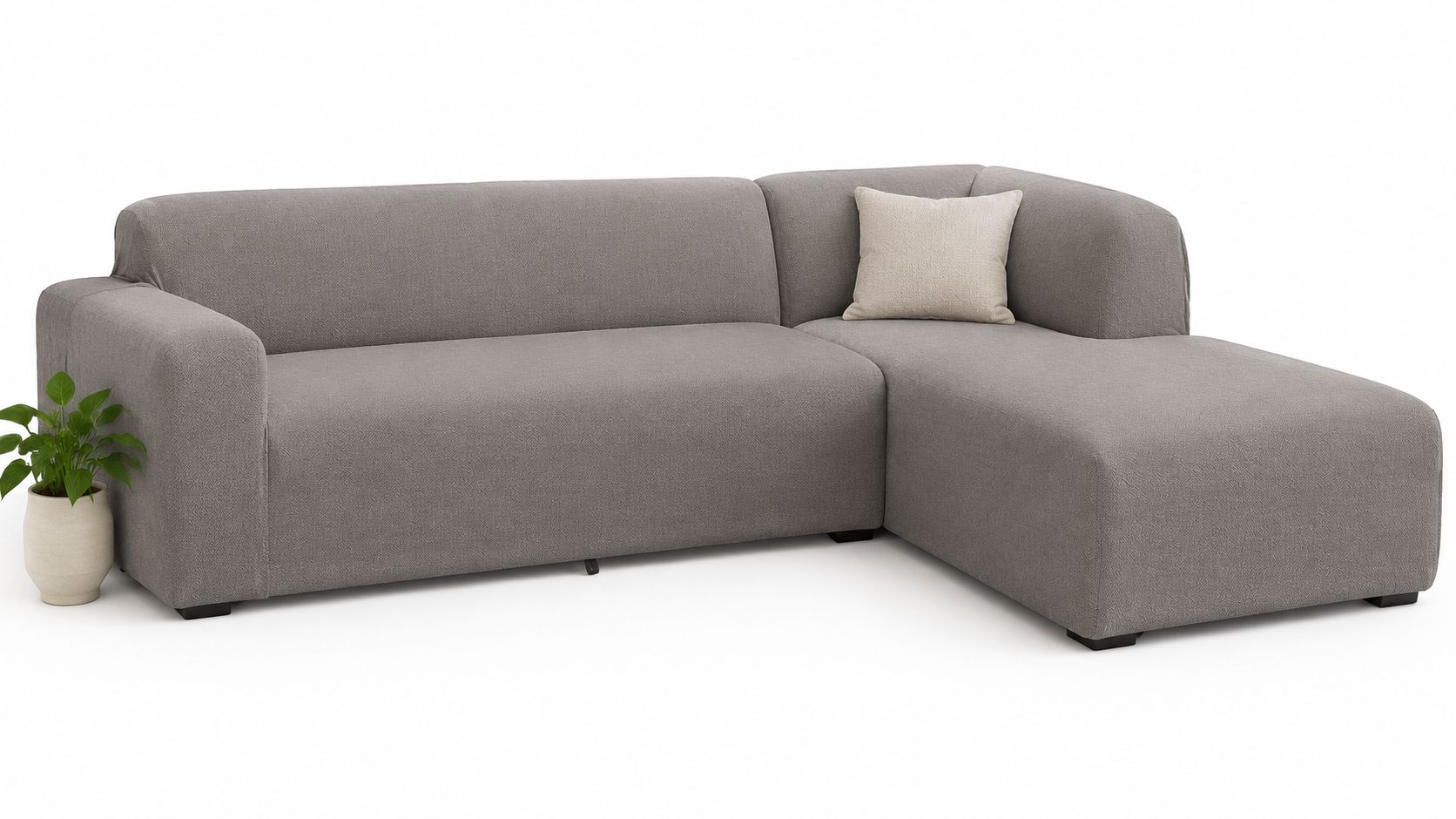
Practical rule: Measure cushion length, width and height, then check armrest thickness and the furniture maker's fit guide. A loose cover won't look tailored, and an unsuitable cover won't become suitable through extra tucking.
Before installation, smooth bulky cushions and use foam inserts where the cover maker recommends them. Pull the under-sofa anchor strap around all relevant legs so the fabric doesn't creep when people sit down. Machine-washable construction is useful, but care instructions still matter. Australian textile guidance requires care information to explain how products should be washed, dry-cleaned or otherwise maintained without damage (national textile care-labelling guidance).
A chocolate-coloured water-resistant cover could make a tired family sectional feel intentional, while coordinated navy covers could unify inherited chairs in a rental. Choose a neutral shade for the main sofa, and reserve stronger colour for an armchair or occasional seat. For more guidance on measuring and styling, see these stretch couch covers in Australia.
The action is simple. Measure twice, choose a washable fabric with accurate care information, install the straps firmly, then style the refreshed sofa before buying anything else.
A cover installation is easier to understand when you can see the fabric being positioned and secured.
2. Can layered throw blankets make a sofa feel warmer and more considered?
Layered throw blankets can add warmth, colour and texture to a sofa without changing its structure or upholstery. One carefully placed throw can soften a stark room, while two or three complementary fabrics can make an inherited sofa look deliberately styled.
Start with the sofa cover or existing upholstery as the base. Add one throw in a related colour, then introduce a different weave, such as a chunky knit beside a smoother merino blend or linen textile. A neutral oatmeal throw over a brown sofa can calm the colour, while charcoal texture adds definition without creating a busy pattern mix.
The placement matters more than the quantity. A throw draped asymmetrically over one arm and the seat edge usually looks more relaxed than one folded perfectly across the centre. On high-traffic seating, secure the textile with a discreet holder or clip so children and pets don't pull it onto the floor.
- Choose contrast carefully: Pick a shade slightly lighter or darker than the sofa, then repeat that colour in a cushion, artwork or rug.
- Match maintenance to use: Use washable, easy-care blends where toddlers, pets or frequent guests sit.
- Store selectively: Keep seasonal throws in breathable cotton bags rather than leaving every blanket on display.
- Wash thoughtfully: Cool water and gentle detergent help protect the fabric, while fabric softener can reduce absorbency and contribute to pilling.
A renter with an inherited brown sofa might use an oatmeal throw and charcoal textured throw to make the base feel intentional. A family can place a washable blanket over the most-used chair, where it catches minor spills without making the room look like a protective cover has taken over.
Use the sofa cover first if the upholstery is the main visual problem. Use throws first if the sofa is sound but the room feels cold or flat. These throw blanket selection ideas help match colour, weight and texture to the way the room is used.
3. How should cushions be arranged for comfort and style?
Cushion arrangements work best when larger cushions sit at the back, smaller cushions sit in front, and every seat still has usable support. Styling shouldn't force people to remove half the sofa before they can sit down.
A practical arrangement might use two large neutral cushions at the back, two patterned accents in front and one rectangular lumbar cushion. The neutral pieces provide comfort, while the pattern creates a focal point that can be repeated in artwork or a throw. An odd number, such as three or five cushions, often creates a relaxed composition, although symmetry can suit a more formal room.
The before-and-after difference is usually one of scale. A sofa with several small, unrelated cushions can look crowded and under-supported. The same sofa with fewer, larger cushions and one lumbar shape feels calmer, more comfortable and easier to maintain.
Start with the cushions you already own. Remove anything that doesn't support a person, repeat a useful colour, or contribute a texture you can maintain.
Families should keep at least one functional cushion for each regular seated person. For toddlers, choose removable covers and avoid delicate trims that catch on toys or clothing. Pet owners should also consider whether the fabric collects hair. A tightly woven cover is usually easier to brush than a loose, looped surface.
Renters can change cushion covers without marking walls or furniture, which makes the update especially useful in an inherited living room. A long lumbar cushion can also visually connect a mismatched chair and sofa without pretending they're a matching set.
Measure inserts before purchasing replacement covers. A cover that is too tight can distort the cushion, while an oversized cover looks untidy. Rectangular shapes can add support and break up a row of square forms, as explained in these rectangular cushion cover ideas.
4. Can mixed fabric textures make inexpensive seating look more layered?
Mixed fabric textures can give inexpensive seating more visual depth when the colour palette stays controlled and the materials suit the room's maintenance needs. Texture should add contrast, not create a collection of unrelated surfaces.
Begin with a neutral foundation, such as a plain sofa cover, neutral upholstery or a simple throw. Add one noticeable texture, perhaps a chunky knit cushion, then balance it with smoother linen, cotton or merino. Velvet can provide contrast, but it may be a poor choice for a family or pet-heavy room if frequent cleaning and visible wear are concerns.
A Melbourne apartment might combine velvet cushions, a chunky wool-style throw and a linen lumbar cushion over neutral seating. The effect can feel polished without requiring a new sofa. In a Brisbane family room, washable merino-style blankets and textured cotton cushions are more sensible than fragile decorative fabrics that need constant protection.
Keep the palette to a small group of related colours. If every piece introduces a new shade and pattern, the room loses the calm that makes texture noticeable. Use larger patterns behind smaller accents, and repeat one colour across the sofa, throw, artwork or rug.
- Use texture for contrast: Pair a smooth surface with a visibly woven one.
- Use pattern sparingly: One patterned cushion can lead the arrangement while plain pieces support it.
- Plan the cleaning routine: Launder and rotate frequently handled pieces before they look tired.
- Test the touch: A beautiful fabric that feels scratchy or traps hair won't improve daily comfort.
For renters, focus on removable cushions and throws rather than alterations to walls or furniture. For pet owners, inspect the weave before buying. A loose loop can catch claws, while a dense surface may be easier to vacuum and brush.
5. Can rearranging furniture improve a living room without buying anything?
Rearranging existing furniture can improve flow, conversation and usable space without any purchase, provided the new layout preserves clear walking routes. It is the best zero-cost experiment because you can reverse it if the room feels worse.
Start by measuring the room and the furniture footprint, including length, width and depth. Sketch two or three options on paper before moving heavy pieces. Angle seating towards a window, fireplace or television instead of automatically placing every sofa flat against a wall. In an open-plan room, a sofa can help define the living area when it floats slightly away from the perimeter.
A family might rotate a sectional to open the sightline between the living room and play area. A renter could move an armchair and small table into an unused alcove, creating a reading or work corner without drilling into walls. In both cases, the before-and-after improvement comes from clearer purpose, not extra decoration.
Move the furniture before you buy the rug. A rug purchased for the wrong layout can make the room harder to use and more expensive to correct.
Keep conversation seating close enough for ordinary speech, but don't block doors, hallways or access to windows. Use furniture sliders on carpet and folded cardboard on hard floors, and recruit help for heavy sofas. If you're considering anchoring furniture in a rental, check the local rules and your agreement. In Western Australia, renters can request permission to anchor furniture to walls, although landlords may refuse in limited circumstances such as asbestos disturbance or heritage listing (Western Australian renter furniture anchoring guidance).
Finish by repositioning lamps. A floor lamp that was trapped behind the sofa may work better beside an armchair, while a table lamp can make a newly created seating zone feel complete.
6. How does decluttering make a living room feel more spacious?
Decluttering makes a living room feel more spacious by removing visual competition and giving the remaining furniture and textiles room to register. The room's dimensions don't change, but its movement paths and visual clarity can improve immediately.
Work in a small area rather than emptying the entire room. Sort one shelf, one corner or one category into keep, donate, sell and recycle or discard. A family might remove unused toys, old magazines and unmatched cushions, then place daily toys in a basket and blankets in an ottoman. The sofa becomes easier to style because the surfaces around it aren't competing for attention.
Storage should serve the routine. A decorative basket near the sofa can hold pet blankets, remotes or children's books. An ottoman with concealed storage can provide seating and hide items, while a narrow vertical shelf uses wall space without taking over the floor.
- Keep visible items purposeful: Display pieces you use or value.
- Rotate seasonal textiles: Store heavy winter throws when the room no longer needs them.
- Use clear assignments: Give each family member or pet-related item a designated place.
- Style shelves lightly: A few varied objects usually read better than every space being filled.
A renter can use freestanding baskets, under-sofa containers and removable shelving where permitted. Avoid installing wall storage without checking the tenancy terms. Families need storage that children can access and return easily, while pet owners should choose baskets that can tolerate hair, claws and regular handling.
A decluttered living room also stages more effectively for inspection or sale. These home staging techniques reinforce the practical value of clear surfaces, defined zones and furniture that doesn't obstruct movement.
7. Can better lighting change the mood of a living room?
Better lighting can change the mood and usability of a living room by combining ambient, task and accent sources instead of relying on one harsh overhead fitting. The most affordable improvement may be moving a lamp or changing the bulb rather than replacing the entire fixture.
Use warm white light for a relaxed living area, with task lighting beside reading chairs or work spots. An uplighter in a dark corner can reflect light off the wall, while a table lamp near the sofa makes the seating arrangement feel grounded after sunset. Dimmers add flexibility, but renters should choose plug-in or lamp-based solutions if electrical changes require approval.
A room with one central ceiling light often feels flat and overly bright in some areas while leaving corners dark. Moving an existing lamp from a hallway to the sofa arm, then adding a clip-on reading light to an armchair, can create a more useful evening arrangement with minimal spending.
- Layer the sources: Combine general light with reading and accent light.
- Control glare: Keep lamps out of direct eye level and angle light towards walls where appropriate.
- Match the finish: Matte black, brass or chrome can reinforce the room's existing hardware and accessories.
- Avoid excess: Too many bright sources can make a cosy room feel clinical.
Families should keep cords away from play paths and use stable lamp bases. Pet owners need to consider tail height and chewing risk, particularly with floor lamps. Renters should avoid drilling for sconces unless the owner has approved the work.
Place the lighting after rearranging the furniture. The correct lamp position depends on where people sit, read and move. Lighting should reveal the sofa cover, cushions and texture, not flatten them with glare.
8. Is an accent wall a sensible budget makeover idea for renters?
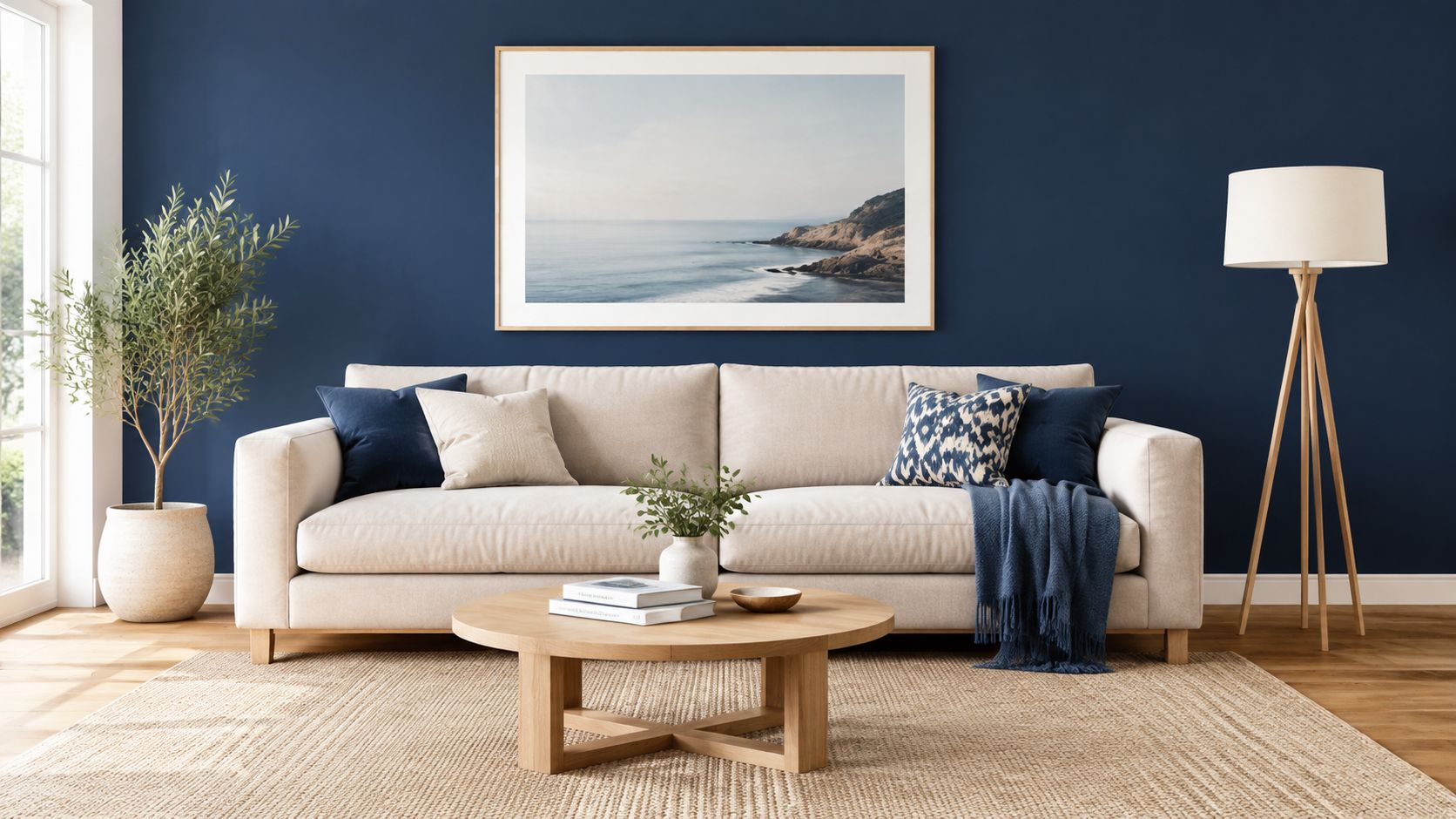
An accent wall can be a sensible budget makeover idea for renters when the finish is removable or the landlord has approved painting. A painted wall creates a stronger commitment, while removable wallpaper can offer personality with less permanence, but removal still requires careful product selection and wall testing.
The wall behind the sofa is a natural focal point because it anchors the main seating. A deep navy wall can support grey and cream textiles, while forest green can work with warm wood, oatmeal and terracotta accents. In a dark room, however, a deep shade may make the wall feel heavier, especially if the lighting is weak.
Test a large sample in both natural and artificial light. Colour changes across the day, and a small shop card rarely shows how the shade behaves beside your sofa, rug and lamps. Matte paint can disguise minor wall imperfections, while a wipeable finish may be more practical behind family seating.
For a renter, removable botanical wallpaper can make an inherited sofa and armchair feel connected without a permanent change. Check the tenancy agreement and follow the manufacturer's removal instructions. Standard wallpaper can leave adhesive or damage that becomes the renter's responsibility.
- Choose one wall: Two competing feature walls usually make a small room feel unsettled.
- Coordinate textiles: Repeat the wall colour in a cushion or throw rather than matching every item.
- Balance the depth: Keep surrounding walls and larger furniture more restrained.
- Light the surface: A lamp or uplighter can stop a darker wall disappearing at night.
Don't make the accent wall responsible for fixing a poor layout or a damaged sofa. Rearrange first, reset the seating, then use colour to reinforce the room's focal point. For additional design directions, browse these accent wall ideas from Bulls Eye Repair.
9. What area rug placement works best under living-room seating?
The best area rug placement anchors the seating group, leaves a workable path around it and suits the room's scale, furniture and cleaning demands. A rug that is too small can make the sofa look disconnected, while the wrong pile can become a daily nuisance in a family or pet room.
Measure the seating arrangement before shopping. In a compact room, leaving roughly 30 to 60 centimetres of visible floor between the rug edge and walls can create useful breathing space, but the furniture layout should take priority over a rigid rule. Place the rug so the seating feels connected, with the longer side generally running parallel to the main sofa where that suits the room.
A Brisbane family room might use a large neutral wool-style rug to unify the sofa, chairs and play area. A Sydney renter may prefer a flatweave synthetic rug with a non-slip underlay because it protects the floor, resists everyday marks and can be removed without permanent alteration. In a Melbourne apartment, a durable base rug with a smaller patterned layer can provide seasonal flexibility, although stacked rugs need stable edges and careful vacuuming.
- Prioritise safety: Use non-slip underlay, especially on hard floors.
- Match the fibre to traffic: Choose resilient wool or synthetic blends for busy rooms and softer piles for quieter areas.
- Control pattern scale: Let the rug support, rather than compete with, patterned cushions and throws.
- Plan cleaning: Check whether the rug can be vacuumed and spot-cleaned with your household equipment.
Place the rug after the sofa and major furniture have found their positions. A rug should solve a specific problem, such as defining an open-plan zone, softening a hard floor or connecting mismatched seating. It shouldn't be an expensive pattern added because the room has an empty patch of floor.
9-Point Budget Makeover Comparison
| Item | Implementation Complexity 🔄 | Resource & Cost ⚡ | Expected Outcomes 📊 | Ideal Use Cases 💡 | Key Advantages ⭐ |
|---|---|---|---|---|---|
| Stretch Fabric Sofa Covers: Transform Any Seating in Minutes | Low, simple DIY fit but requires accurate measurements | Low–Medium cost ($50–$300); minimal tools; machine-washable | High, instant tailored look, upholstery protection, moderate durability | Homeowners, renters, pet owners, families needing quick refresh | ⭐ Cost-effective replacement alternative; reversible; protects furniture |
| Layered Throw Blankets: Add Texture, Warmth, and Seasonal Style | Very low, no installation, simple draping | Very low per piece ($25–$60); easy maintenance (varies by fibre) | Moderate, adds warmth, seasonal visual change, light protection | Seasonal decorators, renters, cosy corners, budget styling | ⭐ Affordable, instant warmth and texture; portable and low-commitment |
| Cushion Arrangement and Mix: Balance Comfort and Style | Low, basic styling technique; requires balance | Low, cushion covers/inserts variable cost; washable options | Moderate, improves comfort, ergonomics and visual hierarchy | Anyone wanting quick style uplift or extra back support | ⭐ Fast comfort and style boost; easy to swap or launder |
| Textured Fabric Layering: Mix Patterns, Weaves, and Materials | Low–Medium, design sense needed to avoid visual clutter | Medium, multiple quality pieces can increase cost | High, perceived luxury, hides wear, adds tactile depth | Budget high-end looks, families wanting durable textures | ⭐ Elevates visual richness; flexible and reversible styling |
| Strategic Furniture Rearrangement: Maximise Flow and Comfort Without Buying New | Low–Medium, planning and physical effort; may need helpers | Minimal cost (zero if DIY); optional sliders or helpers | High, improves flow, creates zones, reveals space | Small spaces, families, renters seeking zero-cost refresh | ⭐ Zero-cost, immediate functional gains; reversible layout changes |
| Decluttering and Organisational Storage: Create Clean, Spacious-Feeling Rooms | Low–Medium, time and discipline required | Low–Medium (mostly labour; storage solutions $0–$300) | High, perceived space increase, easier maintenance, safety gains | Cluttered homes, families, renters preparing move-outs | ⭐ Maximises perceived space; reduces stress; pairs well with styling |
| Lighting Upgrade and Repositioning: Brighten Spaces and Create Ambiance | Low–High, lamp repositioning is easy; fixture installs may need electrician | Low–Medium for bulbs/lamps; high for rewiring or premium fixtures | High, transforms ambiance, perceived size, and saves energy with LEDs | Dark rooms, homeowners seeking mood & efficiency improvements | ⭐ Big visual impact; highlights textures; long-term energy savings |
| Accent Wall Styling: Focus Attention and Add Personality | Medium, DIY painting doable; wallpaper needs prep/removal | Low–Medium DIY; Medium–High professional; removable wallpaper for renters | High, creates focal point, anchors seating, strong visual change | Design-focused homeowners, renters (with removable options) | ⭐ Dramatic, cost-effective focal change; showcases textiles and colour |
| Area Rug Selection & Placement: Anchor Seating and Define Zones | Low–Medium, correct sizing & placement essential | Low–High depending on material/size; underlay recommended | High, defines zones, improves acoustics and thermal comfort | Open-plan homes, renters protecting floors, family rooms | ⭐ Anchors furniture visually; adds insulation and floor protection |
Build Your Makeover in the Right Order
A successful low-cost living-room refresh is usually a sequence, not a shopping spree. Start by measuring the sofa and checking whether the existing upholstery needs protection, concealment or only styling. If the frame and cushions remain useful, a fitted cover can be more sensible than replacement. Australian renovation activity shows why improvement remains relevant: industry reporting placed total home renovation activity above A$53.5 billion in the previous financial year, while renovation spending rose from 34.2% of residential construction spend in 2018–19 to 40% in 2023–24, according to the market context summarised by KPMG and reported through Australian housing data (Australian renovation market context).
Next, rearrange the furniture before buying decorative pieces. Clear the traffic route, open the sightline and decide where the main seating should face. Then declutter visible surfaces and floor space. These steps cost nothing, and they prevent you from styling around furniture that is in the wrong place or storing items you don't use.
Add the sofa cover or a throw only after the base arrangement works. Follow with cushions, then introduce texture through a controlled mix of weaves and materials. Improve lighting where the room is dark or the seating lacks task light. Add an accent wall only if colour will solve a genuine visual problem, and choose a rug only when it anchors furniture or defines a zone.
A practical spending ceiling keeps the makeover from expanding. One Australian furnishing guide places living-room budgets between A$10,000 and A$73,000 or more, depending on scope and quality, which shows how quickly a full furnishing project can grow (Australian living-room furnishing cost guide). A targeted refresh can stay far below that by combining free rearrangement and decluttering with only the purchases that address the room's biggest weakness.
Use this compact budget lens:
- A$0 first: Rearrange furniture, shop other rooms for lamps and cushions, remove clutter and restyle existing objects.
- Around A$25: A renter can prioritise a bulb, small lamp adjustment or simple removable styling change, where available.
- Around A$120: A layered lighting update may cover a corner uplighter and small reading lamps in a modest scenario.
- Around A$150: A DIY accent-wall project can be achievable in a modest scenario, depending on materials and wall condition.
- Around A$180: A protective sofa-cover refresh can be a targeted first purchase in a specific household scenario, subject to product, size and fabric choice.
These amounts come from the practical scenarios in the makeover plan, not universal price promises. Shop carefully, confirm the exact product specifications and don't treat a low purchase price as a saving if the fabric is unsuitable for pets, children or frequent washing. Australian care standards cover upholstery and other textile articles, and require relevant, accurate care information at the point of sale (Australian textile care standard).
For renters, prioritise slipcovers, throws, cushions, freestanding storage, plug-in lighting and removable wall treatments. For families and pet owners, favour washable covers, tightly woven textiles, stable rugs and storage that can be maintained without a complicated routine. Casamé Home can be considered when a washable, protective sofa refresh is the most useful first purchase, with stretch-fit covers, textured jacquard options, waterproof choices and foam inserts or under-sofa straps available for relevant furniture configurations.
The strongest result usually comes from coordination. A sofa cover in a calm colour, one related throw, a considered cushion arrangement, clearer floor space and better lamp placement will generally feel more finished than one unrelated statement piece placed in a cluttered room. Set the ceiling, make the zero-cost changes first and buy only what solves the next visible problem.
Casamé Home offers Australia-focused stretch-fit sofa covers, protective and waterproof options, textured jacquard fabrics and cosy throw blankets for refreshing living rooms without replacing useful furniture. Visit Casamé Home to compare washable sofa-cover and throw options, then measure your seating before choosing the configuration and fabric.


