


You've found the right sofa, layered a throw across the arm, and still have an awkward gap that makes the room feel unfinished. Large bolster pillows can solve that problem while adding a long, comfortable support for lounging, reading, lumbar positioning or side-sleeping. Their cylindrical shape gives a sofa or bed a stronger visual line than a flat cushion, but the wrong diameter can make a compact Australian lounge look crowded.
The useful choice depends on more than colour. You'll need to consider diameter, length, fill, firmness, fabric, cleaning requirements and room proportion. A bolster that feels supportive behind your lower back may be too firm for decorative layering, while a soft fibre version may look beautifully plump but lose shape with frequent use.
Australian homes already favour substantial cushion arrangements. Common references include 55 cm × 55 cm and 70 cm × 70 cm large square cushions, alongside rectangular formats such as 40 cm × 65 cm, so a long bolster fits naturally into the country's preference for layered, oversized soft furnishings. The wider Australian cushion-and-pillow market was estimated at USD 478.8 million in 2024 and is forecast to reach USD 1,382.1 million by 2033, with a projected 12.50% CAGR from 2025 to 2033, according to 6W Research's Australia sleeping pillow market data.
By the end of this guide, you'll be able to choose a large bolster pillow that suits the furniture, understand how each fill behaves, style it without overwhelming the room and care for the cover safely.
Table of Contents
- What Is a Large Bolster Pillow and How Is It Different
- What Size Large Bolster Pillow Do You Need
- Which Fill and Firmness Feels Best for You
- How Should You Style a Large Bolster Pillow on Sofas and Beds
- Can You Machine Wash a Large Bolster Pillow
- How Do You Choose the Right Large Bolster Pillow for Your Home
What Is a Large Bolster Pillow and How Is It Different
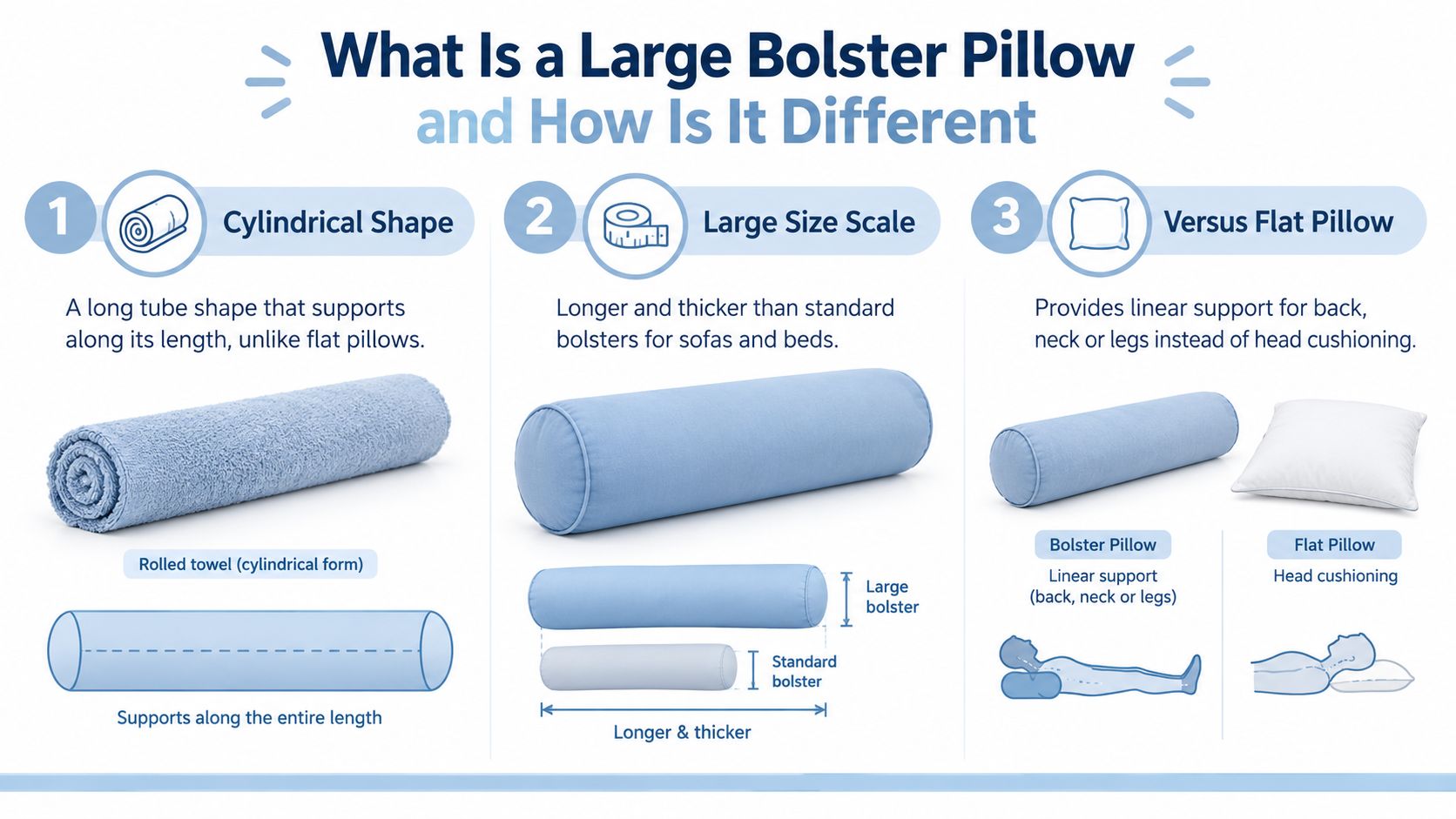
A large bolster pillow is a long, cylindrical pillow that supports along its length, unlike a square or rectangular cushion that spreads support across a flatter surface. The simplest analogy is a rolled towel. A rolled towel forms a tube that can sit behind your neck, across your lower back or beneath your knees. A bolster uses the same basic geometry, but with a fitted cover and a controlled fill.
How does a bolster differ from a standard cushion
A standard cushion is usually square or rectangular, so it creates a broad face for sitting against or decorating with. A lumbar pillow is flatter and more targeted, often used to support the lower back without adding much visual height. A small neck roll is shorter and narrower, designed for a more specific support position.
A large bolster pillow sits between functional support and statement décor. Its continuous length creates a clean horizontal or vertical line, depending on how you place it. On a sofa, that line can soften a deep seat or make one end feel more inviting. On a bed, it can sit in front of sleeping pillows and act as the finishing layer.
Practical rule: Treat a large bolster as a piece of furniture styling, not just as another cushion. Its length and cylinder shape have a stronger visual presence.
Where can you use a large bolster pillow
On a sofa, place a bolster behind the lower back, along the full width of a daybed-style arrangement or at one end as a substantial arm support. It can also help define a reading position without filling the seat with several small cushions.
On a bed, a long bolster works across the front of the sleeping pillow arrangement. It can add structure to a layered look and provide a comfortable roll for sitting up. Floor seating is another option, particularly where a long, firm shape can support the back against a wall.
The important distinction is that a bolster provides linear support. It doesn't replace every flat cushion, and it shouldn't be chosen solely because its cover looks attractive. First decide where your body or furniture needs a continuous support line. Then choose the scale.
What Size Large Bolster Pillow Do You Need
A large bolster pillow commonly measures around 15–20 cm in diameter and 60–160 cm in length. The right combination depends on the furniture, the way you will use it and how much visual weight the room can carry, as shown by Australian bolster product references. Diameter controls how thick the bolster feels. Length controls how much of the sofa or bed it occupies.
A 15 cm diameter looks lighter and more refined, which suits a compact seat or a decorative bed layer. A 20 cm diameter feels fuller and gives the body a deeper support surface. The difference is substantial: because the bolster is cylindrical, its cross-sectional area follows the square of its radius. Increasing the diameter from 15 cm to 20 cm increases that area by about 78%, so the larger version needs considerably more fill to maintain a similar loft and firmness. This is a straightforward mathematical relationship, not a product-performance claim.
Length changes the balance just as strongly. A 60 cm bolster can sit neatly in one chair or at one end of a sofa. An 80 cm version suits a smaller sofa arrangement or a single-bed layer. Lengths of 110 cm and 140 cm create a clearer statement across a sofa or bed, while 160 cm suits a generous surface where the pillow can breathe instead of crowding the edges.
Australian cushion sizing provides a useful scale check. Common formats include 45 cm × 45 cm, 50 cm × 50 cm, 55 cm × 55 cm, 65 cm × 65 cm and 70 cm × 70 cm, along with lumbar cushions measuring 30 cm × 50 cm and 40 cm × 65 cm, according to 6W Research's Australian pillow market sizing reference. A 110 cm bolster is longer than two 55 cm squares placed side by side, but its uninterrupted line often looks calmer than two separate cushions. That single shape works particularly well with texture-led rooms, where one visible fabric surface can make a lounge feel considered rather than busy.
| Size Option | Best For | Consideration |
|---|---|---|
| 15 cm diameter × 60 cm | Compact chairs, narrow sofa sections and small decorative arrangements | Looks refined, but offers less depth for lumbar support |
| 15–20 cm diameter × 80 cm | Smaller beds, reading corners and single-seat sofa styling | A useful middle ground between support and visual restraint |
| 20 cm diameter × 110 cm | Standard sofas, daybed arrangements and substantial bed layering | Needs enough surrounding space so the cylinder doesn't dominate |
| 20 cm diameter × 140 cm | Larger sofas, broad beds and a single statement bolster | Creates a strong horizontal feature and needs balanced styling |
| 20 cm diameter × 160 cm | Generous beds and wide seating areas | Can look oversized in a compact lounge, especially with many other cushions |
Measure the usable width of the furniture before ordering, rather than measuring the full outside frame. Mark the proposed length with masking tape or a tape measure. In a small lounge, compare one long bolster with two standard cushions. The bolster may create a calmer, more continuous line, but its solid cylinder can overpower a narrow sofa when other cushions already fill the seat.
Use this sofa size guide to check furniture dimensions before committing to a long format.
Which Fill and Firmness Feels Best for You
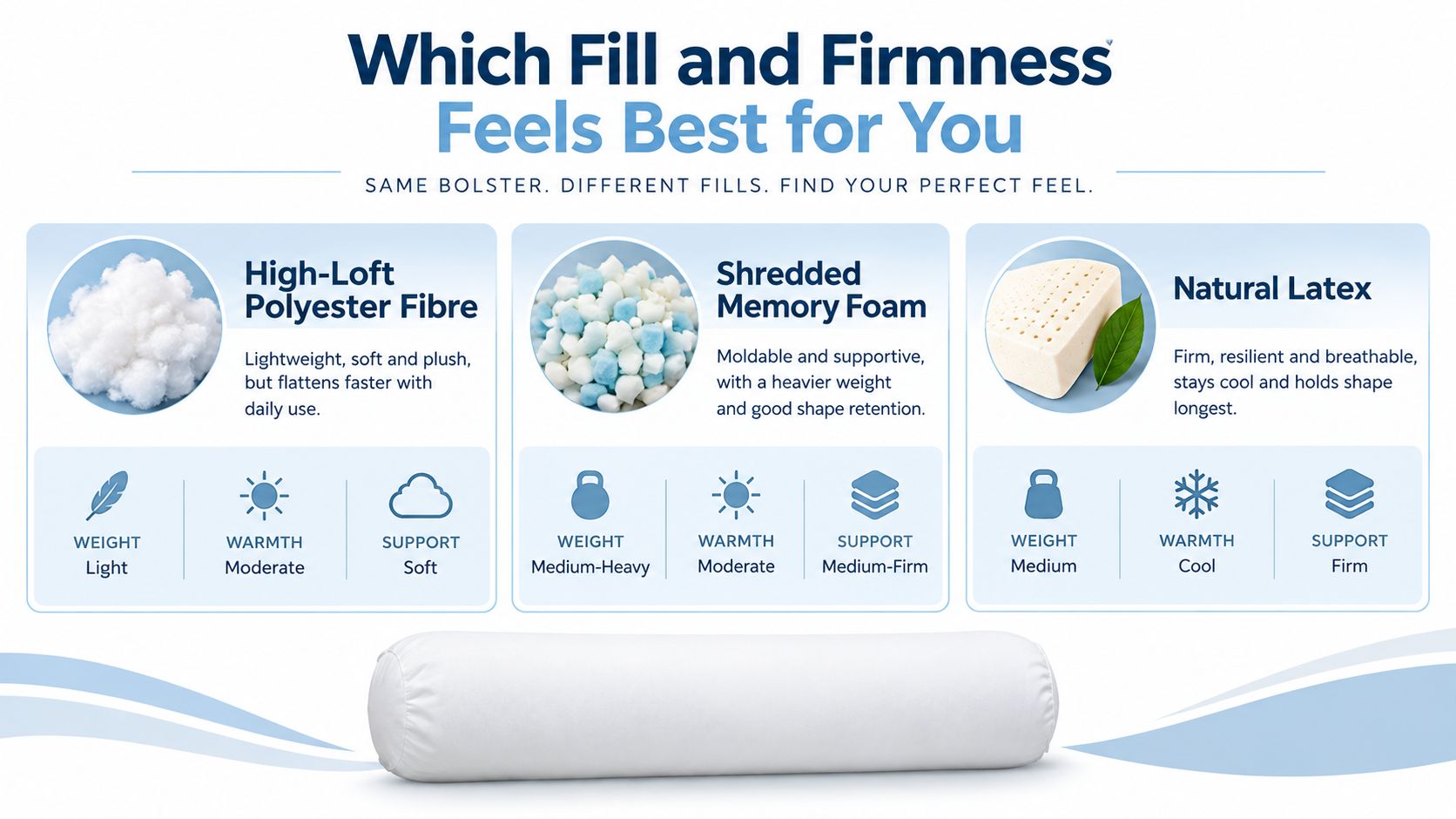
A large bolster pillow with high-loft polyester fibre suits soft decorative layering, while shredded memory foam or latex is generally more appropriate when you want firmer, more consistent shape retention. Australian product guidance describes polyester fibre as down-like and insulating, while shredded memory foam and latex are positioned as firmer options that resist flattening more effectively, as outlined by Nest Path's Australian bolster pillow guide.
The choice becomes clearer when you think about how you'll use the pillow. Fibre behaves like a cloud inside a fabric tube. It feels inviting and plush, but repeated compression can reduce loft, and the shell needs enough tension to help the pillow keep its outline. Foam and latex behave more like a springy core. They return more predictably after pressure and tend to hold their shape more consistently, although they can feel heavier and less airy.
How should firmness match the use
For a decorative bolster placed in front of larger bed cushions, a softer polyester fibre fill usually creates the relaxed, slightly yielding appearance that works with linen, boucle or brushed fabrics. A softer fill also suits a sofa where the pillow will be moved often rather than used as a fixed backrest.
For lumbar support, choose a firmer construction that doesn't collapse as soon as you lean against it. Shredded memory foam can feel mouldable while still offering resistance, whereas latex tends to feel more resilient. Neither should be treated as a medical guarantee. Pillow height, material and shape affect sleep comfort, but clinical evidence remains mixed. A review found moderate evidence for latex, contoured designs and a 7–11 cm central height in relation to sleep comfort and spinal alignment, while an Australian health source notes that pillow-shape findings remain inconclusive and that long-term studies on spinal degeneration are absent, as summarised in this clinical review.
A larger diameter also changes the filling requirement. The 20 cm cylinder needs substantially more material than the 15 cm version if both are expected to feel equally full. If a large bolster looks broad but feels hollow, the issue may be insufficient fill rather than an unsuitable cover.
What should you check in the insert
Ask whether the insert is loose fibre, shredded foam or a formed latex construction. Check whether the cover can be removed, whether the filling can be replenished and whether the finished pillow feels firm at the centre as well as at the ends.
For a closer look at how inserts affect sofa comfort and shape, this guide to couch cushion inserts is a useful companion.
Australian premium bolster specifications may also involve filling composition and purity. The relevant Australian trade reference for down and feather filling materials is AS 2479-2007, identified in the Australian guidance linked above. Read the composition information rather than assuming that a premium-looking cover indicates a particular fill.
How Should You Style a Large Bolster Pillow on Sofas and Beds
A large bolster pillow works best as one deliberate visual anchor, either centred on a bed, offset on a sofa or paired with a restrained number of flat cushions. Australian interiors increasingly favour nature-inspired colours, tactile materials and softer, earthier styling, a direction reflected in Hatch Textiles' cushion trend coverage.
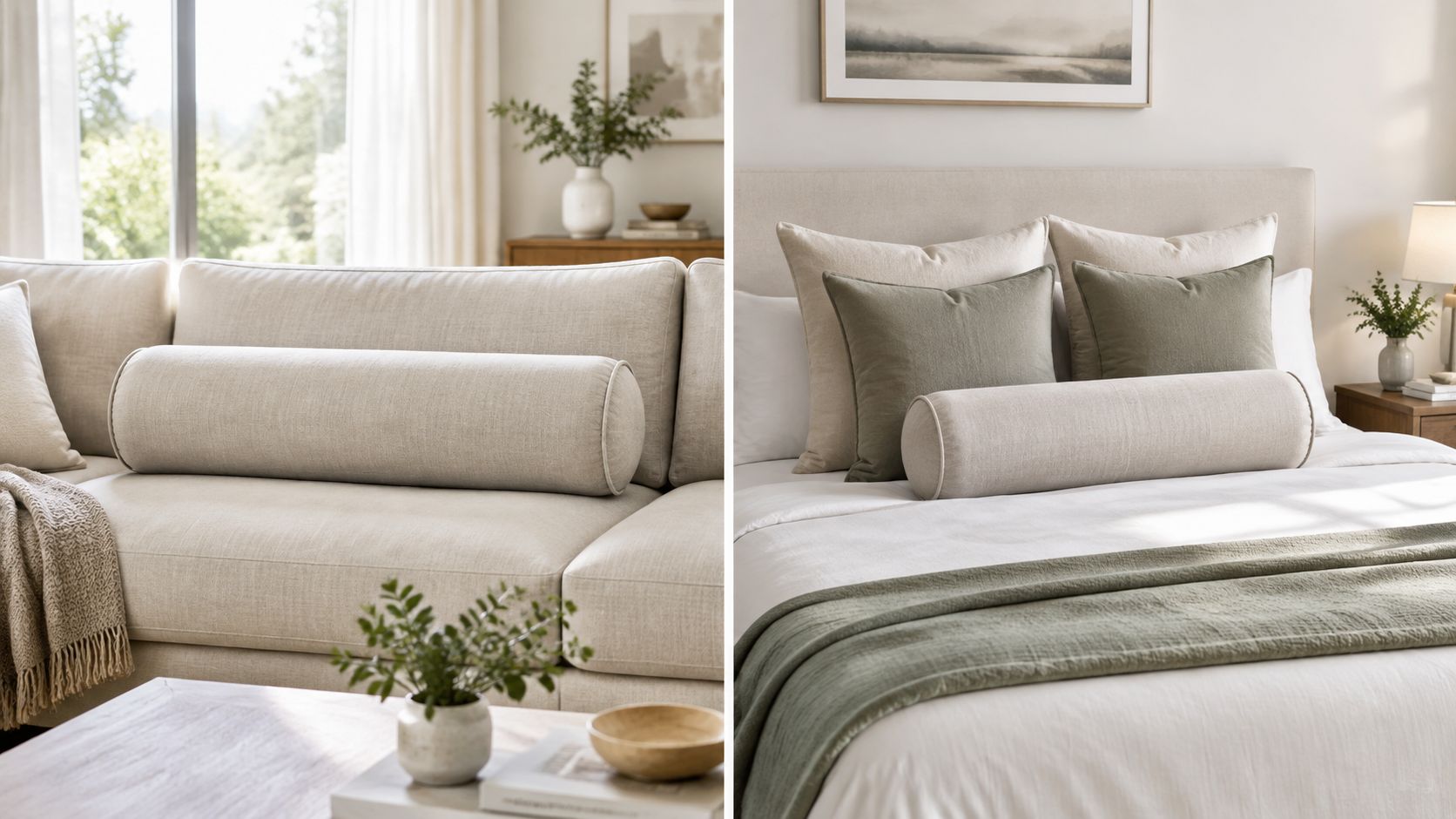
On a standard sofa, start with placement rather than decoration. A centred bolster creates symmetry and works well when the sofa has a clean, uncomplicated silhouette. An offset bolster feels more relaxed and leaves one side open for sitting. If the main purpose is lumbar support, place it where the person leans instead of forcing it into the exact middle.
A sectional needs more care because the corner already has strong visual weight. A long bolster can run along one section, but don't assume a particular length will suit every L-shaped configuration. Measure the usable seat and back areas, check whether the corner interrupts the pillow's line and avoid allowing the bolster to block a walking route or become trapped against an arm.
On a bed, a long bolster can sit across the front of the sleeping pillows. Pair it with 45 cm or 55 cm square cushions when you want layered depth, but keep the arrangement edited. One bolster and two squares often feel more composed than a crowded row of unrelated shapes.
A large bolster should look like the final brushstroke, not another layer added because the bed still feels empty.
Colour and texture can do different jobs. A quiet oatmeal, clay or muted olive bolster can connect a room to timber, natural flooring and woven finishes. A tactile fabric adds interest without requiring a busy print. If the bolster has a strong pattern, keep the surrounding cushions simpler. For seasonal character, an illustrated option such as autumn watercolor pillow art can introduce a focal motif without changing the whole room.
The risk is proportion. In a small Australian loungeroom, a deep 20 cm bolster with several oversized cushions may reduce usable seating and make the sofa appear shorter. In that setting, choose a shorter length, a lower-profile diameter or use the bolster alone. A large room or broad bed can carry a longer cylinder because there's enough visual space around it.
This video offers another way to think about horizontal layering and relaxed seating arrangements:
For more ideas on combining soft layers without making a sofa look overfilled, explore this guide to throw blankets and pillows.
Can You Machine Wash a Large Bolster Pillow
A large bolster pillow can only be machine washed when the fabric and care label allow it, and the insert may require separate treatment. A removable cover and a non-washable foam or latex core should never be handled as though they were one washable item.
Which cleaning code applies
Australian upholstery guidance commonly uses four codes:
- W means water-based cleaners only. Use an appropriate water-based upholstery method if the label permits it.
- S means solvent-based cleaners only. Don't apply water unless the manufacturer specifically allows it.
- WS means either water or solvent cleaners. Choose the gentlest suitable method and test an inconspicuous area first.
- X means vacuum only. Avoid liquids and rely on careful vacuuming.
These definitions are set out in Australian upholstery cleaning-code guidance. The code belongs to the fabric and construction, so don't assume that two covers with the same colour can share the same cleaning method.

If the cover has a zip and the label specifically permits machine washing, wash the cover according to those instructions. A gentle, cool cycle and thorough air drying are sensible only when the label supports them. Don't put a foam or latex insert in the washing machine. Blot marks instead, keep the core as dry as possible and allow it to air thoroughly.
What should you avoid during spot cleaning
Australian and New Zealand textile-care rules warn against wetting filling where the applicable label prohibits it. They also state not to use dishwashing or laundry detergents and not to scrub with a stiff brush in situations covered by those instructions, as shown in the AS/NZS upholstery care standard.
Wool upholstery needs particular restraint. More intensive cleaning is generally dry cleaning, and a wool fabric-maintenance guide recommends upholstery shampoos, with non-alkaline options preferred for wool. Always separate a removable cover from its insert before cleaning, and never guess when the label is missing.
How Do You Choose the Right Large Bolster Pillow for Your Home
A large bolster pillow is the right choice when its size, firmness and fabric match both the furniture and the way you'll use it. Start with the room. A compact lounge usually benefits from a shorter or narrower bolster, while a broad sofa or bed can handle a longer, more visible cylinder.
Next, identify the main job. Choose a softer fibre construction for relaxed styling and occasional leaning. Choose shredded memory foam or latex when consistent support and shape retention matter more. If sleeping comfort is the priority, treat general guidance cautiously and consider your position, preferred height and any existing neck concerns rather than relying on appearance alone.
Fabric should follow your lifestyle. A removable, washable cover is practical for households with children, pets or frequent entertaining, provided the care label permits washing. Textured natural-looking fabrics suit earthy interiors, while a plain colour gives you more freedom to change surrounding cushions and throws.
A useful external reference is this guide to choosing pillows, especially if you're comparing comfort, support and decorative use across different pillow shapes.
Use this final checklist before buying:
- Measure the usable furniture width: Mark the intended length with tape so the bolster doesn't crowd arms, corners or pathways.
- Choose the diameter deliberately: Select 15 cm for a lighter profile or 20 cm for a fuller support shape.
- Match fill to use: Fibre suits plush decoration, while foam or latex suits firmer, more resilient support.
- Check the care label: Confirm the code, removable-cover instructions and insert restrictions.
- Edit the surrounding cushions: A large bolster often needs fewer additional cushions to look balanced.
If you're refreshing the whole seating area, Casamé Home offers protective sofa covers, washable options and throw blankets that can coordinate with a newly chosen bolster. Visit Casamé Home to explore sofa covers and soft layers for a practical Australian living-room update.


