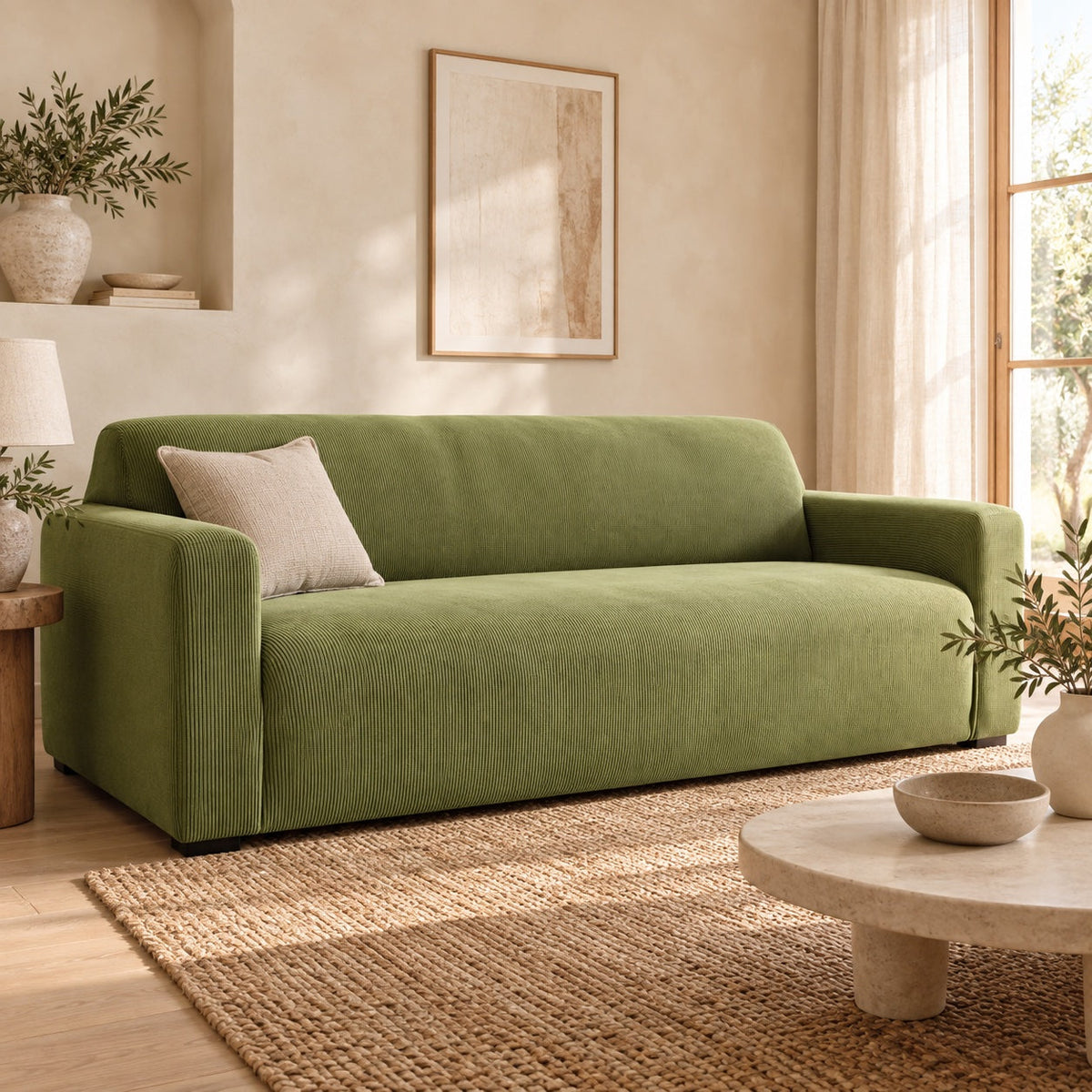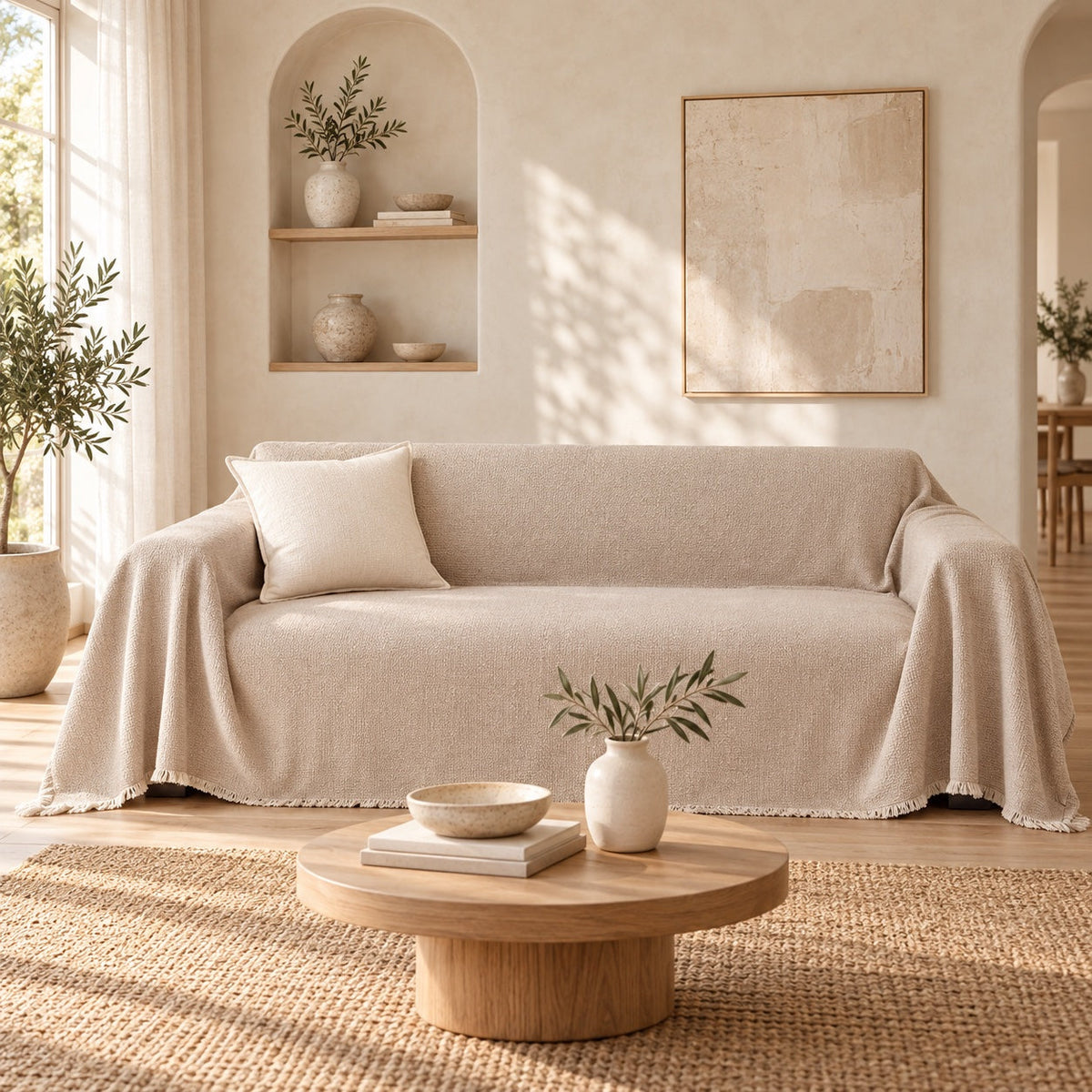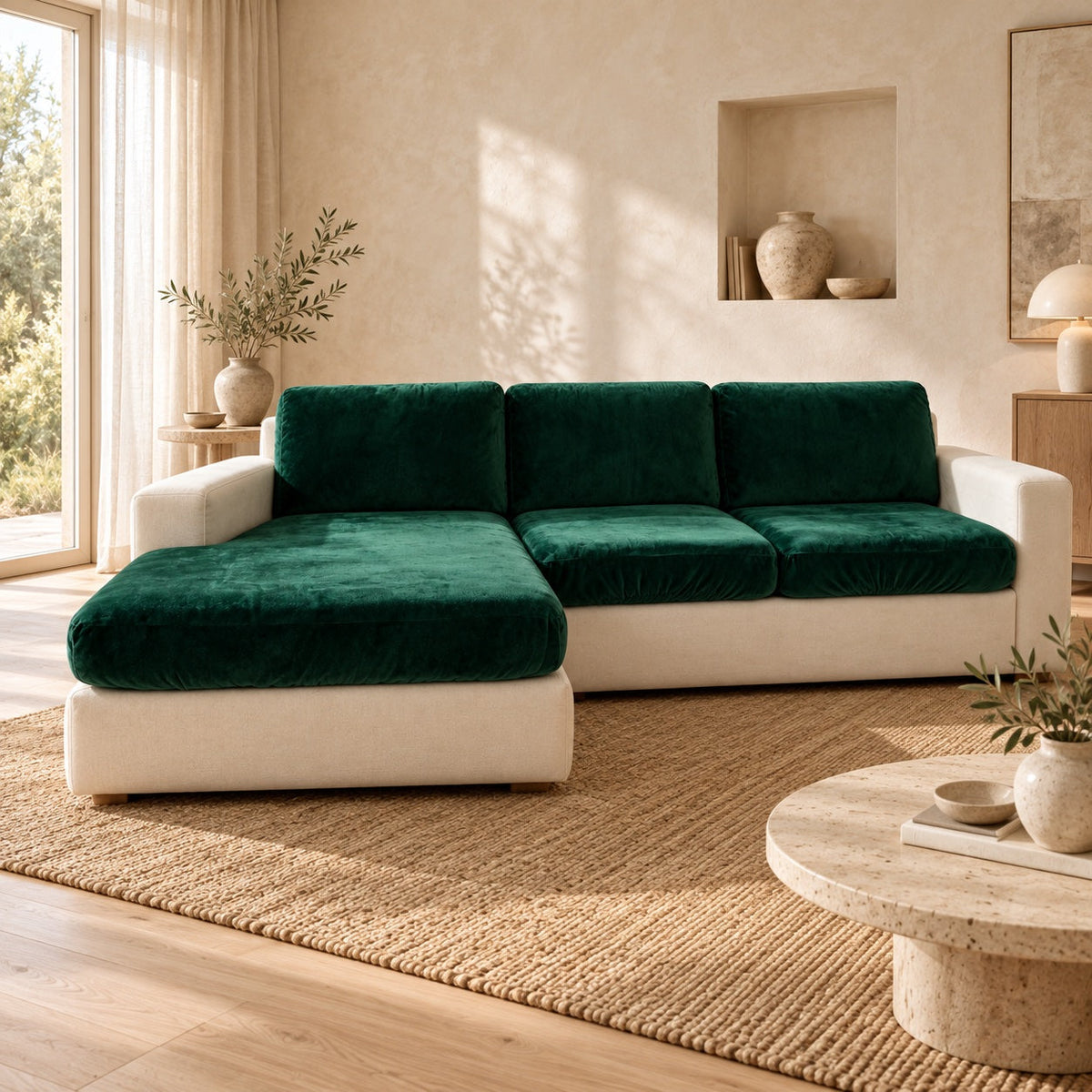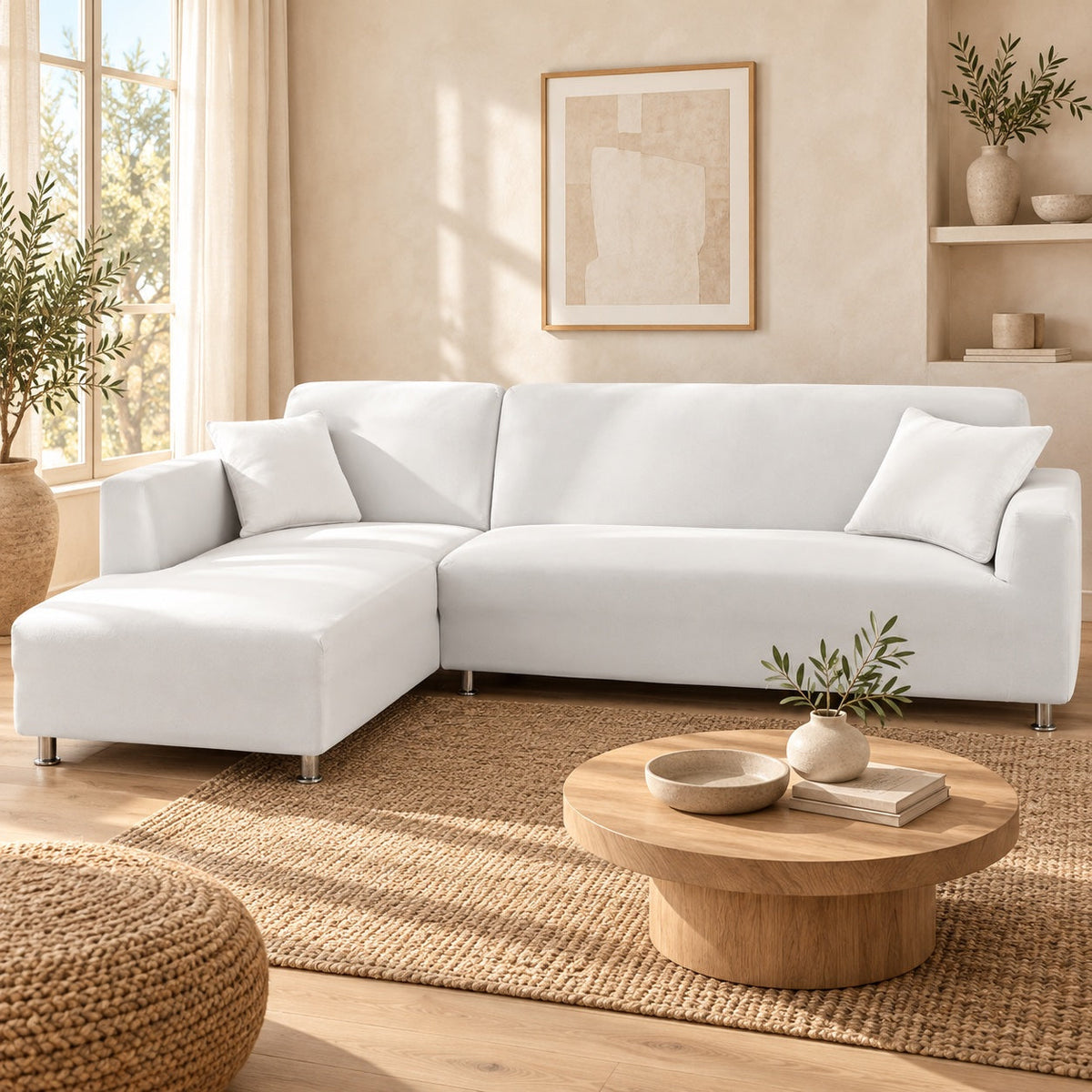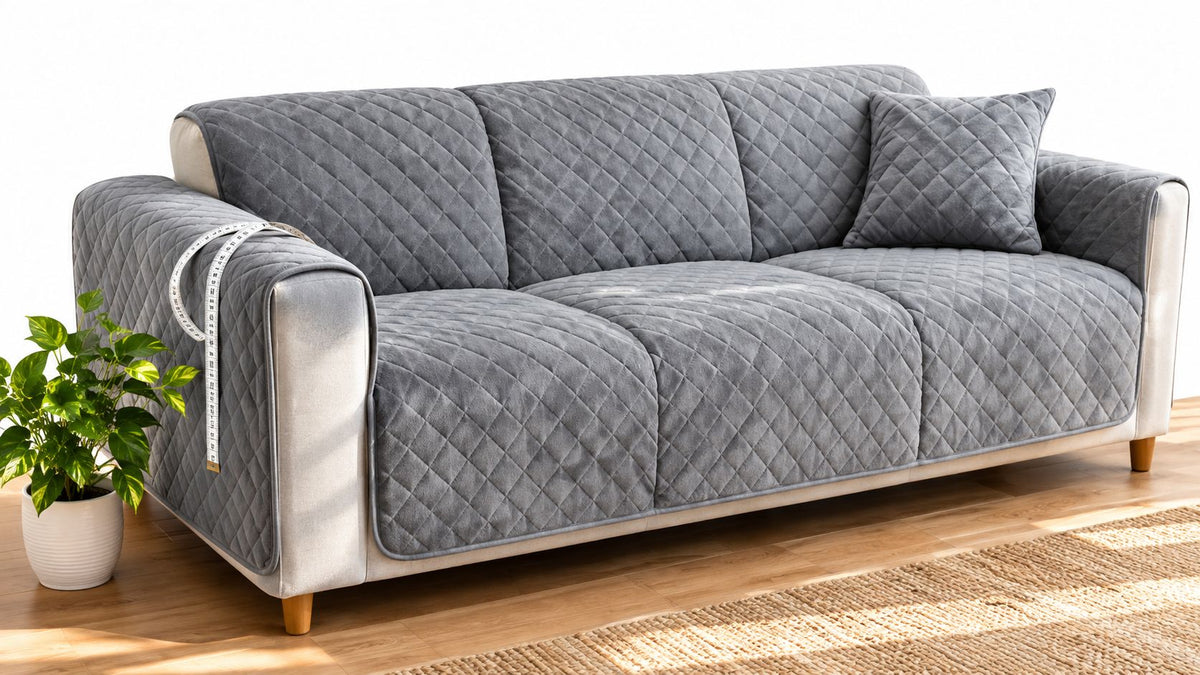
Casamé Home doesn't stock a quilted couch cover, and if you're searching for quilted couch covers in Australia, the closest textured option in that range is the Diamond Jacquard Couch Cover on a stretch base.
Key Takeaways Quilted Couch Covers
Quilting vs Jacquard: Quilted layers bunch on arms; woven jacquard fits sofas better.
Measure Arm to Arm: Choose the size band that matches your measurement.
L-Shapes Need Their Own: Sectionals need an L-shaped cover, not a standard one.
Most advice on this topic gets the main point wrong. Buyers say “quilted” when what they usually want is more texture, a thicker hand-feel, and a cover that looks like it's doing real protective work, not a flat sheet stretched over a lounge. True quilting can give you loft, but loft isn't the same thing as a good fitted sofa cover.
That distinction matters in Australia, where people still buy practical home-softening textiles because replacing a whole sofa is expensive, messy, and often unnecessary.
Table of Contents
- What Quilted Couch Covers Actually Mean in Australia
- How Quilted Construction Works and Why It Matters on a Sofa
- Quilted vs Woven Jacquard on a Stretch Base
- The Closest Alternative Casamé Home Stocks
- Measuring Your Lounge for the Right Cover Size
- Styling an Australian Living Room Around a Textured Cover
- Care and Cleaning for a Woven Stretch Cover
- Choosing Well and What to Check Before You Order
What Quilted Couch Covers Actually Mean in Australia
Quilted couch covers in Australia usually mean padded, stitched-through covers, but Casamé Home doesn't sell that product type and instead offers textured stretch covers such as the Diamond Jacquard Couch Cover.
That's the honest starting point. If you came looking for a padded, wadded, stitched-through lounge cover, you won't find one in this range. What you will find is a cover that chases the part most buyers care about. Surface texture, visual depth, and a fabric face that feels more substantial than a plain smooth stretch knit.
Why buyers use the word quilted
People often use “quilted” loosely. On a couch listing, it can mean anything from actual stitched padding to a diamond-look surface pattern. That's where disappointment starts. A buyer expects thickness and grip, then receives a bulky panel that doesn't hug the arms or seat properly.
Australian sofa upholstery sits inside a much bigger furnishing-textile ecosystem: upholstery textiles are the fabrics used to cover sofas, lounges, armchairs, dining chairs and ottomans. Removable covers appeal to buyers trying to extend the life of that furniture instead of reupholstering or replacing it.
Practical rule: If what you want is a lounge cover that looks thicker and feels more textured, don't assume a quilted build is automatically the better fit.
What matters more than the label
For most buyers searching quilted couch covers Australia, the useful questions are these:
- Does the cover sit tight on curved arms and fixed cushions
- Does the fabric look textured instead of flat
- Will the surface still look decent after normal washing and daily use
- Can you read the care instructions clearly before you wreck the stretch base
Those are the buying questions worth answering. “Quilted” is just the search term that gets you there.
How Quilted Construction Works and Why It Matters on a Sofa
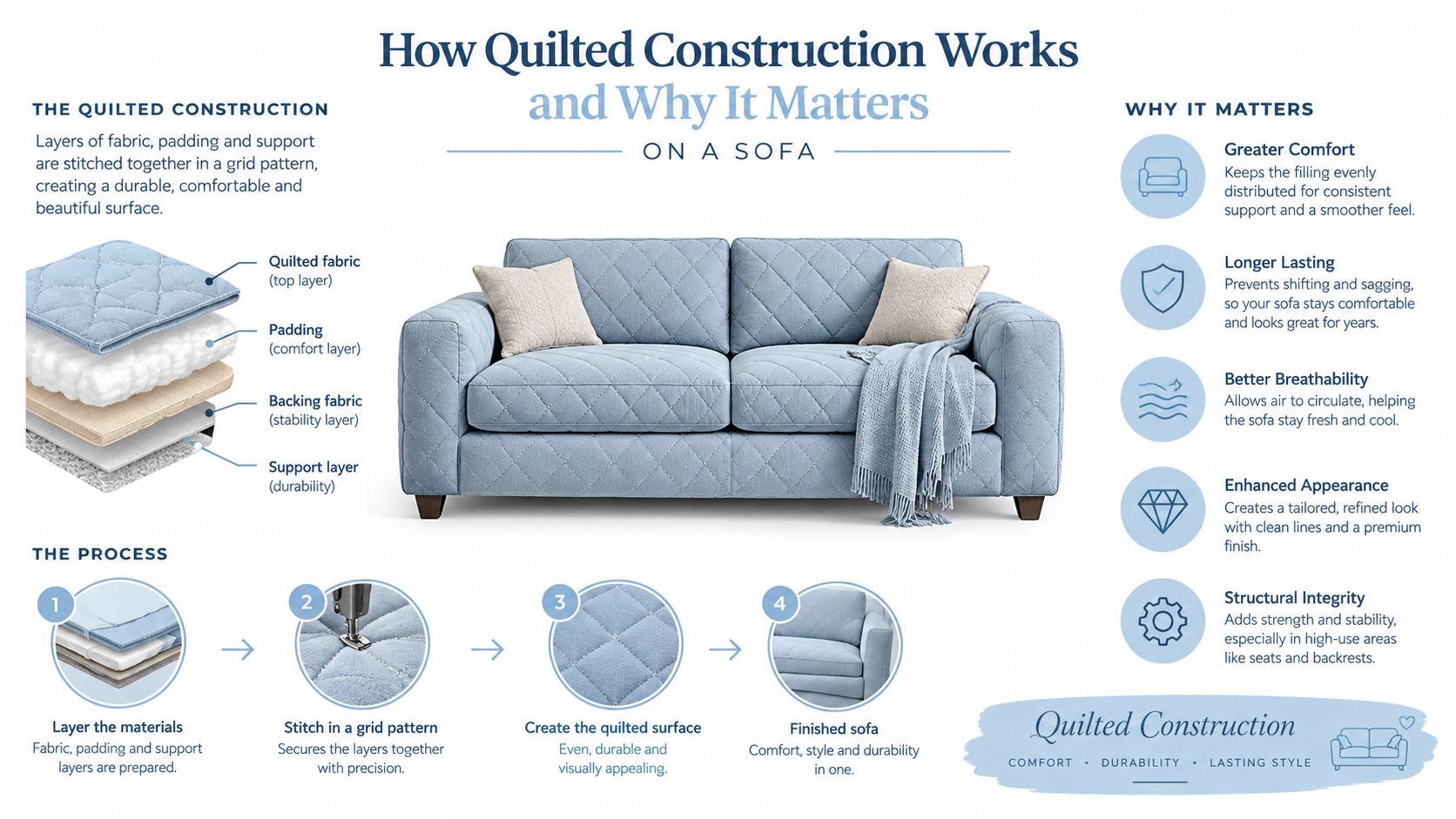
Quilted sofa construction works by trapping wadding between two fabric layers and stitching through all of them, and that build adds padding but usually fights the close fit a stretch sofa cover needs.
That's the mechanism in plain English. Quilting creates loft because the middle layer adds bulk, and the stitched lines stop that padding from shifting too far. On a bedspread or mat, that makes sense. On a fitted sofa cover, that same build often creates tension in all the wrong places.
What quilting does well
Quilting gives you a few obvious benefits:
- Added loft: The wadding makes the cover feel fuller under the hand.
- Visible patterning: Stitch lines create diamond, grid or channel effects.
- A cushioned look: A quilted panel can read as padded and protective from across the room.
If you want softness underfoot or a lightly padded seat layer, quilting can help. It just doesn't solve the fitted-cover problem very elegantly.
Where quilting struggles on a lounge
A sofa isn't a flat rectangle. A fitted lounge has arms, corners, fixed backs, piping, seat breaks and shape changes that a bulky stitched panel has to wrap around. That's where the trouble starts.
The stitch lines are rigid points. The padding compresses more where people sit most. The extra bulk can stop the cover pulling tight to the frame. Instead of skimming the sofa, the cover can sit slightly above it, then shift when somebody drops into the seat.
Abrasion is the other half of the problem. Every stitched ridge and raised line on a quilted cover creates another wear point, because the raised parts of the surface take the rubbing first.
If you specifically want padding under you, a fitted stretch cover isn't the right tool. A separate throw over the seat is the closer answer.
Quilted vs Woven Jacquard on a Stretch Base
Woven jacquard on a stretch base is usually the better choice for a fitted sofa cover because it gives texture and a weightier look without the bulk and weak points of wadding plus stitch lines.
This is the comparison that helps a buyer choose. You're not choosing between “nice” and “plain”. You're choosing between two different ways of making fabric feel more substantial.
The practical difference
Quilting adds another layer. Jacquard builds the pattern into the cloth itself. That's why the two behave differently once you stretch them over a sofa.
| Criterion | Quilted (wadding + stitch lines) | Woven jacquard on stretch base |
|---|---|---|
| Thickness | Added by padding between layers | Added by the weave and surface relief |
| Fit | Bulk can resist tight wrapping on arms and corners | Stretch base pulls closer to the frame |
| Texture | Comes from stitched channels or diamonds | Comes from the woven figure in the cloth |
| Wear points | Stitch lines often take early abrasion | No stitched-through padding to flatten or separate |
| Washing outcome | Padding can compress unevenly over time | Texture stays tied to the cloth structure |
If you want the longer version, this guide to jacquard slipcovers explains the fabric family. The short version is enough here. Jacquard gives you relief without adding a middle layer that fights the fit.
Which textured option makes sense
A textured stretch cover doesn't have to be diamond-patterned to do the job. For example, Veloura Couch Cover · Beige · Stretch Fit is a jacquard face on a stretch base with a softer hand, sold in the same 1 to 4 seater bands that cover sofas from 90 to 300 cm. Check the care label that comes with it before you wash it.
That said, if your eye keeps drifting back to “quilted” because you want a visible patterned surface, a jacquard with a stronger figure gets closer than a softer-handed one.
The Closest Alternative Casamé Home Stocks
The closest alternative Casamé Home stocks is the Diamond Jacquard Couch Cover because the woven diamond figure gives the raised, dimensional look people usually want from a quilted couch cover without the padded build that disrupts stretch fit.
That's the cover to look at first if you searched “quilted couch covers Australia”, at Casamé Home. Not because it's quilted. It isn't. Because it solves the more useful problem.
Why the Diamond Jacquard option gets closest
The Diamond Jacquard Couch Cover, Light Concrete Grey uses a diamond figure woven into the cloth on a stretch base. That matters because the pattern is part of the fabric face, not a stitched-on effect with fill trapped underneath.
The result is a cover that reads more substantial than a flat smooth knit while still pulling around arm fronts, seat edges and the awkward transitions where many padded covers start bunching. If what you want is a fitted lounge that looks dressed rather than wrapped, this is the better compromise.
What to expect from the range
The Diamond Jacquard Couch Cover comes in nine colours: Cardinal Red, Light Brown, Sky Blue, Black, Pale Purple, Chestnut Brown, Brown, Light Sage Green, and Light Concrete Grey. Pricing sits at AUD 68.90 to 114.90 across the size range.
If you want matching accents without buying a second full cover, the coordinated Cushion Covers are available in 45 x 45 cm formats as one piece or two.
Willow H., on the Diamond Jacquard Couch Cover in Black: "Fits like a glove – didn't even think it'd look this good, to be honest! No slipping around or anything, just stays put and gives the room a nice fresh feel."
That quote says more than most marketing copy. A textured fitted cover only works if the surface has character and the shape stays tidy.
Measuring Your Lounge for the Right Cover Size
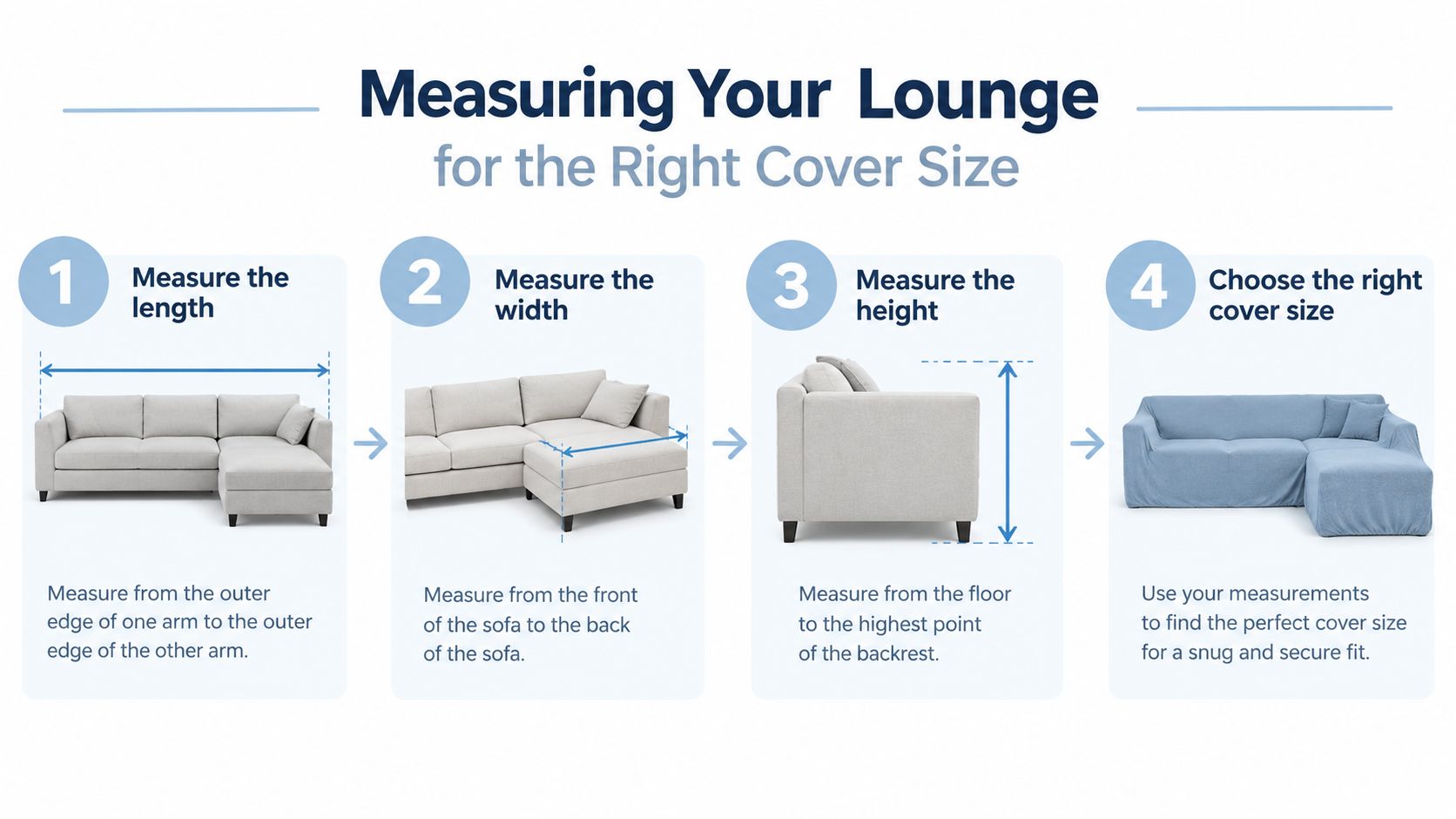
The right cover size for a stretch couch cover is chosen by measuring arm to arm across the outside of both arms, and if your lounge falls between two size bands you should choose the larger band.
This is one of the few areas where getting strict helps. Stretch covers can pull in to suit a slightly smaller frame. They won't stretch past the top of their published range.
The size bands to use
Casamé Home sells couch covers in these seat-width bands:
- 1 seater: 90 - 130 CM
- 2 seater: 135 - 175 CM
- 3 seater: 180 - 220 CM
- 4 seater: 225 - 300 CM
Use a tape measure across the outside of both arms. Don't guess from the retailer's old sofa receipt. Don't estimate from cushion count either. “Three-seater” means very little without centimetres.
The two mistakes that cause bad fit
The first mistake is buying the smaller size because you want a drum-tight finish. That only works if the sofa already sits safely inside the band. If the frame exceeds the top of the range, the cover won't magically stretch further.
The second mistake is treating a stretch cover like a loose throw and sizing up for safety. That's how you get baggy arm fabric, extra pooling at the base, and a seat that needs constant retucking.
Sizing rule: When a lounge sits between two listed bands, take the larger band. A stretch cover can pull in on a smaller frame, but it won't stretch past its upper limit.
What if you own a sectional
An L-shaped lounge needs an L-shaped sofa cover, not a standard one-piece cover forced across the whole unit. If your sofa has a sectional layout, look at L-Shaped Sofa Covers instead of trying to make a standard fitted cover do a job it isn't cut for.
Styling an Australian Living Room Around a Textured Cover
Skip the idea that quilting is what makes a sofa look finished. On a fitted lounge cover, the stronger styling move is texture that sits close to the frame and keeps its shape.
That matters in Australian living rooms, where hard floors, bright light, and simple wall colours can make a plain smooth cover look flat fast. A textured stretch cover gives you enough surface interest without piling on extra throws and busy prints.
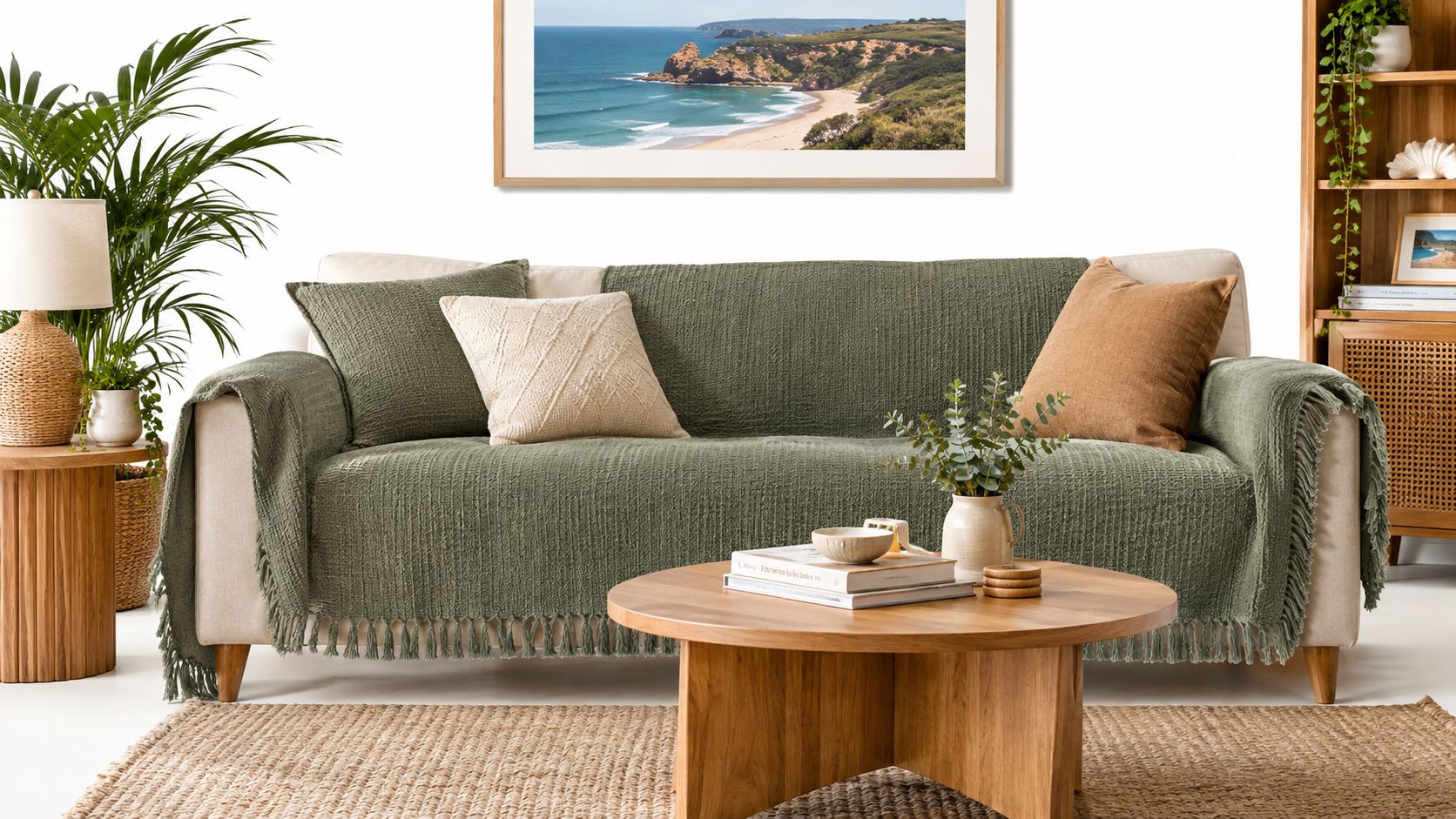
Three room setups that work
Coastal Queensland sunroom
Use sand, light brown, or light sage on the sofa. Then add one darker cushion so the room does not wash out in daylight. Timber, a woven rug, and the cover's own texture already do enough.
Victorian terrace in inner Melbourne
Choose a darker cover such as Black, Brown, or Light Concrete Grey if the room has pale walls and older detailing. It grounds the space. Add one warm accent, rust, chestnut, or muted plum, and keep the rest tight and restrained.
New-build apartment in Western Sydney
Go with a neutral textured cover to soften sharp lines, glossy finishes, and standard-builder flooring. Stick to two tonal cushions at most. The woven surface already breaks up the block of the sofa, so another throw usually just creates clutter.
What actually makes the room look better
A fitted textured cover works best when the sofa becomes the main textile in the room. That is the point. You do not need to fake depth with layers if the fabric already catches light and shadow.
This is also where a quilted build works against the look. Quilting reads bulky before it reads sharp and fitted, especially on a stretch-fitted cover. If your real goal is a thicker-looking, harder-wearing finish, a jacquard weave on a stretch base gets closer than stitched channels and padded wadding.
Casamé Home does not make a quilted cover. For this kind of room, that is not a drawback. A woven textured finish is the better fit for buyers who want their lounge to look cleaner, sit flatter on the arms and seat, and still feel more substantial than a plain smooth cover.
Keep the rest of the room simple. Let the cover do its job.
Care and Cleaning for a Woven Stretch Cover
A woven stretch cover should be cared for as a washable textile with clear label instructions, low-friction cleaning habits, and enough drying time to protect the stretch base and textured surface.
This part deserves less fluff and more honesty. Some care information is clear. Some isn't. Buyers should know the difference before they wash anything.
What Australian rules require
Australia's mandatory care-labelling standard covers clothing, household textiles, apparel, furnishings, upholstered furniture, bedding, mattresses and bed bases under the Australian care-labelling requirements here.
The standard allows those care instructions to be given in English, in the five internationally recognised care symbols, or both as set out in the mandatory standard. So the label on a cover may be words, symbols, or a mix, and it is worth reading either way before the first wash.
What good day-to-day care looks like
Sensible upkeep for a woven stretch cover is low-suction vacuuming, blotting spills straight away instead of rubbing them in, not over-wetting the fabric, and keeping the cover out of long spells of direct sun. Those habits matter more on textured covers because grit can sit in the surface pattern and sun can fade exposed areas faster.
| Care detail | Published on product page | Not published |
|---|---|---|
| Machine washability | Yes, where stated on the product page or label | Full wash performance over repeated cycles |
| Routine dust removal | Low-suction vacuuming is sensible care | Any in-house abrasion or pilling test results |
| Spill handling | Blot spills quickly, don't rub | Detailed stain-by-stain cleaning protocol |
| Fibre details | Not stated for these covers | Fibre percentages or blend |
| Thickness metric | Not stated | Fabric weight |
For upkeep between washes, this practical guide can help you keep covers fitting like new.
Wash to the care label that came with your cover, dry it thoroughly, and don't store a cover while it's still damp. Texture hides some dust. It doesn't forgive mildew.
Choosing Well and What to Check Before You Order
Choose a textured stretch cover if you want shape-hugging fit and a more substantial look, but don't choose a textured stretch cover if what you want is padded cushioning or a barrier against claws and heavy moisture.
That's the trade-off in one line. A woven jacquard on a stretch base gives you the cleaner sofa fit. True quilting gives you loft. You usually don't get both at once on a fitted lounge cover.
The last two checks that matter
Before ordering, confirm the size from the published arm-to-arm measurement bands and stick to the larger band if your sofa falls between them. A stretch cover can only do its job if the dimensions are honest.
Then read the product page like someone who might need to return the item. In Australia, a product can be rejected if it's faulty, unsafe, not as described, or doesn't meet consumer guarantees, and the remedies can include refund, replacement or repair under the ACCC problem solver guidance. If a cover arrives looking materially different from the listing, pills unusually fast because of a fault, or fails in normal use inside a reasonable life, that's not a favour request. That's a consumer law question.
My blunt recommendation
If you searched for quilted couch covers Australia because you wanted a lounge cover that feels thicker, looks textured and stays put better than a thin smooth one, stop chasing the word “quilted” and start judging the construction. A diamond jacquard stretch cover is closer to that goal than padded stitch-through quilting on most standard lounges.
If you want actual seat padding, add a throw or dedicated seat layer. If you want a fitted room-refresh that looks more substantial than a basic smooth slipcover, the woven route is the smarter buy.
Casamé Home offers stretch-fit couch covers, textured jacquard options, matching cushion covers, and size bands that suit standard lounges across Australia. If you want the quilted look without the bulk that usually ruins the fit, start with the diamond-patterned textured options and browse Casamé Home for the cover shape and colour that matches your lounge.