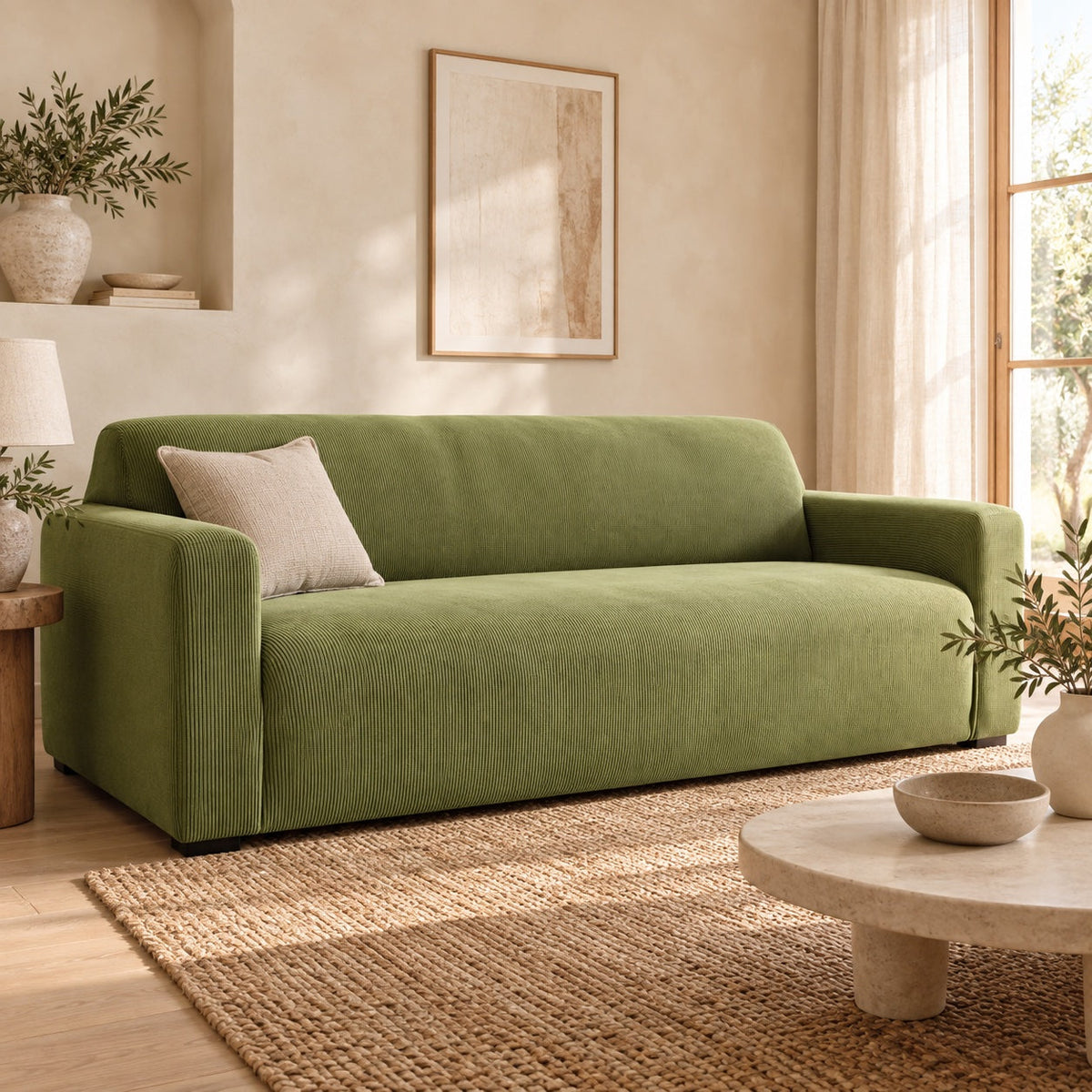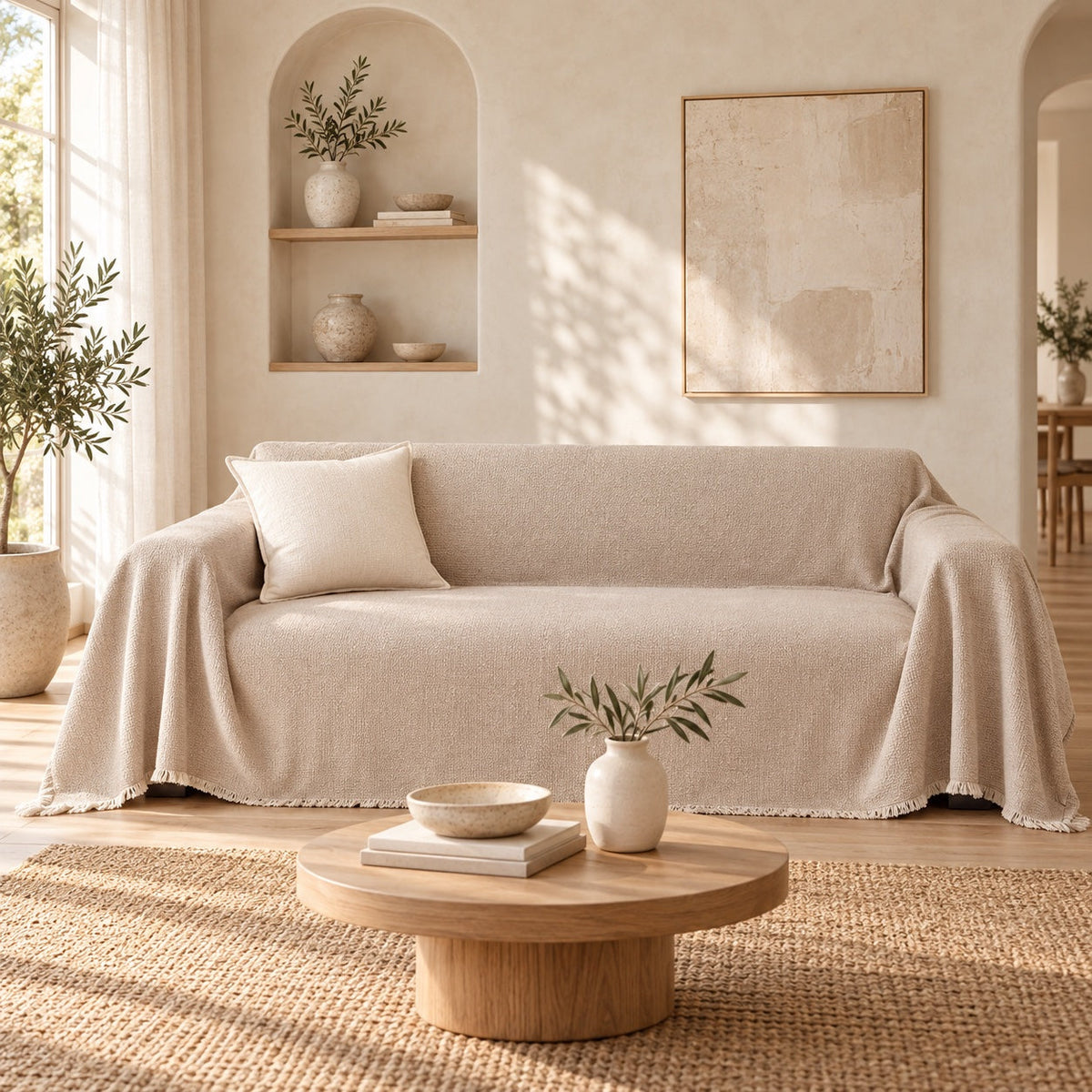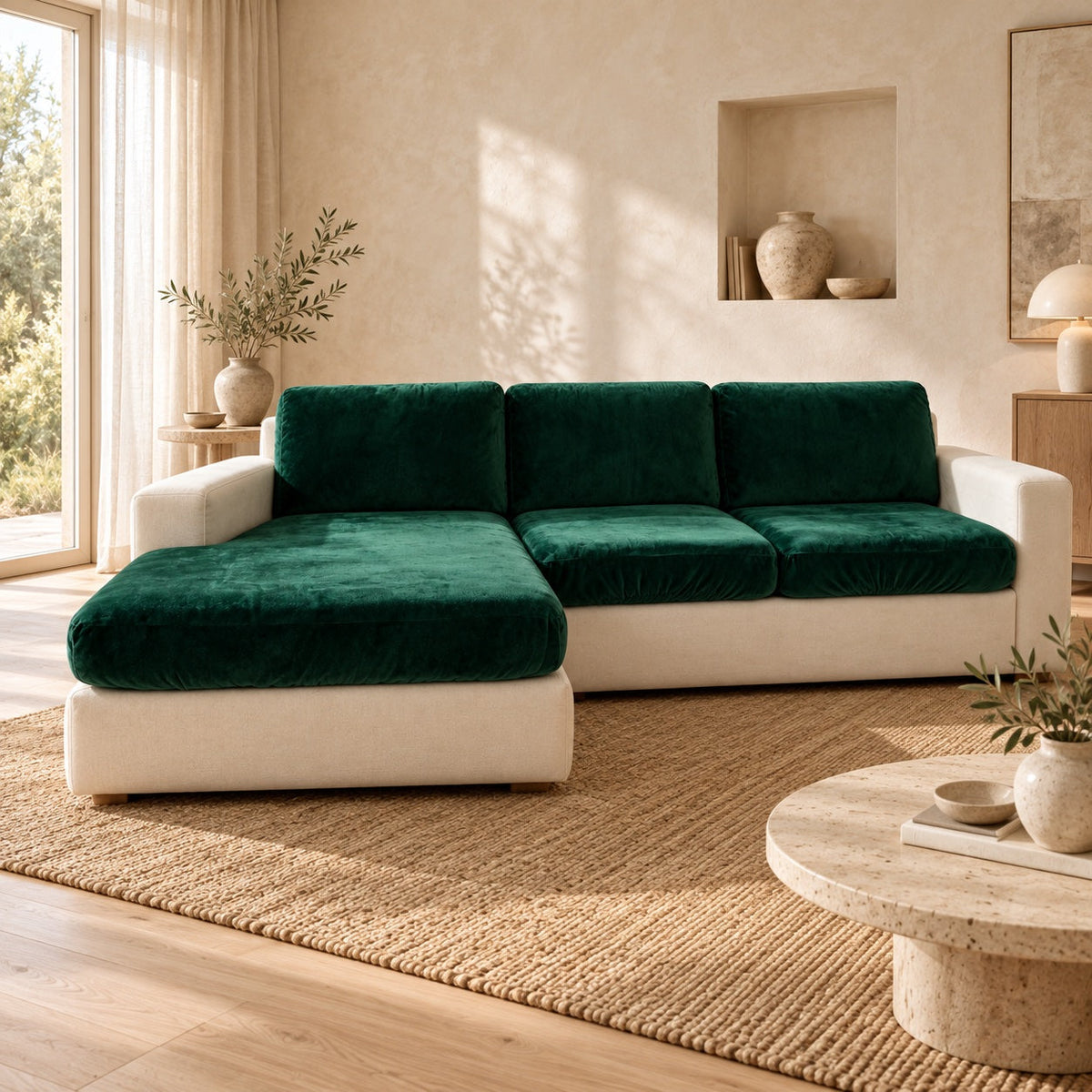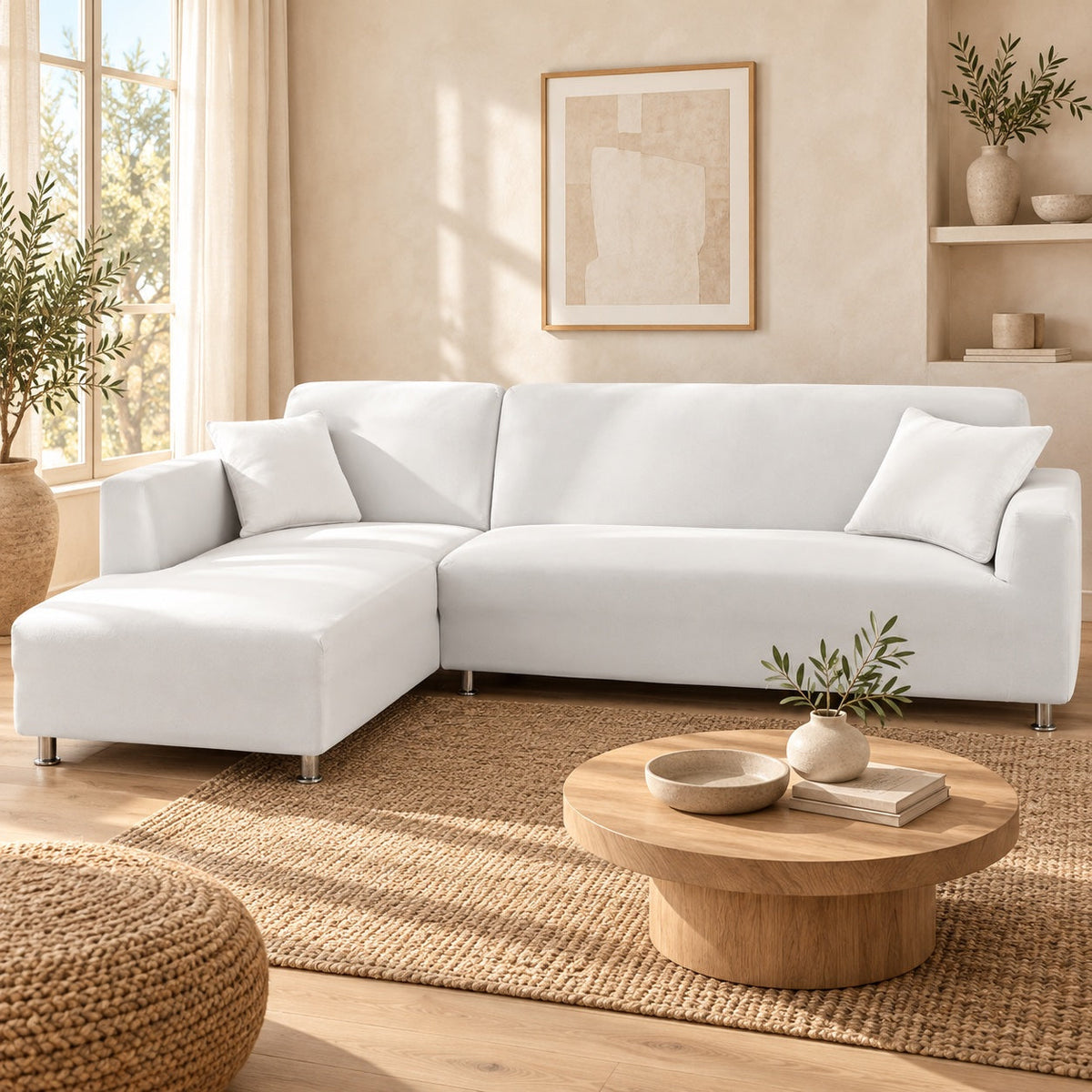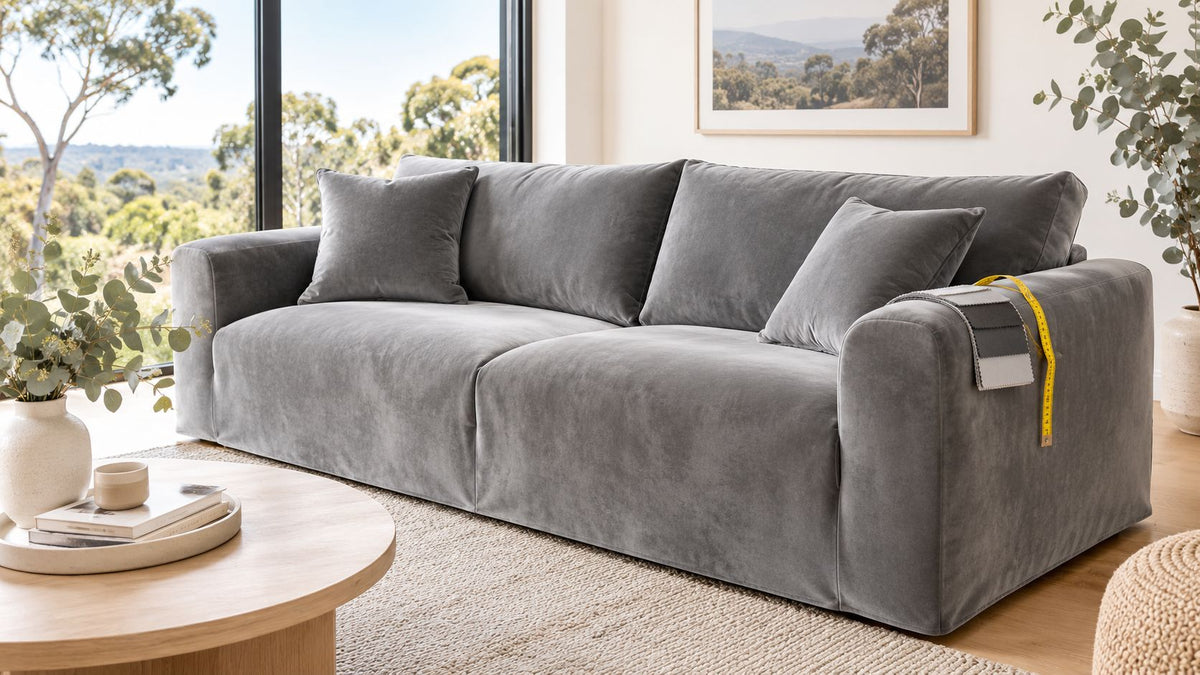
Velvet sofa covers in Australia are the straightforward way to get the velvet look on the couch you already own without buying a new velvet sofa. If you want the plush finish, the deeper colour, and the softer hand-feel, the buying questions aren't about velvet sofas at all. They're about cover construction, colour matching, nap direction, sizing, and care.
Key Takeaways Velvet Sofa Covers
Pile Direction: Fit every panel with the pile running the same way.
Match Colours Exactly: Buy matching velvet pieces so tones stay consistent.
Wash Only If Labelled: Vacuum grit out first and wash only if the label allows.
That matters because velvet can look excellent or wrong for very practical reasons. A stretch velvet cover can read rich and even, or patchy and flat. The difference usually comes down to how the pile is fitted, how the size was chosen, and whether the cover is cared for as a stretch textile first and a decorative fabric second. For renters, families, and anyone shopping home textiles for renters, that's the useful part to understand before you pick a colour.
This guide stays on that job. It focuses on Casamé Home's single velvet-on-stretch construction, what's in the velvet range, how the nine colours match across pieces, why one shade can look like two tones, how to measure, and how to keep the pile looking right.
Table of Contents
- Introduction
- What Velvet Covers Casamé Home Stocks
- Why Does One Velvet Colour Look Like Two Tones
- Can You Match Velvet Colours Exactly Across Your Lounge
- How Do You Measure For A Velvet Stretch Cover That Looks Smooth
- Can You Machine Wash A Velvet Sofa Cover
- Is Velvet The Right Choice For Your Lounge
Introduction
Velvet sofa covers in Australia make sense when you want the velvet finish on an existing lounge, not a furniture replacement project. The smarter buy is usually the one that solves the room you have now, with the frame you already own.
Australian spending on home furnishings has grown strongly over time. In the ABS retail series for “Furniture, floor coverings, houseware and textile goods retailing”, November turnover rose from A$1,050.9 million in 2013 to A$1,872.6 million in 2024, a 78.2% increase, according to the ABS retail statistics history. The same series shows November turnover jumping from A$1,312.3 million in 2019 to A$1,662.5 million in 2020, a 26.7% rise. A cover sits in that same part of the household budget, and it changes how a lounge looks without replacing the whole suite.
There's also a practical furniture-life angle. A New South Wales EPA-backed report found 3 to 5% of textiles became waste in furnishing production, and estimated 90,900 metres of pre-consumer textile waste from 1,818,000 metres of fabric used for 178,200 sofas in NSW retail output, with a wider scenario noting around 225,000 metres of furnishing textiles could end up in landfill if 4.5 million metres are sold and 5% becomes waste, as detailed in the NSW furnishings textiles waste report. A removable cover won't solve all of that, but it does support the simple habit of extending the life of a usable couch rather than replacing it early.
Practical rule: Velvet works when you buy it like a fitted textile, not like a paint colour. The look comes from pile direction, stretch, and fit.
Three mechanisms decide whether a velvet cover earns its place in a lounge. Nap controls how light hits the pile. Warmth is a real comfort trade-off because dense pile holds a warm layer of air against the body. Stretch decides whether the surface sits smooth or strained. Get those three right and velvet looks deliberate. Get them wrong and even a good colour won't rescue it.
What Velvet Covers Casamé Home Stocks
You can rule a few things out straight away. Casamé Home's velvet range uses one stretch velvet construction across the line, and it does not include crushed velvet. That matters because mixed velvet types are where lounges start looking uneven, even before colour enters the picture.
The practical upside of a single construction is consistency. The nap reads the same way from product to product, the warmth level stays predictable, and the stretch behaves similarly whether you are fitting a full sofa cover or separate cushion covers. That is the part many buying guides skip. They talk about velvet as a colour story, when the finish is really controlled by pile and tension first.
The velvet range at a glance
| Product | Price AUD | Sizing |
|---|---|---|
| Velvet Couch Cover | AUD 67.90-121.90 | 1 seater 90 - 130 CM, 2 seater 135 - 175 CM, 3 seater 180 - 220 CM, 4 seater 225 - 300 CM |
| Velvet L-Shaped Sofa Cover | AUD 176.90-268.90 | Ordered as a pair of seater bands, one per run of the L |
| Velvet Couch Cushion Cover | AUD 39.90-89.90 | Standard in S, M, L and XL, Deep in S, M and L, plus Chaise Narrow, Chaise Wide and Backrest S and M |
| Velvet Cushion Cover | AUD 12.90-21.90 | 45 x 45 cm, one piece or two |
The broader Casamé Home slipcover collection includes other fabric families, but the velvet line stays tight. That is useful if you want the sofa body, chaise section, and loose cushions to read as one matched set instead of a close-enough mix.
Velvet accounts for 10% of all units ordered over the last year, so it is a settled part of the range rather than a side line.
Nine matched colours also solve a common room problem. Buyers often find a sofa cover they like, then add cushion covers later and end up with a near match that photographs differently in daylight. Keeping the velvet line in one fabric family and one colour set cuts that risk down.
What is stocked, and what is not
Each velvet product serves a different fitting job.
- Velvet Couch Cover: For standard 1 to 4 seater sofas that fit the listed width bands.
- Velvet L-Shaped Sofa Cover: For corner lounges. This is bought as two pieces, with one size chosen for each run of the L.
- Velvet Couch Cushion Cover: For separate seat cushions, deeper seats, chaise cushions, and backrest pieces where a single full cover would look strained or loose.
- Velvet Cushion Cover: For 45 x 45 cm scatter cushions in the same velvet finish.
For sectionals, start with the L-Shaped Sofa Covers range because the fit is modular. That is the right approach for velvet. A one-piece guess tends to pull the pile in different directions, and that is when the surface starts looking patchy.
One more filter matters. Velvet is not part of the waterproof line.
That saves wasted orders. If the first requirement is moisture resistance, choose from the water-repellent fabrics. If the first requirement is a warmer, richer surface with a consistent nap and matching accessories, the velvet range is built for that job.
Why Does One Velvet Colour Look Like Two Tones
A velvet cover looks like two tones because the pile lies one way and light reflects differently along it than against it. That's normal velvet behaviour, and it's the first thing to understand before judging a colour swatch.
If you've ever brushed hair one way and then the other, you already know the effect. Velvet does the same thing. The nap shifts the way light sits on the surface, so one colour can read deeper from one angle and lighter from another, especially near a window.
The fitting rule that stops the patchy look
The rule is direct. Fit every velvet panel with the pile running the same way, usually down the seat towards the front edge. When one seat panel runs one way and the next panel runs the opposite way, the lounge won't read as plush. It will read as uneven.
That patchy finish is the most common reason a new velvet cover looks wrong in photos. The colour usually isn't the problem. The panel direction is.
Standard velvet handling advice supports the same logic. Velvet should be brushed gently in the direction of the pile, vacuumed regularly with an upholstery attachment, and kept out of direct sunlight, because UV exposure damages fabric over time.
A separate seat piece can make that easier to control. One option is the Velvet Couch Cushion Cover · Light Grey · Stretch Fit, which comes in 11 sizes across its Standard, Deep, Chaise and Backrest options. Separate cushion covers can help keep nap direction consistent across individual seats instead of forcing one large panel to do all the work.
A moving demonstration helps more than words alone.
Feel and fit in a real buyer's words
Velvet also needs to feel right once it's on the lounge, not just photograph well.
Arabella J., on the Velvet Couch Cover in Light Grey: "The velvet material feels nice and plush, and it fits my four-seater perfectly—gotta say, it looks quite chic in light grey."
That quote captures the two things buyers usually notice first. The pile feels soft under hand, and the fit needs to sit properly across a larger frame. Velvet won't hide a poor fit. If the cover is twisted, over-stretched, or fitted with mixed nap direction, the plush feel won't translate visually.
Can You Match Velvet Colours Exactly Across Your Lounge
Yes, Casamé Home's velvet couch covers, velvet L-shaped covers, velvet couch cushion covers, and velvet cushion covers can be matched exactly because all four velvet families share the same nine colours. Those colours are Grey, Beige, Dark Green, Lake Blue, Orange, Navy Blue, Light Grey, Pink, and Brown.
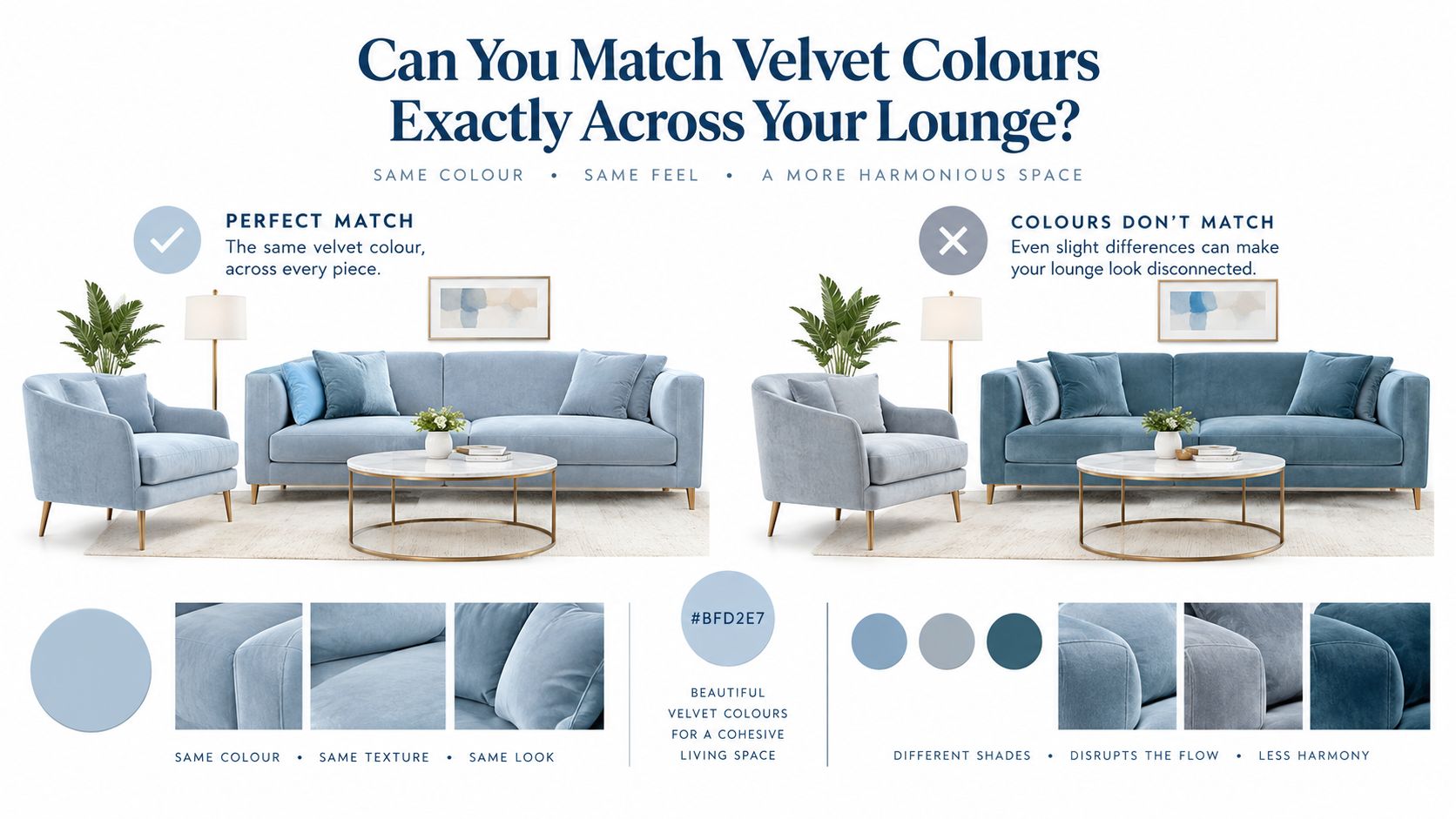
That's more useful with velvet than with flatter fabrics. Velvet already creates depth and shadow on its own, so it doesn't usually need a second competing pattern to make a room feel layered. Exact colour continuity tends to look cleaner than “close enough” mixing.
How to build a matched velvet setup
The practical combinations are straightforward:
- Standard sofa route: Pair a velvet couch cover with velvet couch cushion covers in the same colour if your seat cushions are separate.
- Corner lounge route: Pair a velvet L-shaped sofa cover with matching seat and chaise cushion covers so the two runs of the lounge stay visually consistent.
- Finishing route: Add velvet scatter cushion covers in the same colour when you want the room to read as one set, not a mix of similar tones.
If you want to see the cushion side of that system, the matching sits in the Cushion Covers range.
Why exact matching matters more in velvet
With woven, matte covers, a near match can sometimes pass unnoticed. Velvet is less forgiving because the nap shifts tone with light. If the base dye is already slightly off between pieces, the pile can exaggerate the mismatch.
A lounge covered in one velvet colour family looks intentional. A lounge covered in near matches often looks like replacements were bought separately.
That's why the shared palette matters. If you choose Grey for the main sofa, you can carry Grey through the corner section and the loose cushion pieces instead of hoping two different greys will sit well together. The Velvet Couch Cover, Grey is the cleanest example of that exact-match approach on the main seating piece.
How Do You Measure For A Velvet Stretch Cover That Looks Smooth
A velvet cover usually goes wrong in the same spot. The arms fit, the middle looks fine for a day, then the pile starts pulling flat across the front rail and the corners creep out. That happens less from colour choice than from bad measuring.
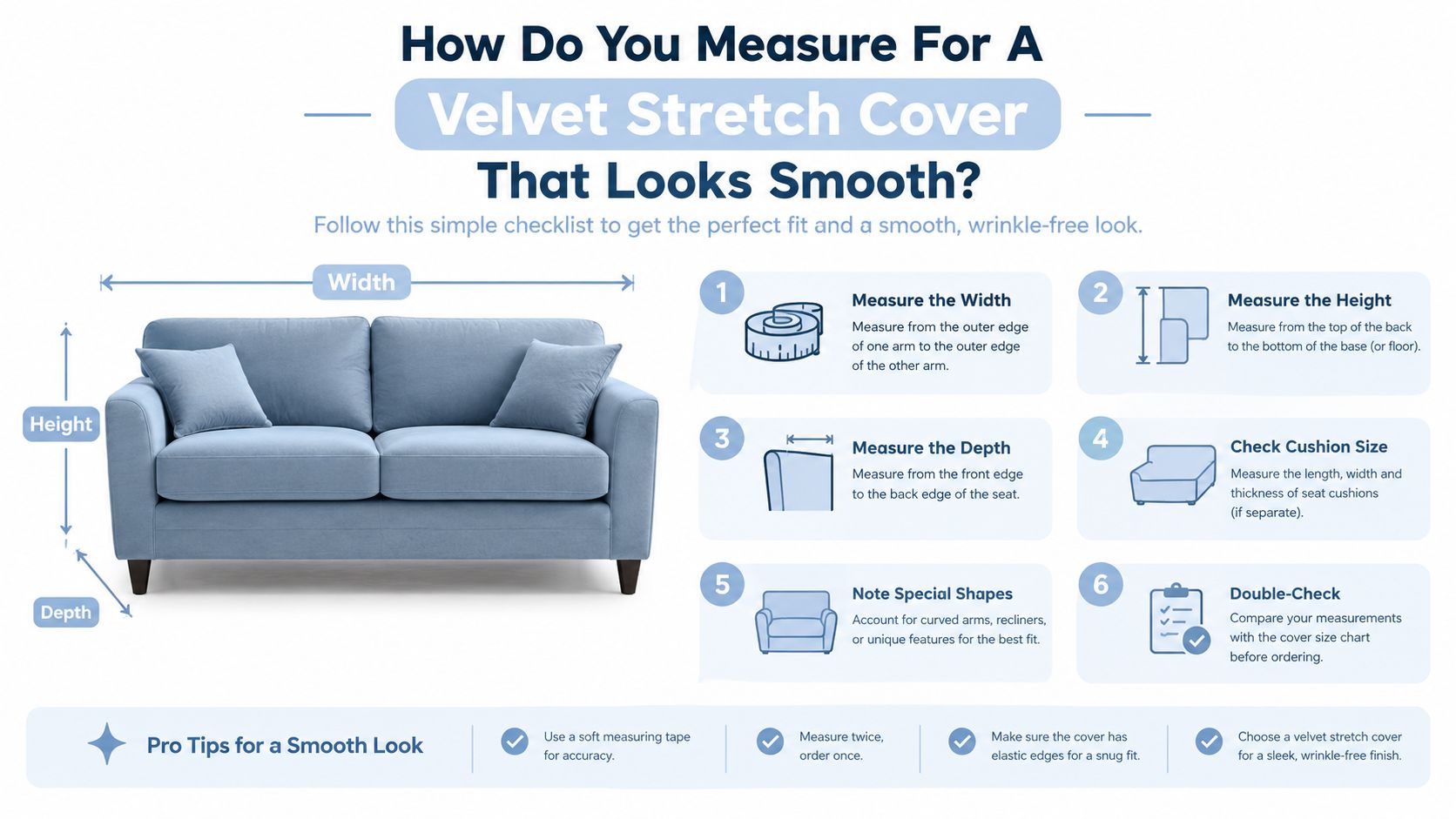
With velvet stretch covers, three physical things matter at once. The nap shows strain quickly because flattened pile catches light differently. The fabric also reads warmer and fuller than a plain knit, so any twisting or bunching is more visible. Then there is stretch. Stretch helps the cover hug the frame, but once you push past the top of the size band, that same tension drags seams, distorts the nap, and gives velvet that patchy, over-pulled look.
Start with the outside arm-to-arm width. That is the measurement that decides whether the cover will settle smoothly or fight the frame.
A fitted furniture cover is typically measured by width, height, and depth with the piece on a level surface, and the width should include any cushion that extends past an arm or leg. For velvet stretch covers, width across the outside of both arms is still the first check.
Use this order:
- Measure the full width: Go from the outer edge of one arm to the outer edge of the other.
- Check height and depth: Note the overall shape on a level surface so you can judge whether the cover proportions make sense.
- Choose the larger band if you sit between sizes: A stretch cover pulls in neatly to a slightly smaller frame, but it will not stretch past the top of its range.
That last point matters more with velvet than with looser woven covers. If you size down, the fabric may still get onto the sofa, but the nap will tell on you. You will see bright and dark pressure areas across the arms and seat base where the pile is being forced in different directions.
For standard sofas, the listed seater bands are:
- 1 seater: 90 - 130 CM
- 2 seater: 135 - 175 CM
- 3 seater: 180 - 220 CM
- 4 seater: 225 - 300 CM
For an L-shaped lounge, measure each run of the lounge separately and order one seater band per run. Do not measure the outside footprint of the whole corner and treat it as one cover. That is how you end up with one side sitting smooth and the other side showing tension lines.
Casamé Home's single velvet construction helps here because the same fabric behaviour carries across the range. If both runs of a lounge are measured correctly, the finish looks consistent across the room instead of one section sitting tighter, shinier, or darker than the other. That consistency is what stops velvet from reading as mismatched, even when the colour itself is the same.
If the sofa shape sits awkwardly between product types, treat that as a warning sign. Velvet looks best when the fit is calm, even, and properly within range. Force-fitting is what makes it look cheap.
Can You Machine Wash A Velvet Sofa Cover
Yes, a velvet sofa cover can be machine washed only if the care label explicitly allows it, and the safest approach is to remove grit from the pile first and protect the stretch from heat afterwards. That's the whole job in one sentence.
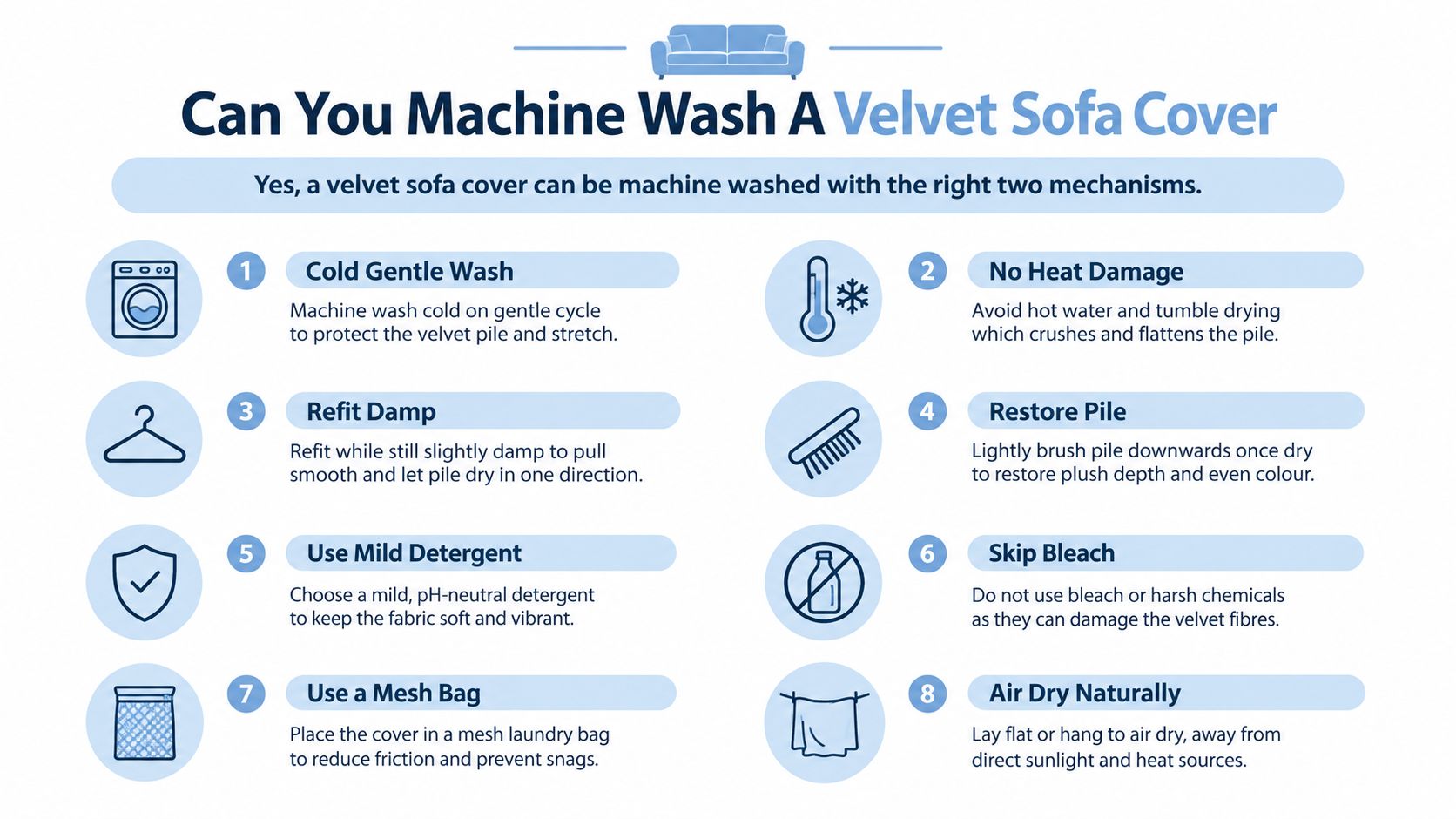
Velvet care guidance in Australia commonly recommends a cold gentle cycle, mild detergent, no bleach, and air-drying flat to reduce friction, snagging, and pile damage, but only when the care label allows machine washing, as outlined in this guide to washing velvet.
What to do before washing
Velvet’s pile traps grit at its base, where it can act as an abrasive, so vacuum or brush along the direction of the pile before washing.
Do that first, then wash if the label allows it.
- Remove loose grit: Use an upholstery attachment or a soft brush.
- Follow the nap: Always work in the direction the pile already lies.
- Blot spills, don't rub: Rubbing roughs up the nap and can leave scuffing on pile fabrics.
Brush or vacuum first. Washing a grit-loaded velvet cover only gives the abrasive more work to do.
What to protect during drying and refitting
The vulnerable part in a stretch velvet cover isn't only the pile. It's also the elastic behaviour of the base fabric. When washing, protect the stretch by following the care label and keeping drying heat as low as it allows.
Refit the cover while it is still slightly damp so it pulls flat as it dries and the pile settles in one direction.
A short checklist helps:
- Follow the care label: Machine-washable only means machine-washable when the label says so.
- Keep drying heat as low as the label allows: Lower heat is easier on stretch.
- Refit slightly damp: The cover settles more smoothly back onto the frame.
- Set the pile direction by hand: Smooth the nap the same way across each panel.
For more general laundering context across cover fabrics, the closest internal reference is Casamé Home washing tips.
The trade-offs buyers should be honest about
Velvet does bring a seasonal comfort trade-off. The dense pile holds a warm layer of air against the body, which is pleasant when you want a cosier seat and less neutral when you want a cooler-feeling lounge.
There are also limits worth stating plainly. We publish no lifespan figure, no wear-test result and no wash temperature for the velvet covers themselves, so the care label sewn into your cover is the instruction to follow. Velvet also shouldn't be called waterproof. If moisture resistance is the priority, that belongs to a different product line.
Is Velvet The Right Choice For Your Lounge
Velvet is the right choice for your lounge if you want a softer, deeper-looking finish on the couch you already own and you're happy to work with nap, warmth, and proper sizing rather than expecting a flat, low-maintenance fabric. That's the key decision line.
The upside is easy to see once the cover is fitted properly. Velvet gives the lounge more visual depth, a plush hand-feel, and a coordinated look when the main cover, corner pieces, and cushions all use the same shared colour family. The downside is just as real. Velvet isn't waterproof, side light will show nap variation, and the fabric feels warmer against the body than flatter cover types.
A quick velvet decision check
Choose a velvet cover when these points sound right for your room:
- You want the velvet look without replacing the sofa: A stretch cover handles that directly.
- You care about matched pieces: The nine shared colours make room-wide coordination much easier.
- You'll maintain the pile properly: Velvet rewards brushing, vacuuming, and correct refitting.
- You don't need a waterproof cover: Velvet isn't the line for that requirement.
Pause before choosing velvet if these are your priorities instead:
- You want a cooler-feeling seat surface year-round
- You need water-focused protection first
- You don't want to pay attention to nap direction during fitting
Velvet looks right when the practical decisions are right first. Colour comes after fit, pile direction, and the correct size band.
The final checklist is short. Measure arm to arm across the outside of both arms. Choose the larger band if your lounge sits between sizes. Align the pile in one direction across every visible panel. Match the nine velvet colours across the pieces you're using. Care for the pile before washing, and protect the stretch during drying.
Casamé Home offers velvet couch covers, velvet L-shaped sofa covers, velvet couch cushion covers, and matching velvet cushion covers in one coordinated velvet-on-stretch construction. If you want the velvet look on the lounge you already own, with exact colour matching across pieces and sizing bands that suit standard sofas and corner lounges, visit Casamé Home.